Letter recognition Extra Challenge English for Beginners Worksheets for 8-Year-Olds

Enhance your child's letter recognition skills with our engaging "Letter Recognition Extra Challenge" worksheets, specifically designed for 8-year-olds learning English as a second language. These worksheets provide both fun and educational activities that challenge young learners to recognize, identify, and differentiate letters through varied exercises. Featuring colorful illustrations and interactive tasks, they promote active learning and help build a strong foundation in literacy. Perfect for classroom use or at-home practice, these worksheets are tailored to spark your child's interest in letters while consistently reinforcing their understanding of the English alphabet. Unlock their potential with our beneficial resources today!

Check out this FREE Trial Lesson on English for Beginners for age 8!

X

Favorites
With answer key
Interactive
  • 8
  • Letter recognition
  • English for Beginners
  • Extra Challenge
Letter R worksheets
Letter R worksheets

Letter R Tracing Page

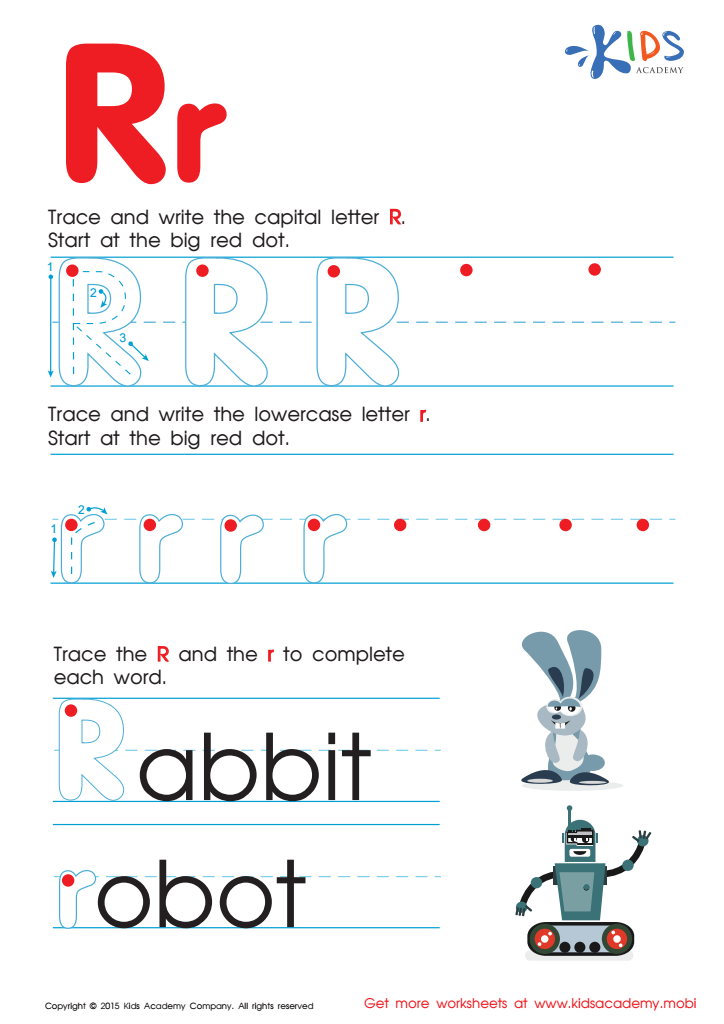
Trace and write the letter "R" with this worksheet for kindergarten. Start with the uppercase, then move on to the lowercase. Write the letters several times for practice. Then help complete the words for the rabbit and robot, spelling carefully. More ABC worksheets can be found at Kids Academy.
Letter R Tracing Page
Worksheet
Letter X worksheets
Letter X worksheets

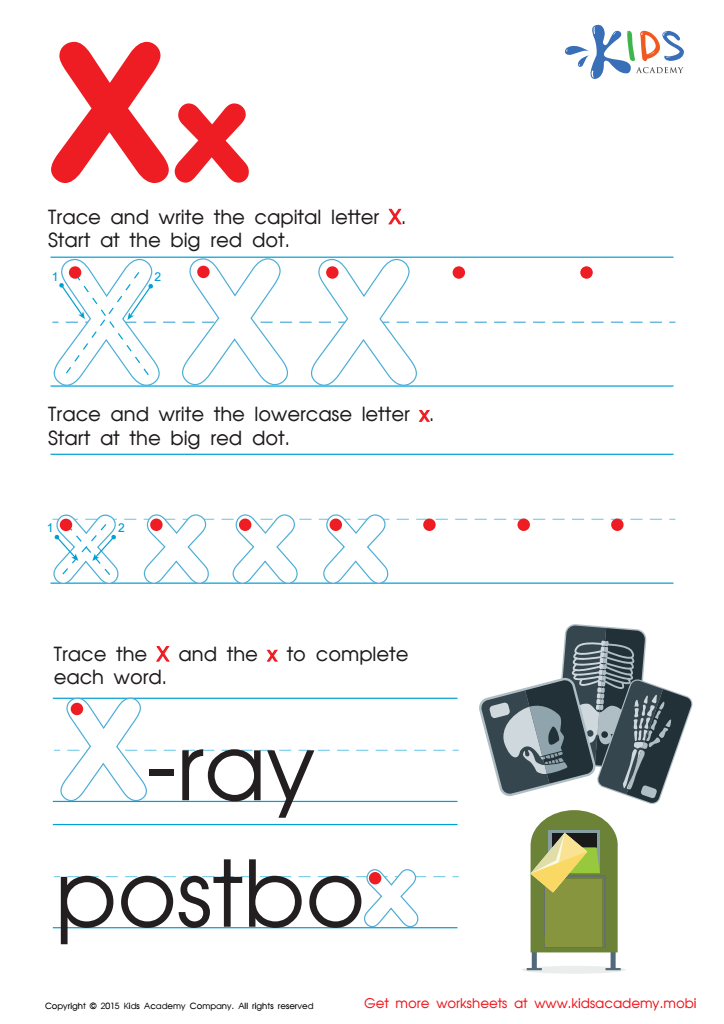
Letter X Tracing Page

Trace the uppercase letter "X" to learn, then write it yourself and practice. Then do the same with the lowercase "x" before completing the words "X-ray" and "postbox". Enjoy our alphabet printables!
Letter X Tracing Page
Worksheet
Letter U worksheets
Letter U worksheets

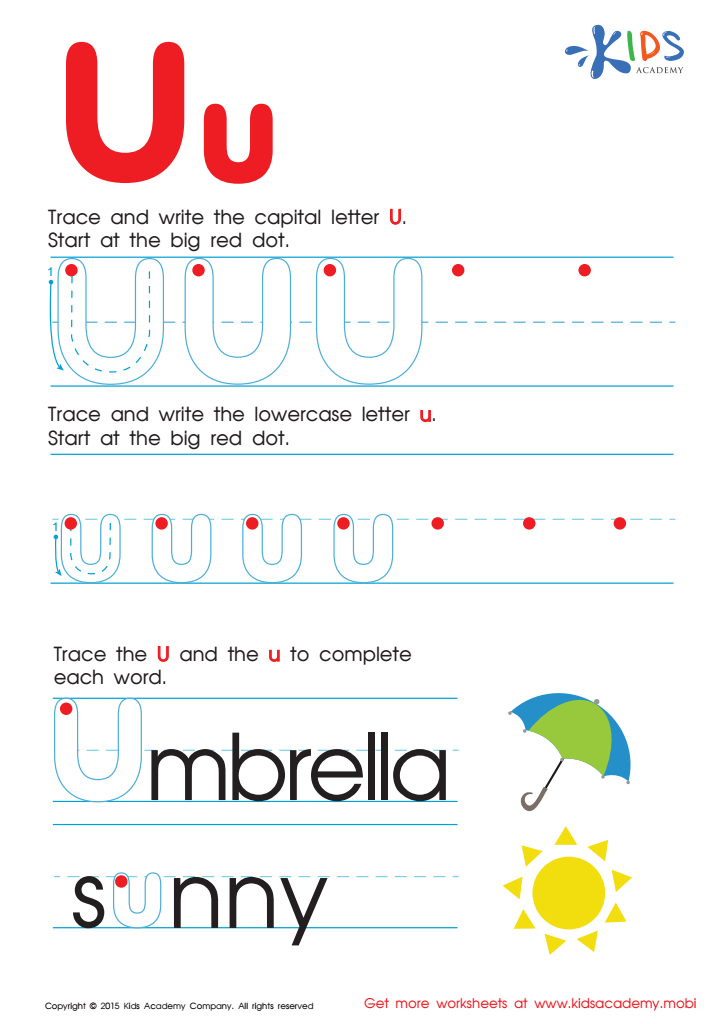
Letter U Tracing Page

Ready to trace and write the letter "U"? Use our worksheet and practice tracing both uppercase and lowercase letters. Complete the words "umbrella" and "sunny" with a capital "U". Check our full collection of alphabet printables for more activities.
Letter U Tracing Page
Worksheet
Letter S worksheets
Letter S worksheets

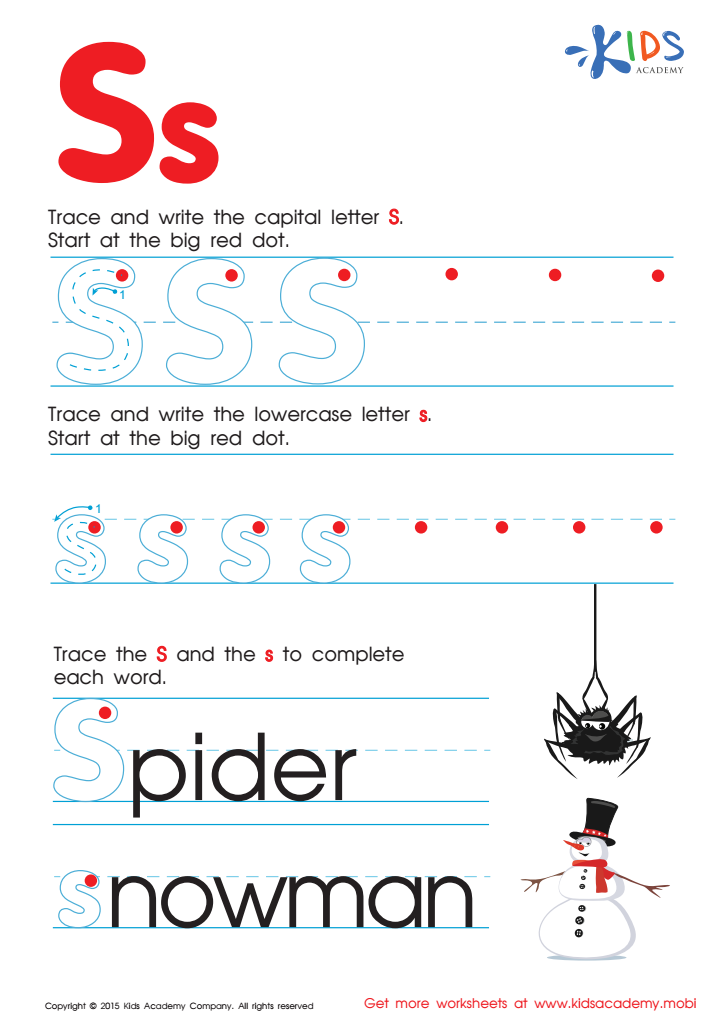
Letter S Tracing Page

Trace and write the capital and lowercase "S" on this ABC worksheet for kindergarten. Start with the big red dot and be careful. When you finish, help the spider and snowman in the pictures restore their words with the capital and lowercase letters. Continue learning the alphabet with Kids Academy.
Letter S Tracing Page
Worksheet
Letter W worksheets
Letter W worksheets

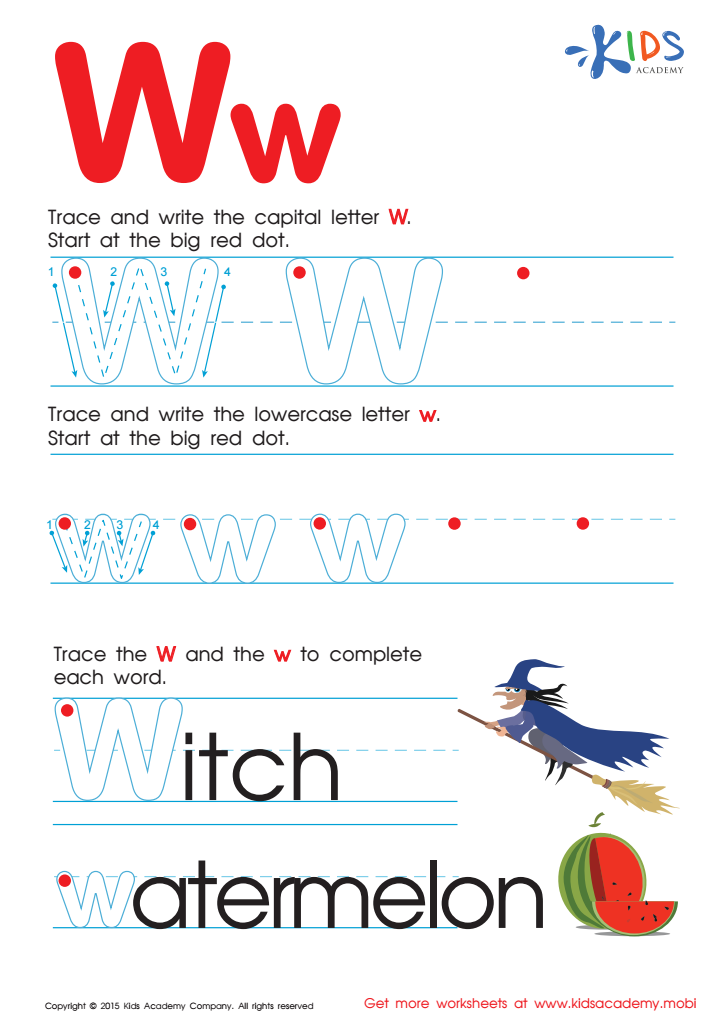
Letter W Tracing Page

Trace and write the capital and lowercase letter W with this free letter tracing worksheet by Kids Academy. Complete the words "Witch" (capital) and "watermelon" (lowercase). Check out our other kindergarten alphabet worksheets!
Letter W Tracing Page
Worksheet
Letter V worksheets
Letter V worksheets

Letter V Tracing Page

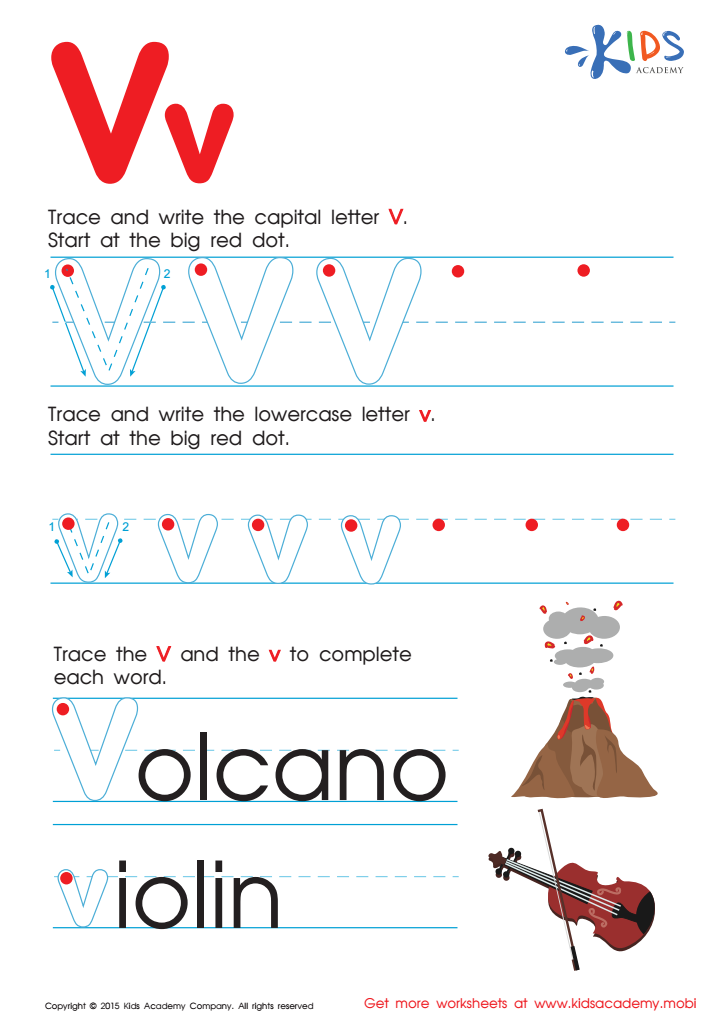
Trace the uppercase and lowercase letter "V" with our kindergarten tracing worksheet. Begin at the red dot and follow the lines. Write it several times. Complete the words "Volcano" and "violin". Get more alphabet activities at Kids Academy.
Letter V Tracing Page
Worksheet
Letter T worksheets
Letter T worksheets

Letter T Tracing Page

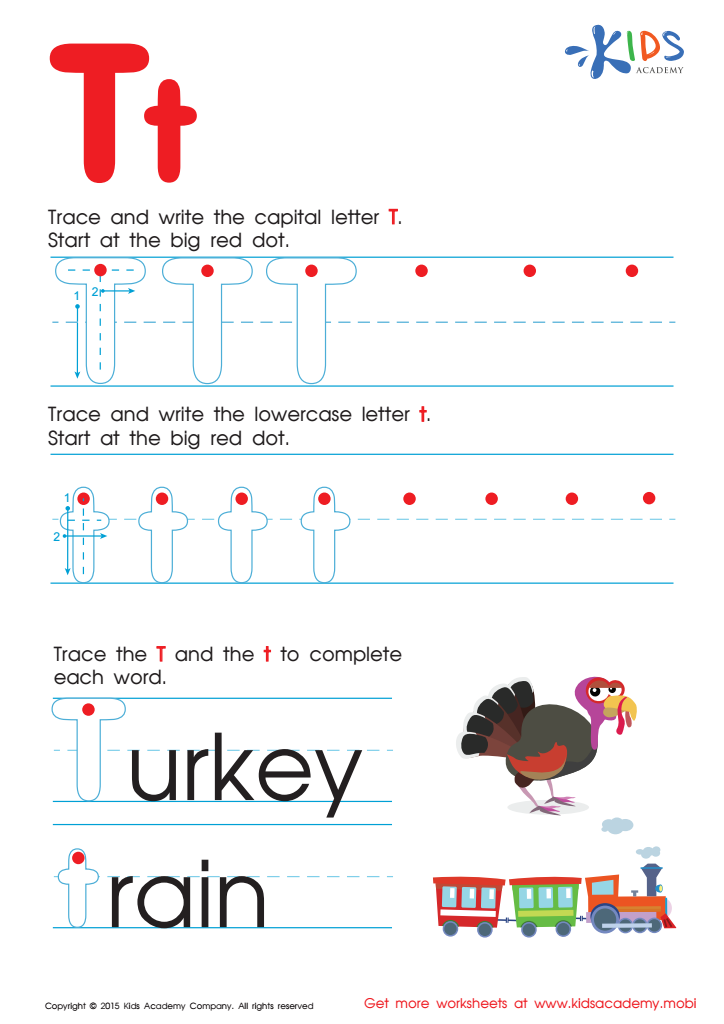
Trace letters, complete words, draw pictures and see your kids having fun! Kids Academy offers alphabet tracing worksheets to learn to write letters. Start with the big red dot, trace the letter, then write it. Practice uppercase and lowercase. Have fun completing words with a Turkey or a rain-train and draw pictures. Get more printable worksheets to make learning enjoyable.
Letter T Tracing Page
Worksheet


Letter recognition is a crucial foundational skill for young learners, especially for 8-year-olds. Understanding the alphabet not only contributes to reading proficiency but also enhances overall literacy development. For parents and teachers, fostering this skill through extra challenges nurtures children's curiosity and engagement with language.

Firstly, mastering letter recognition enables children to decode words, a key component in becoming confident readers. As they identify letters and their corresponding sounds, they build phonemic awareness, paving the way for successful reading and writing experiences.

Additionally, incorporating extra challenges can make learning fun and dynamic. Activities such as letter scavenger hunts, matching games, or creative art projects stimulate interest and motivate children to practice consistently.

Moreover, strong letter recognition lays the groundwork for future academic success. It supports not just literacy, but also subjects that rely on reading comprehension, like science and social studies.

Ultimately, when parents and teachers prioritize letter recognition, they equip children with essential skills that will benefit their education and personal growth. Investing time in this area fosters a love for learning, encourages independence, and instills confidence in young students, setting them on a path for lifelong literacy and educational achievement.