Understanding fractions Extra Challenge Fractions of Shapes Worksheets for 8-Year-Olds
5 filtered results
-
From - To
Discover our "Understanding Fractions Extra Challenge Fractions of Shapes Worksheets" designed specifically for 8-year-olds! These engaging worksheets provide an innovative way for students to explore fractions by visually dissecting different shapes. By completing these challenges, children will enhance their understanding of fractional parts in a fun and interactive manner. Our carefully crafted activities encourage critical thinking and problem-solving skills, making math enjoyable! Perfect for reinforcing classroom lessons or for extra practice at home, these worksheets will captivate young learners and build their confidence in working with fractions. Start your child’s journey to mastering fractions today!
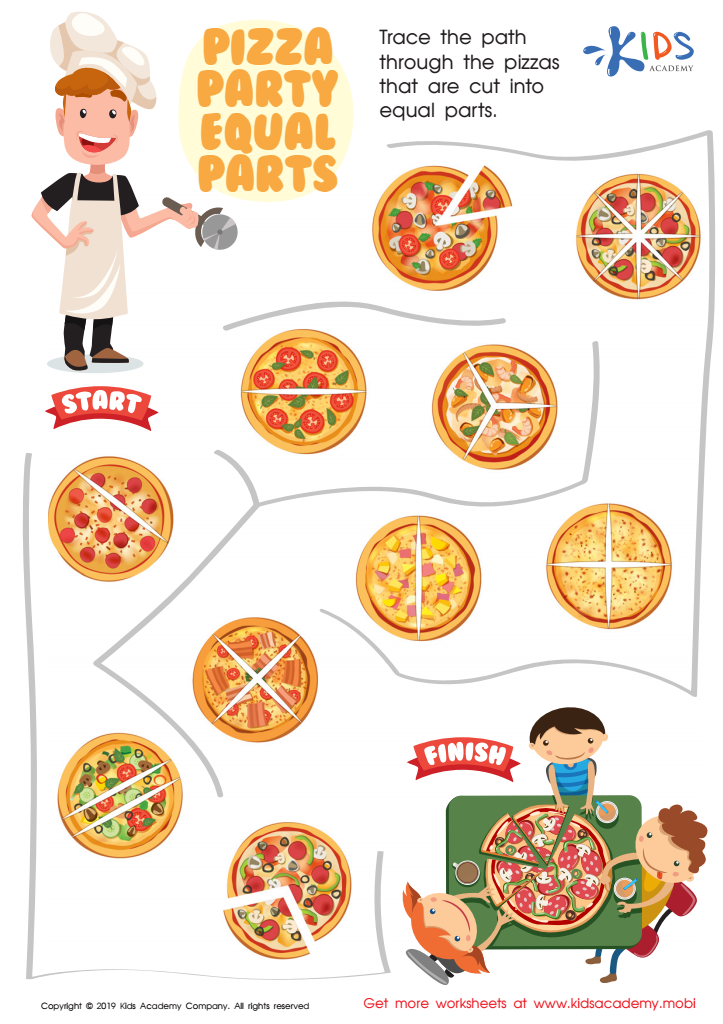
Pizza Party Equal Parts Worksheet
 Assign to My Students
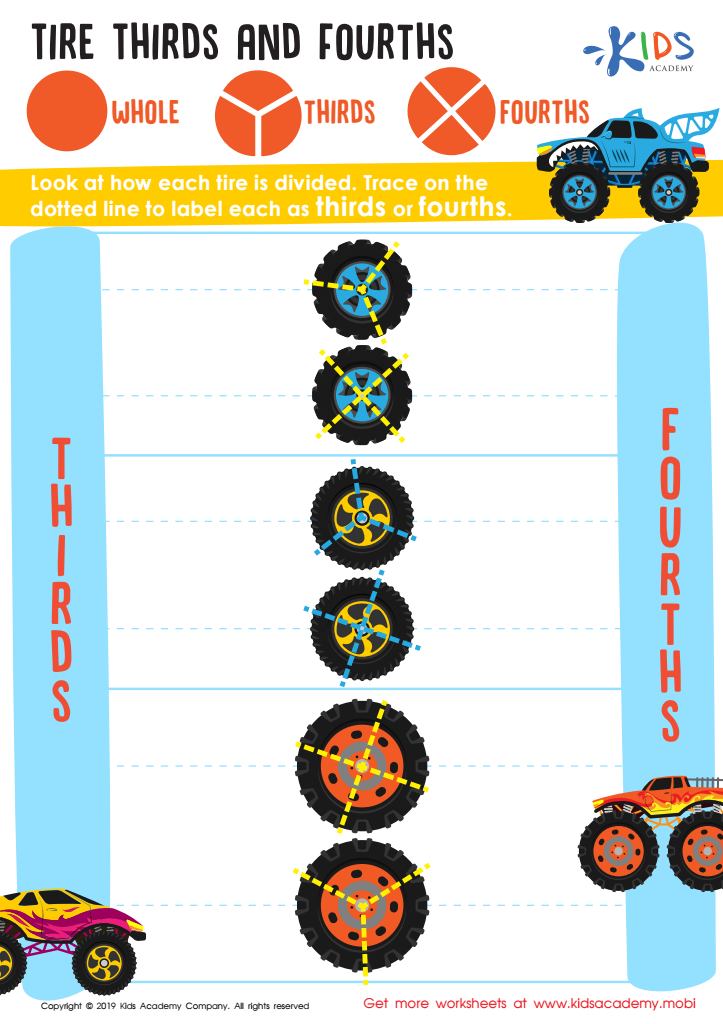
Tire Thirds and Fourths Worksheet
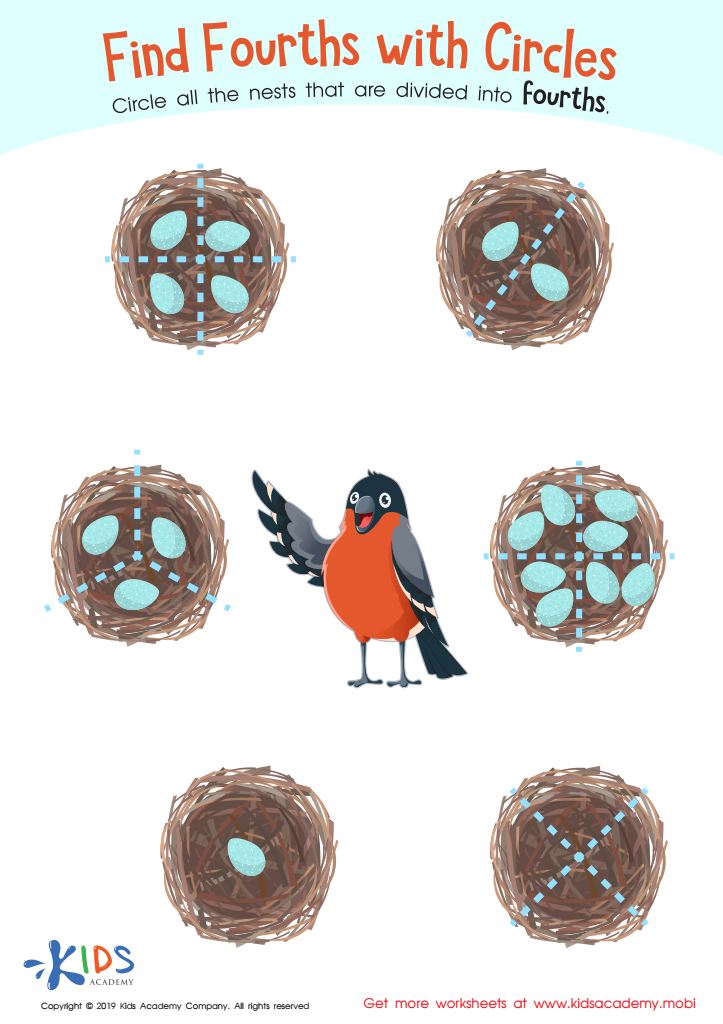
Find Fourths Circles Worksheet
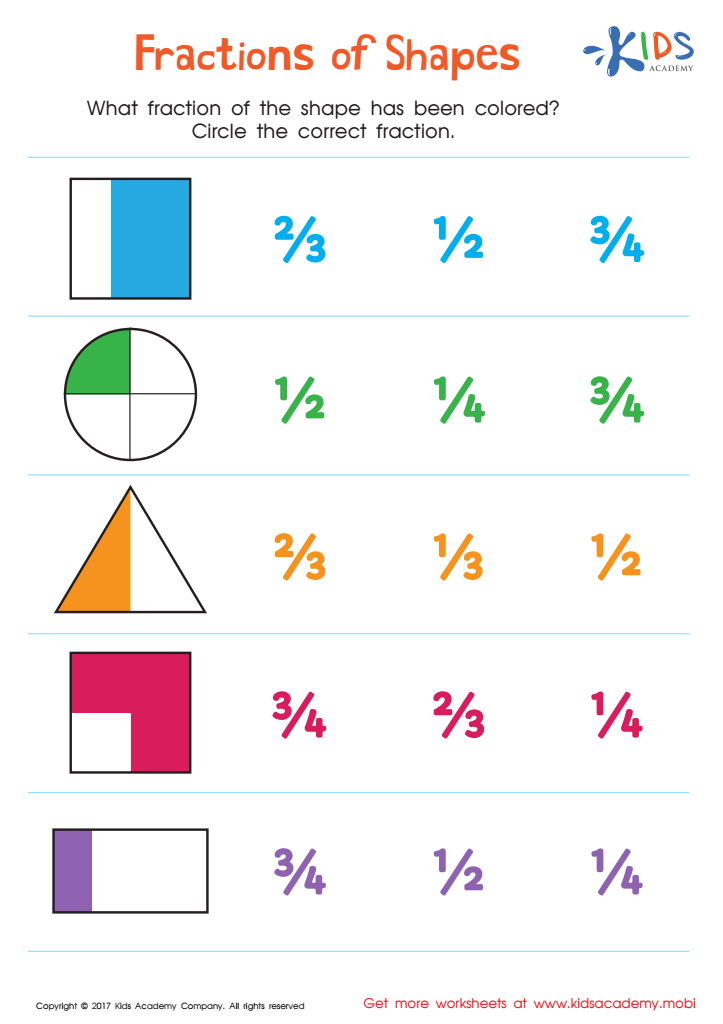
Fractions of Shapes Worksheet
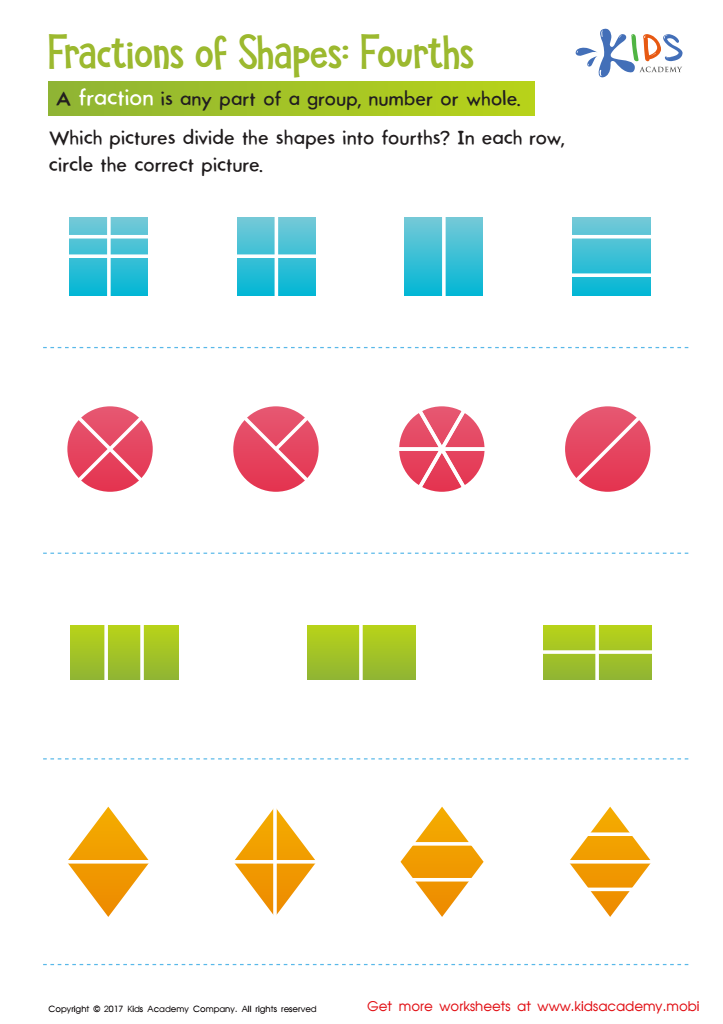
Fractions of Shapes: Math Concept Worksheet








Understanding fractions, especially in the context of shapes, is crucial for 8-year-olds as it serves as a foundational concept in mathematics and critical thinking. Parents and teachers should care about this topic because it supports children's cognitive development and their ability to solve real-world problems.
Fractions of shapes help children visualize parts of a whole, making abstract mathematical concepts more concrete. This understanding goes beyond mere numbers; it promotes spatial awareness and enhances problem-solving skills. By learning how to divide shapes into equal parts and represent those parts as fractions, children can build their confidence in mathematics and form a solid foundation for more advanced topics, like geometry and algebra, later on.
Moreover, the ability to recognize and manipulate fractions equips students with tools for everyday situations, such as cooking or sharing. This concept also fosters collaboration in group activities and enhances communication skills as they discuss and compare fractions.
Encouraging a solid grasp of fractions supports children's overall academic success and promotes a positive attitude towards learning math, an essential skill in today's world. Therefore, it is vital for parents and teachers to engage actively with them in this fundamental area of mathematics.