Recognizing shapes Extra Challenge Math Worksheets for 8-Year-Olds
3 filtered results
-
From - To
Explore our "Recognizing Shapes Extra Challenge Math Worksheets" designed specifically for 8-year-olds! These engaging and visually appealing worksheets provide an excellent opportunity for young learners to enhance their shape recognition skills. Each worksheet presents a variety of fun, challenging activities that encourage critical thinking, pattern recognition, and spatial awareness. Tailored to stimulate and captivate curious minds, these extra challenge worksheets promote independent learning while reinforcing essential math concepts. Perfect for classroom settings or at-home practice, our resources aim to develop confidence in young mathematicians. Dive into shape exploration and watch your child thrive as they take on these exciting math challenges!
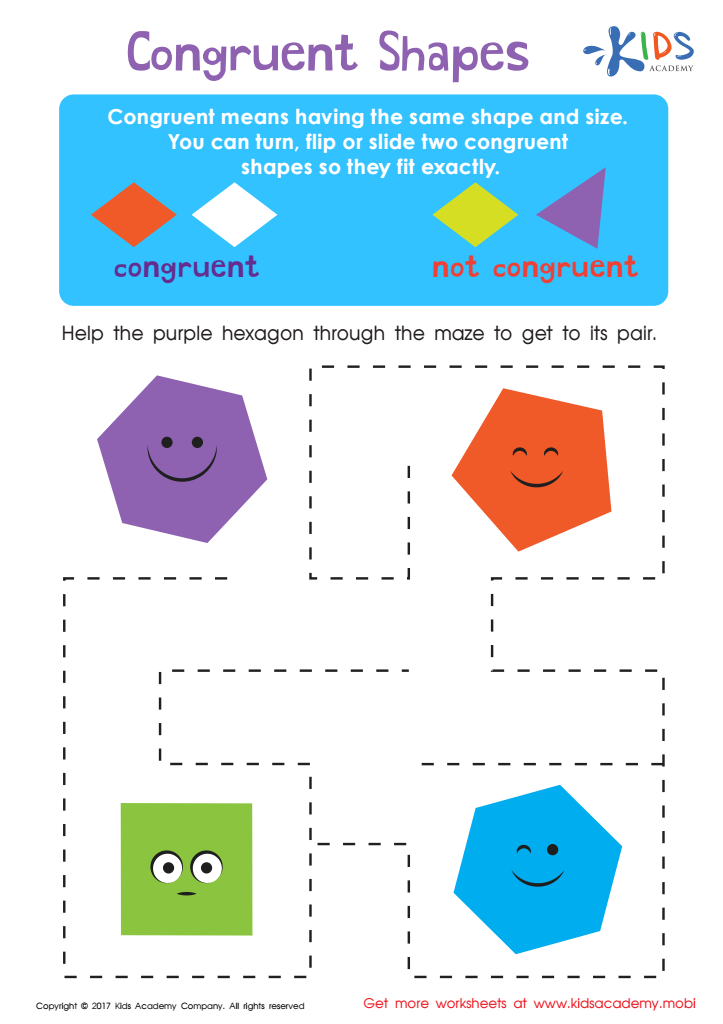
Congruent Shapes Worksheet
 Assign to My Students
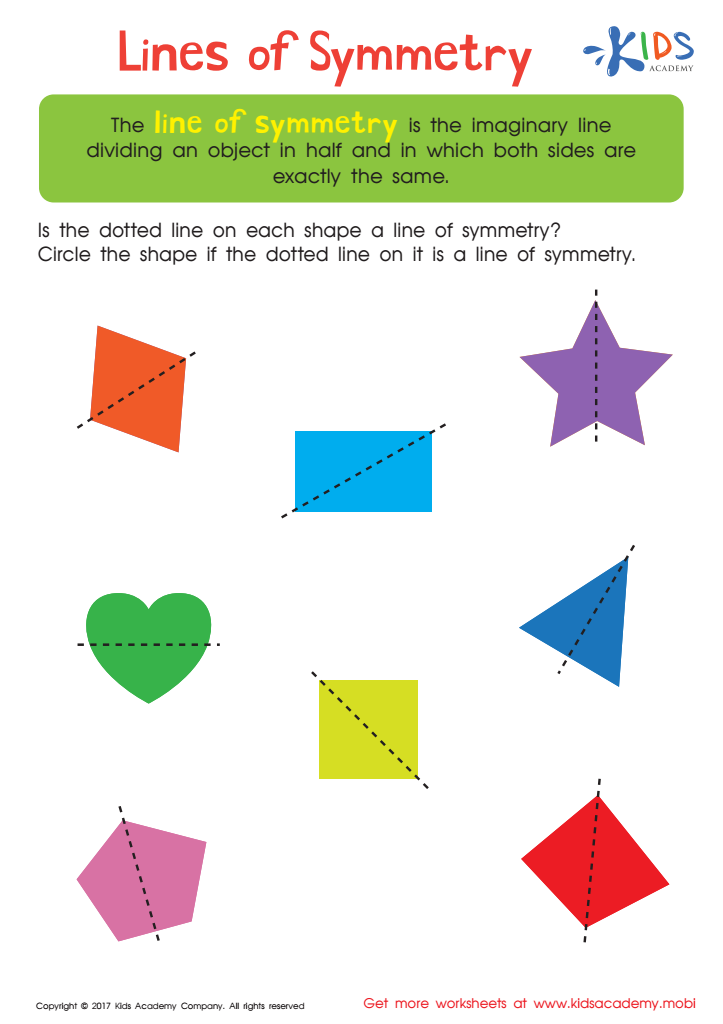
Lines of Symmetry Printable
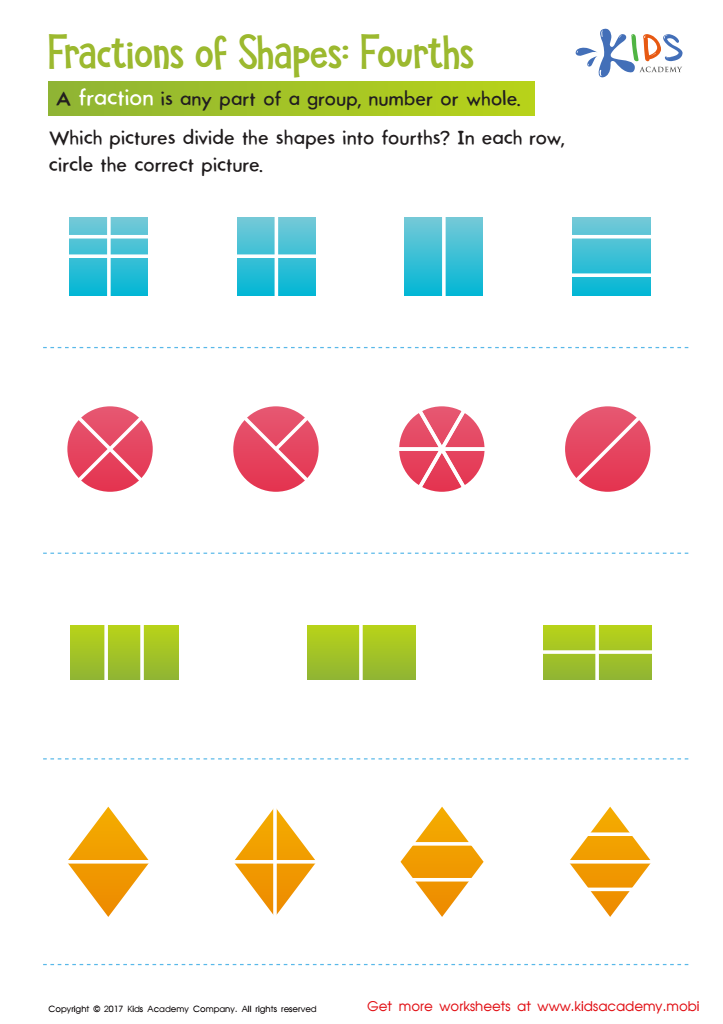
Fractions of Shapes Worksheet





.jpg)


Recognizing shapes is a fundamental mathematical skill that plays a crucial role in a child's overall cognitive development. For 8-year-olds, understanding shapes goes beyond simply identifying them; it fosters critical thinking, spatial awareness, and problem-solving abilities. Parents and teachers should care about this because mastering geometric concepts forms the basis for more complex math ideas, such as volume, area, and even later architectural and design skills.
Shape recognition also intersects with everyday contexts, making it relevant and engaging for children. Whether it's identifying objects in their environment or understanding the basics of symmetry and patterns, these skills enrich math learning and promote a love for the subject.
Moreover, recognizing and classifying shapes can enhance fine motor skills through activities like drawing, cutting, or modeling shapes. This dual focus on cognitive and physical development supports holistic education.
Encouraging children to recognize shapes not only prepares them for advanced mathematics but also boosts their confidence in tackling challenging tasks. Providing fun, engaging math challenges that focus on shape recognition brings parents and teachers together in promoting active learning and reinforces an essential skill set that supports lifelong learning.