
Counting practice Extra Challenge Money Worksheets for 9-Year-Olds
4 filtered results
Difficulty Level
Grade
Age
-
From - To
Subject
Activity
Standards
Boost your 9-year-old's math skills with our Counting Practice Extra Challenge Money Worksheets! These engaging, printable worksheets are designed to make learning to count money fun and challenging. Perfect for young minds, they help improve counting accuracy, enhance problem-solving skills, and build a solid foundation in financial literacy. Each worksheet delivers diverse exercises, from identifying coins to solving complex money puzzles. Ideal for classroom use or at-home practice. Start today and watch as your child becomes confident in managing money while honing crucial math abilities. Give your child the extra challenge they need to excel!
Favorites
With answer key
Interactive
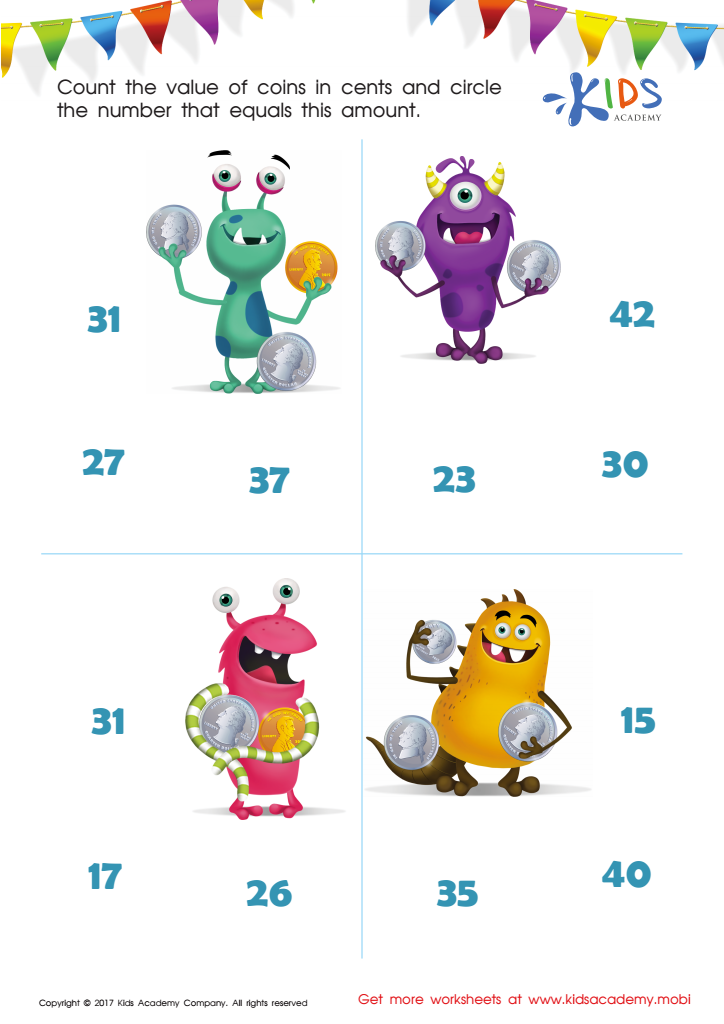
How Many Coins Money Worksheet
Have fun while counting coins: look at the monsters and count the coins in their hands. Challenge your little learners to count and write down the number of coins each one has. Enjoy the time together!
 Assign to My Students
How Many Coins Money Worksheet
Worksheet
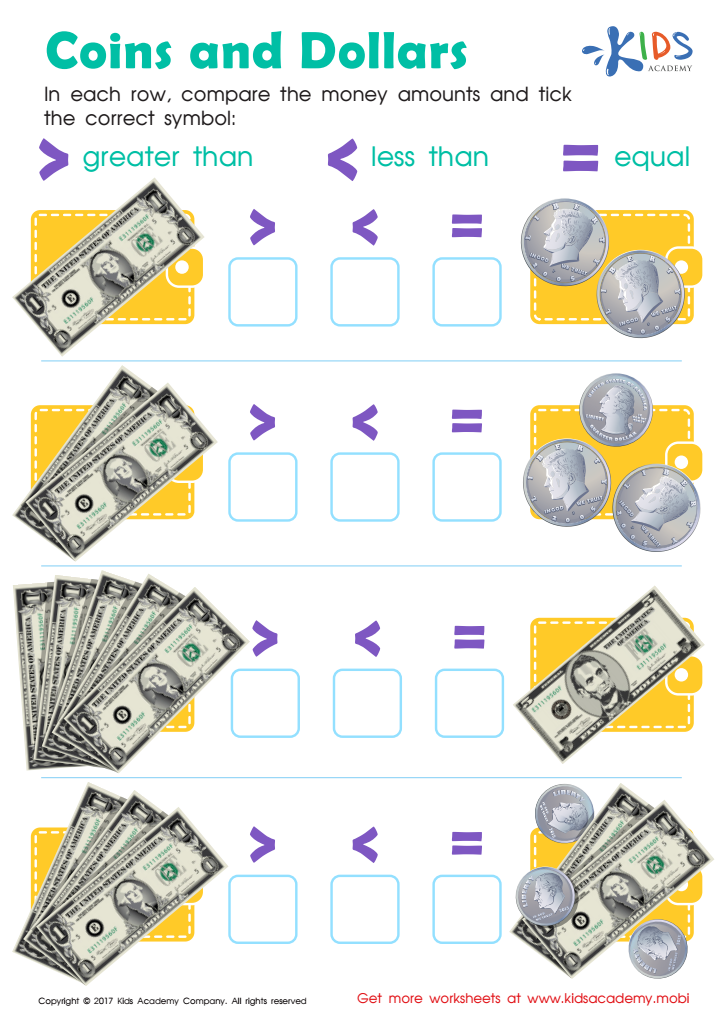
Money: Coins Dollars Printable
Motivate your kid to learn and practise essential math skills, like 'greater than' and 'less than', by introducing the importance of money! The money worksheet "Coins and Dollars" will give them a hands-on experience of counting coins and dollars, making math symbols more memorable.
Money: Coins Dollars Printable
Worksheet
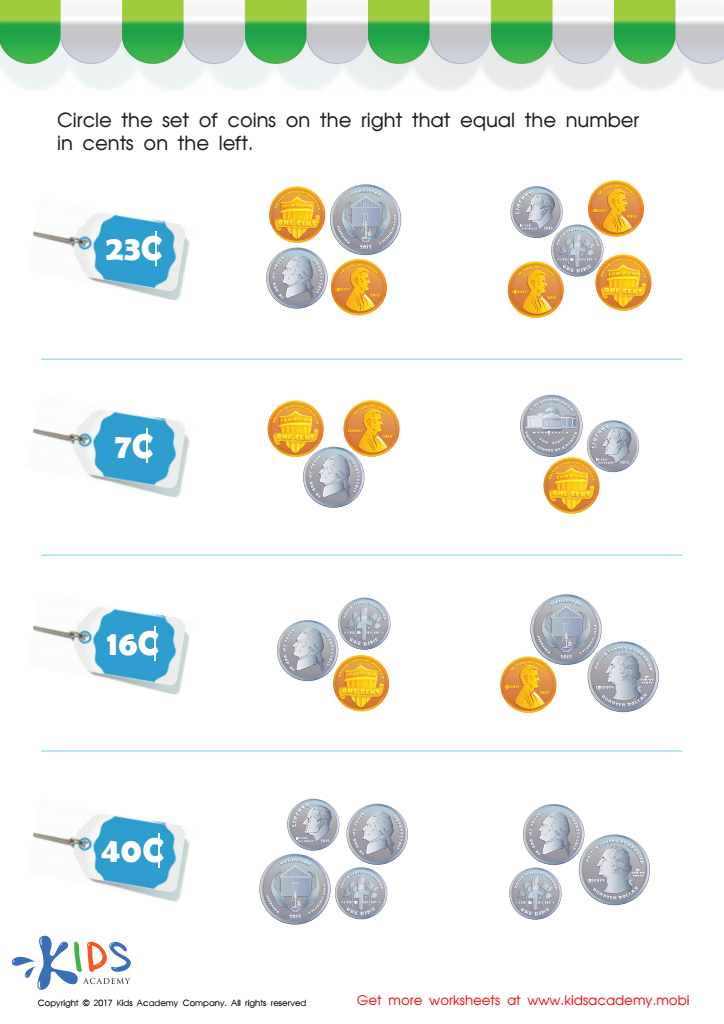
Picking the Coins You Need Money Worksheet
Let's learn to count money with Parents and Kids Academy! Investigate a real shop together: buy a globe, pencils, books, and a school bag using coins. Then, circle the coins you'll need. Visit our website for more free and fun money games for kids!
Picking the Coins You Need Money Worksheet
Worksheet
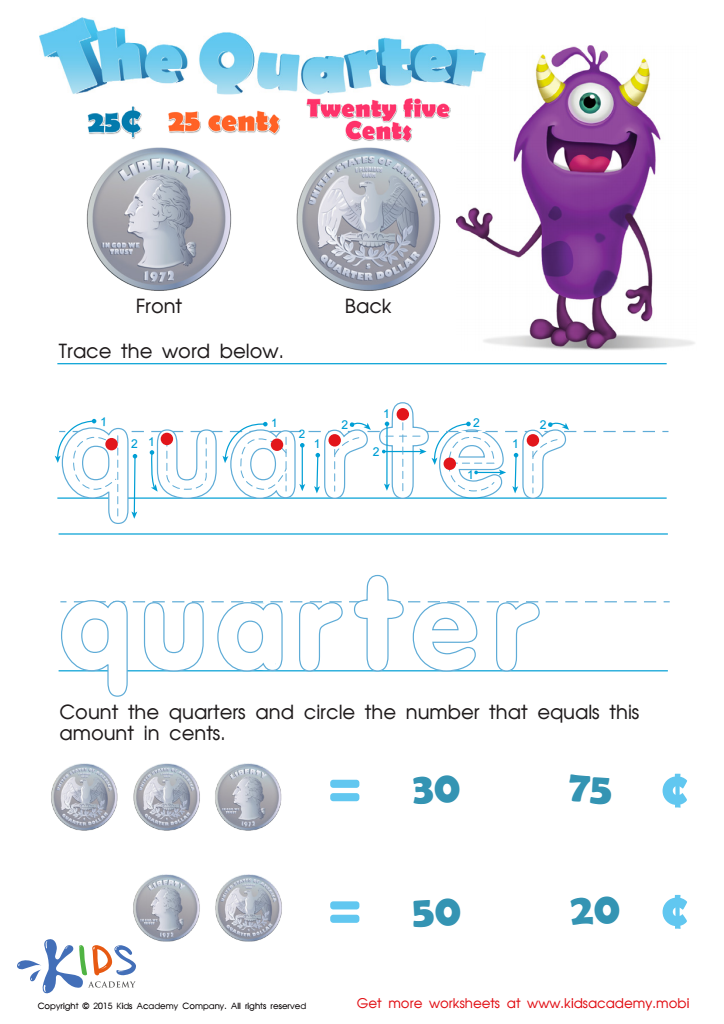
Twenty Five Cents or the Quarter Money Worksheet
Check out our new printable money games - learn to count money easily! With quarters, trace the word, count them and calculate the amount in cents. More worksheets at our website. Give it a try!
Twenty Five Cents or the Quarter Money Worksheet
Worksheet
Join Kids Academy for Free
Who is primarily going to use this learning content?








Counting practice with an extra challenge involving money is incredibly beneficial for 9-year-olds, making it something that parents and teachers should wholeheartedly support. At this developmental stage, children are honing their mathematical skills and can greatly benefit from practical and engaging activities. By incorporating money into counting exercises, kids gain important numeracy skills, expanding their understanding of addition, subtraction, multiplication, and even early division.
Handling money also reinforces real-world applications of math. Children learn to recognize different denominations, understand the value of coins and bills, and practice necessary life skills like making change and budgeting. This hands-on experience with currency fosters a greater connection to everyday math, promoting financial literacy from a young age.
Moreover, money-based counting activities can spark enthusiasm and curiosity about math, as they often seem more relevant and interesting than abstract numbers alone. Problem-solving and critical thinking skills are nurtured when children tackle practical scenarios, such as figuring out how much change they should receive or whether they have enough money to buy an item.
Investing time in money counting challenges reinforces both mathematical competence and practical life skills, laying a strong foundation for future financial responsibility and academic success. Thus, both parents and teachers have a vested interest in making these activities an integral part of a child's learning journey.








