Understanding patterns Extra Challenge Multiplication Worksheets for 9-Year-Olds
3 filtered results
-
From - To
Explore our "Understanding Patterns Extra Challenge Multiplication Worksheets" specifically designed for 9-year-olds! These engaging resources enhance multiplication skills by using patterns to deepen students' mathematical understanding. By identifying trends and applying them to solve challenging problems, children gain confidence and improve their problem-solving abilities. Our worksheets feature a variety of exercises that promote critical thinking, promote solid number sense, and make learning fun. Whether for in-class activities or homework reinforcement, these worksheets are perfect for young learners looking to advance their multiplication knowledge. Help your 9-year-old excel in math while enjoying the thrill of pattern discovery!
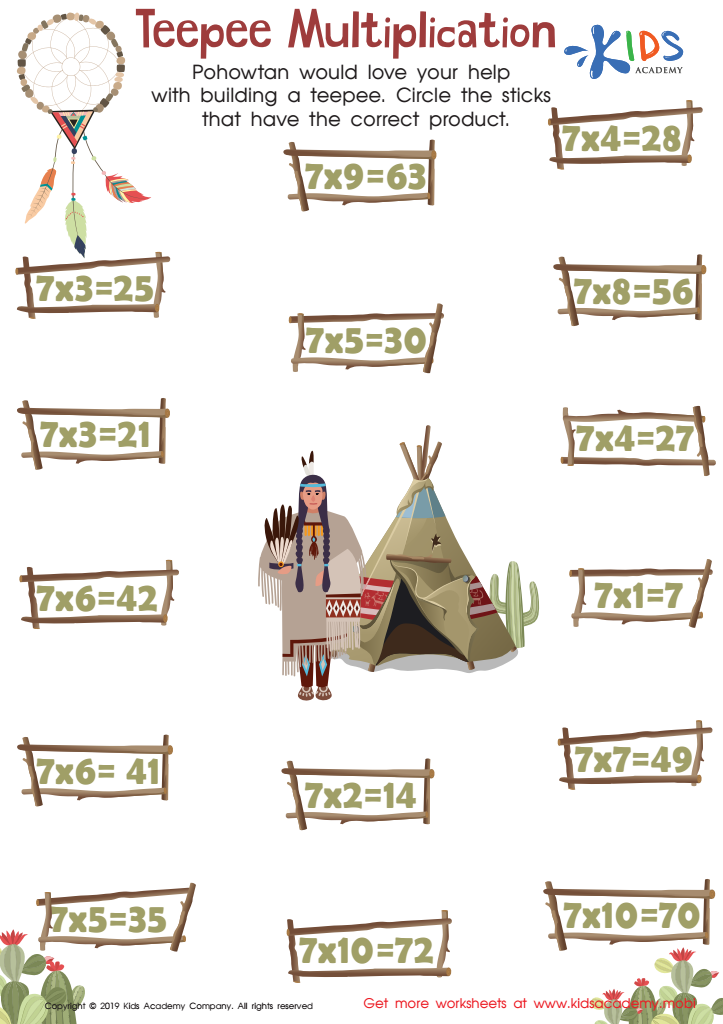
Teepee Multiplication Worksheet
 Assign to My Students
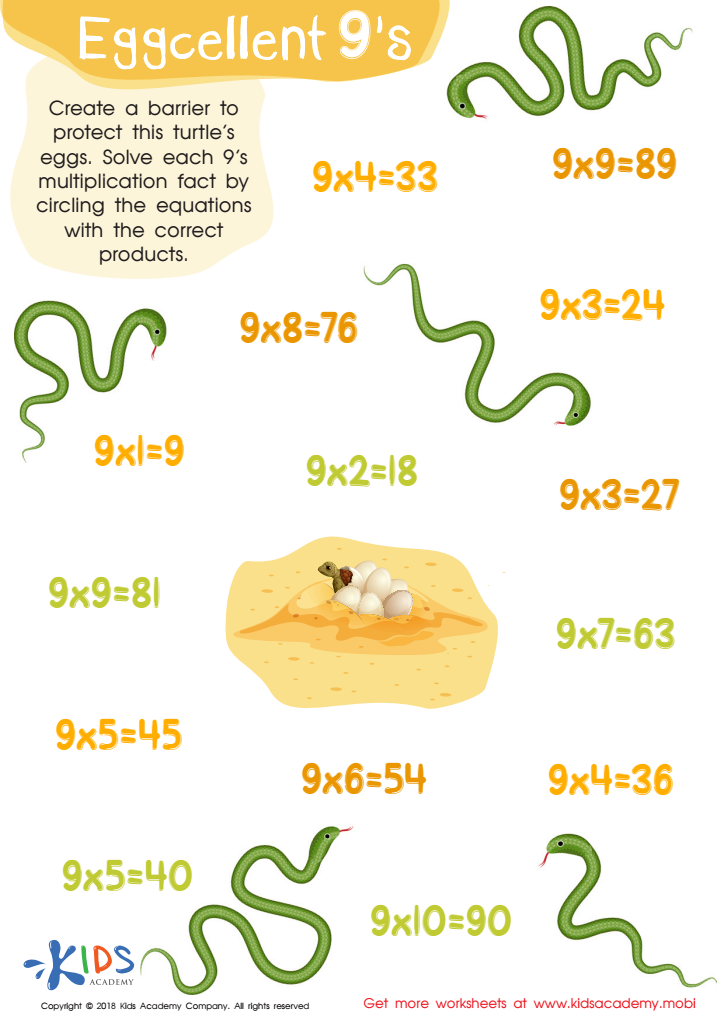
Eggcellent 9’s Worksheet
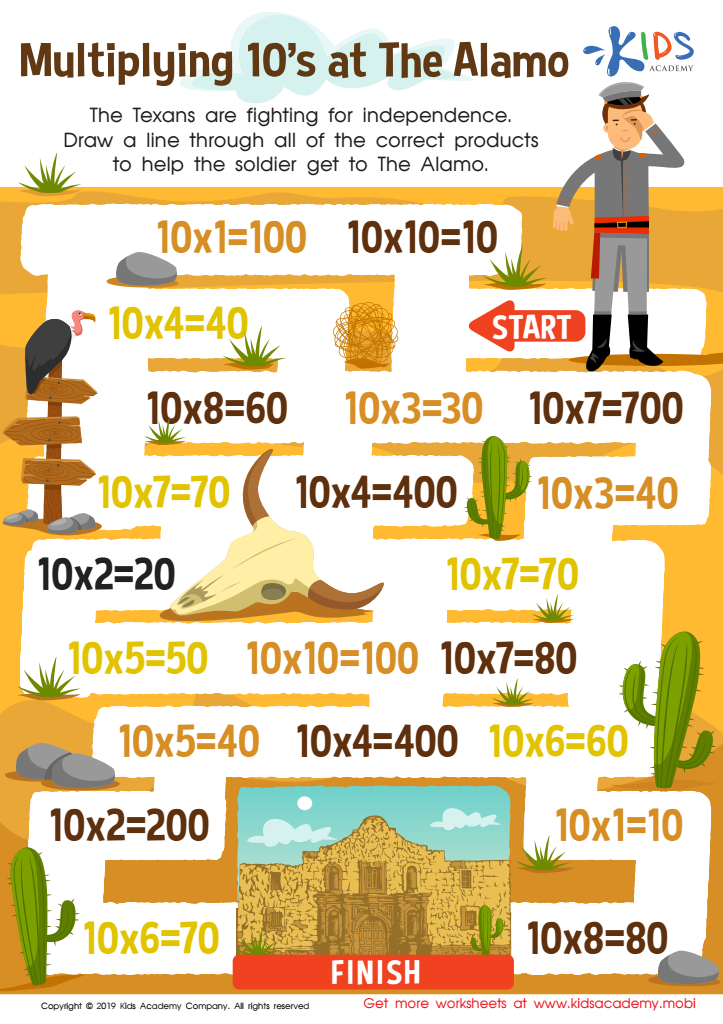
Multiplying 10’s at The Alamo Worksheet








Understanding patterns is a fundamental aspect of mathematics, especially for 9-year-olds who are beginning to engage more deeply with numbers and operations like multiplication. Parents and teachers should prioritize this skill for several reasons.
First, pattern recognition improves problem-solving skills. By identifying numerical patterns such as skip counting or recognizing repetitive multiplication facts, children develop a shortcut to calculations and enhance their mathematical fluency. This foundational skill prepares them for more complex concepts in algebra and geometry.
Second, recognizing patterns can boost a child’s confidence in math. When students can see relations among numbers and make predictions based on those patterns, they feel empowered to tackle more challenging problems, fostering a positive attitude toward mathematics.
Additionally, understanding patterns supports critical thinking and adaptability. As children encounter different math problems, recognizing underlying patterns helps them strategize and apply previously learned skills in new contexts.
Lastly, mastery of multiplication through patterns can lead to greater overall academic success. Multiplication is a critical skill that impacts various subjects, including science and economics. By emphasizing understanding patterns, parents and teachers lay a strong foundation for lifelong learning and healthy mathematical habits.