Spelling practice Extra Challenge Short Vowels Worksheets
3 filtered results
Difficulty Level
Grade
Age
-
From - To
Subject
Activity
Standards
Welcome to our "Spelling Practice Extra Challenge Short Vowels Worksheets" page! Designed for early grade students, these engaging worksheets aim to reinforce short vowel recognition through fun spelling challenges. Each activity focuses on enhancing phonemic awareness while students practice vowel sounds and word formation. Our extra challenge worksheets are perfect for reinforcing learning at home or in the classroom, providing targeted practice to build confidence in spelling skills. With colorful illustrations and diverse exercises, kids will love honing their abilities while enjoying the process. Explore our resource to make learning spelling a fun and interactive experience today!
Favorites
With answer key
Interactive
Short Vowel Sound I Worksheet
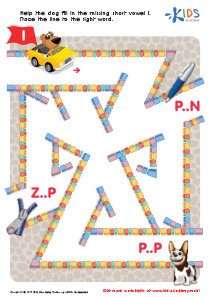
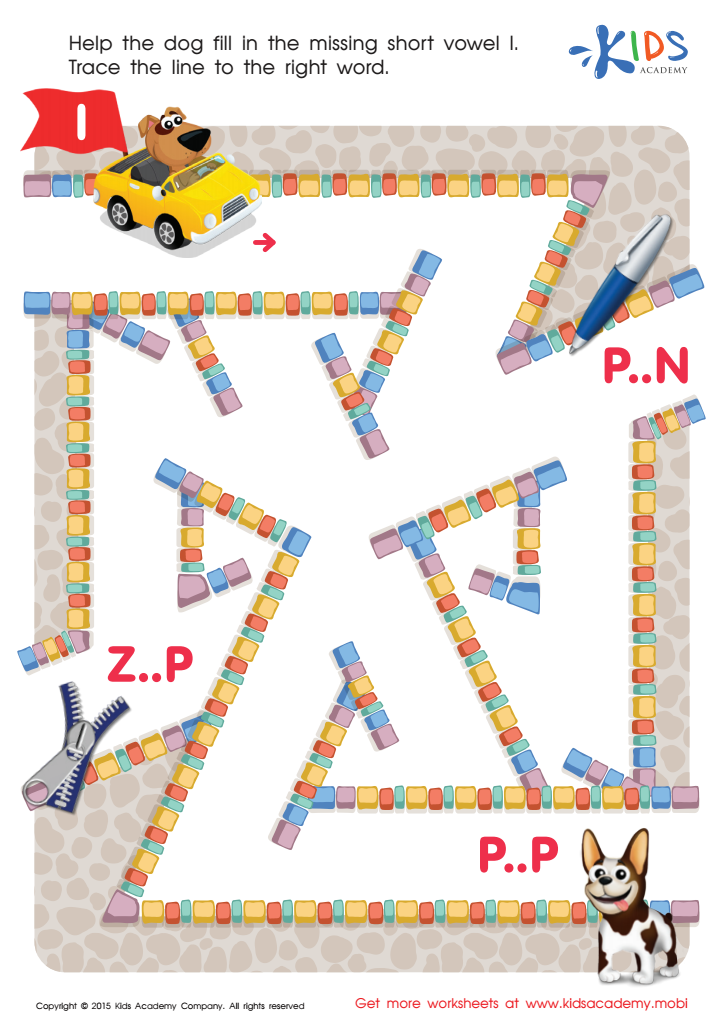
This free printable phonics worksheet will get your kid prepped for reading! It's a maze to help the dog complete the word “zip” with the missing letter I. Have your kid say the word aloud to learn the I sound. It's a great way to practice reading, writing and spelling skills. Check out here for more phonics worksheets!
 Assign to My Students
Short Vowel Sound I Worksheet
Worksheet
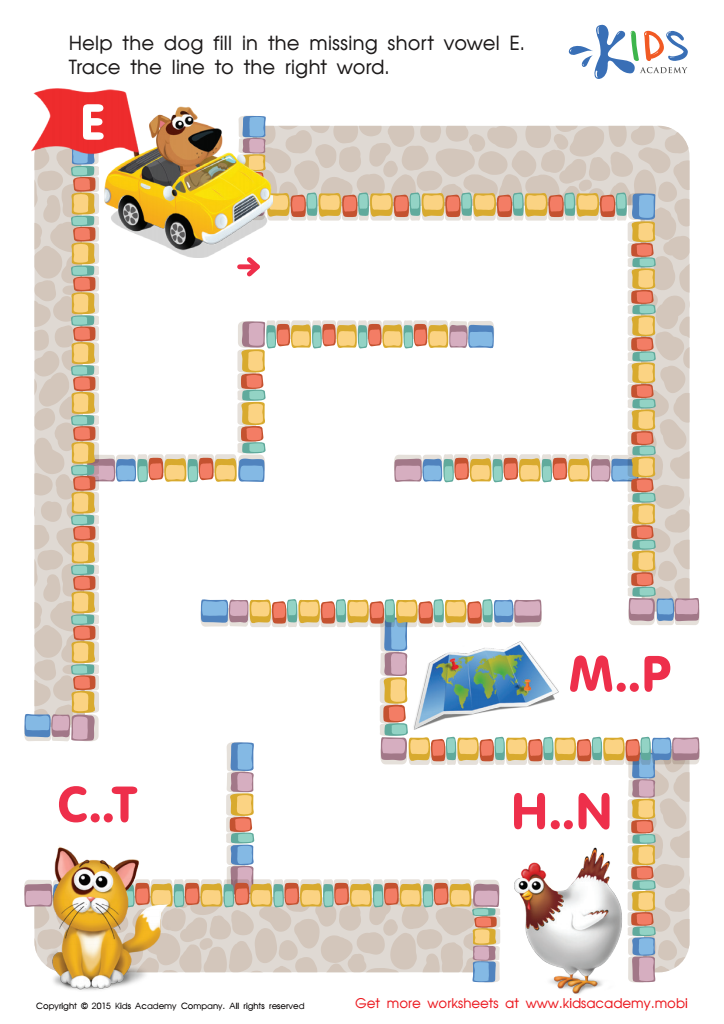
Short Vowel Sound E Worksheet
This free printable phonics worksheet helps kids learn the short vowel sound E. Kids need to help the dog complete the word “hen” by finding their way through a maze. It teaches kids to see the connection between letters and sounds and also strengthens their writing and spelling skills. Fun and educational, this phonics worksheet is great for kids. Want more? Check out here.
Short Vowel Sound E Worksheet
Worksheet
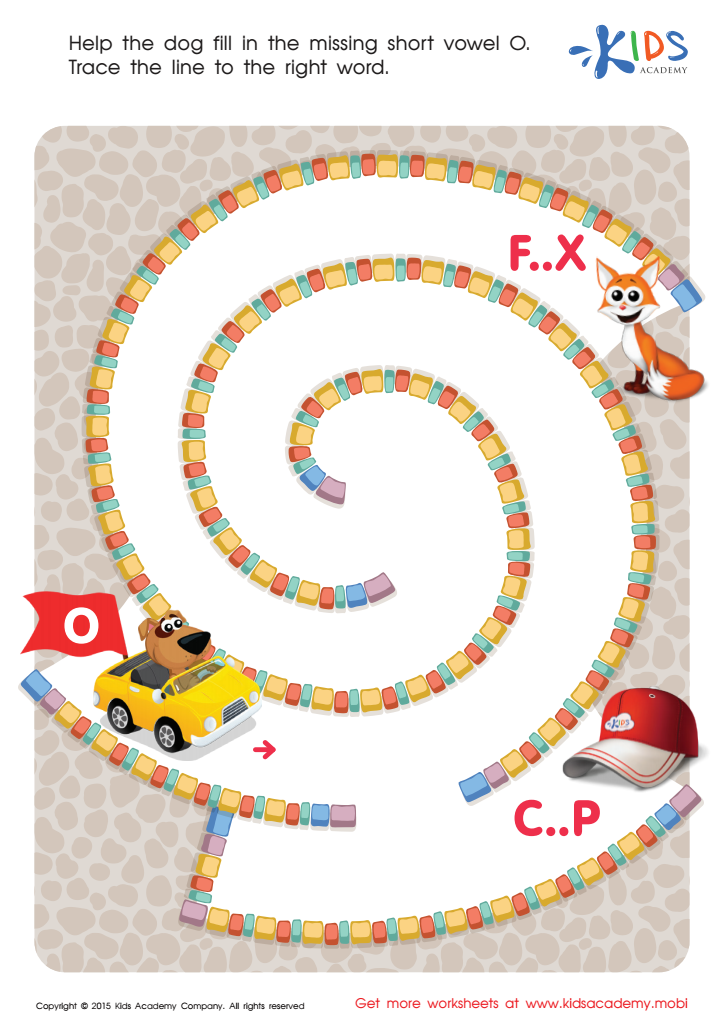
Short Vowel Sound O Worksheet
Help your child learn the short vowel sound O with this fun and free printable phonics worksheet! They'll need to complete the maze to help the dog finish the word "fox" with the missing letter O. Engage their fine motor muscles while they color or trace the maze with crayon or pencil. This educational activity is sure to bring a smile to your little learner's face! For more phonics worksheets, check here.
Short Vowel Sound O Worksheet
Worksheet
Join Kids Academy for Free
Who is primarily going to use this learning content?



Spelling practice, particularly with short vowels, is essential for early learners as it lays the foundation for successful reading and writing. Short vowels are integral components of the English language; they appear in many frequently used words. When children become adept at spelling these sounds, it enhances their decoding skills, contributing to fluency in reading.
By focusing on short vowels, parents and teachers help children develop phonemic awareness, a crucial skill that allows them to understand sound patterns and make connections between letters and sounds. This understanding removes barriers in reading comprehension, promoting more confidence and enjoyment in literacy activities.
Furthermore, practice with short vowels fosters critical thinking and problem-solving skills, as children learn to identify and manipulate sounds, leading to better overall language development. Mastering spelling through engaging activities or extra challenges encourages a love for learning while reinforcing cooperation between home and school.
Investing time in spelling practice with short vowels enriches children’s vocabulary, aids in their academic success, and nurtures their lifelong learning habits. Ultimately, stakeholders in a child’s education, including parents and teachers, should address this vital aspect to support their overall linguistic development. The sooner these skills are developed, the stronger their future literacy competence will be.