Letter recognition Extra Challenge Kindergarten English for Beginners Worksheets
7 filtered results
Difficulty Level
Grade
Age
-
From - To
Subject
Activity
Standards
Enhance your kindergarteners' letter recognition skills with our Extra Challenge Worksheets designed for English beginners! These engaging and interactive worksheets provide young learners with the opportunity to identify, trace, and practice both uppercase and lowercase letters. Our thoughtfully crafted activities cater to diverse learning styles, fostering a deeper understanding of letter formation and sounds. Perfect for extra practice at home or in the classroom, these worksheets reinforce essential skills while keeping children motivated. Exploring the alphabet has never been so fun! Access our variety of worksheets today and give your little learners the boost they need for a successful language journey.
Favorites
With answer key
Interactive
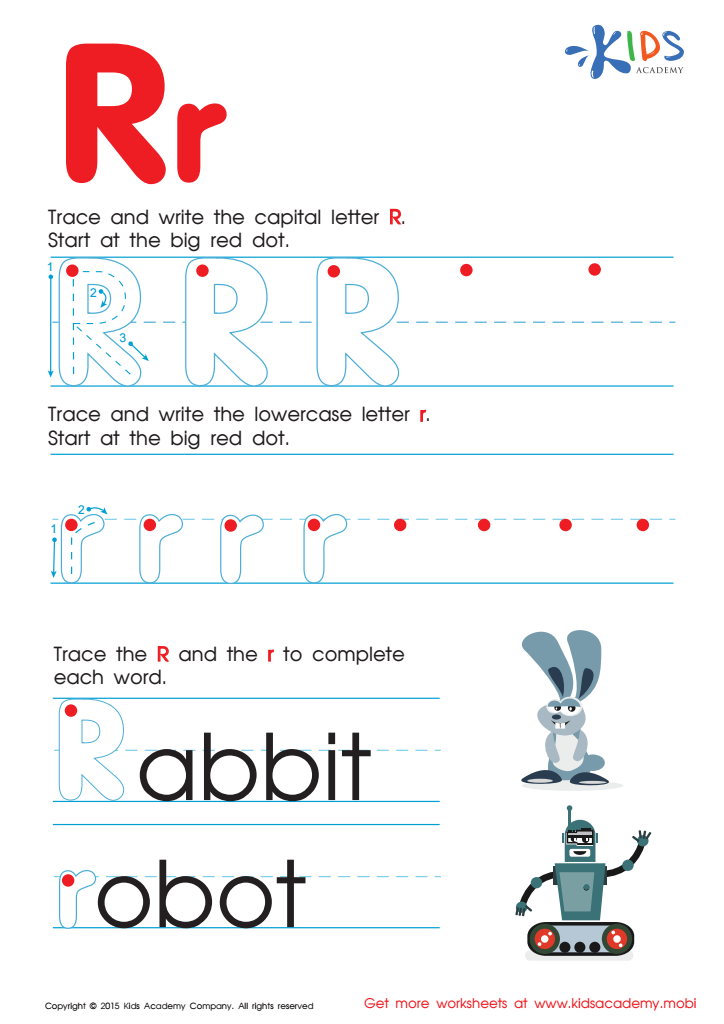
Letter R Tracing Page
Trace and write the letter "R" with this worksheet for kindergarten. Start with the uppercase, then move on to the lowercase. Write the letters several times for practice. Then help complete the words for the rabbit and robot, spelling carefully. More ABC worksheets can be found at Kids Academy.
 Assign to My Students
Letter R Tracing Page
Worksheet
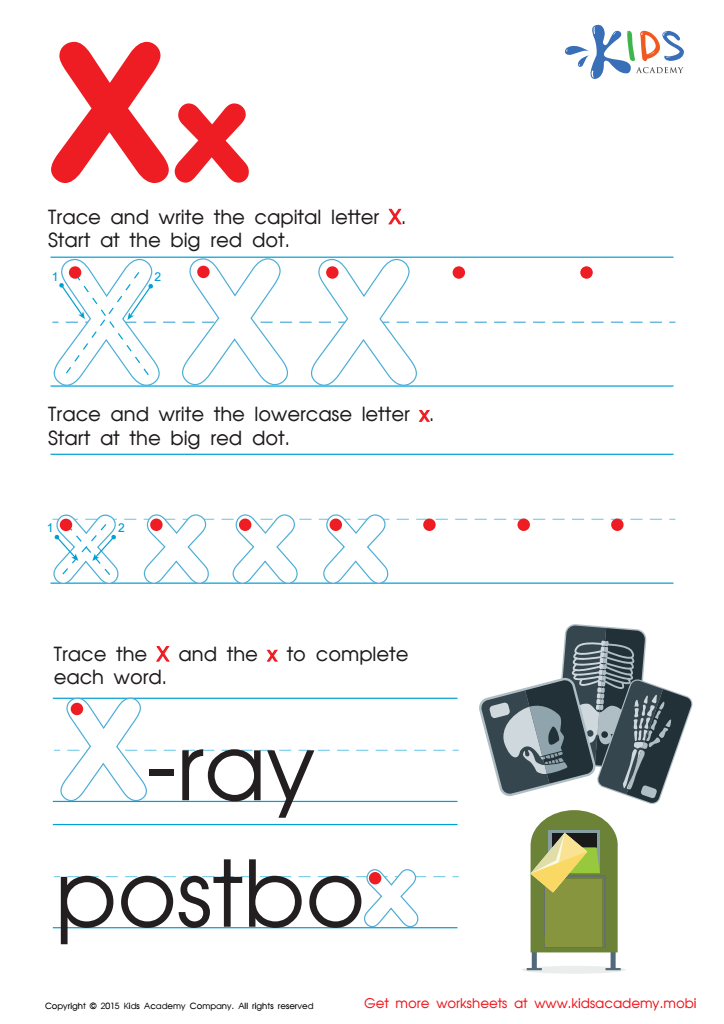
Letter X Tracing Page
Trace the uppercase letter "X" to learn, then write it yourself and practice. Then do the same with the lowercase "x" before completing the words "X-ray" and "postbox". Enjoy our alphabet printables!
Letter X Tracing Page
Worksheet
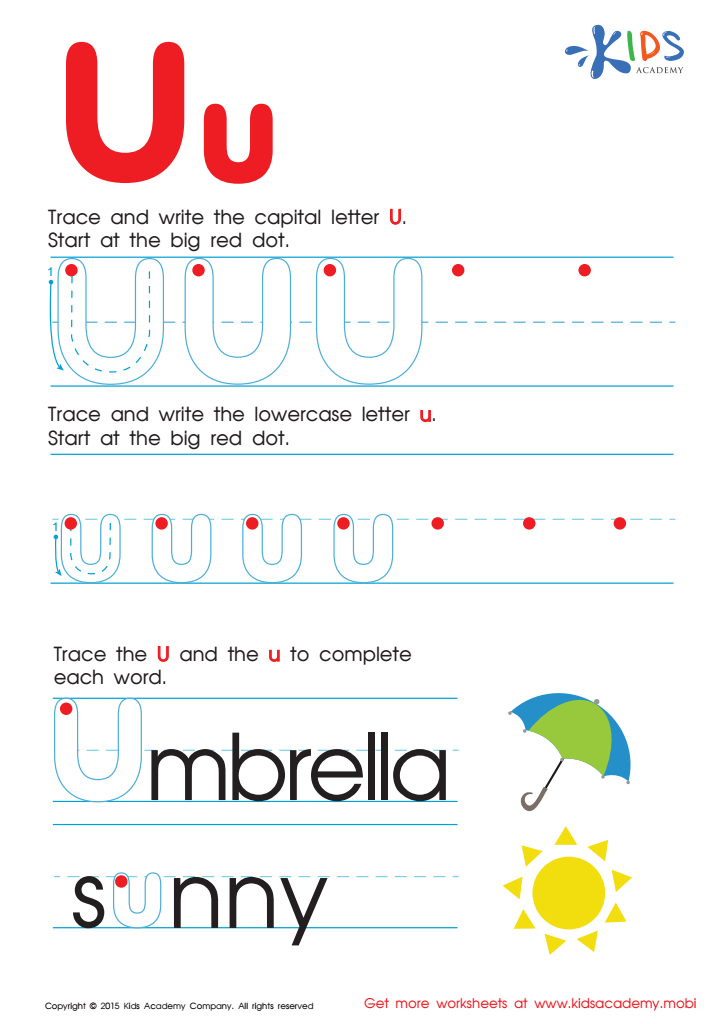
Letter U Tracing Page
Ready to trace and write the letter "U"? Use our worksheet and practice tracing both uppercase and lowercase letters. Complete the words "umbrella" and "sunny" with a capital "U". Check our full collection of alphabet printables for more activities.
Letter U Tracing Page
Worksheet
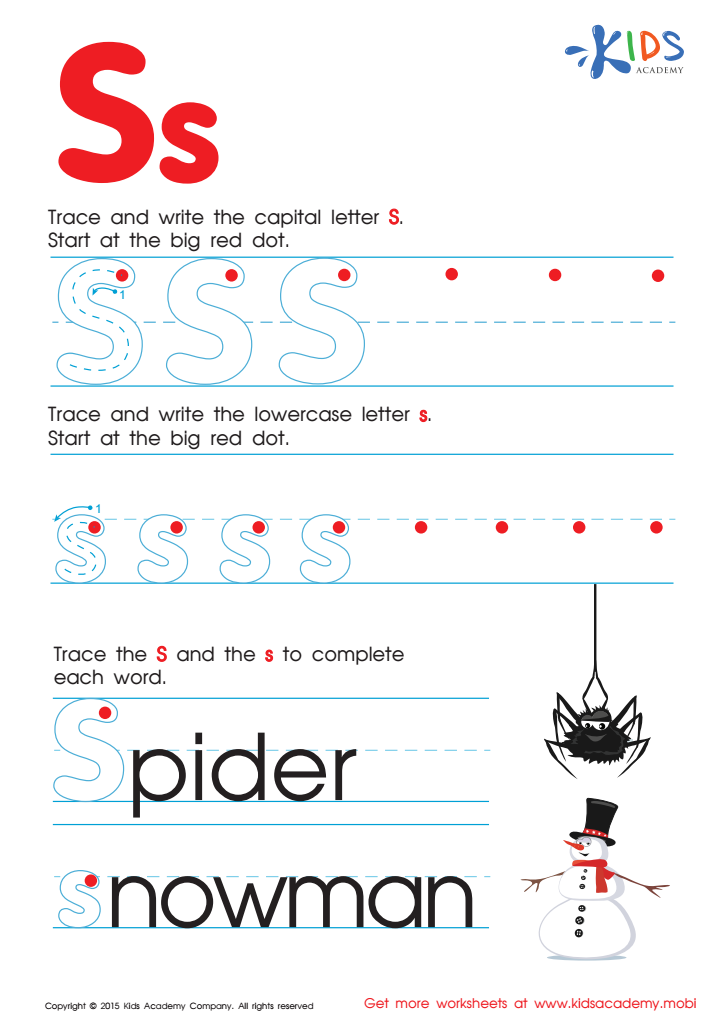
Letter S Tracing Page
Trace and write the capital and lowercase "S" on this ABC worksheet for kindergarten. Start with the big red dot and be careful. When you finish, help the spider and snowman in the pictures restore their words with the capital and lowercase letters. Continue learning the alphabet with Kids Academy.
Letter S Tracing Page
Worksheet
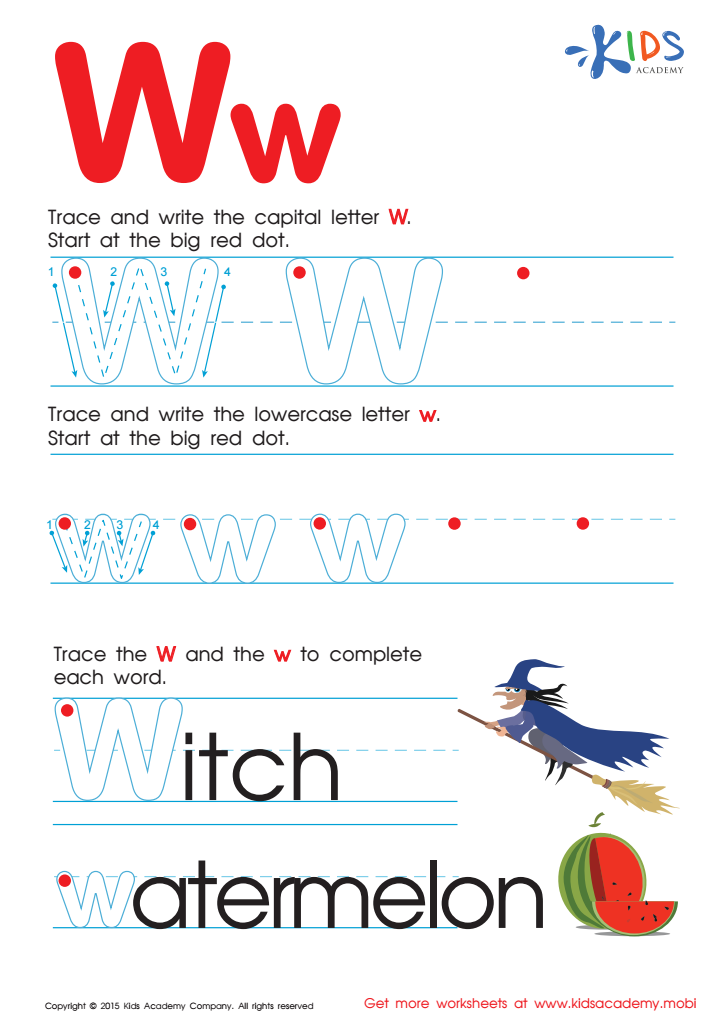
Letter W Tracing Page
Trace and write the capital and lowercase letter W with this free letter tracing worksheet by Kids Academy. Complete the words "Witch" (capital) and "watermelon" (lowercase). Check out our other kindergarten alphabet worksheets!
Letter W Tracing Page
Worksheet
Letter V Tracing Page
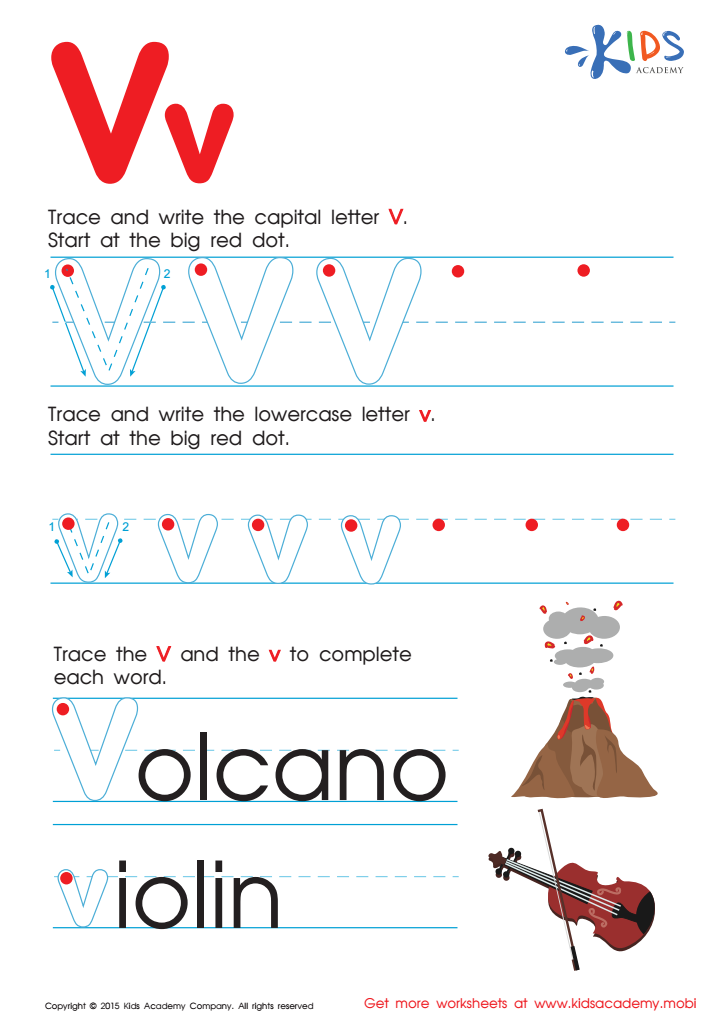
Trace the uppercase and lowercase letter "V" with our kindergarten tracing worksheet. Begin at the red dot and follow the lines. Write it several times. Complete the words "Volcano" and "violin". Get more alphabet activities at Kids Academy.
Letter V Tracing Page
Worksheet
Letter T Tracing Page
Trace letters, complete words, draw pictures and see your kids having fun!
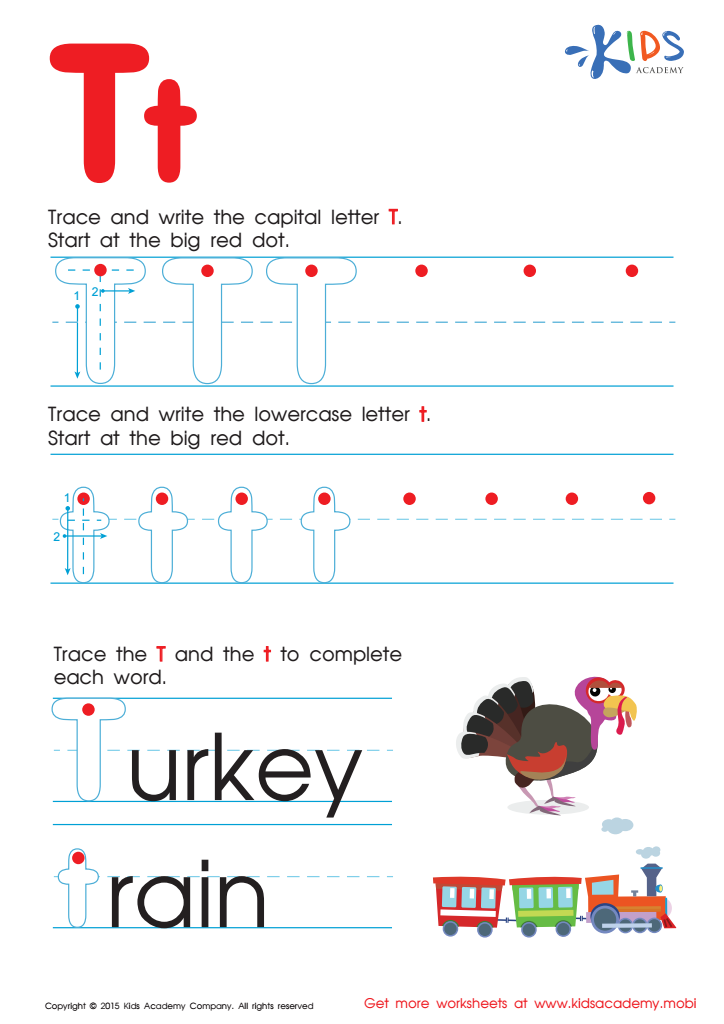
Kids Academy offers alphabet tracing worksheets to learn to write letters. Start with the big red dot, trace the letter, then write it. Practice uppercase and lowercase. Have fun completing words with a Turkey or a rain-train and draw pictures. Get more printable worksheets to make learning enjoyable.
Letter T Tracing Page
Worksheet
Join Kids Academy for Free
Who is primarily going to use this learning content?



Letter recognition is a foundational skill for young learners, particularly in Kindergarten and for beginners in English. Parents and teachers should care about this essential developmental milestone because it lays the groundwork for reading and writing, two key components of literacy. When children can recognize letters, they begin to understand that these symbols represent sounds and ideas, enabling them to form words and sentences.
Moreover, letter recognition promotes language development and cognitive skills. It fosters phonemic awareness, helping children to hear and manipulate sounds which is crucial for spelling and reading fluency. Engaging young learners in activities that involve letter recognition not only supports their academic growth but also boosts their self-confidence as they start recognizing words in their environment.
Additionally, for English language learners, early letter recognition provides vital support in navigating a new language. This process helps bridge the gap between spoken and written language, allowing children to express themselves with increasing ease. Engaging in activities that challenge letter recognition, such as games and interactive exercises, adds a fun and rewarding dimension to learning, ensuring that children remain motivated and excited about their literacy journey. In summary, supporting letter recognition is crucial for successful reading and writing in a child’s educational experience.