Understanding currency Extra Challenge Kindergarten Worksheets
3 filtered results
Difficulty Level
Grade
Age
-
From - To
Subject
Activity
Standards
Enhance your child's financial literacy with our "Understanding Currency Extra Challenge Kindergarten Worksheets." Specifically designed for young learners, these engaging activities help children recognize and understand the value of different coins and bills. With a focus on real-world applications, the worksheets introduce basics of cost, savings, and spending, fostering essential math and critical thinking skills. Perfect for classroom use or at-home practice, the extra challenges keep young minds stimulated and encouraged. Equip your kindergartner with a solid foundation in money management through fun and interactive learning, setting the stage for a financially-savvy future.
Favorites
With answer key
Interactive
Counting Coins Worksheet
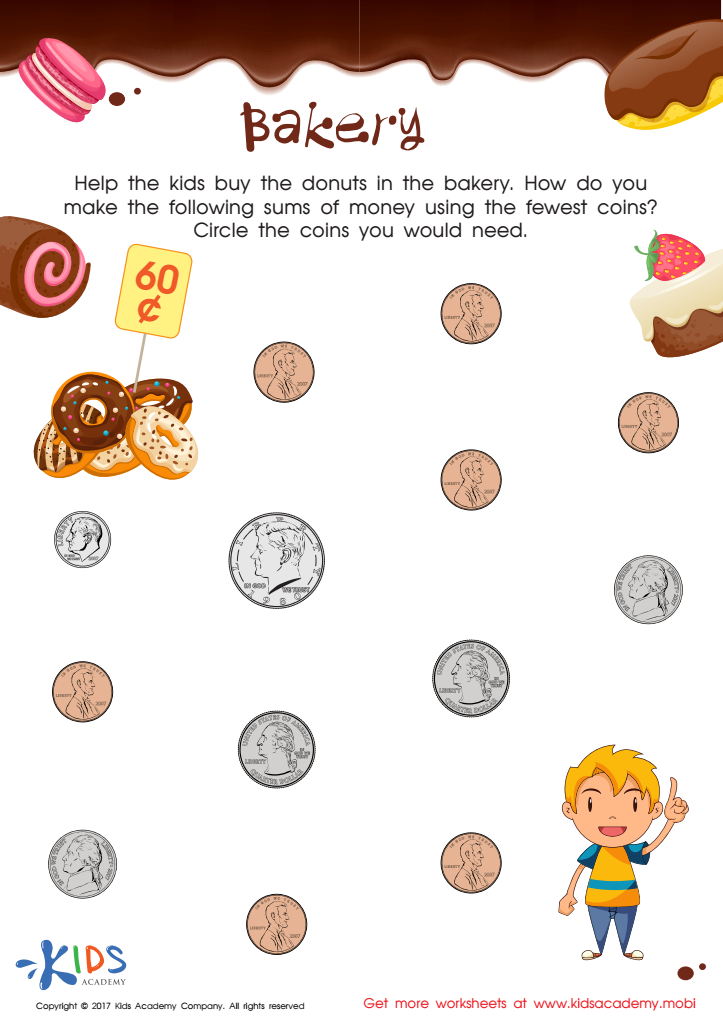
It will challenge them to spend a given amount using the least coins possible. Perfect for 2nd grade.
Help your child learn to count coins with this fun bakery-themed worksheet. It's perfect for 2nd graders and will challenge them to use the least coins possible to spend a set amount. Develop a valuable life skill and have fun while doing it!
 Assign to My Students
Counting Coins Worksheet
Worksheet
Five Cents or the Nickel Money Worksheet
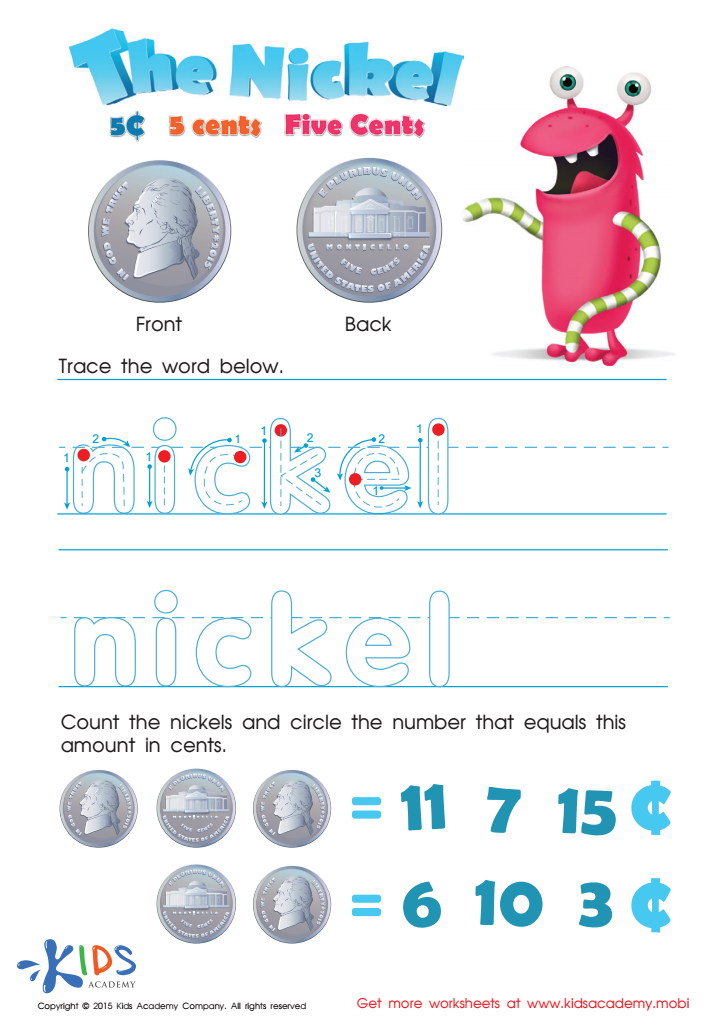
Counting money games help kids make learning money fun and easy. Next up: the 5 cent coin, or nickel. Look at both sides and remember them. Then, trace the word "nickel" to help you remember. Finally, count the nickels and work out amounts in cents. Let's do this! Kids Academy helps make money learning easy and fun!
Five Cents or the Nickel Money Worksheet
Worksheet
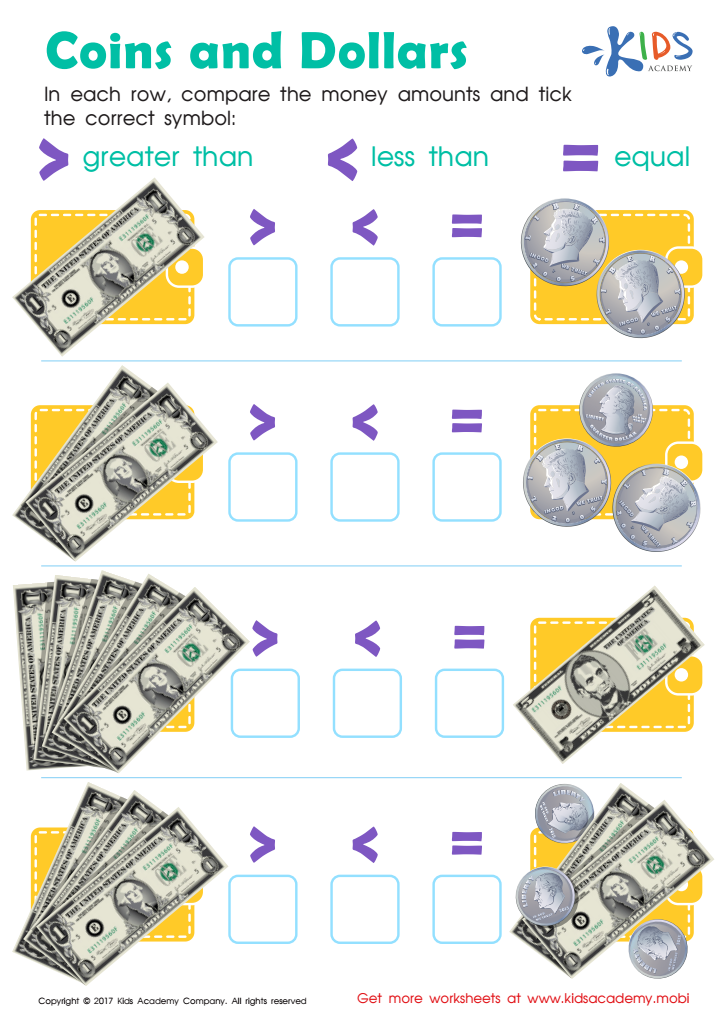
Money: Coins Dollars Printable
Motivate your kid to learn and practise essential math skills, like 'greater than' and 'less than', by introducing the importance of money! The money worksheet "Coins and Dollars" will give them a hands-on experience of counting coins and dollars, making math symbols more memorable.
Money: Coins Dollars Printable
Worksheet
Join Kids Academy for Free
Who is primarily going to use this learning content?


.jpg)



.jpg)
Understanding currency is a fundamental skill that sets the foundation for financial literacy, which is crucial for young learners' future independence and success. Introducing currency concepts in kindergarten ensures children become comfortable with money early on, facilitating easier comprehension as they grow.
For parents and teachers, this early education offers several key benefits. Firstly, it stimulates cognitive development by involving basic math skills like counting, addition, and subtraction. These numeracy skills are essential for academic success and everyday problem-solving. Besides math, handling currency questions also develops critical thinking and decision-making abilities as children learn to make simple transactions and budget for small items.
Moreover, an extra challenge in understanding currency at a kindergarten level encourages curiosity and engagement with the world around them. It helps children recognize the value of money and understand its role in transactions, fostering an introductory sense of economic responsibility. This awareness is significant in cultivating responsible spending habits and avoiding financial pitfalls later in life.
Additionally, a solid grasp of currency can boost self-confidence, providing a sense of accomplishment and independence. When children know how to count and manage money, even in simple forms, they feel empowered, reinforcing a positive attitude towards learning and problem solving.
In essence, teaching currency at a young age lays crucial groundwork for both academic and life skills, forming a crucial aspect of holistic early childhood development.