Writing practice Extra Challenge Kindergarten Worksheets
4 filtered results
Difficulty Level
Grade
Age
-
From - To
Subject
Activity
Standards
Introducing "Writing Practice Extra Challenge Kindergarten Worksheets" – the perfect resource for young learners ready to take their writing adventures to the next level! These engaging, meticulously designed worksheets from Kids Academy aim to challenge kindergarten students by enhancing their writing skills. Each worksheet features fun and diverse exercises that bolster letter formation, fine motor skills, and word recognition. Ideal for classroom or home use, these printables provide an excellent opportunity for children to build confidence in their writing abilities while enjoying the learning process. Empower your kindergartner with effective writing practice that makes mastering early literacy a delightful experience!
Favorites
With answer key
Interactive

Letter A Tracing Page
Trace and write the letter "A"! Start with the big red dot, then do the capital and lowercase versions. Then write it again with two words - apple and alligator. Download more tracing worksheets at Kids Academy.
Letter A Tracing Page
Worksheet
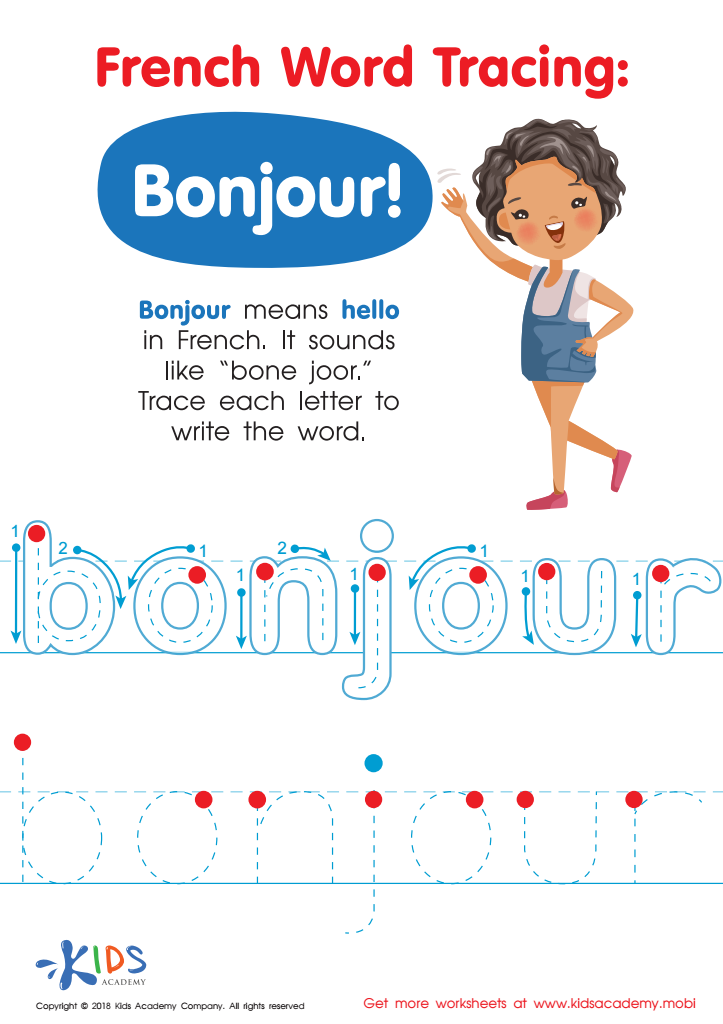
French Word Tracing: Bonjour Worksheet
Students can learn about culture and practice writing and saying "Bonjour" using the traceable lines. Guide dots support top-to-bottom patterning and left-to-right reading/writing. It's an ideal introduction to different greetings and connecting as global citizens.
French Word Tracing: Bonjour Worksheet
Worksheet
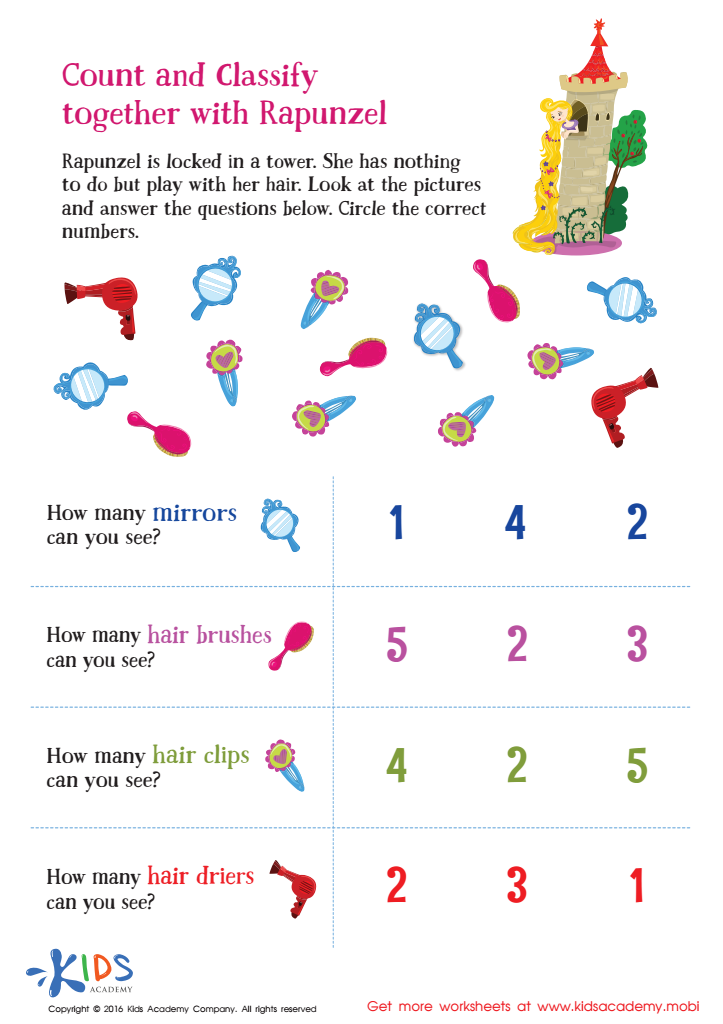
Fairy Tale Worksheet: Count and Classify with Rapunzel
Get printing and shine a light on your pre-math skills!
Fairy Tale Worksheet: Count and Classify with Rapunzel
Worksheet
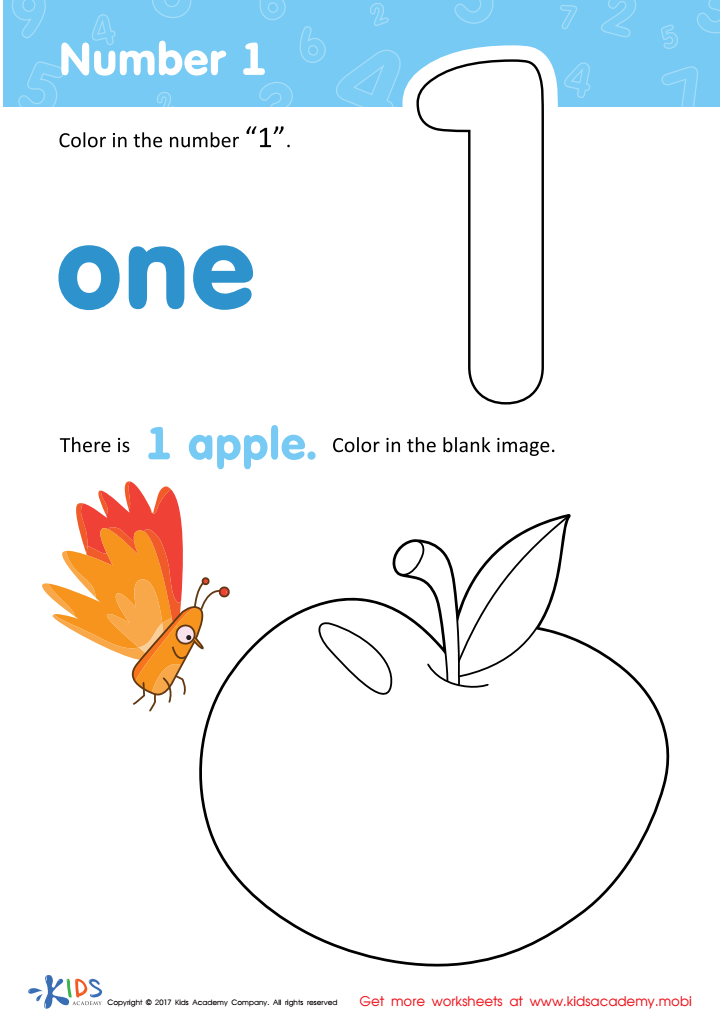
Number 1 Printable
An apple a day keeps the doctor away, but this coloring page can keep your child and the preschool teacher happy, too! Teach them to recognize numeracy with this cute page, featuring number 1!
Download (PDF)
 Assign to My Students
Assign to My Students
Number 1 Printable
Worksheet
Join Kids Academy for Free
Who is primarily going to use this learning content?








Parents and teachers should care about Writing Practice Extra Challenge for Kindergarten because early writing skills form the foundation for effective communication and academic success. Introducing writing challenges at this stage helps young children develop fine motor skills, which are essential for holding and controlling a pencil. Additionally, practicing writing enhances their hand-eye coordination and spatial awareness.
Writing practice also boosts cognitive development, as children learn to recognize patterns, letters, and words. They begin to understand the connection between spoken and written language, which is crucial for reading skills. Furthermore, engaging with writing tasks improves their ability to concentrate and follow instructions, fostering better attention and discipline.
By incorporating extra challenges, educators and parents can cater to the varying skill levels within a kindergarten class, ensuring that more advanced students remain engaged and are not held back. These challenges can stimulate creativity, encourage problem-solving, and instill a sense of accomplishment in young learners.
Moreover, consistent writing practice is aligned with early literacy standards and prepares children for future academic requirements. It also promotes self-expression and can boost their confidence as they share their thoughts and ideas effectively. Thus, prioritizing writing practice in kindergarten sets a strong educational foundation and nurtures lifelong skills.