Comparing sizes Extra Challenge Kindergarten Math Worksheets
3 filtered results
-
From - To
Enhance your kindergarteners' math skills with our "Comparing Sizes Extra Challenge Worksheets." Designed to boost critical thinking, these engaging worksheets provide students with the opportunity to practice comparing various object sizes, honing their observation and reasoning abilities. Through fun activities, they will learn to identify which items are bigger, smaller, taller, or shorter, fostering a solid foundation in measurement concepts. Perfect for extra practice at home or in the classroom, these worksheets stimulate curiosity and encourage independent learning. Join us in making math enjoyable and accessible for young learners, paving the way for confident future mathematicians! Explore our resources today!
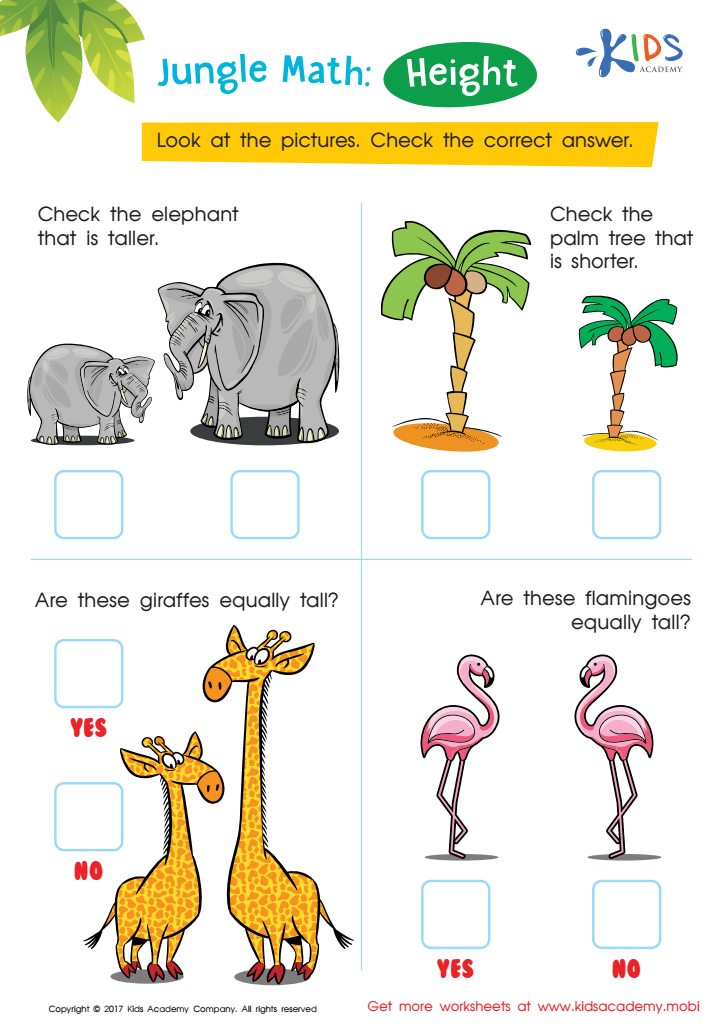
Which Is Taller Worksheet
 Assign to My Students
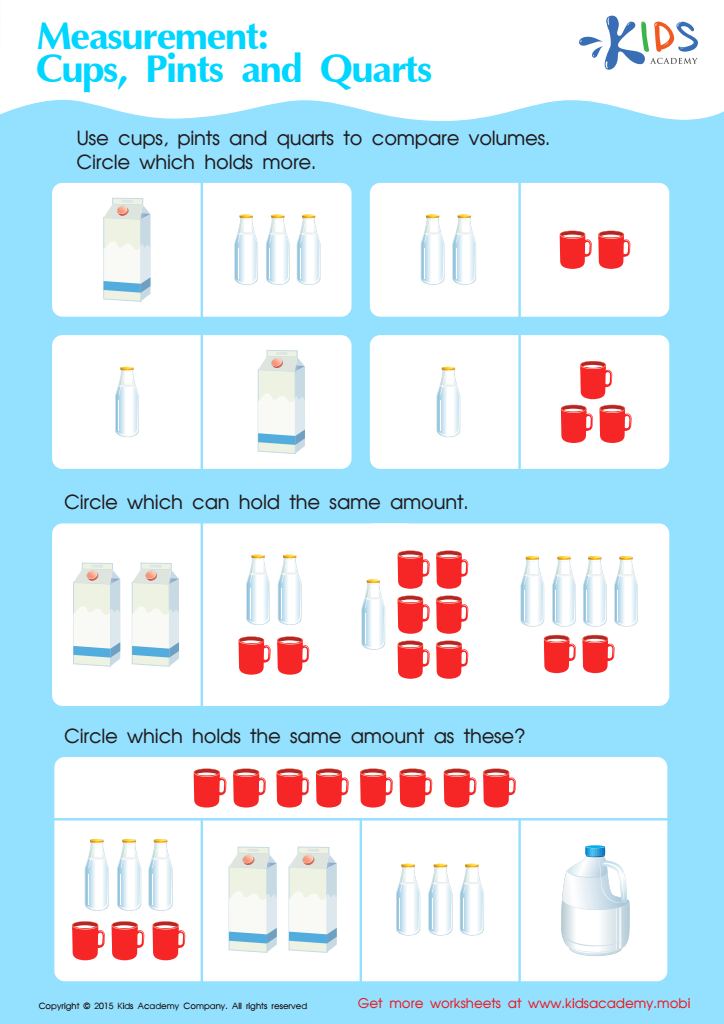
Measurement: Compare Volumes Worksheet
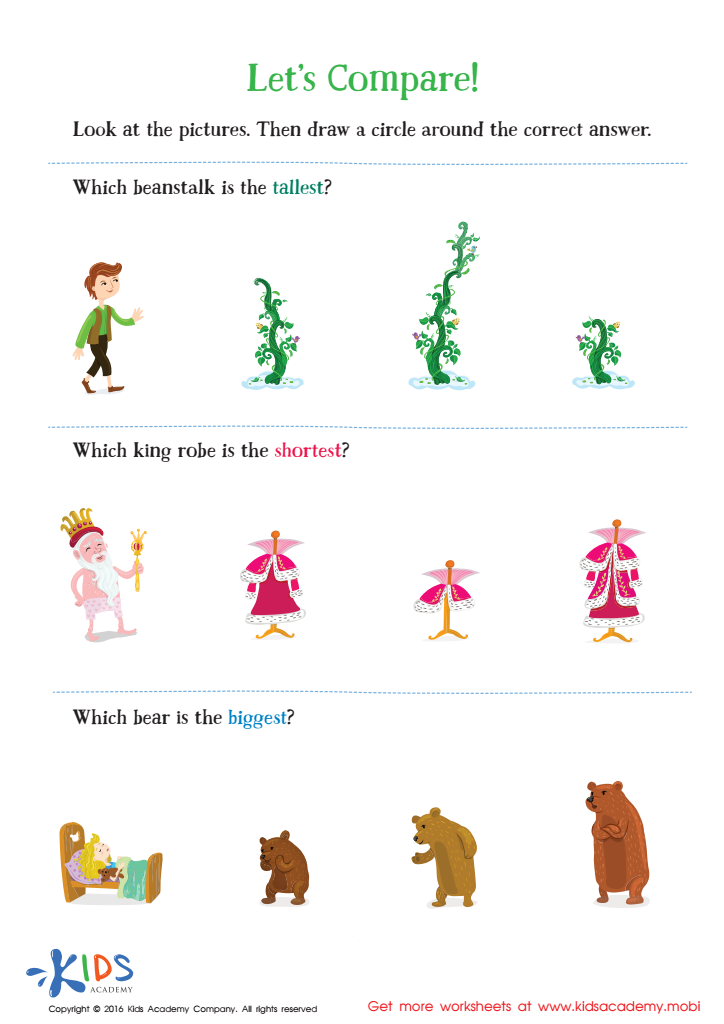
Fairy Tale Worksheet: Let's Compare







Comparing sizes is a crucial skill for kindergarten students that lays the foundation for future mathematical understanding. Parents and teachers should care deeply about this Extra Challenge in math for several reasons.
Firstly, it helps children develop logical thinking and problem-solving skills. By comparing sizes, they learn to observe and discuss attributes, fostering critical analytical skills that are essential in everyday situations. This comparative practice also strengthens their vocabulary as they learn terms like "greater than," "less than," and "equal to".
Furthermore, comparing sizes is a gateway to more advanced mathematical concepts, such as measurement and number sense. Understanding relationships between objects prepares students for later success in mathematics and supports their overall cognitive development.
In addition, engaging with size comparison activities provides opportunities for hands-on learning. It encourages sensory exploration and physical engagement, making learning more memorable and enjoyable. This approach also highlights the importance of teamwork and communication as students compare sizes, share insights, and assist one another.
In essence, fostering skills in comparing sizes contributes to a comprehensive educational experience that benefits children academically, socially, and emotionally, and empowers them for future learning challenges.