Subtraction practice Extra Challenge Kindergarten Word Problems Worksheets
3 filtered results
-
From - To
Boost your kindergarten students' math skills with our "Subtraction Practice Extra Challenge Work Problems Worksheets." Designed to engage young learners, these worksheets feature real-world scenarios that make subtraction fun and relatable. Each problem encourages critical thinking as students solve various challenges, promoting comprehension and number sense. Teachers and parents can utilize these resources to provide extra practice, ensuring students master subtraction concepts. Ideal for on-the-go learning or in-class activities, our worksheets come in an easy-to-print format, making them accessible and handy. Give your children an exciting way to conquer subtraction and watch their confidence and abilities soar!
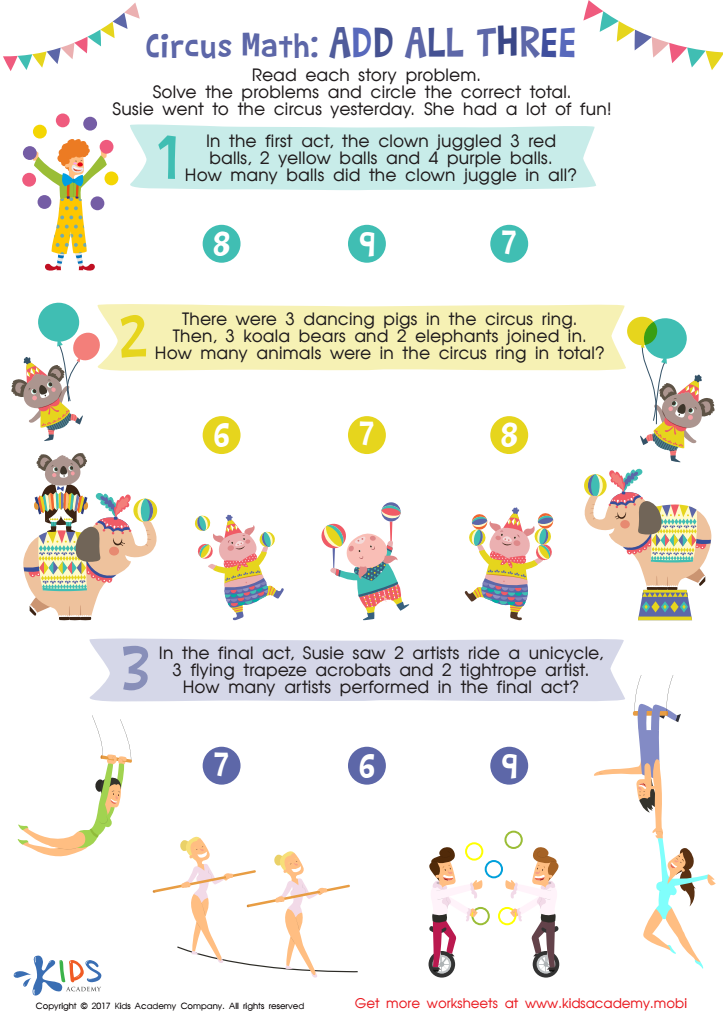
Circus Math Printable
 Assign to My Students
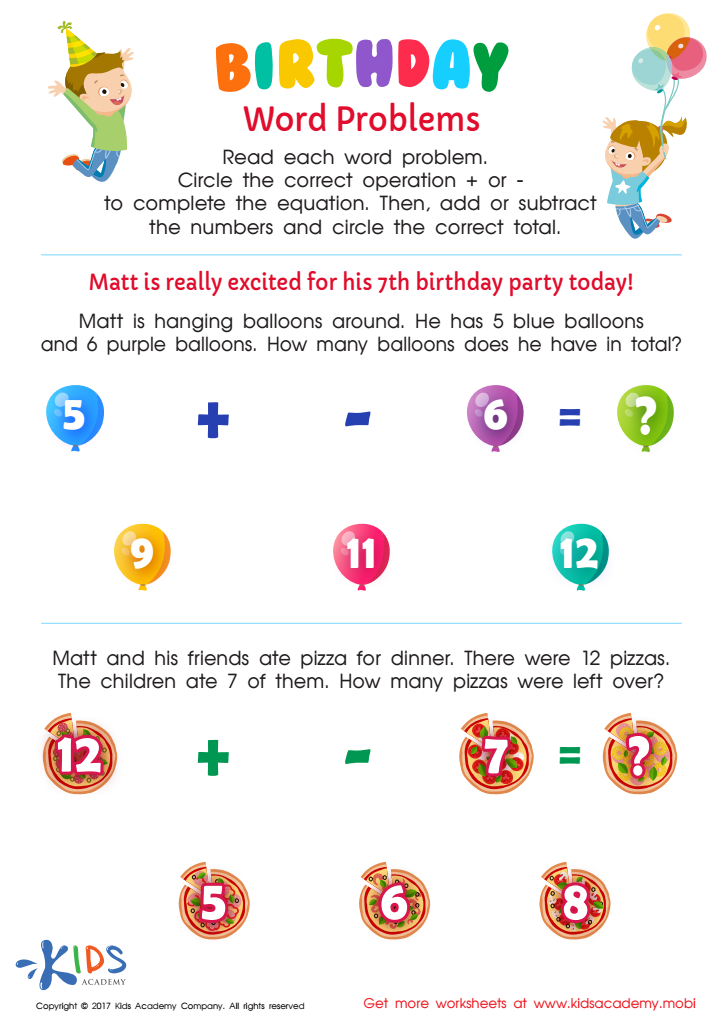
Birthday Word Problems Substraction Worksheet
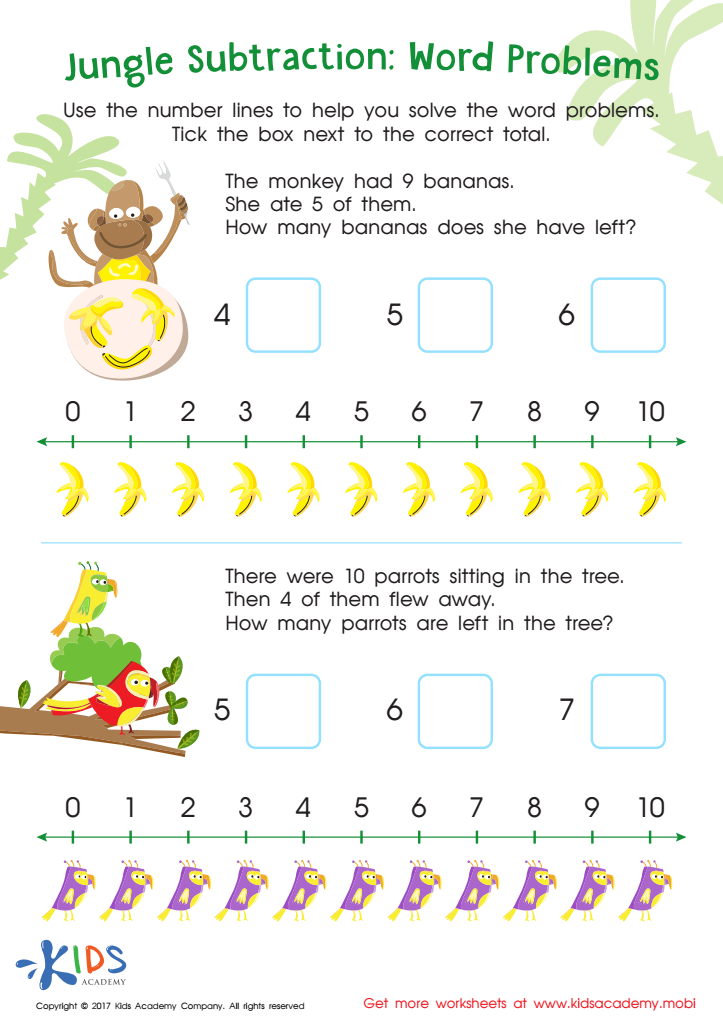
Jungle Subtraction Word Problems Substraction Worksheet




.jpg)



Parents and teachers should prioritize subtraction practice, particularly through extra challenge kindergarten word problems, because these activities build foundational math skills essential for young learners. Engaging with word problems helps children transition from concrete counting to abstract mathematical reasoning, fostering critical thinking and problem-solving abilities.
Through these challenges, students not only practice subtraction but also learn to read and interpret language, enhancing their literacy skills. By encountering varied scenarios, children develop a deeper understanding of subtraction as they contextualize numbers in real-life situations, making math more relatable and enjoyable.
Moreover, active engagement in challenging tasks encourages a growth mindset, teaching students that effort leads to improvement. This resilience is vital for academic success in the future. Furthermore, when parents and teachers collaborate in guiding children through these problems, they reinforce the importance of education and emotional support, creating a nurturing learning environment.
Ultimately, subtraction practice via extra challenge word problems cultivates not only math competency but also a love for learning, confidence in problem-solving, and effective communication skills. These early experiences lay the groundwork for future academic achievement and a lifelong appreciation of mathematics.