Basic counting skills Extra Challenge Worksheets
4 filtered results
-
From - To
Enhance your child's counting skills with our "Basic Counting Skills Extra Challenge Worksheets"! Designed for young learners, these worksheets provide engaging and thought-provoking exercises that go beyond standard counting. Each worksheet features fun themes and activities, allowing children to practice counting objects, solve puzzles, and tackle problems that promote critical thinking. Ideal for kindergarten and early grade levels, our extra challenge worksheets not only strengthen basic counting abilities but also encourage the development of fine motor skills and attention to detail. Perfect for classroom use or at-home learning, these worksheets make mastering counting a fun and exciting adventure!
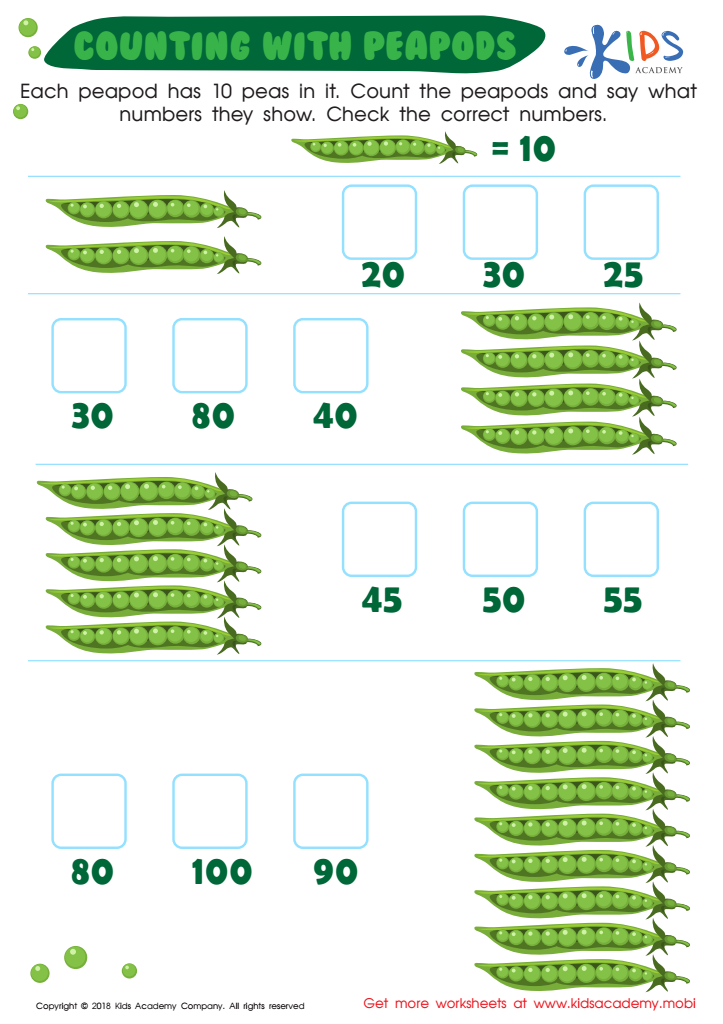
Number Worksheet: Counting With Peapods
 Assign to My Students
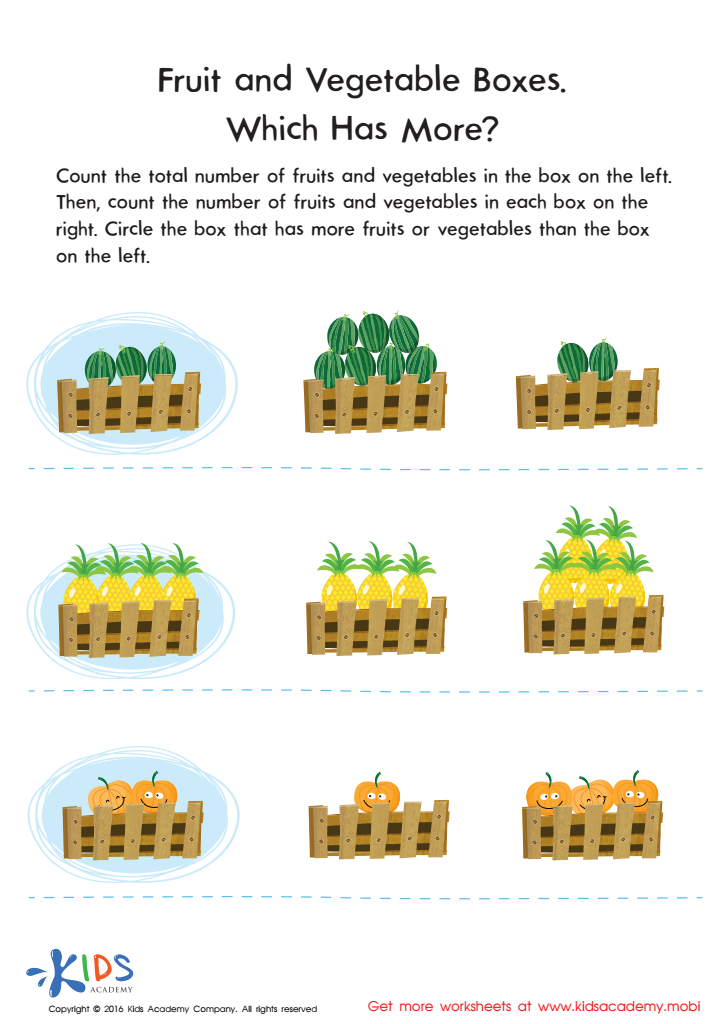
Which Has More? Size Worksheet
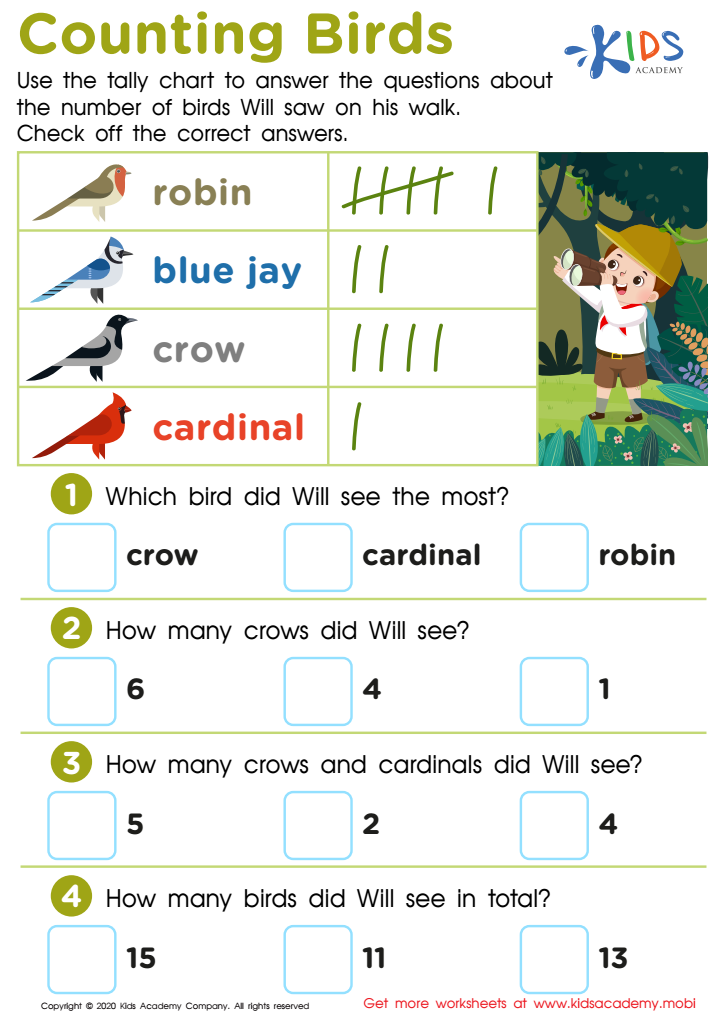
Counting Birds Worksheet
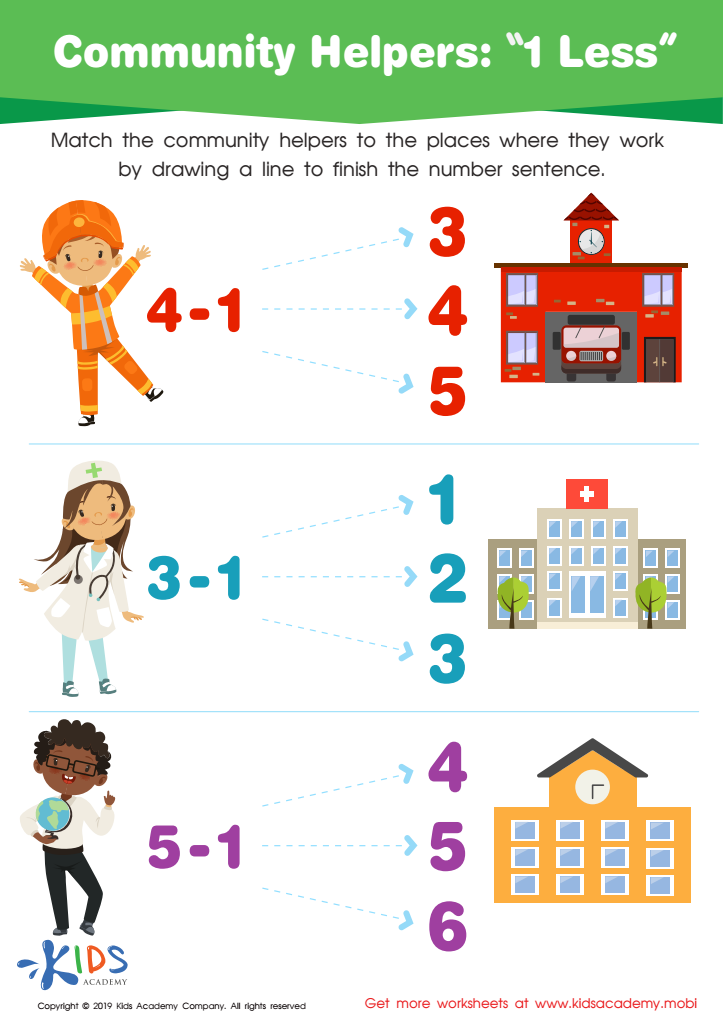
Community Helpers: 1 less Worksheet






Basic counting skills serve as a foundational element in a child's education and overall cognitive development. Parents and teachers should prioritize these skills because they lay the groundwork for more complex mathematical concepts that children will encounter later, such as addition, subtraction, and even multiplication. Mastery of counting supports children in developing problem-solving abilities critical for academic success.
Counting helps enhance a child’s understanding of quantity and number recognition, bridging the gap to reading and writing numerals correctly. It also fosters good habits in organization and categorization during early developmental stages. Through counting, children can improve their fine motor skills when manipulating objects, which aids in hand-eye coordination—essential for tasks like writing and using utensils.
Beyond academic performance, counting skills have real-world applications. Simple actions like sharing snacks or helping with grocery shopping can reinforce these abilities while promoting social and life skills.
Finally, engaging with counting activities makes learning fun and interactive, which can strengthen the parent-child or teacher-student bond. Ultimately, as educators and caregivers, nurturing counting skills ensures children are better prepared to face future academic challenges and develop a love for math from an early age.








