Comparing lengths Extra Challenge Worksheets
6 filtered results
-
From - To
Enhance your students' understanding of measurement with our "Comparing Lengths Extra Challenge Worksheets"! These engaging worksheets are designed to challenge young learners as they compare lengths using a variety of objects. Perfect for early-grade classrooms, our resources include visual aids and hands-on activities that promote critical thinking and problem-solving skills. Each worksheet encourages students to practice measurement literacy in fun and interactive ways, helping them develop a solid grasp of mathematical concepts. Whether used in class or as homework, these extra challenge worksheets are ideal for reinforcing learning and boosting confidence in comparing lengths. Get started today and watch your students thrive!
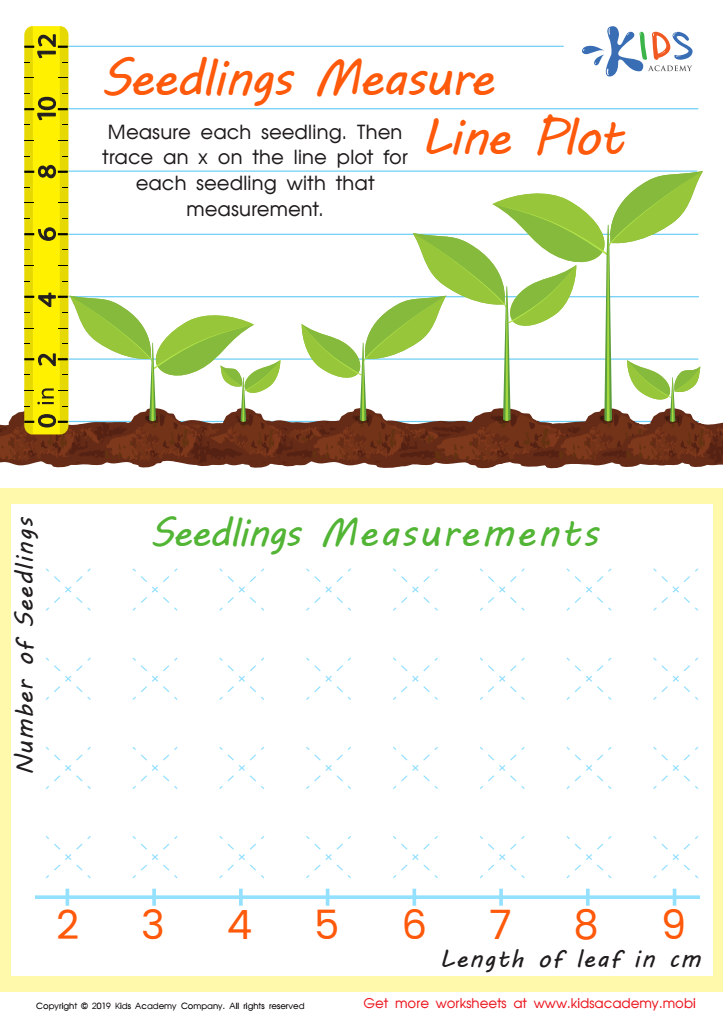
Seedling Measure Line Plot Worksheet
 Assign to My Students
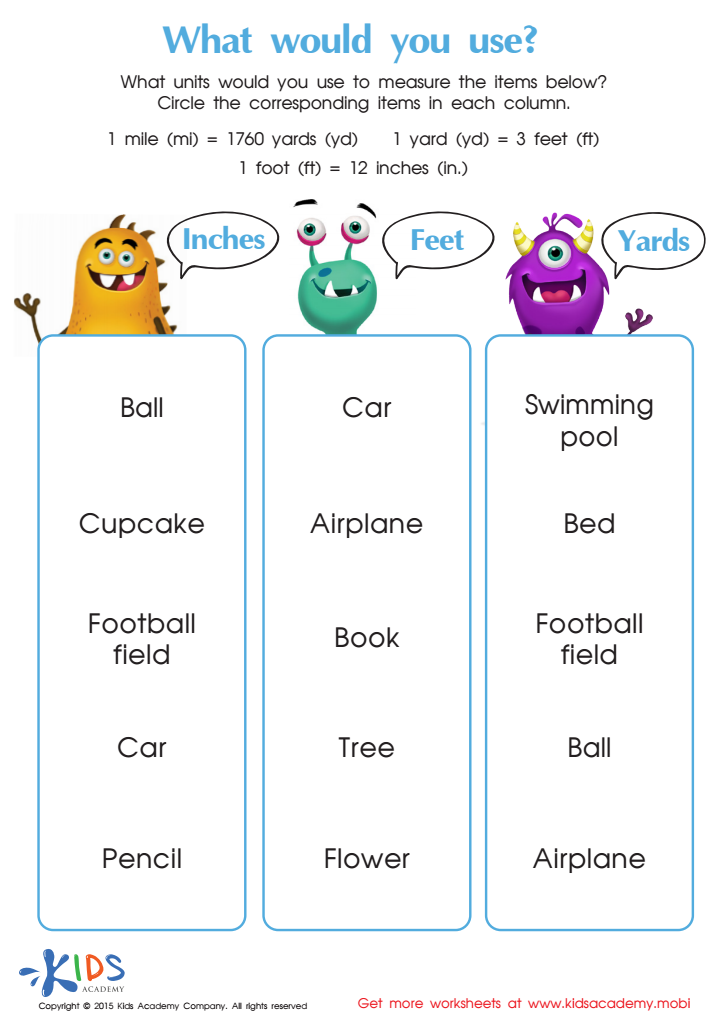
Learning about measuring objects in inches, feet and yards Worksheet
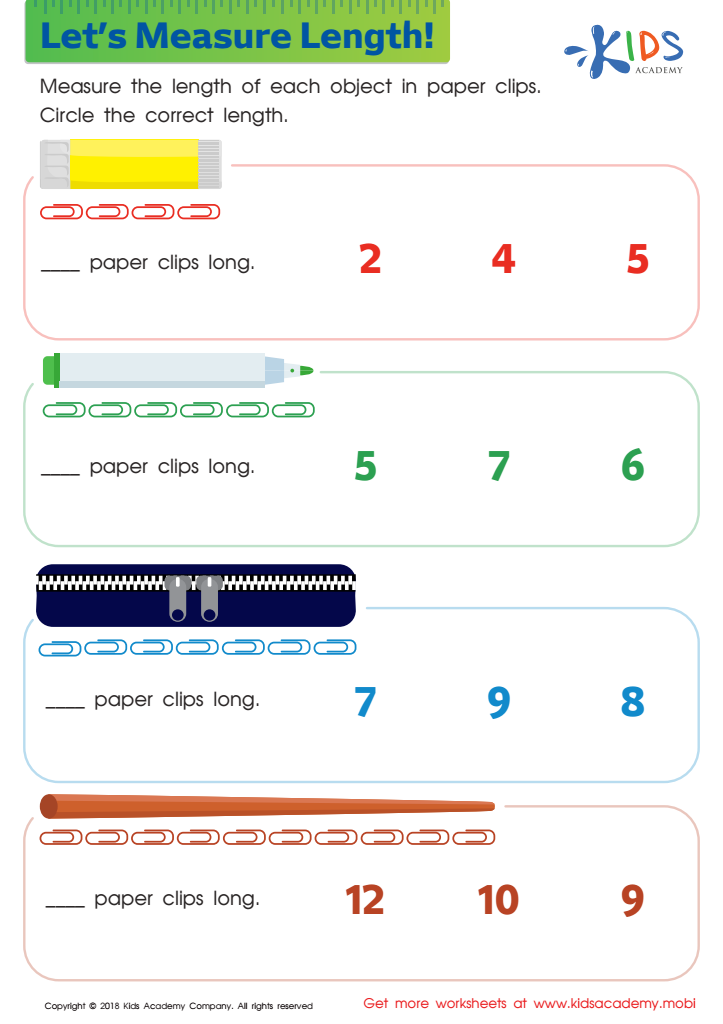
Lets Measure Length Worksheet
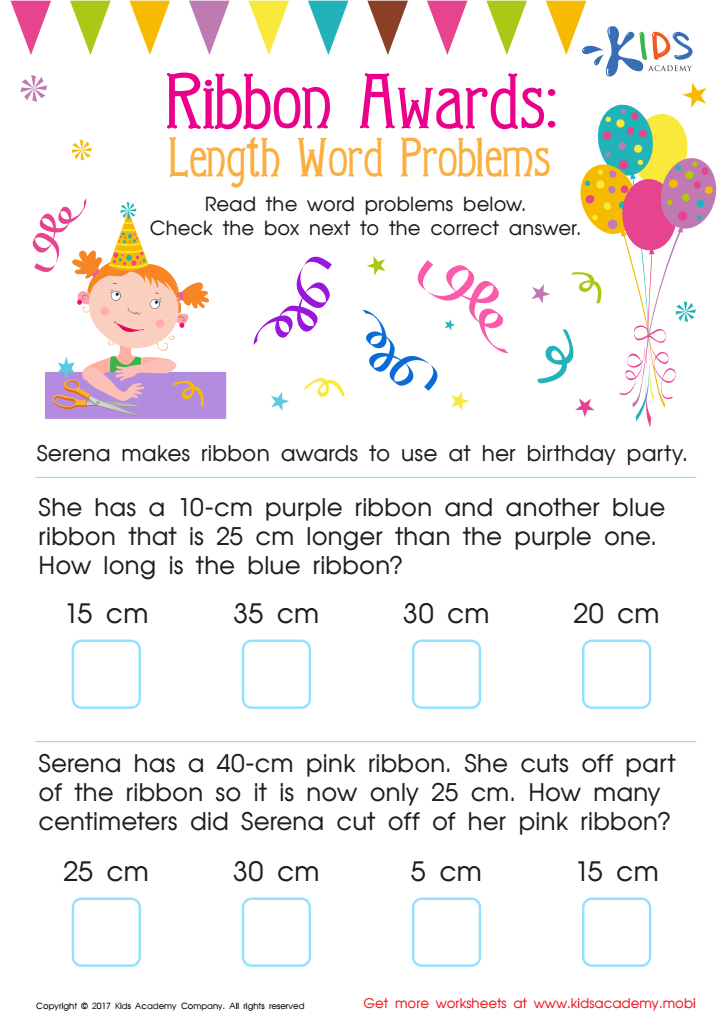
Length Word Problems Worksheet
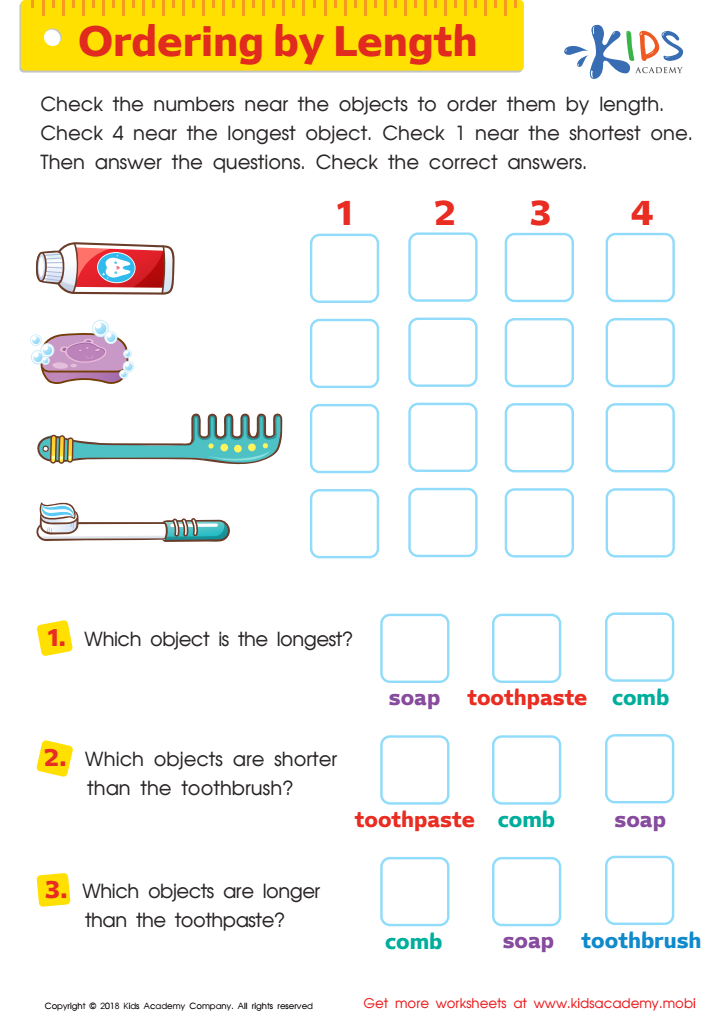
Ordering by Length Worksheet
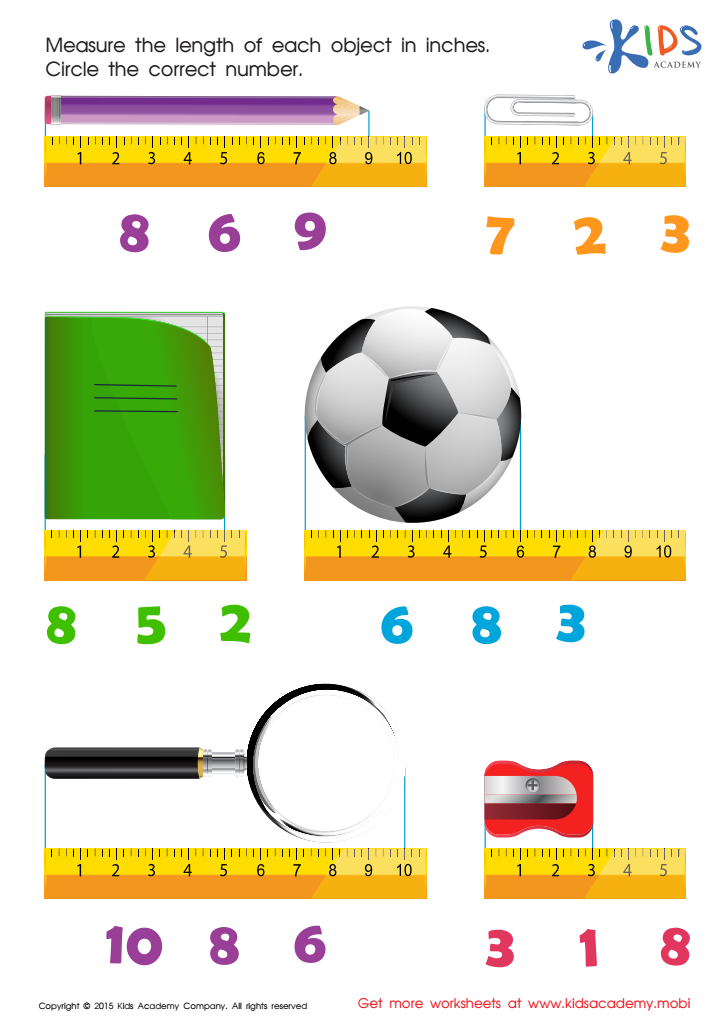
Learning measuring objects in inches Worksheet





Comparing lengths is an essential skill that fosters both critical thinking and practical abilities in children, making it crucial for parents and teachers to emphasize this concept. First and foremost, understanding how to compare lengths helps children grasp foundational mathematical concepts, which are building blocks for more complex subjects later in their education. This skill encourages children to develop problem-solving abilities, as they learn to assess, measure, and distinguish between various objects or distances.
In everyday life, the ability to compare lengths is highly useful. From cooking and gardening to navigating spaces and even participating in sports, children frequently encounter scenarios where they need to evaluate size, distance, or height. By equipping children with this skill early on, parents and teachers prepare them for real-world challenges, enhancing their independence and confidence.
Furthermore, engaging in comparative activities fosters language development, as children learn to articulate their observations and reasoning. It encourages collaboration and communication during group tasks, promoting social skills. Lastly, addressing the extra challenge of comparing lengths can motivate students to think creatively and critically, helping cultivate a lifelong interest in learning and discovery. Ultimately, recognizing the importance of this skill enriches a child’s educational journey and daily interactions.








