Financial literacy Extra Challenge Worksheets
3 filtered results
-
From - To
Enhance your child's understanding of personal finance with our "Financial Literacy Extra Challenge Worksheets" from Kids Academy. Designed for budding learners, these worksheets delve into essential financial concepts, from budgeting to savvy spending. As part of our comprehensive financial literacy program, each worksheet challenges children with engaging scenarios and practical exercises that promote smart money habits. Ideal for Grades 4-6, they support critical thinking and real-world application, ensuring kids master the foundational skills of financial management. Make financial education fun and effective with our expertly crafted, research-based materials, empowering young minds for a financially savvy future.
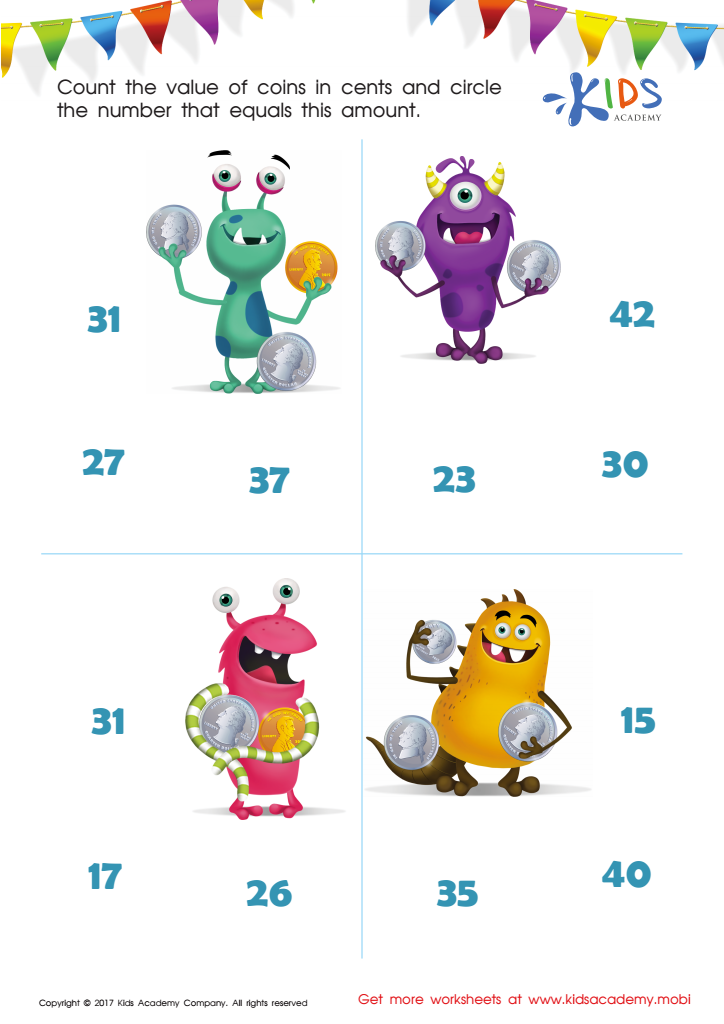
How Many Coins Money Worksheet
 Assign to My Students
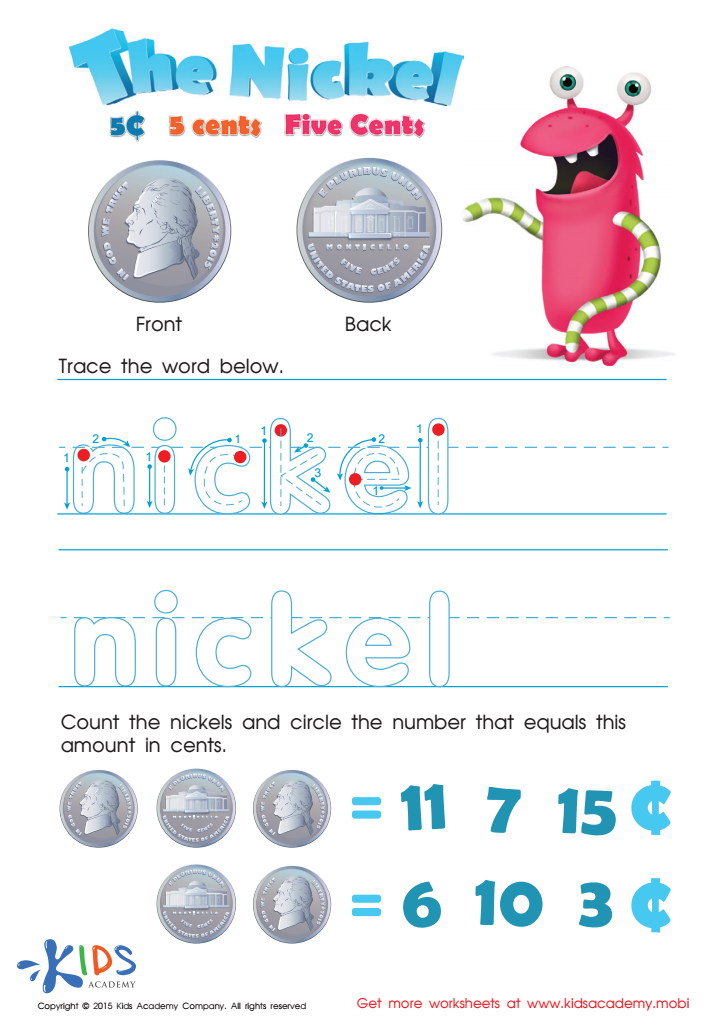
Five Cents or the Nickel Money Worksheet
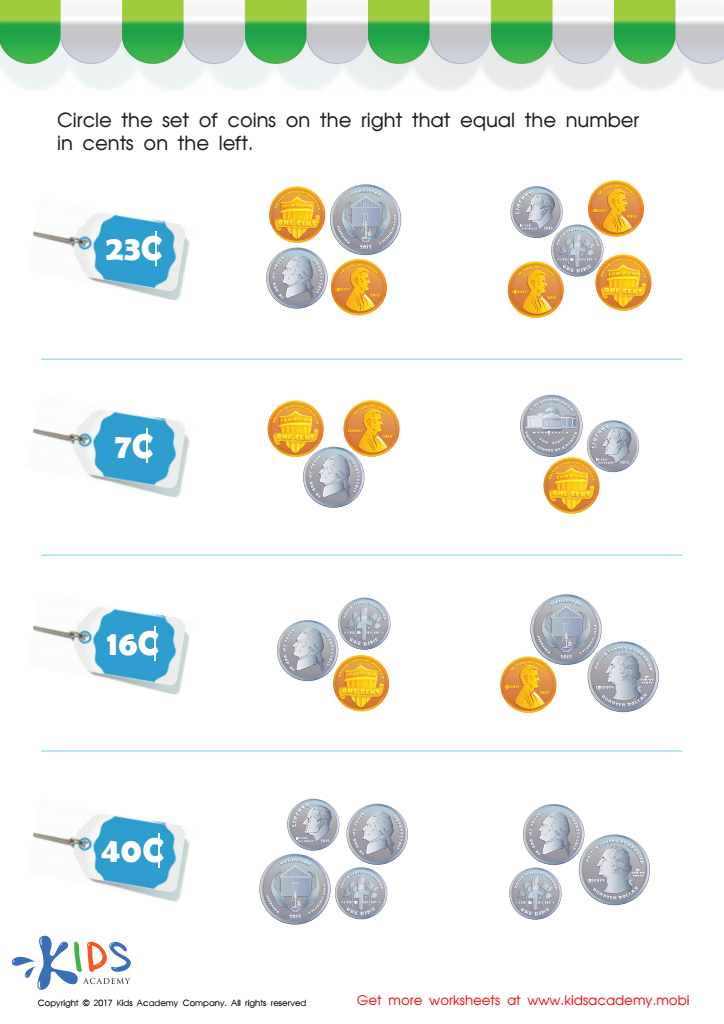
Picking the Coins You Need Money Worksheet







Financial literacy is an essential life skill that lays the foundation for sound financial decision-making, and both parents and teachers have pivotal roles in fostering this competency from an early age. The urgency of incorporating financial literacy into a child's education cannot be overstated. Children who are financially literate are more likely to manage money wisely, make informed decisions about budgeting and saving, and use credit responsibly. These skills ultimately lead to a more stable and secure future.
For parents, teaching financial literacy helps children grasp the real-world applications of managing allowances, making purchases, and understanding the concept of value and money. This interaction also improves parent-child bonding and prepares children to become financially responsible adults.
Teachers, on the other hand, introduce financial literacy in a structured environment, employing diverse educational tools such as games, activities, and practical lessons that make learning engaging and effective. Financial literacy programs in schools augment scholarly education with practical life skills, laying a broader path for future economic well-being.
In sum, parents and teachers who prioritize financial literacy are intricately involved in shaping vigilant, competent individuals who will grow into adults capable of sustaining healthy financial habits. It's a collective effort that promises long-term societal benefits, securing not just individual futures but contributing to economic stability as a whole.








