
Logical thinking development Extra Challenge Worksheets
6 filtered results
Difficulty Level
Grade
Age
-
From - To
Subject
Activity
Standards
Enhance your child's cognitive skills with our Logical Thinking Development Extra Challenge Worksheets, thoughtfully designed for advanced learners. Each worksheet provides engaging and stimulating activities that foster critical thinking, problem-solving, and reasoning abilities. Developed by educational experts, these exercises tackle a range of topics, including patterns, sequences, and classifications, ensuring a comprehensive approach to logic skills. Perfect for both classroom use and at-home practice, our worksheets offer an exciting way for kids to develop essential learning skills while having fun. Empower young minds with the logical tools they need for academic success and beyond. Discover the challenge today!
Favorites
With answer key
Interactive
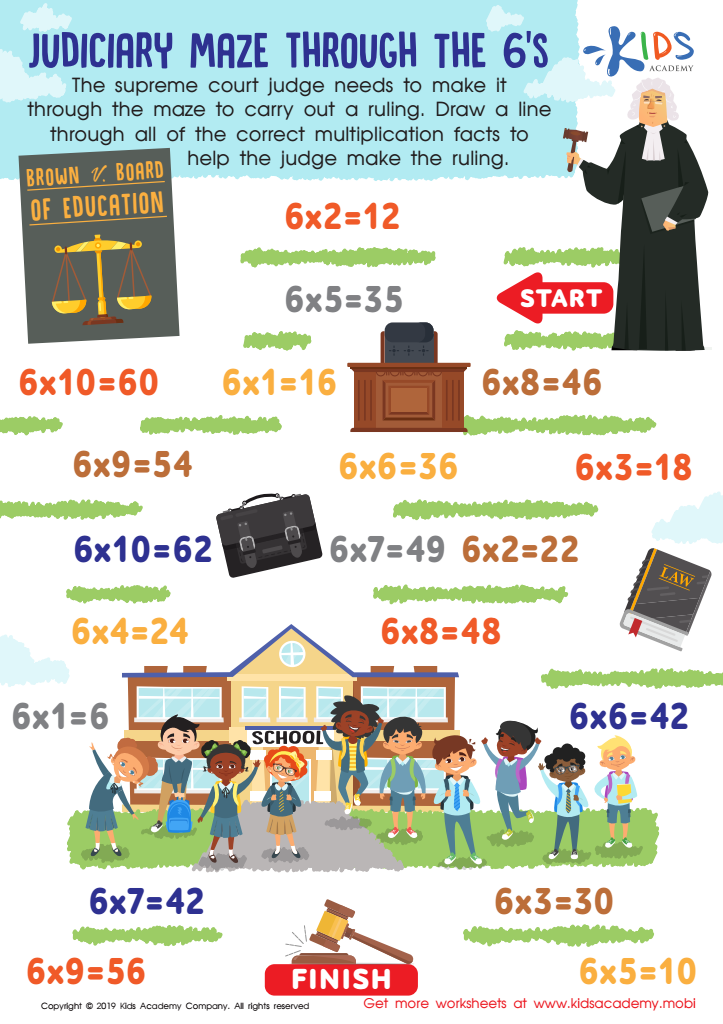
Judiciary Maze Through The 6’s Worksheet
Multiplication can be complicated for kids, with lots of numbers and a seemingly endless multiplication table. Get them interested with a fun worksheet! Have them draw a line through all the correct multiplication facts to help the judge make it through the maze and carry out a ruling.
 Assign to My Students
Judiciary Maze Through The 6’s Worksheet
Worksheet
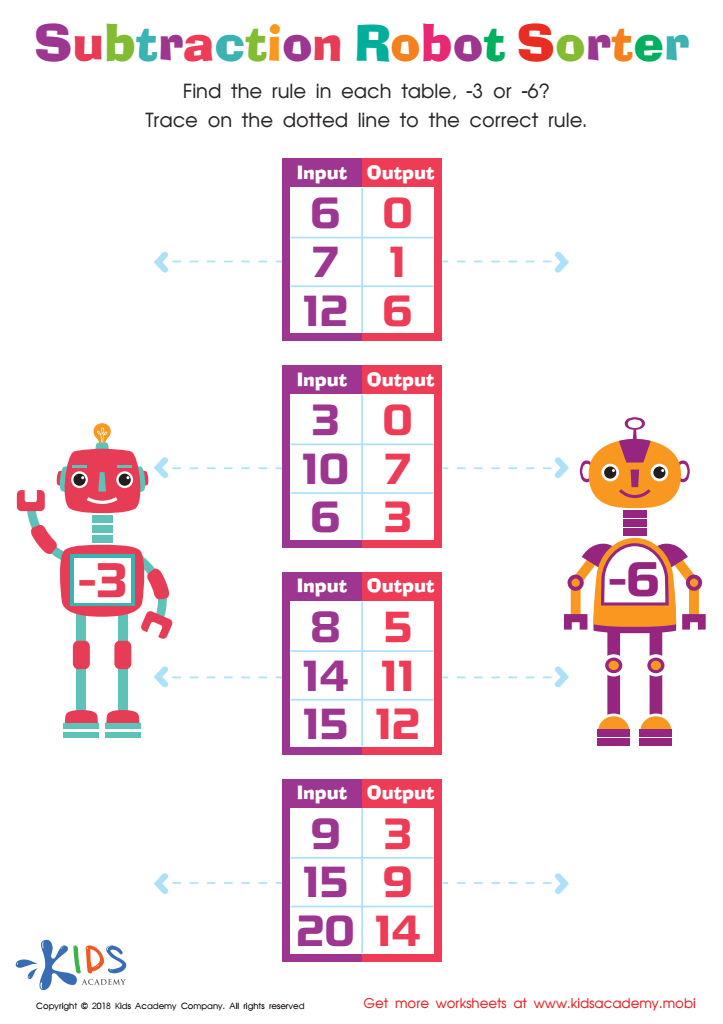
Subtraction Robot Sorter Worksheet
Help your child learn essential math skills with robot friends! Look at function machines and find if the rule is minus 3 or minus 6. Trace the dotted line to the robot with the correct rule when the pattern is found. Simple and delightful!
Subtraction Robot Sorter Worksheet
Worksheet
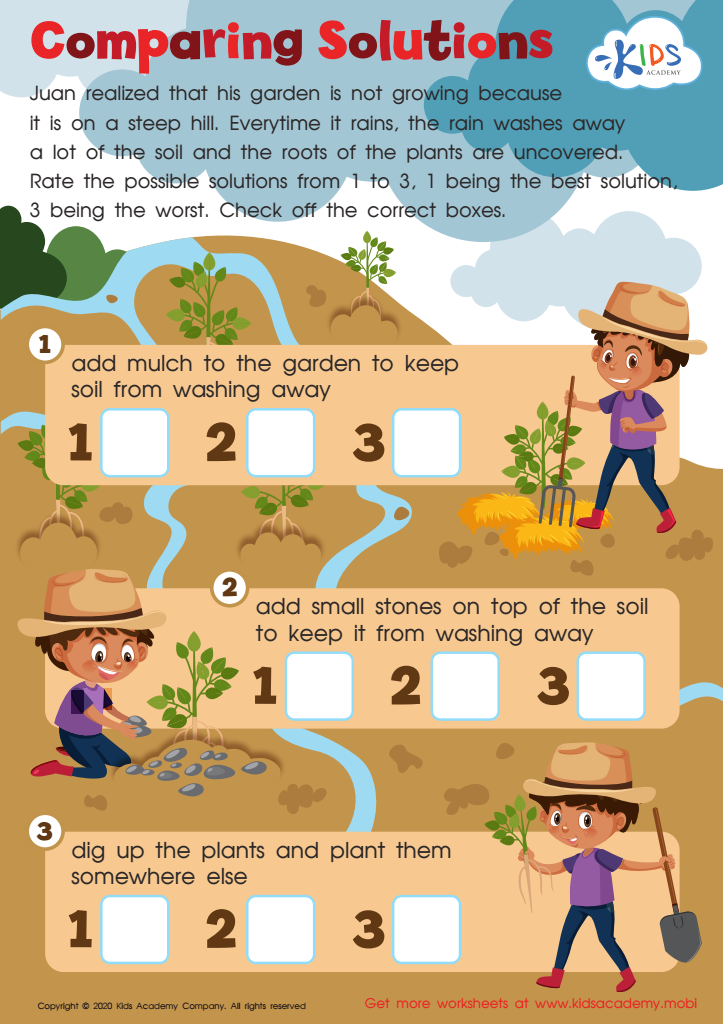
Comparing Solutions Worksheet
Juan can't get his veg garden growing as he'd like, planted on a steep hill. Help your child practice problem-solving by comparing solutions and rating them from most to least effective. With this thought-provoking worksheet, learners can hone the important skill of finding the best solution from a range of options.
Comparing Solutions Worksheet
Worksheet
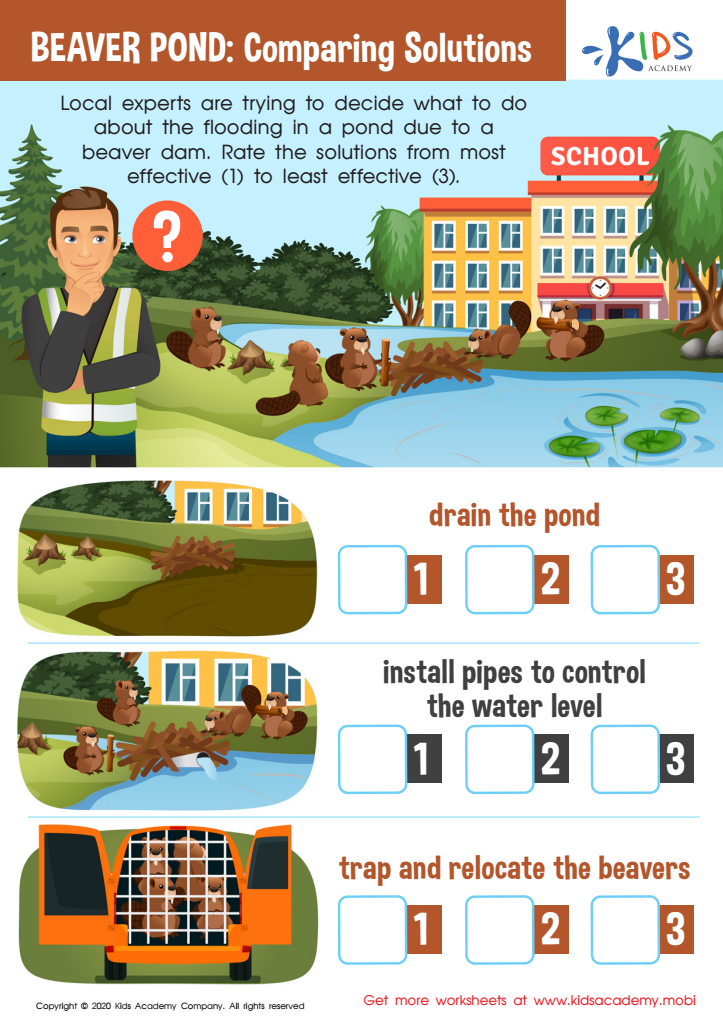
Beaver Pond: Comparing Solutions Worksheet
Got a problem? This science worksheet is great for helping your child compare solutions and pick the best one. Kids get to rate each option's effectiveness by ticking off boxes, from most to least. It's a great way to encourage problem-solving skills, while having fun!
Beaver Pond: Comparing Solutions Worksheet
Worksheet
Math Puzzle Worksheet
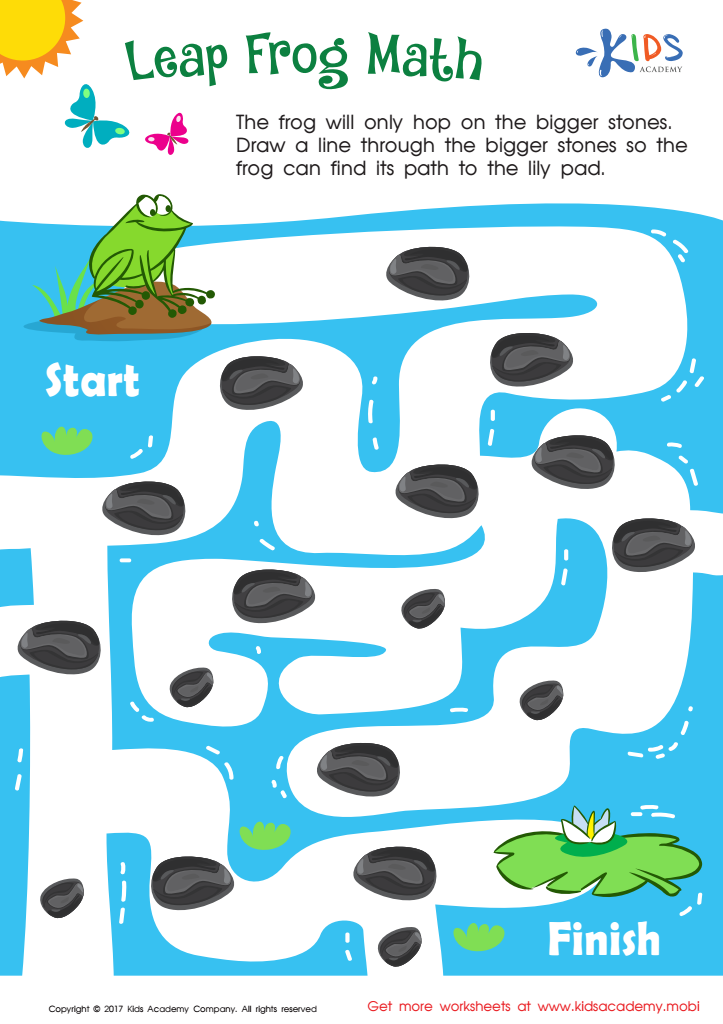
Kids will use their math skills to help the frog get through the maze by selecting the larger stones. Perfect for kindergarteners, it develops the ability to identify size differences.
Math Puzzle Worksheet
Worksheet
Football Math Worksheet
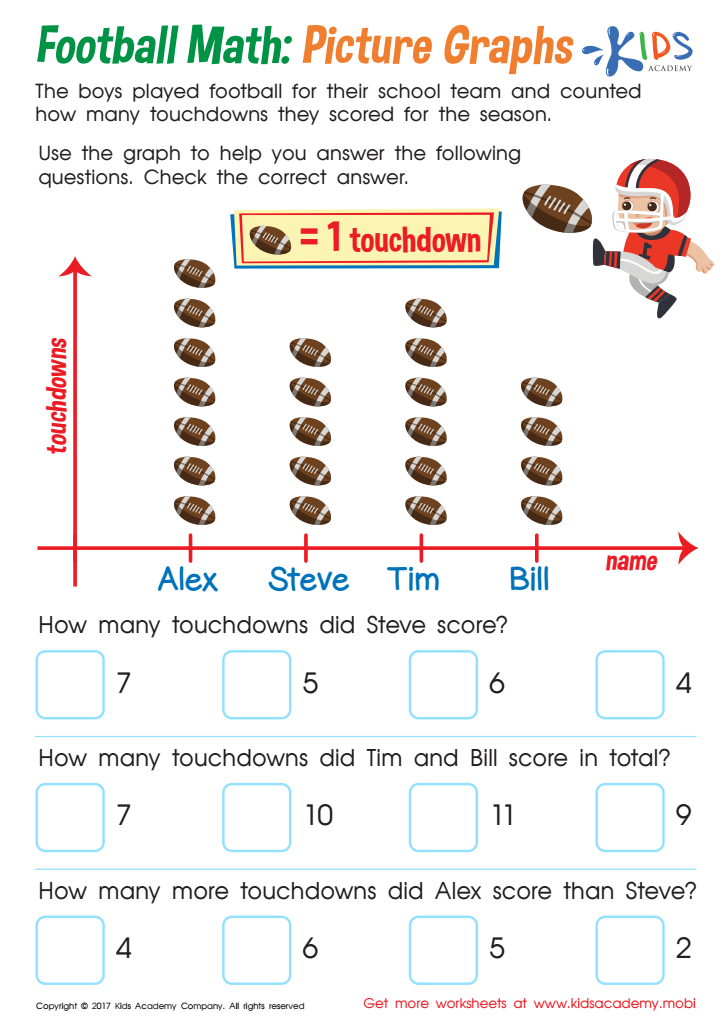
It uses football-themed data to compare teammates' touchdowns. Perfect for motivating your child and helping them learn to read graphs in a fun way!
Motivate your child to learn to read graphs with this fun and sporty picture graph worksheet! Football-themed data is used to compare teammates and their touchdowns, sure to delight your little sports fan. Perfect for teaching data analysis in an engaging way!
Football Math Worksheet
Worksheet
Join Kids Academy for Free
Who is primarily going to use this learning content?







Parents and teachers should prioritize the cultivation of logical thinking skills because they form the foundation for children’s cognitive development and academic success. Logical thinking enables children to process information, analyze situations, and make reasoned decisions based on evidence and reason. By integrating logical problem-solving activities and extra challenges, children improve critical thinking, which is an essential skill across all subjects, from math and science to reading comprehension and history.
Moreover, early development of logical thinking fosters creativity. When children learn to see patterns and solve problems, they become more innovative and better equipped to approach complex issues from multiple angles. This adaptability will serve them well in future educational endeavors and professional environments where analytical and creative problem solving are valued.
Additionally, helping children enhance their logical thinking skills increases their confidence and independence. They are more likely to trust their reasoning abilities and thrive in situations requiring autonomous decision-making. This growth in self-reliance contributes to their overall emotional and social well-being.
Involvement in logical thinking exercises also encourages a lifelong love for learning. Children become naturally curious and driven to seek out new information and solutions. Therefore, providing extra challenges tailored to developing these capabilities can set children on a pathway to become thoughtful, engaged, and capable adults.








