Phonics recognition Extra Challenge Worksheets
3 filtered results
-
From - To
Enhance your child's reading skills with our Phonics Recognition Extra Challenge Worksheets! Designed for young learners, these worksheets offer engaging exercises that focus on letter sounds, blending, and word recognition. Tailored for diverse learning levels, they provide an interactive approach to understanding phonics, making learning fun and effective. Each worksheet includes various challenges that promote critical thinking and boost confidence in reading abilities. Ideal for classroom use or at-home practice, these resources are perfect for reinforcing phonics skills. Give your child the gift of literacy with our Extra Challenge Worksheets — where learning meets adventure! Explore now for a brighter reading future!
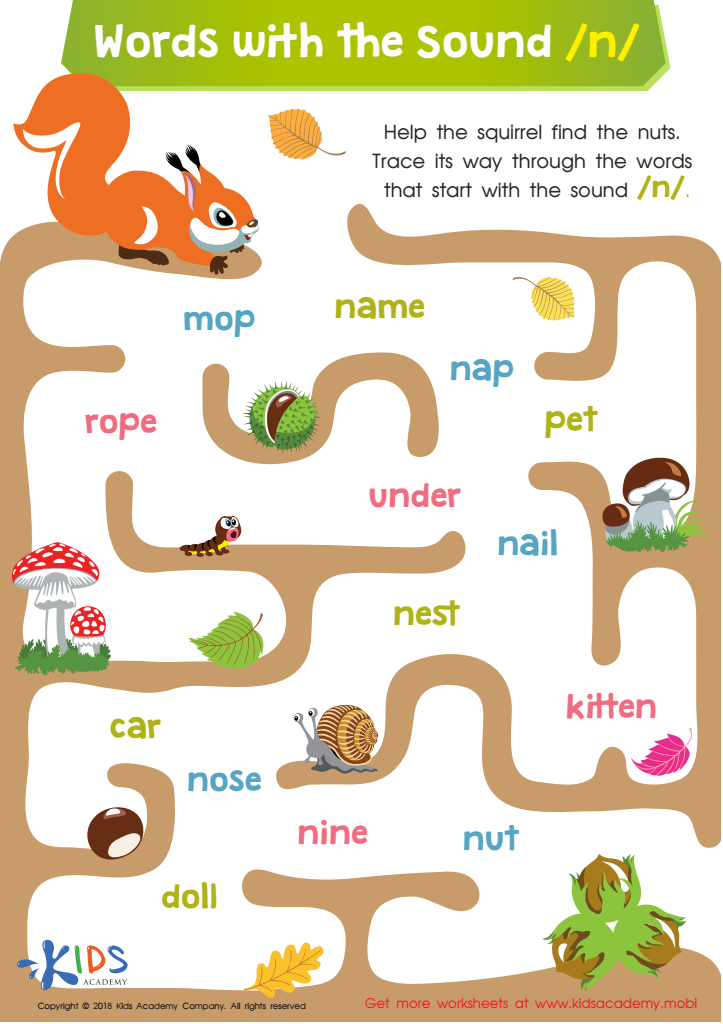
Words with Sound N Reading Worksheet
 Assign to My Students
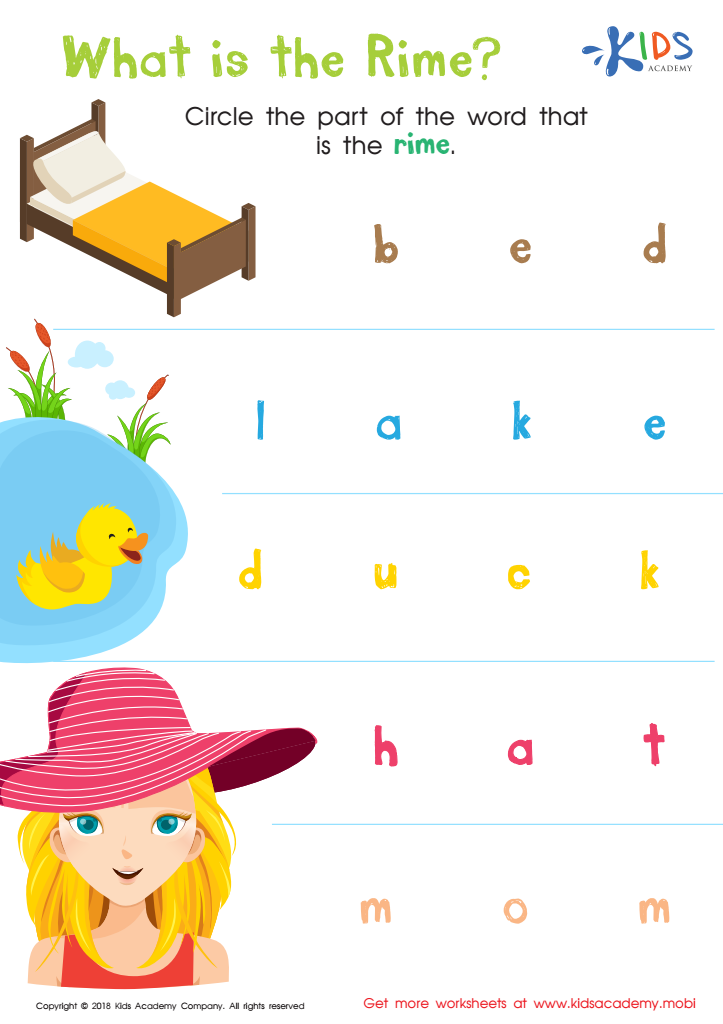
What Is the Rime? Worksheet
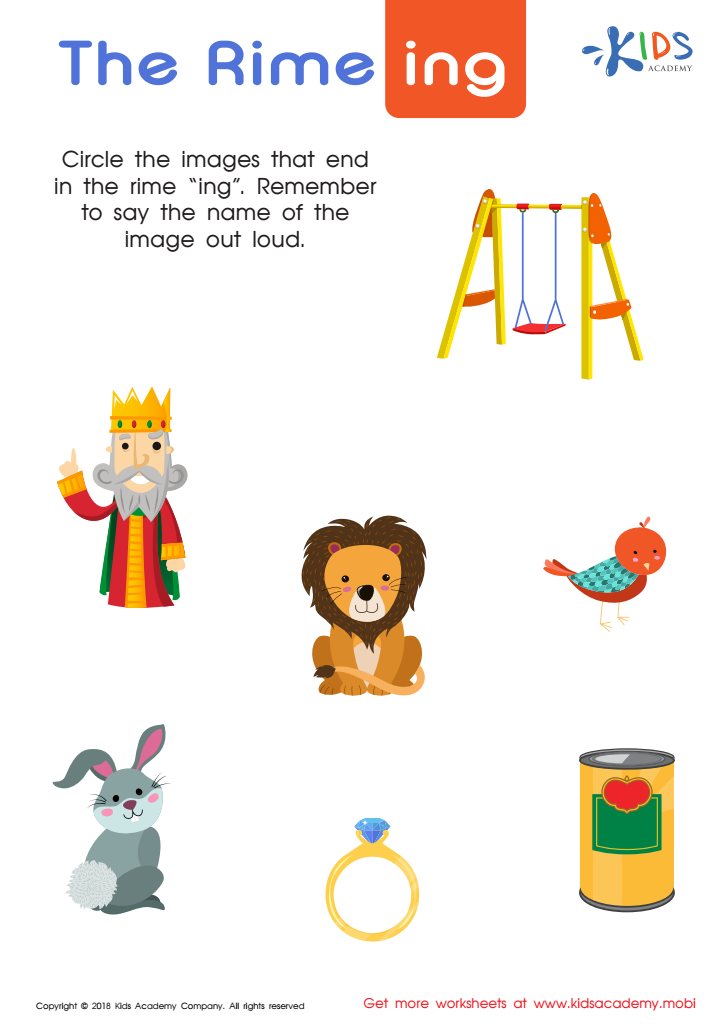
The Rime "ing" Worksheet








Parents and teachers should prioritize phonics recognition because it is foundational for reading proficiency. Phonics involves understanding the relationship between letters and their corresponding sounds, enabling children to decode words and build their reading skills. Mastery of phonics aids in developing fluent reading, which directly influences comprehension and overall academic success.
Moreover, phonics recognition helps children develop strong spelling skills, as understanding sound-letter associations leads to better writing abilities. By engaging children in phonics activities, educators and parents can foster a love for reading, motivating children to explore literature independently.
An extra challenge in phonics recognition can take this learning further by engaging children in diverse, enjoyable ways that cater to various learning styles. This could involve games, puzzles, and multisensory approaches that make learning interactive and fun. These challenges not only boost confidence in their reading abilities but also help identify areas for further support.
Ultimately, investing time and resources in phonics recognition drives long-term academic success, cultivates positivity towards learning, and equips children with essential literacy skills that will serve them throughout their lives. Involving parents and teachers in this process enhances collaboration and provides a supportive literacy-rich environment for children.








