Recognizing shapes Extra Challenge Worksheets
4 filtered results
-
From - To
Discover our "Recognizing Shapes Extra Challenge Worksheets" designed to elevate your child's learning experience in geometry! These engaging worksheets are perfect for young learners eager to deepen their understanding of shapes. Each activity encourages critical thinking as children identify, classify, and compare geometric forms through fun exercises. With a variety of challenges, including puzzles and creative drawing tasks, these worksheets not only reinforce shape recognition skills but also foster creativity and problem-solving abilities. Ideal for classrooms or at-home practice, our worksheets aim to make learning shapes enjoyable and effective. Help your child master shapes with confidence today!
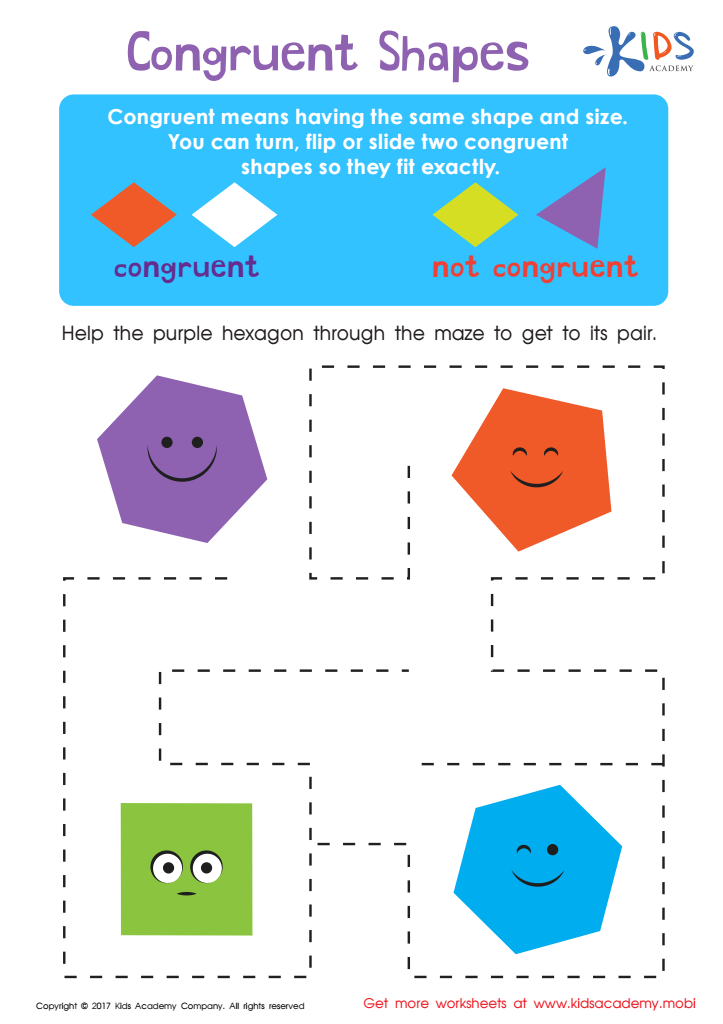
Congruent Shapes Worksheet
 Assign to My Students
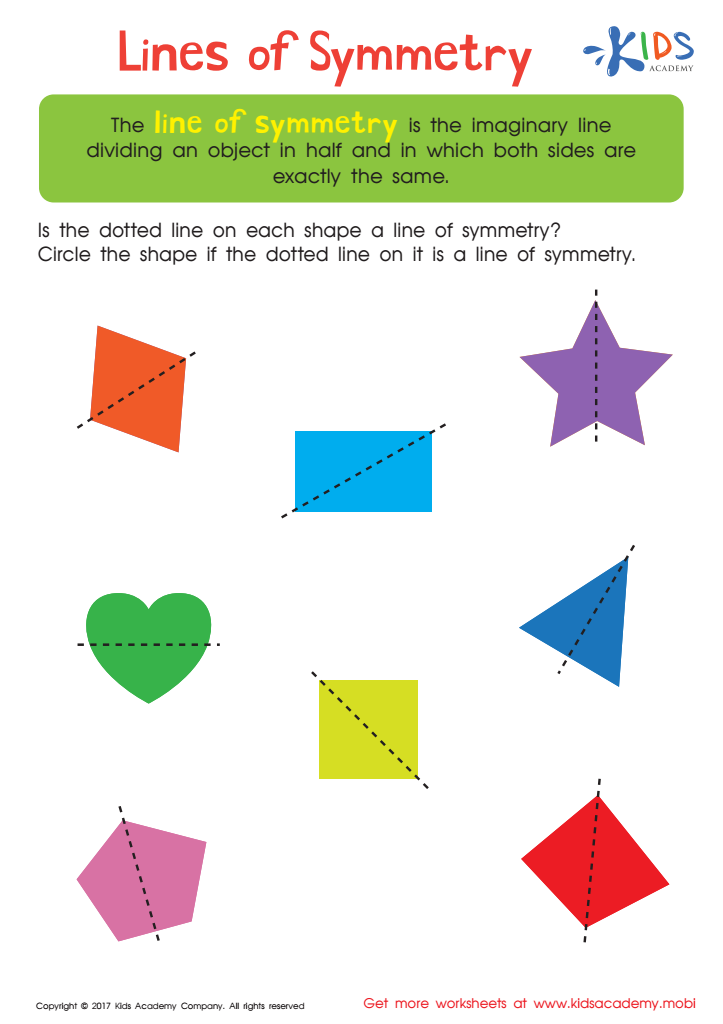
Lines of Symmetry Printable
Easter Word Search Worksheet
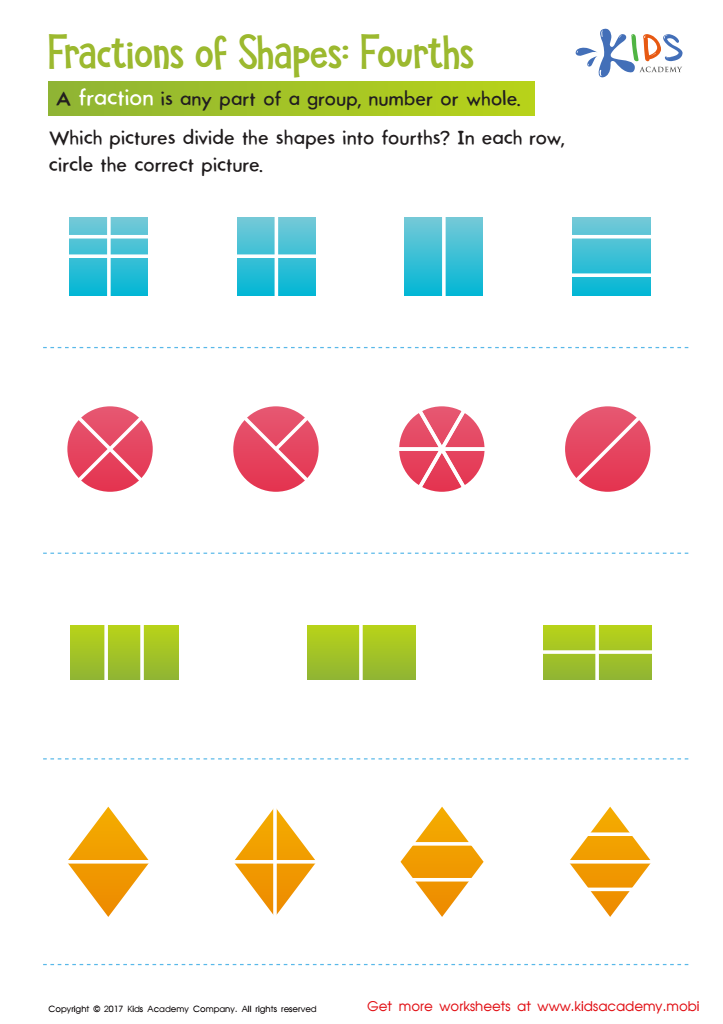
Fractions of Shapes Worksheet





Recognizing shapes is a fundamental skill that lays the groundwork for a child's mathematical understanding and cognitive development. For parents and teachers, fostering this skill is crucial for several reasons. First, shapes are ubiquitous in our environment; by teaching children to identify and categorize them, we enhance their observation skills and awareness of the world around them. This skill not only aids in mathematics but also bolsters spatial reasoning—critical for tasks such as reading maps, understanding diagrams, and engaging in various STEM fields.
Additionally, recognizing shapes helps improve a child's vocabulary. As they learn to identify square, triangle, or circle, they add descriptive words to their language repertoire, fostering better communication skills. With enhanced language, children can express their thoughts and comprehension more effectively.
Moreover, shape recognition serves as a springboard for more complex concepts like symmetry, area, and geometry. Engaging children in shape-related activities encourages problem-solving and critical thinking, vital skills for academic success.
Finally, through fun and engaging shape challenges, children develop perseverance and resilience as they learn to think creatively and tackle problems. For these reasons, parents and teachers should prioritize shape recognition as an integral part of early education, setting the stage for lifelong learning.








