Understanding graphs Extra Challenge Worksheets
3 filtered results
-
From - To
"Understanding Graphs Extra Challenge Worksheets" offer a stimulating way for students to enhance their data interpretation skills. These advanced printables cater to young learners ready to dive deeper into understanding and analyzing various types of graphs, including bar, line, and pie charts. Each worksheet is thoughtfully designed to challenge kids, encouraging critical thinking and the ability to draw conclusions from visual data representation. By engaging with these materials, children can boost their confidence and proficiency in managing real-world information. Perfect for teachers and parents seeking supplementary activities to reinforce their child’s learning, these worksheets align with educational standards while making learning fun.
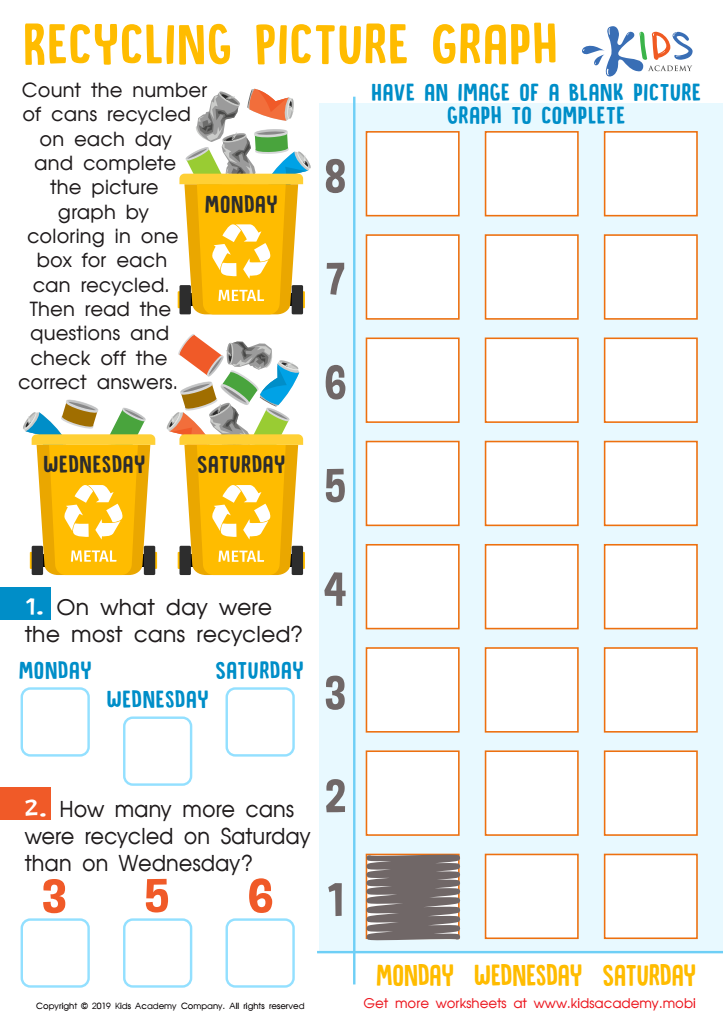
Recycling Picture Graph Worksheet
 Assign to My Students
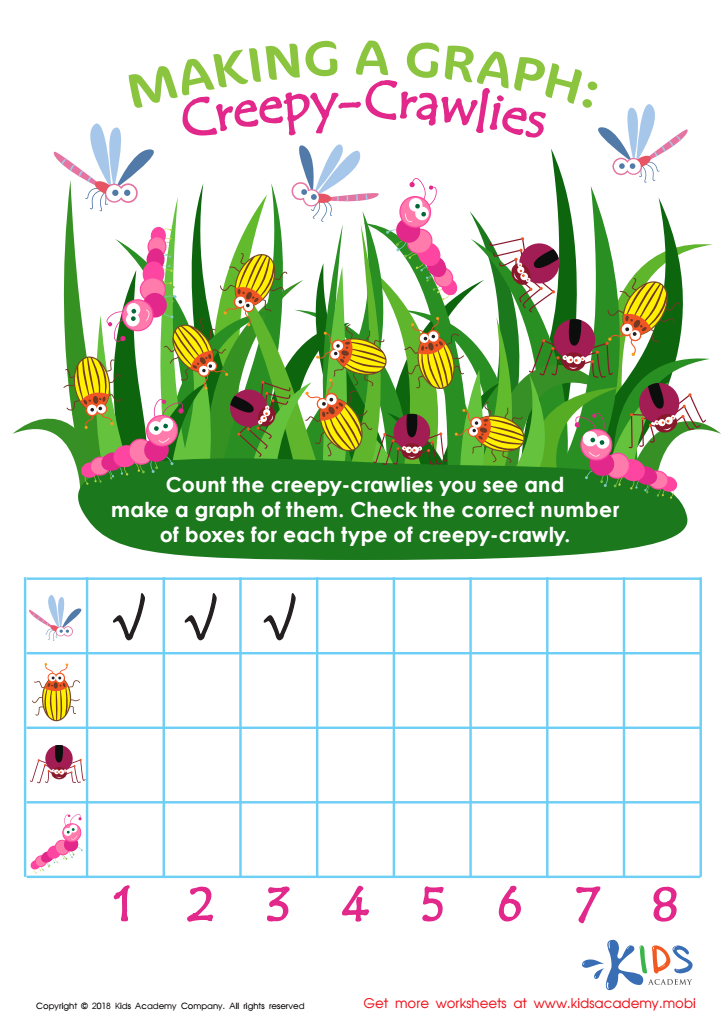
Making a Graph: Creepy Crawlies Worksheet
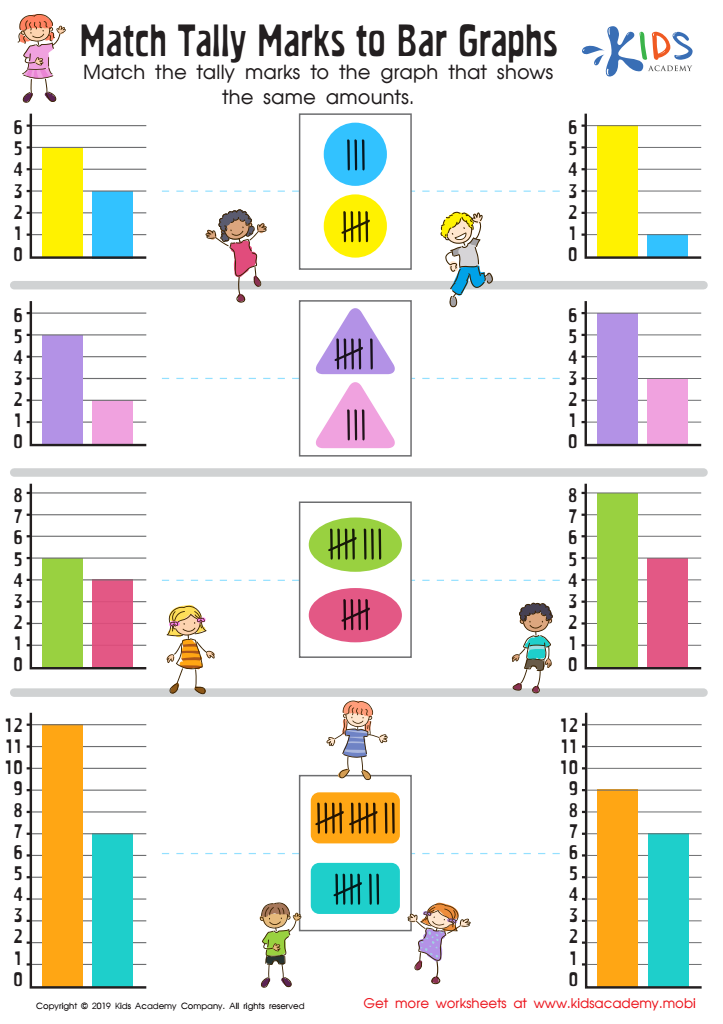
Match Tally Marks to Bar Graphs Worksheet


.jpg)




Understanding graphs is a critical skill that extends beyond the classroom. Engaging in activities like the "Graphs Extra Challenge" helps build essential life skills in children which parents and teachers should deeply care about.
For one, graphs are a common way to present information succinctly and clearly. Whether it’s a weather report, financial summary, or academic results, interpreting these visual data representations is an invaluable skill. Early familiarity with graphs fosters better comprehension and critical thinking, helping children make informed decisions throughout life.
Moreover, working on graph challenges encourages problem-solving abilities. By analyzing patterns, trends, and the relationships between data points, children develop logical thinking. This practice nurtures skills applicable to various subjects such as mathematics, science, and economics. It encourages analytical thinking and attention to detail, laying a robust foundation for higher education and professional success.
Additionally, interactive challenges in understanding graphs can make learning math more engaging and less intimidating. By contextualizing math problems through visual data, children often find them easier to grasp and more relevant to real-world scenarios.
Involving children in such educational challenges also fosters a growth mindset. It teaches perseverance, improves concentration, and promotes a love for learning that parents and teachers ideally seek to instill. Hence, incorporating graph-related activities is an investment in a child’s intellectual and personal growth.








