
Fine Motor Skills Extra Challenge Geometry Worksheets
6 filtered results
Difficulty Level
Grade
Age
-
From - To
Subject
Activity
Standards
Enhance your child’s fine motor skills while exploring the exciting world of geometry with our Extra Challenge Geometry Worksheets! Designed to engage young learners, these worksheets combine fun exercises with essential geometric concepts, fostering both creativity and precision. Children will practice tracing, drawing, and coloring shapes to develop hand-eye coordination and dexterity. Each activity is age-appropriate, encouraging young minds to build confidence in their skills. Whether at home or in the classroom, these worksheets provide an excellent opportunity for hands-on learning. Download our Fine Motor Skills Extra Challenge Geometry Worksheets today and watch your child thrive in their early education journey!
Favorites
With answer key
Interactive
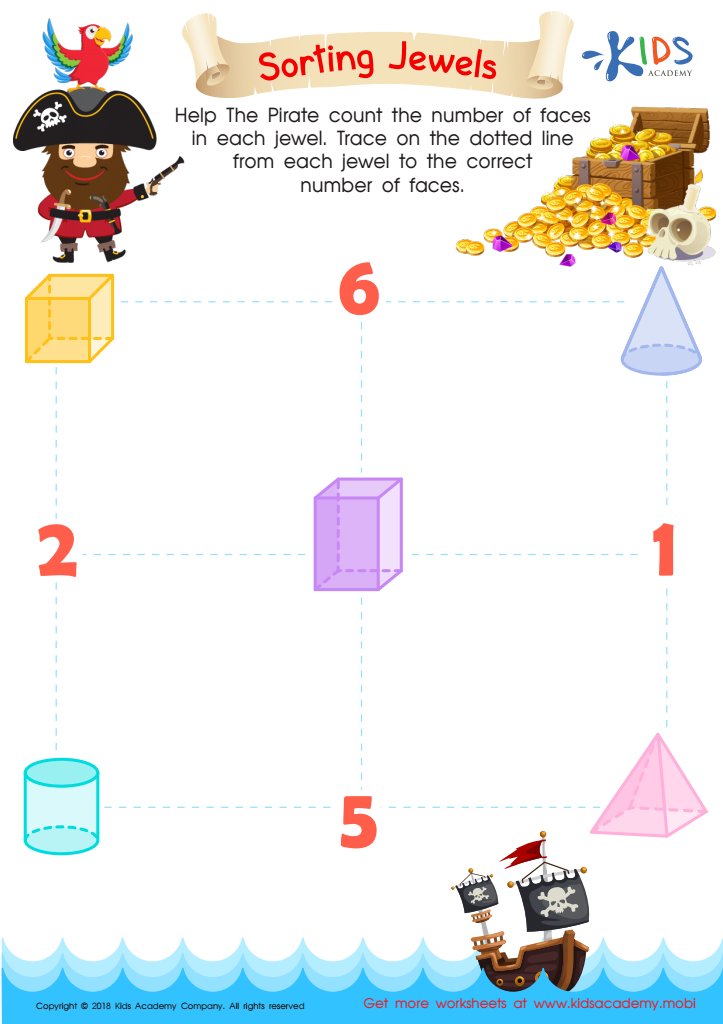
Sorting Jewels Worksheet
Help your kids explore their pirate fantasies with this tracing sheet. Ask them to count the number of faces in each jewel and then trace the dotted line to the correct number. How many faces does a rectangle have? What about a triangle and a cone? This fun worksheet is a great way to teach your kids the basics of identifying the number of faces on shapes.
 Assign to My Students
Sorting Jewels Worksheet
Worksheet











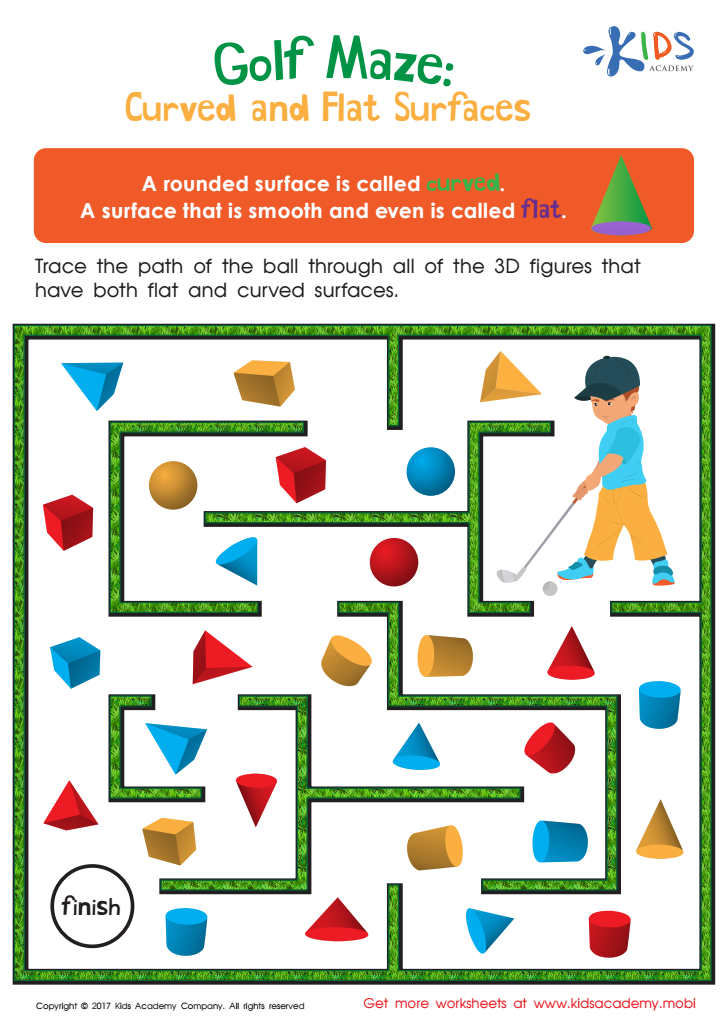
Golf Maze: Curved and Flat Surfaces Worksheet
Give your child a fun and educational challenge with this geometry maze! Your child will navigate 3D shapes to find objects with flat and curved surfaces, while learning important math concepts.
Golf Maze: Curved and Flat Surfaces Worksheet
Worksheet
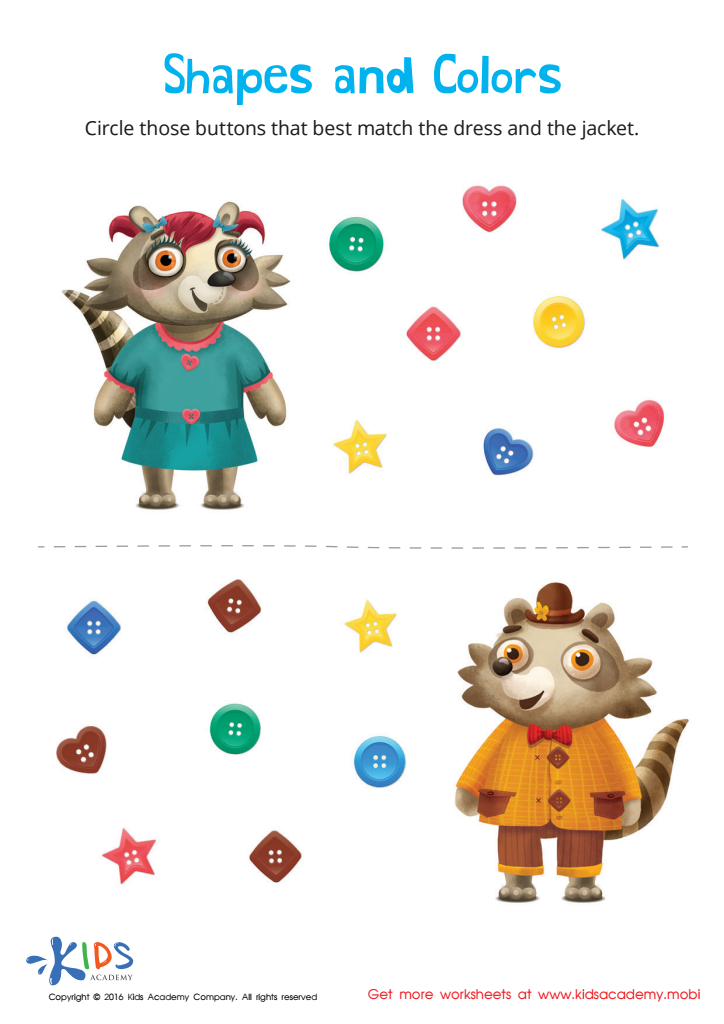
Matching: Shapes and Colors Worksheet
Help Mr. and Mrs. Raccoon find the right buttons to match their shirts! Kids will identify shapes and colors and learn to match them correctly.
Matching: Shapes and Colors Worksheet
Worksheet
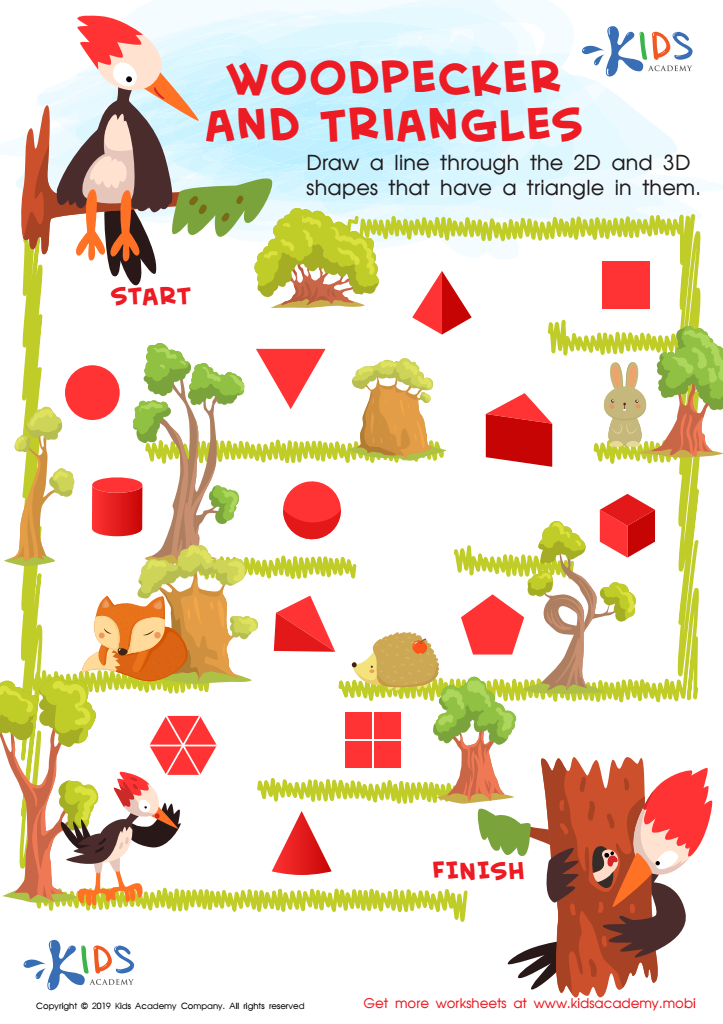
Woodpecker and Triangles Worksheet
Woodpeckers peck wood, and this printout helps kids learn about triangles. Ask your kindergartners to draw a triangle, then draw a line through the shapes that have a triangle in them to help the woodpecker get out of the maze.
Woodpecker and Triangles Worksheet
Worksheet
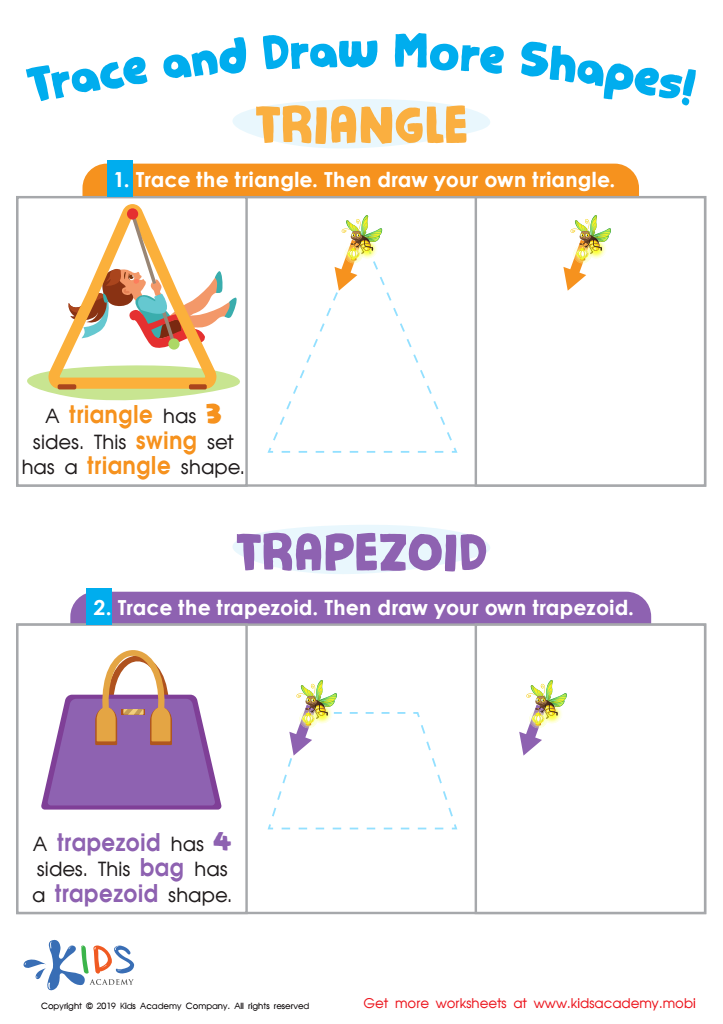
Trace and Draw More Shapes Worksheet
Help your kids with more learning! Look at images in the worksheet, read facts about the shapes, then help your kids trace and draw. This reinforces that learning is never done; use this simple worksheet to help your kids with school homework and more!
Trace and Draw More Shapes Worksheet
Worksheet
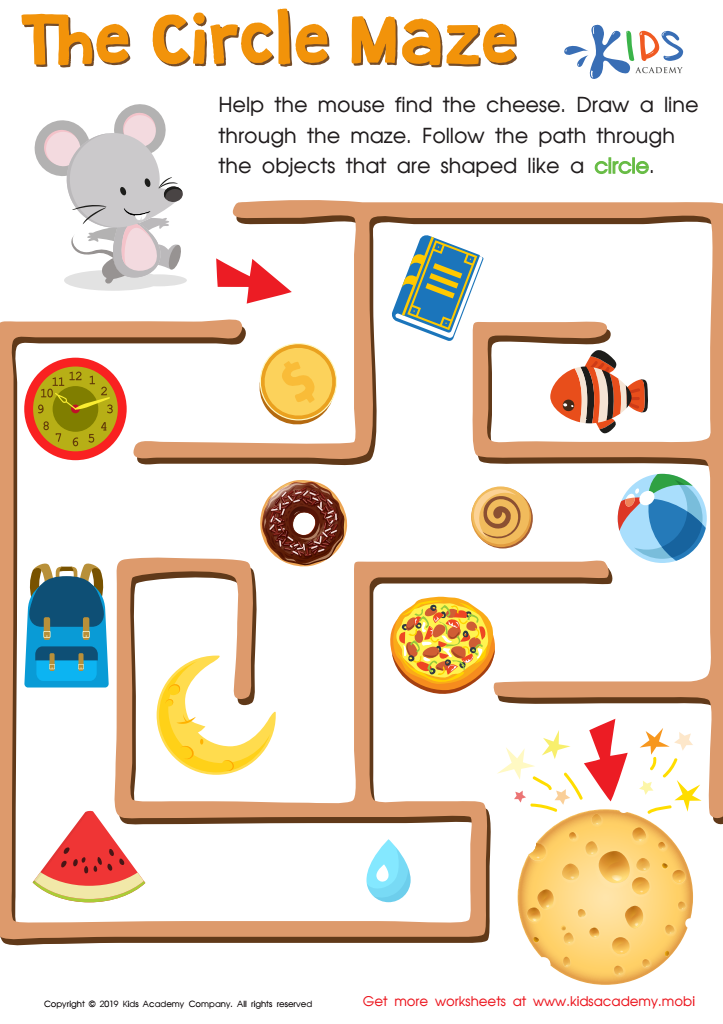
The Circle Maze Worksheet
Kids can have fun learning shapes with this maze worksheet. They can help the mouse find its cheese by tracing the path of a circle through the maze. This printable is great for classroom learning or as an activity at home.
The Circle Maze Worksheet
Worksheet
Join Kids Academy for Free
Who is primarily going to use this learning content?








Fine motor skills are essential for young children's overall development, significantly impacting their academic performance and daily life activities. For parents and teachers, understanding the importance of fine motor skills in the context of geometry is vital. Engaging in activities that develop these skills fosters a sense of precision, coordination, and spatial awareness in children.
When children practice activities like drawing shapes, cutting, or assembling puzzles, they enhance their ability to manipulate objects and use tools effectively. Such tasks require the integration of fine motor skills with geometric concepts, aiding in the visualization and understanding of shapes, angles, and spatial relationships. This foundational knowledge is crucial as geometry becomes a central component of mathematics education in later grades.
Beyond academics, strong fine motor skills enhance children’s independence in self-care tasks, such as buttoning shirts or tying shoelaces, which build confidence and self-esteem. Additionally, the ability to engage in inquiries involving shapes contributes to critical thinking and problem-solving abilities. Thus, promoting fine motor skills through an extra challenge in geometry provides a holistic benefit, laying the groundwork for success both in school and everyday life, making it essential for parents and teachers to prioritize these developmental activities.








