Basic counting skills Extra Challenge Math Worksheets
4 filtered results
-
From - To
Enhance your child's counting proficiency with our "Basic Counting Skills Extra Challenge Math Worksheets"! Designed for young learners, these worksheets provide engaging and challenging exercises that promote essential counting concepts. Incorporating fun visuals and diverse activities, students will practice counting objects, recognizing numbers, and honing their mathematical intuition. Ideal for reinforcing classroom learning at home, our extra challenge worksheets cater to various skill levels and keep children motivated. Foster a love for math through interactive and stimulating challenges that make learning enjoyable. Explore our collection today and watch your child build confidence and competence in fundamental counting skills!
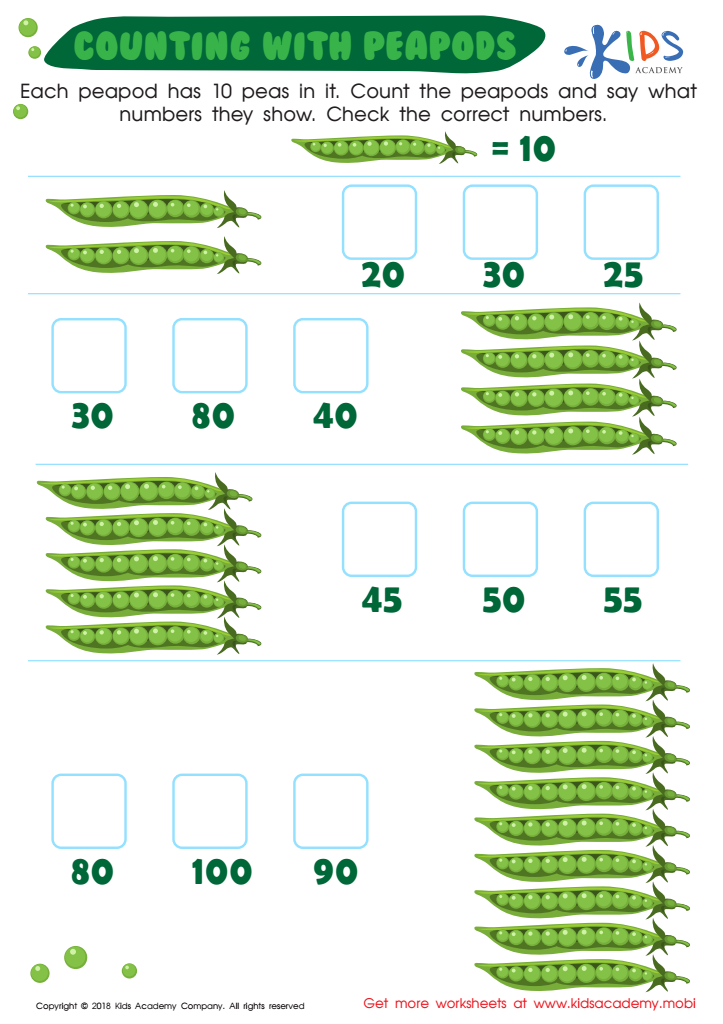
Number Worksheet: Counting With Peapods
 Assign to My Students
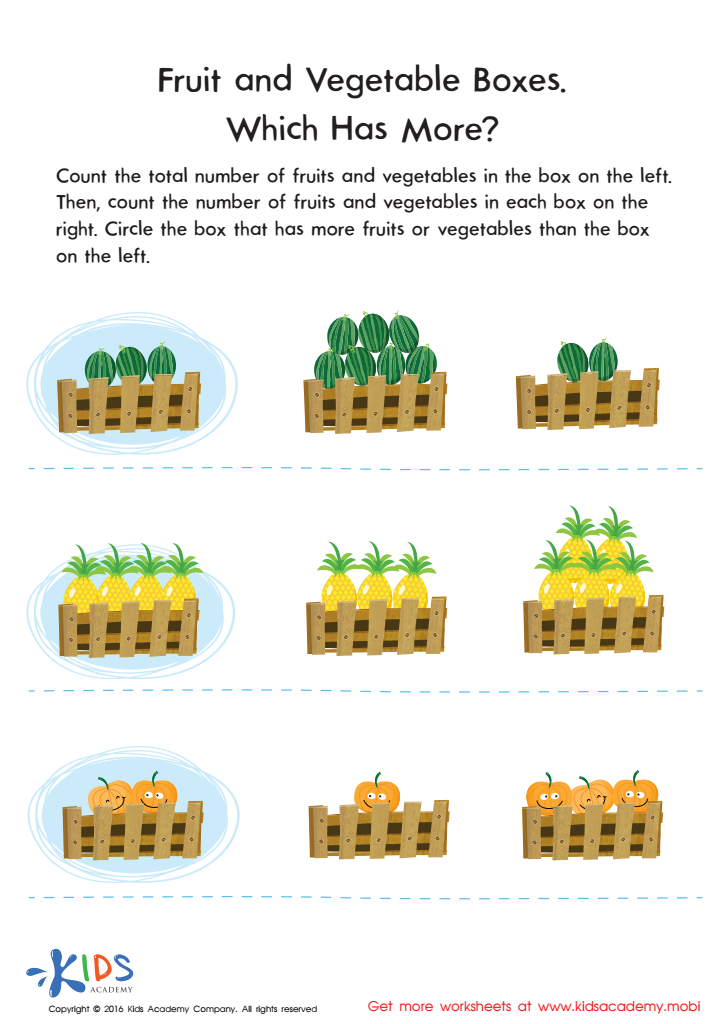
Which Has More? Size Worksheet
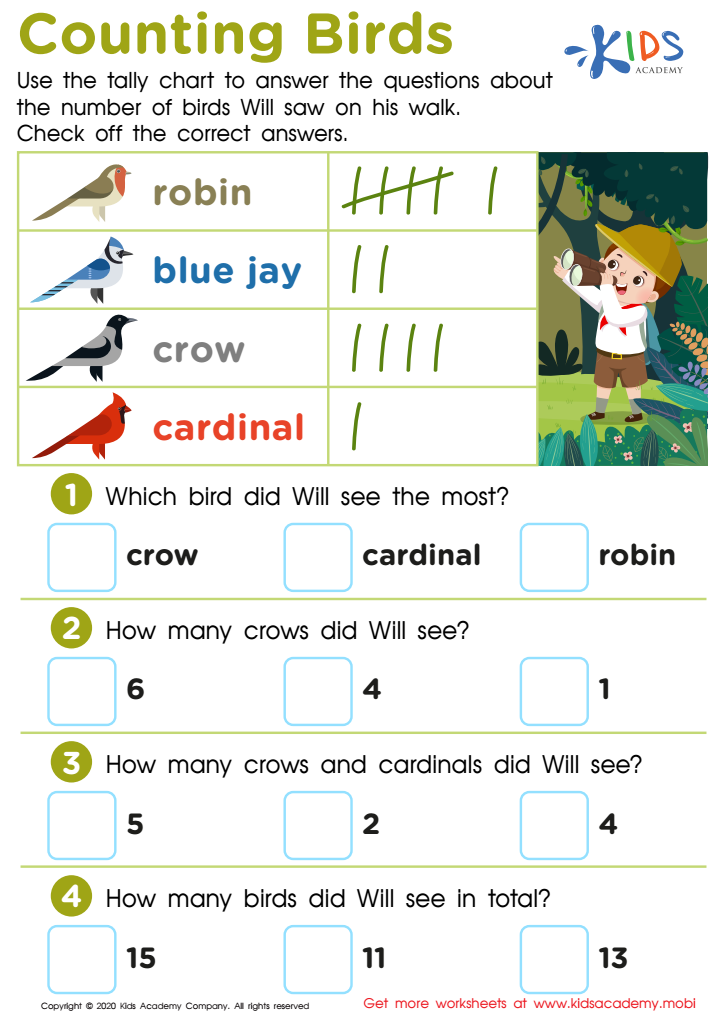
Counting Birds Worksheet
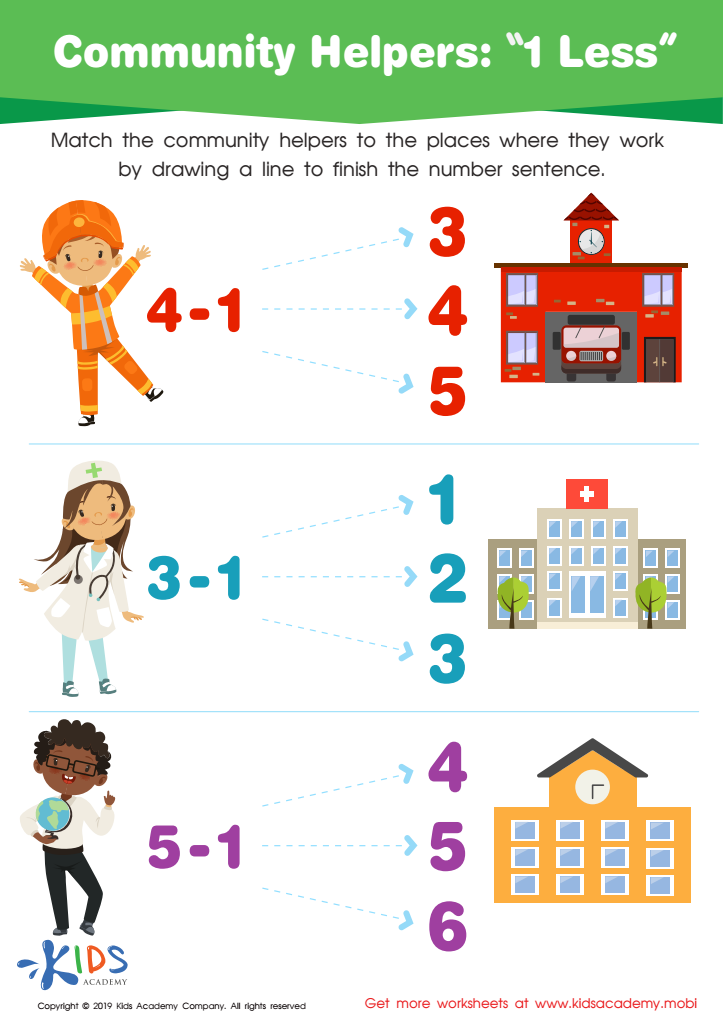
Community Helpers: 1 less Worksheet








Basic counting skills are foundational for children's early mathematical development and learning. For parents and teachers, fostering these skills is crucial as they serve as the building blocks for more complex mathematical concepts. When children master counting, they gain confidence in their abilities, which encourages a positive attitude toward math, an important subject in academia.
Counting allows children to develop critical cognitive skills such as number recognition, sequencing, and one-to-one correspondence. These skills not only play a role in math but also enhance problem-solving and logical thinking capabilities. Furthermore, counting is intertwined with daily life, whether it's counting money, measuring ingredients for a recipe, or tracking items during shopping.
Engaging children in fun counting games or activities promotes retention and makes learning enjoyable. It instills a sense of achievement and curiosity, which can lead to a lifelong appreciation for mathematics. Additionally, recognizing children who struggle with basic counting enables timely interventions, which can prevent future learning challenges.
In short, nurturing counting skills early on sets the stage for academic success and supports the development of crucial life skills that extend beyond the math classroom. It's an investment in a child's future learning and problem-solving abilities.








