Alphabet Recognition Extra Challenge Grade 2 ABC Order Worksheets
3 filtered results
Difficulty Level
Grade
Age
-
From - To
Subject
Activity
Standards
Boost your second grader's alphabet recognition skills with our engaging "Alphabet Recognition Extra Challenge Grade 2 ABC Order Worksheets." Designed for young learners, these worksheets provide exciting activities that help children practice alphabetical order while enhancing their letter identification abilities. Each worksheet features a variety of challenges that promote critical thinking and foster a deep understanding of letter sequencing. Perfect for classroom use or homework, these resources ensure students gain confidence in their literacy skills. Encourage your child's learning journey and make alphabet recognition fun with our carefully curated worksheets tailored for grade 2 learners. Start exploring today!
Favorites
With answer key
Interactive

Letter A Tracing Page
Trace and write the letter "A"! Start with the big red dot, then do the capital and lowercase versions. Then write it again with two words - apple and alligator. Download more tracing worksheets at Kids Academy.
 Assign to My Students
Letter A Tracing Page
Worksheet
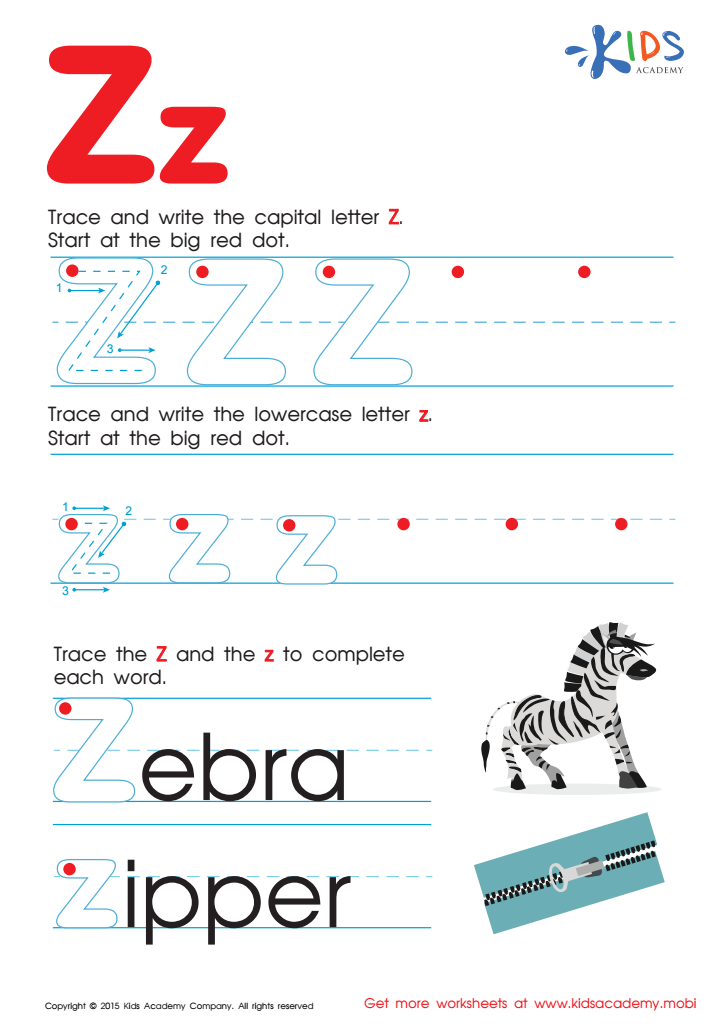
Letter Z Tracing Page
Trace and write capital "Z" and lowercase "z". Complete words "zebra" and "zipper". Be attentive and have fun! (80 words)
Letter Z Tracing Page
Worksheet
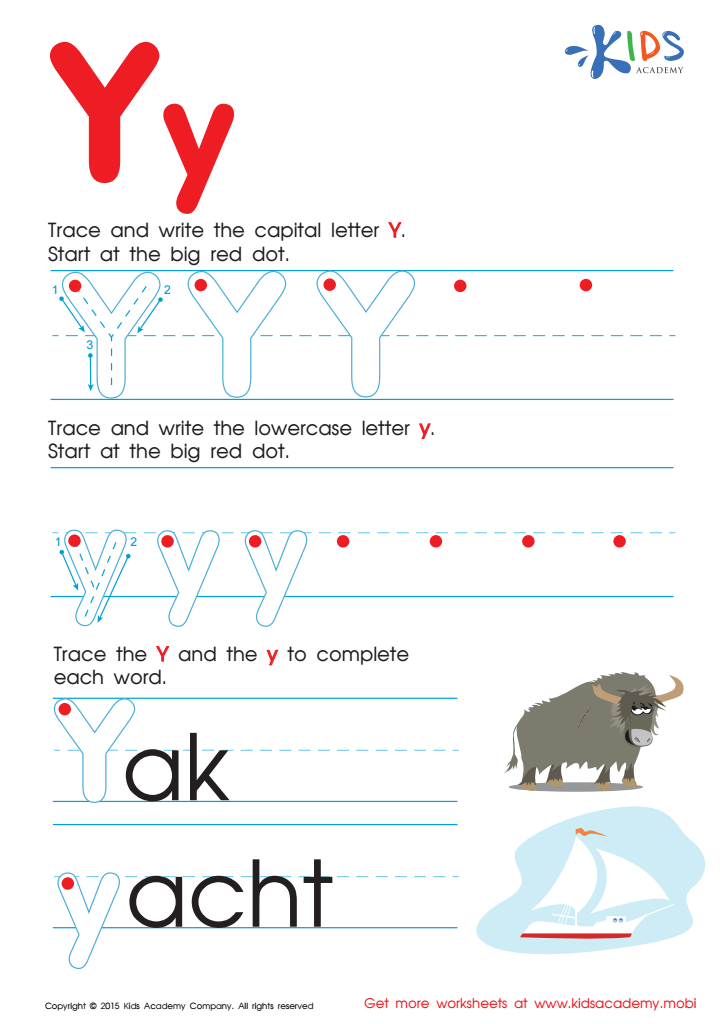
Letter Y Tracing Page
Trace the capital letter "Y" on the red dot, then trace and write the lowercase letter. Complete the words to help the Yak walk and the yacht swim. More worksheets at Kids Academy.
Letter Y Tracing Page
Worksheet
Join Kids Academy for Free
Who is primarily going to use this learning content?


Alphabet recognition is fundamental to a child's literacy development, particularly in Grade 2, where students transition from learning letters to reading independently. Understanding ABC order not only reinforces alphabetical knowledge but also enhances organizational skills crucial for academic success.
For parents and teachers, solidifying these skills fosters a child’s ability to locate and handle information efficiently—essential in an era flooded with data. Alphabetical order is commonly used in everyday contexts, such as dictionaries, encyclopedias, and databases, making it imperative for students to grasp this concept early on.
Engaging students with extra challenges in alphabet recognition can motivate them to diligently practice these skills. It promotes a sense of achievement and boosts their confidence in reading and writing. Additionally, fostering these abilities supports language arts curriculum goals, as children learn to categorize, categorize, and sort in a meaningful way. This lays a strong foundation for future learning, encouraging critical thinking and problem-solving skills. In summary, an emphasis on alphabet recognition, especially through fun challenges, serves to enrich children's learning experiences, cultivate lifelong skills, and empowers them to become more proficient learners and communicators.