Handwriting practice Extra Challenge Grade 2 Letter Recognition Worksheets
5 filtered results
Difficulty Level
Grade
Age
-
From - To
Subject
Activity
Standards
Boost your child's literacy with our Handwriting Practice Extra Challenge Grade 2 Letter Recognition Worksheets! These engaging printables are designed to strengthen letter recognition and handwriting skills for second graders. Each worksheet offers a variety of fun exercises, from tracing and writing letters to identifying and matching uppercase and lowercase forms. Perfect for both classroom and at-home practice, our worksheets provide the extra challenge that students need to excel in their handwriting and comprehension. High-quality and easy to use, these worksheets are an essential tool for any young learner's educational journey.
Favorites
With answer key
Interactive
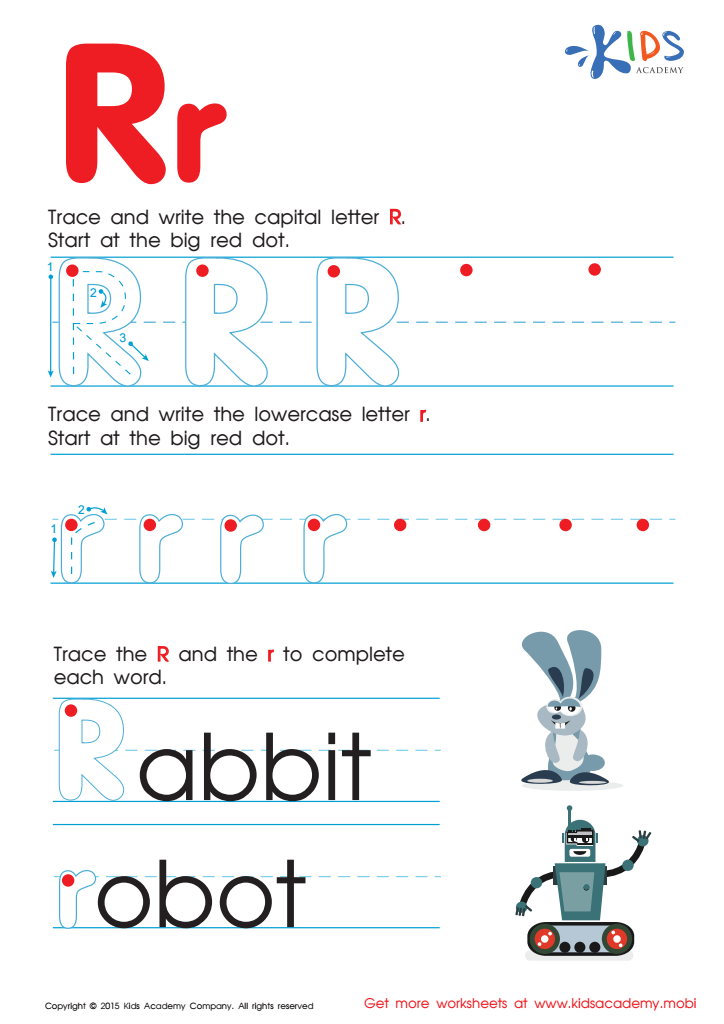
Letter R Tracing Page
Trace and write the letter "R" with this worksheet for kindergarten. Start with the uppercase, then move on to the lowercase. Write the letters several times for practice. Then help complete the words for the rabbit and robot, spelling carefully. More ABC worksheets can be found at Kids Academy.
 Assign to My Students
Letter R Tracing Page
Worksheet
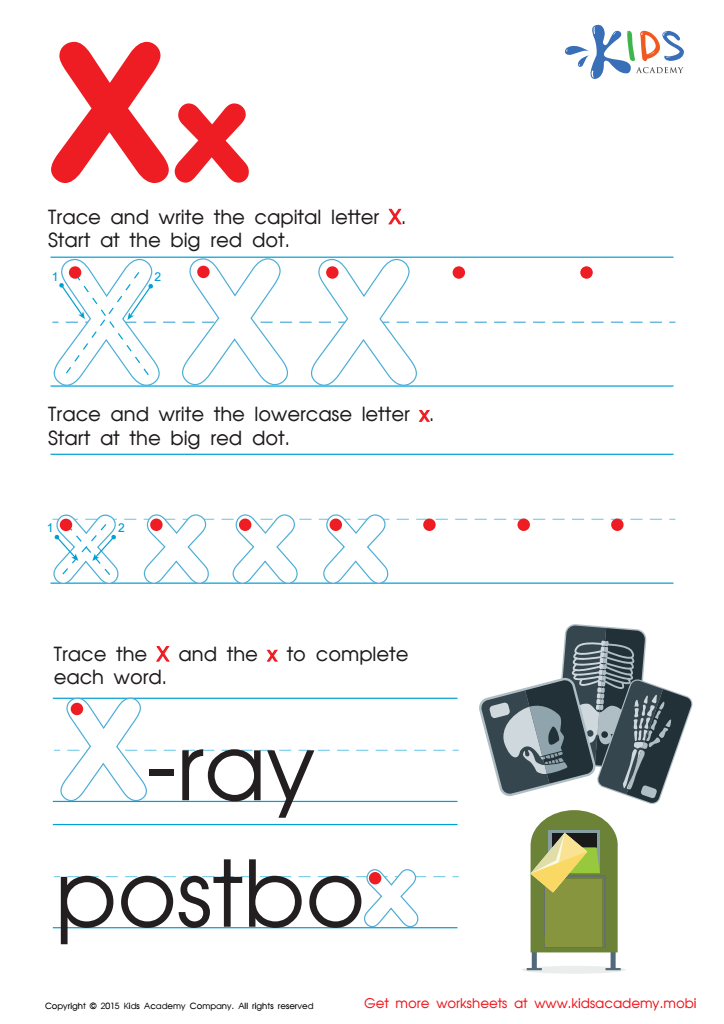
Letter X Tracing Page
Trace the uppercase letter "X" to learn, then write it yourself and practice. Then do the same with the lowercase "x" before completing the words "X-ray" and "postbox". Enjoy our alphabet printables!
Letter X Tracing Page
Worksheet
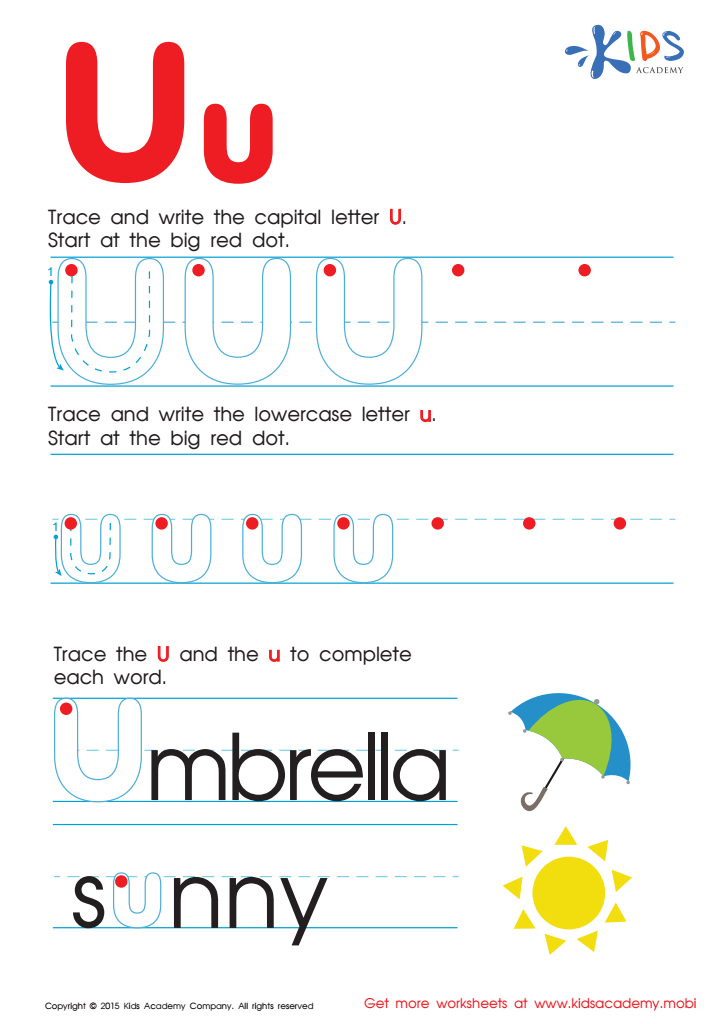
Letter U Tracing Page
Ready to trace and write the letter "U"? Use our worksheet and practice tracing both uppercase and lowercase letters. Complete the words "umbrella" and "sunny" with a capital "U". Check our full collection of alphabet printables for more activities.
Letter U Tracing Page
Worksheet
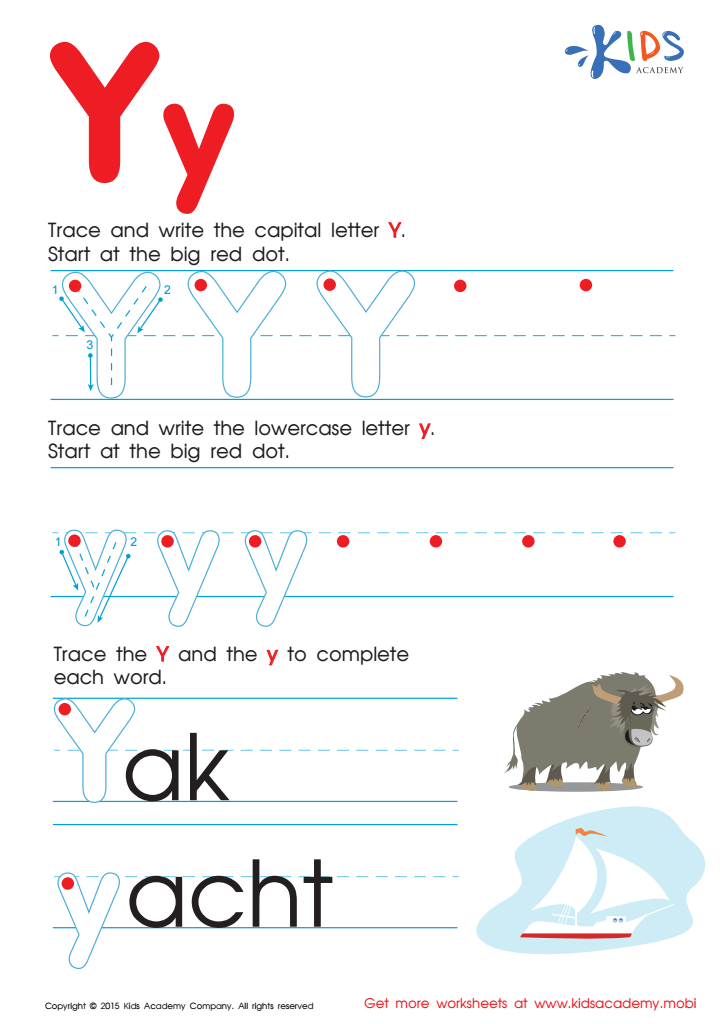
Letter Y Tracing Page
Trace the capital letter "Y" on the red dot, then trace and write the lowercase letter. Complete the words to help the Yak walk and the yacht swim. More worksheets at Kids Academy.
Letter Y Tracing Page
Worksheet
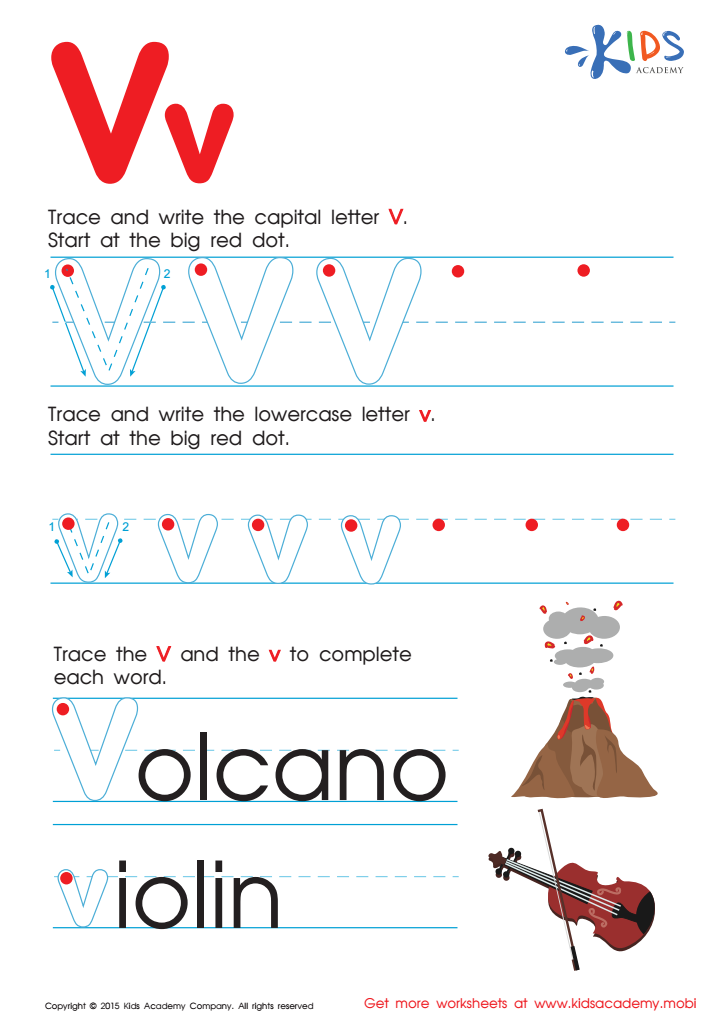
Letter V Tracing Page
Trace the uppercase and lowercase letter "V" with our kindergarten tracing worksheet. Begin at the red dot and follow the lines. Write it several times. Complete the words "Volcano" and "violin". Get more alphabet activities at Kids Academy.
Letter V Tracing Page
Worksheet
Join Kids Academy for Free
Who is primarily going to use this learning content?




Handwriting practice is an essential component of early childhood education for several important reasons, and parents and teachers should give attention to Extra Challenge Grade 2 letter recognition practice. Firstly, well-developed handwriting skills are linked to improved fine motor abilities, which are crucial for various everyday tasks such as tying shoes or using utensils. Furthermore, strong handwriting is associated with better spelling, reading fluency, and overall academic performance. When children can write letters clearly and confidently, it directly supports their literacy skills, enabling them to compose written work more effectively.
Additionally, teaching proper handwriting in Grade 2 reinforces neural circuits involved in forming letters, which can enhance cognitive development and memory retention. Letter recognition, on the other hand, is a foundational literacy skill, critical for reading competency. By facing extra challenges in letter recognition practice, children enhance their ability to quickly and correctly identify letters, leading to more proficient reading and writing skills.
Parents and teachers should care about this aspect because it sets the groundwork for the child's future academic success. Investing time in handwriting practice also builds patience, attention to detail, and perseverance—valuable life skills that extend beyond the classroom. Therefore, handwriting practice and letter recognition exercises are more than just about forming letters; they foster comprehensive educational and personal development.