Recognizing shapes Extra Challenge Grade 2 Geometry Worksheets
3 filtered results
-
From - To
Enhance your students' geometry skills with our "Recognizing Shapes Extra Challenge" worksheets, specially designed for grade 2 learners. These engaging activities will help young minds explore various shapes, from simple squares and circles to more complex polygons. By completing these Challenging worksheets, students will sharpen their ability to identify, differentiate, and understand geometric shapes in real-world contexts. Each worksheet incorporates vibrant visuals and interactive elements to keep learners motivated and excited about geometry. Perfect for classroom use or at-home practice, these resources cater to diverse learning styles and ensure your students build a strong foundation in geometry. Let the shape hunt begin!
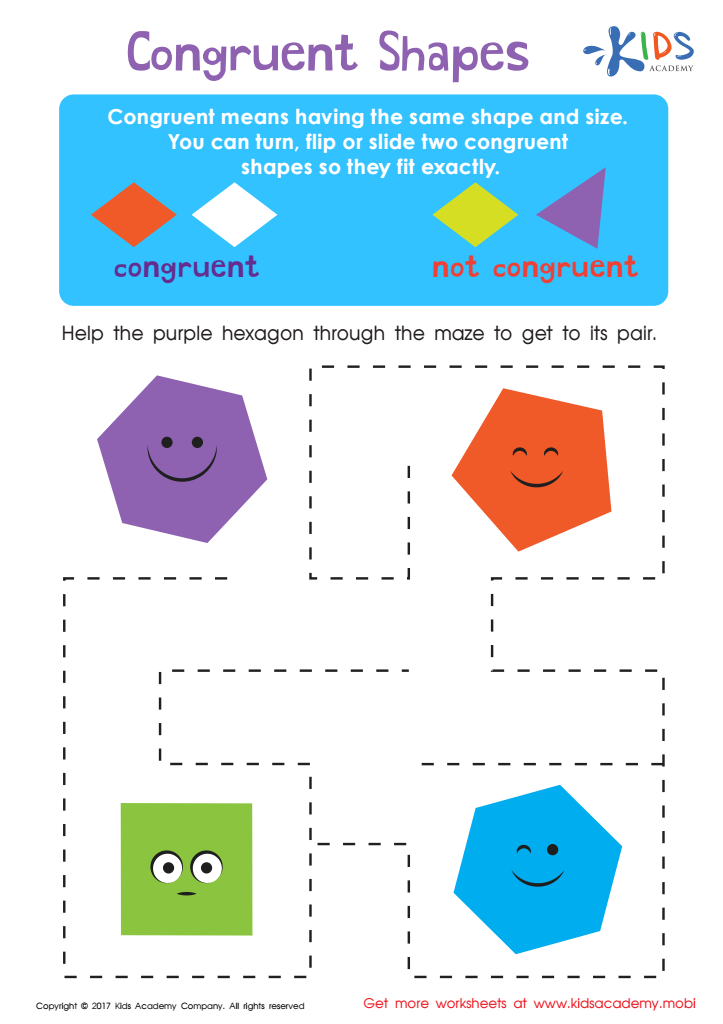
Congruent Shapes Worksheet
 Assign to My Students
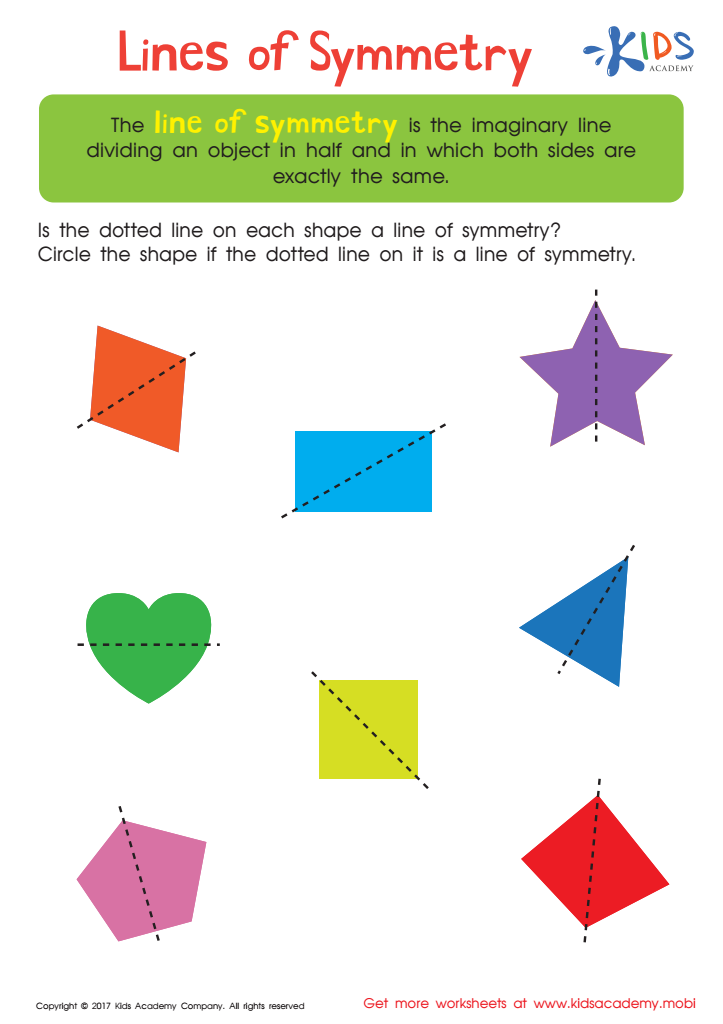
Lines of Symmetry Printable
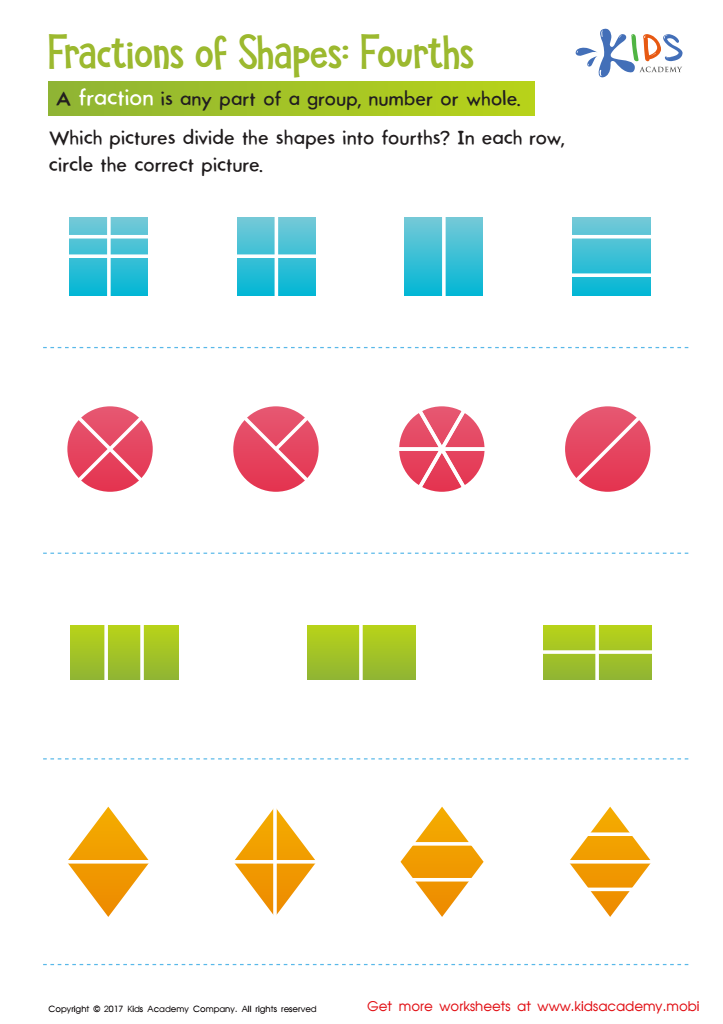
Fractions of Shapes Worksheet








Recognizing shapes is a crucial skill that serves as the foundation for understanding geometry and mathematics as a whole. For Grade 2 students, engaging with shapes promotes critical thinking, problem-solving, and spatial awareness. Parents and teachers should care about this extra challenge for several reasons.
Firstly, recognizing shapes helps children make connections between their mathematical understanding and the physical world around them. It aids in the development of analytical skills by enabling children to categorize, compare, and describe various forms and their properties. This knowledge will contribute to their success in future math topics, such as measurement and area.
Furthermore, learning shapes encourages creativity through art and design projects. When children explore how shapes combine to create new forms, they enhance their cognitive abilities and verbal skills by articulating what they see and experience.
Additionally, recognizing shapes fosters teamwork and collaboration when students work together on geometry tasks. This peer interaction not only boosts confidence but also reinforces social-emotional skills essential for their overall development.
In summary, emphasizing the importance of shape recognition in Grade 2 enriches students’ educational experiences, equips them with lifelong skills, and empowers parents and teachers to cultivate a love of learning in mathematics.