Animal recognition Extra Challenge Grade 2 Math Worksheets
3 filtered results
-
From - To
Discover the "Animal Recognition Extra Challenge Grade 2 Math Worksheets" designed to elevate your child's learning experience! These engaging worksheets combine math skills with animal themes, helping students practice essential second-grade skills while exploring the fascinating world of animals. From counting and addition to classification and sorting, each activity enhances critical thinking and problem-solving skills. Perfect for extra practice at home or in the classroom, these worksheets make learning fun and interactive. Encourage your child's love for learning and animals with these creative challenges that spark curiosity and foster educational growth. Download them today and watch your child excel!
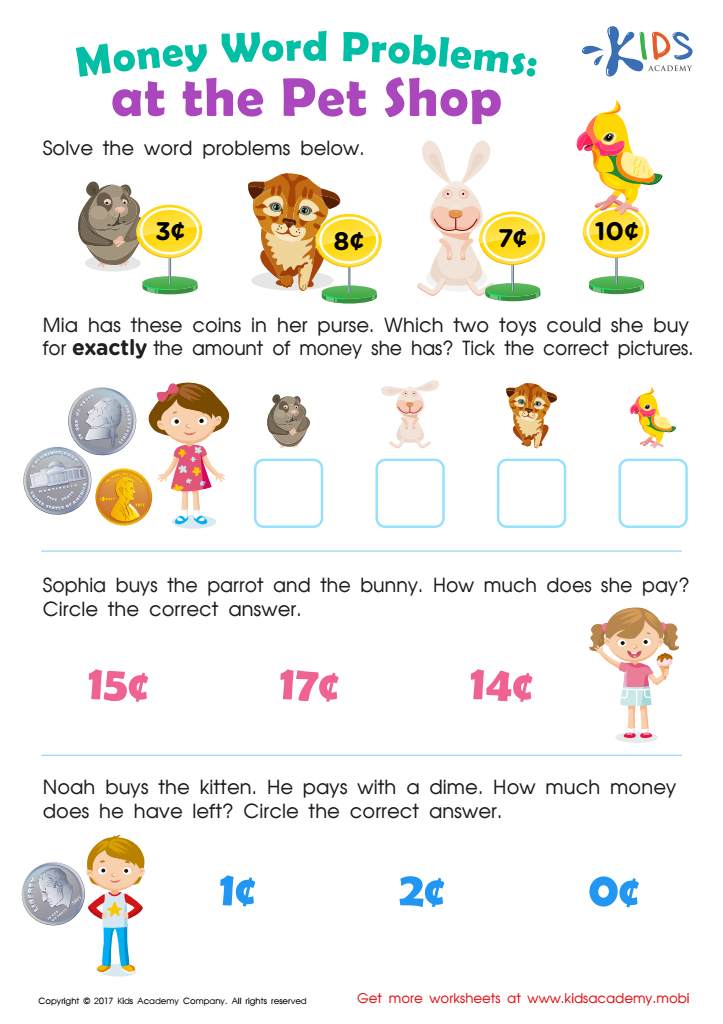
Pet Shop Worksheet
 Assign to My Students
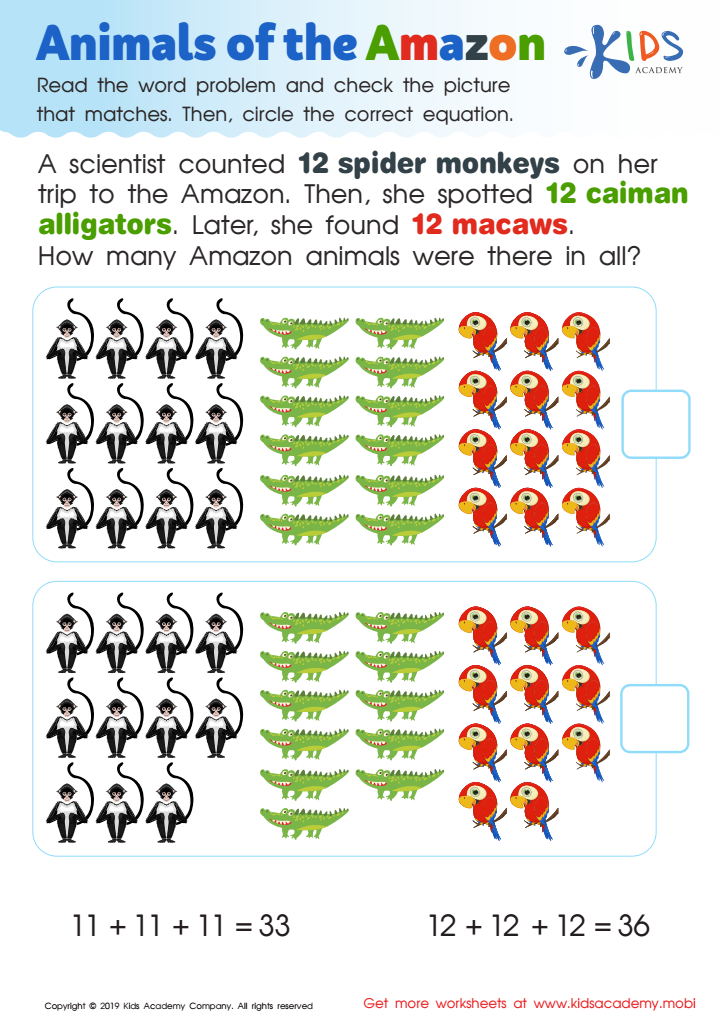
Animals of Amazon Worksheet
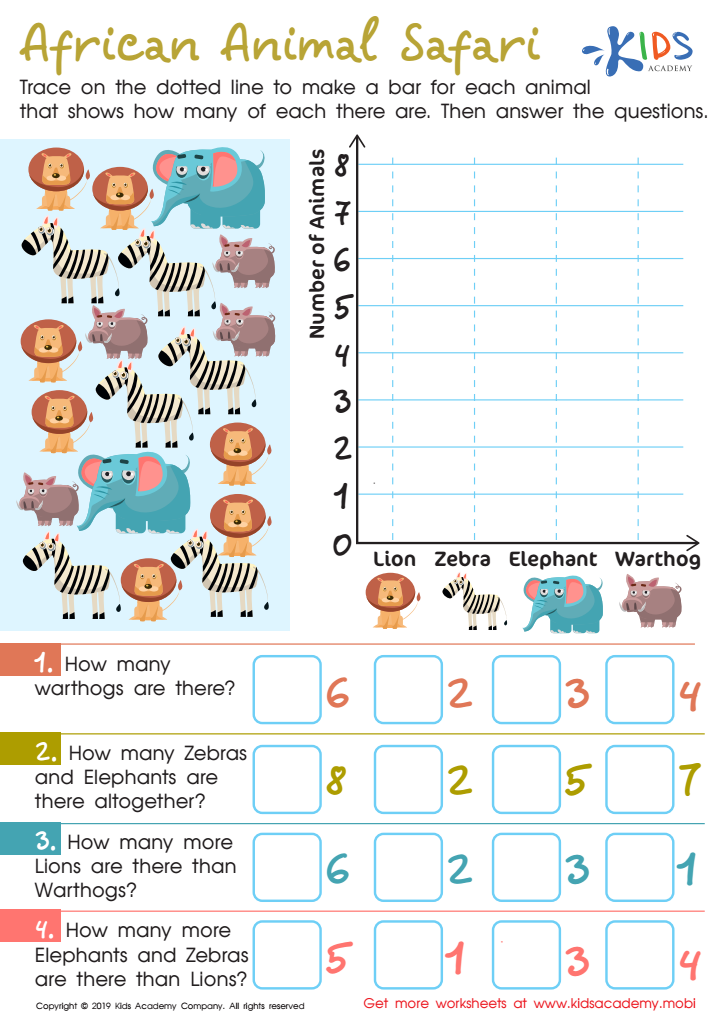
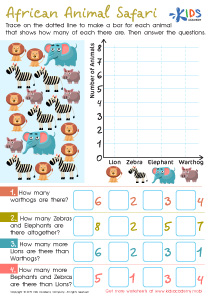
African Animal Safari Worksheet







Animal recognition in math isn't just a fun exercise; it’s an essential aspect of a child's cognitive and social development. Engaging Grade 2 students with animal recognition in math enhances their observational skills while integrating learning with the natural world. This blended approach cultivates curiosity and encourages children to explore mathematics beyond numbers.
Additionally, using animals in math problems creates relatable contexts that can help engage young learners. For instance, if students can visualize a scenario involving their favorite animal, they are more likely to connect with mathematical concepts, making learning more impactful and enjoyable.
Furthermore, such math challenges can foster critical thinking. When children categorize animals by their features, such as size or habitats, they practice sorting and classifying skills that are fundamental to mathematical understanding.
Finally, this activity promotes collaboration and discussion among peers. As they work together on animal-related math problems, students develop essential communication skills and learn from one another.
In summary, animal recognition in Grade 2 math offers more than just problem-solving; it nurtures a well-rounded educational experience that bridges math with creativity, critical thinking, and a love for the natural world. This holistic approach prepares children not just for math tests but for real-life problem-solving.