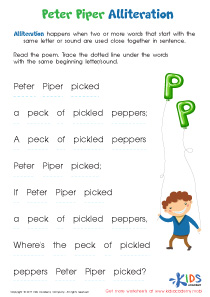
Enhance your Grade 3 students' letter recognition skills with our engaging "Letter Recognition Extra Challenge Tracing Letters Worksheets." Designed for adventurous learners, these worksheets offer a variety of tracing activities that encourage students to increase their familiarity with the alphabet. Each worksheet focuses on both uppercase and lowercase letters, featuring captivating visuals and themes to make learning fun and interactive. These resources are perfect for reinforcing fine motor skills while building confidence in writing. Whether used in the classroom or at home, our worksheets aim to challenge young minds, paving the way for a successful reading and writing journey!

Check out this FREE Grade 3 Trial Lesson on Tracing Letters!

2 Step Word Problems Writing Equations to Match

Favorites
With answer key
Interactive
  • Grade 3
  • Letter recognition
  • Tracing Letters
  • Extra Challenge
Letter R worksheets
Letter R worksheets

Letter R Tracing Page

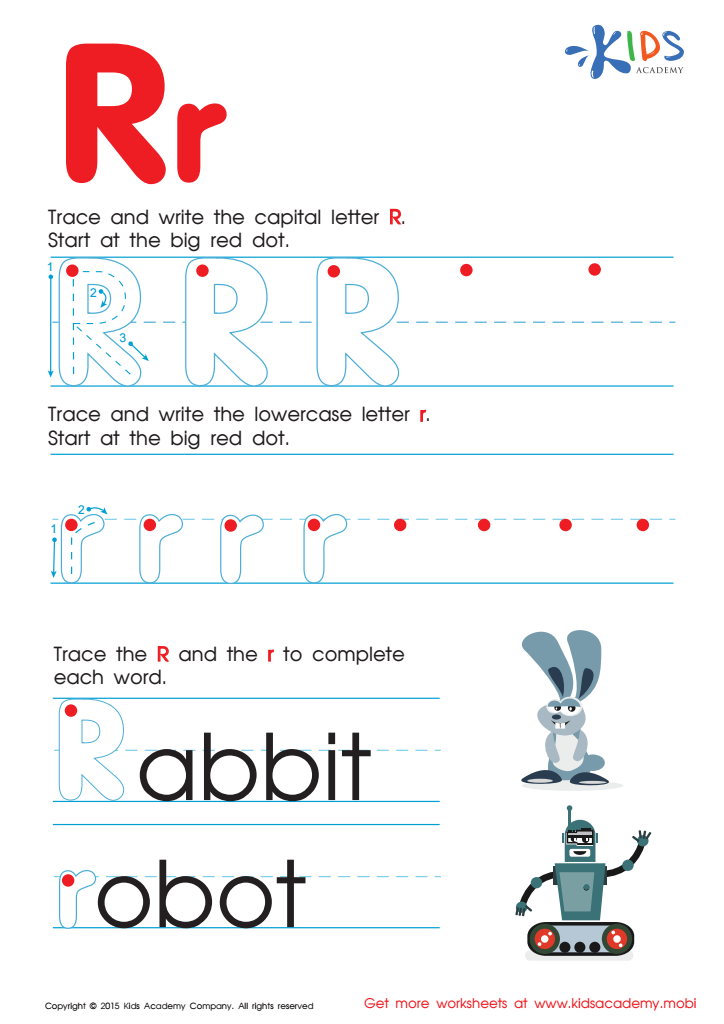
Trace and write the letter "R" with this worksheet for kindergarten. Start with the uppercase, then move on to the lowercase. Write the letters several times for practice. Then help complete the words for the rabbit and robot, spelling carefully. More ABC worksheets can be found at Kids Academy.
Letter R Tracing Page
Worksheet
Letter X worksheets
Letter X worksheets

Letter X Tracing Page

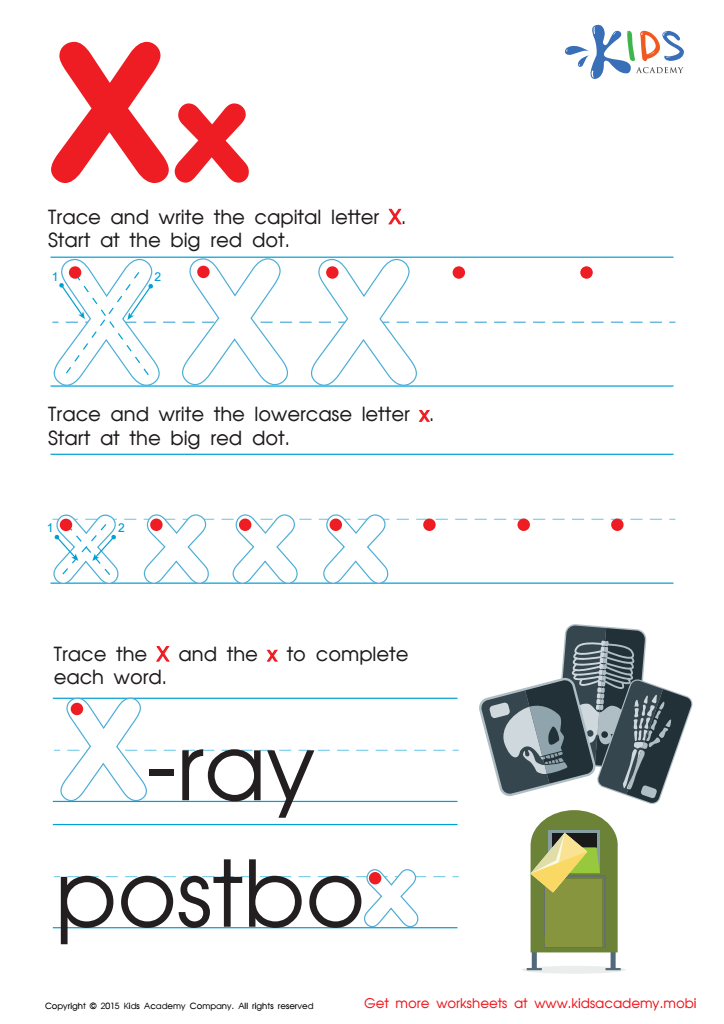
Trace the uppercase letter "X" to learn, then write it yourself and practice. Then do the same with the lowercase "x" before completing the words "X-ray" and "postbox". Enjoy our alphabet printables!
Letter X Tracing Page
Worksheet
Letter U worksheets
Letter U worksheets

Letter U Tracing Page

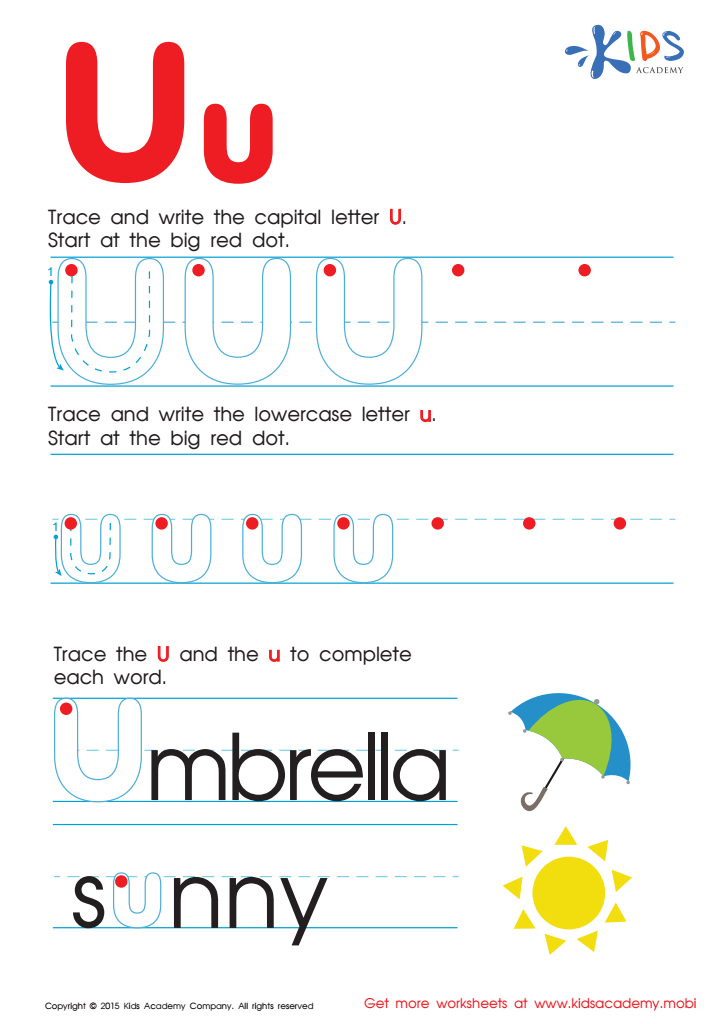
Ready to trace and write the letter "U"? Use our worksheet and practice tracing both uppercase and lowercase letters. Complete the words "umbrella" and "sunny" with a capital "U". Check our full collection of alphabet printables for more activities.
Letter U Tracing Page
Worksheet
Letter S worksheets
Letter S worksheets

Letter S Tracing Page

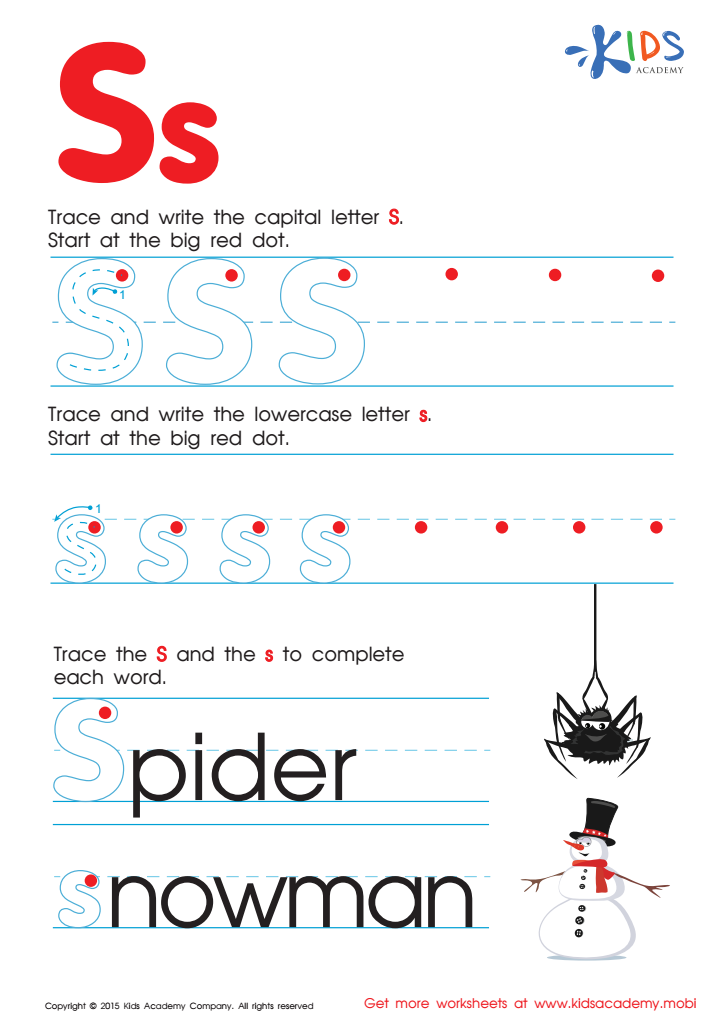
Trace and write the capital and lowercase "S" on this ABC worksheet for kindergarten. Start with the big red dot and be careful. When you finish, help the spider and snowman in the pictures restore their words with the capital and lowercase letters. Continue learning the alphabet with Kids Academy.
Letter S Tracing Page
Worksheet
Letter W worksheets
Letter W worksheets

Letter W Tracing Page

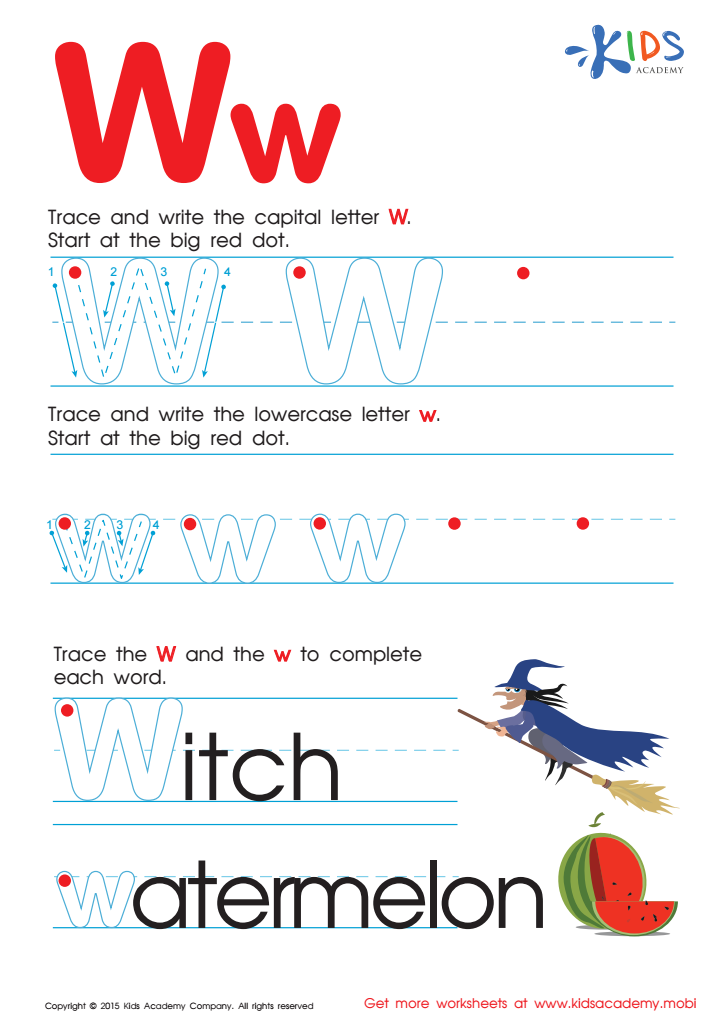
Trace and write the capital and lowercase letter W with this free letter tracing worksheet by Kids Academy. Complete the words "Witch" (capital) and "watermelon" (lowercase). Check out our other kindergarten alphabet worksheets!
Letter W Tracing Page
Worksheet
Letter V worksheets
Letter V worksheets

Letter V Tracing Page

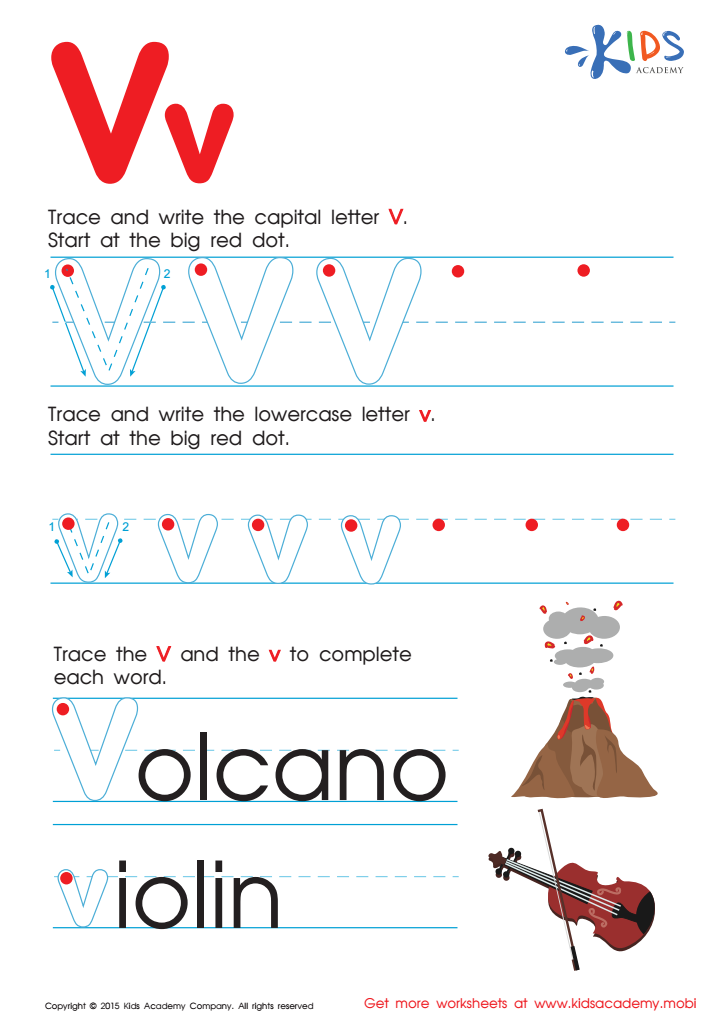
Trace the uppercase and lowercase letter "V" with our kindergarten tracing worksheet. Begin at the red dot and follow the lines. Write it several times. Complete the words "Volcano" and "violin". Get more alphabet activities at Kids Academy.
Letter V Tracing Page
Worksheet
Letter T worksheets
Letter T worksheets

Letter T Tracing Page

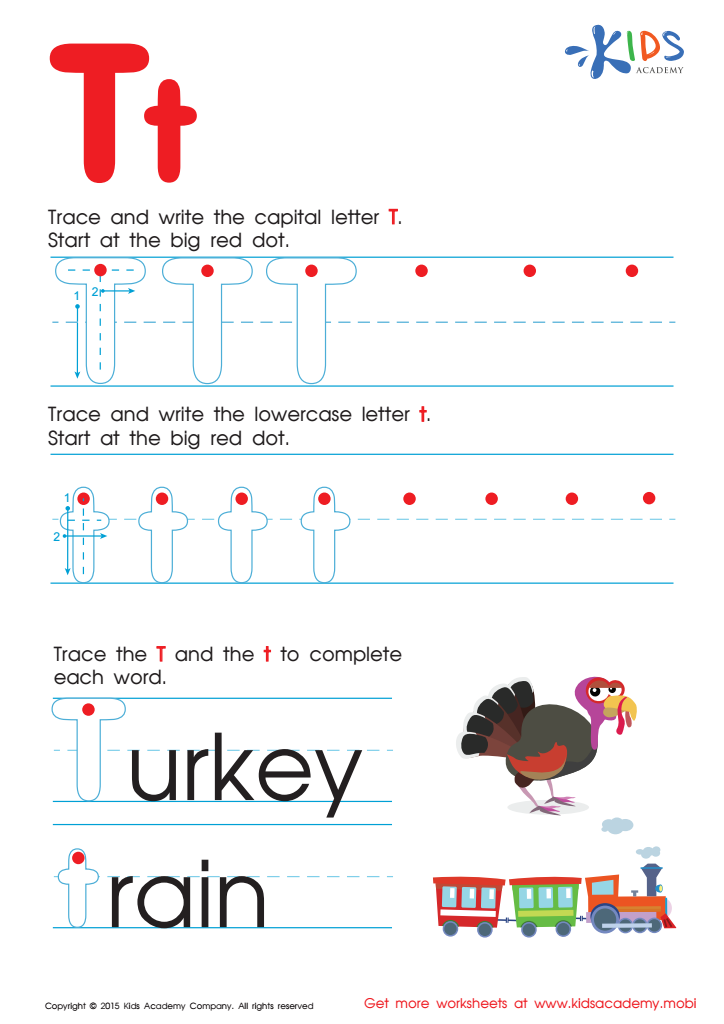
Trace letters, complete words, draw pictures and see your kids having fun! Kids Academy offers alphabet tracing worksheets to learn to write letters. Start with the big red dot, trace the letter, then write it. Practice uppercase and lowercase. Have fun completing words with a Turkey or a rain-train and draw pictures. Get more printable worksheets to make learning enjoyable.
Letter T Tracing Page
Worksheet


Letter recognition is a foundational skill that significantly impacts a child’s literacy development. For third graders, who are transitioning to more advanced reading and writing tasks, mastering letter recognition is crucial. When children can easily identify and trace letters, it enhances their ability to decode words and comprehend texts, fostering a love for reading and learning.

By incorporating activities like tracing letters, parents and teachers engage students in a hands-on way that strengthens motor skills alongside cognitive development. Tracing helps reinforce letter shape and structure, allowing children to visualize each character while developing muscle memory, which is vital as they begin to write independently.

Furthermore, letter recognition can impact a child’s confidence in their reading and writing abilities. As they become more familiar with letters, they are likely to participate more actively in class discussions and activities, promoting a positive learning environment. Early intervention through letter recognition activities can identify any at-risk learners who may need additional support.

In essence, prioritizing letter recognition is essential as it lays the groundwork for literacy success, nurturing not only academic achievement but also a lifelong appreciation for communication and learning. Understanding its importance is key for parents and teachers alike.