Counting practice Extra Challenge Grade 3 Coins Worksheets
3 filtered results
-
From - To
Unlock your child’s potential in mastering math with our Counting Practice Extra Challenge Grade 3 Coins Worksheets. Devised for third-grade scholars, these engaging printables sharpen coin identification and counting abilities through fun, interactive exercises. Each worksheet features a variety of challenges, from adding up mixed coins to complex combinations, ensuring comprehensive learning. Perfect for both learning in-class and at home, these activities reinforce real-world math problems and practical skills. Elevate your child’s confidence in math as they navigate these expertly designed worksheets, making learning effortless and enjoyable. Tap into Kids Academy for top-tier educational resources today!
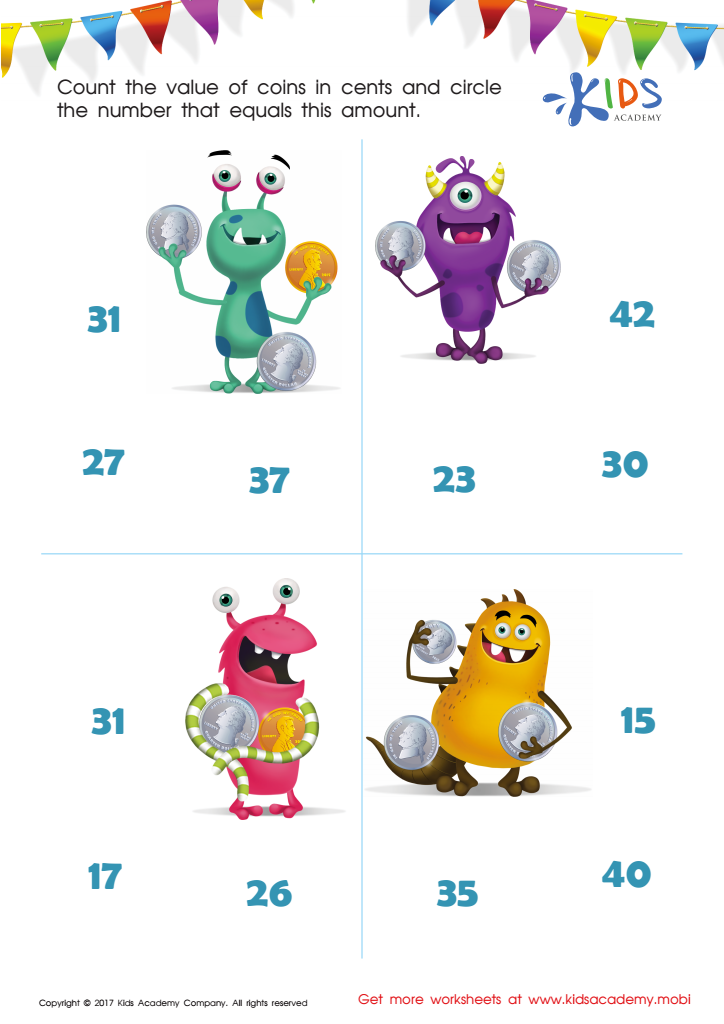
How Many Coins Money Worksheet
 Assign to My Students
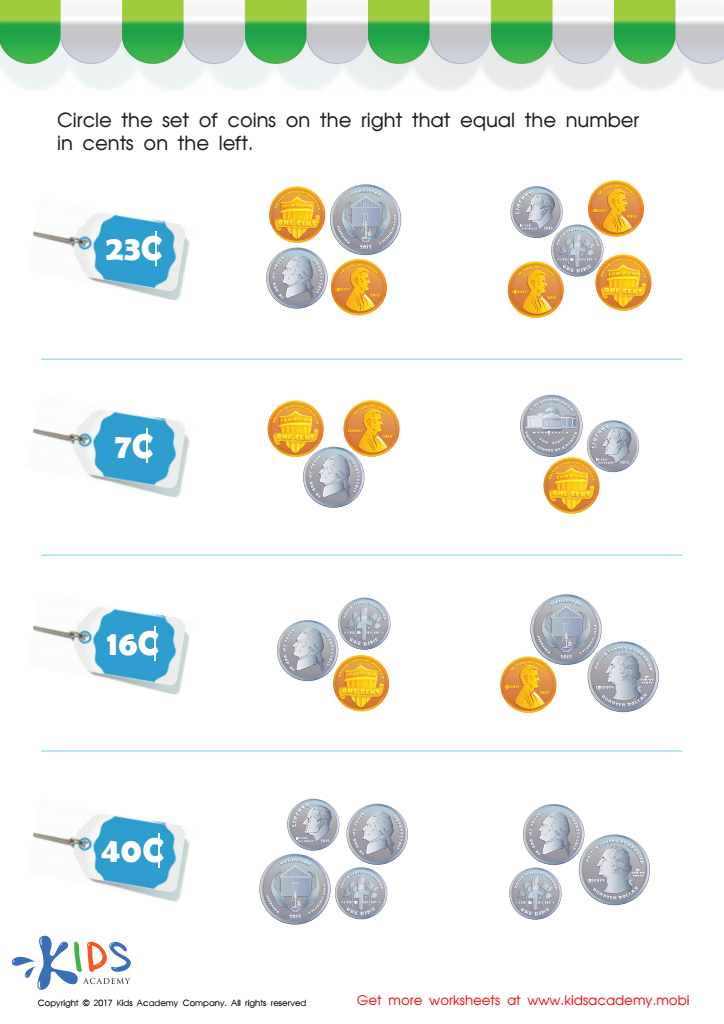
Picking the Coins You Need Money Worksheet
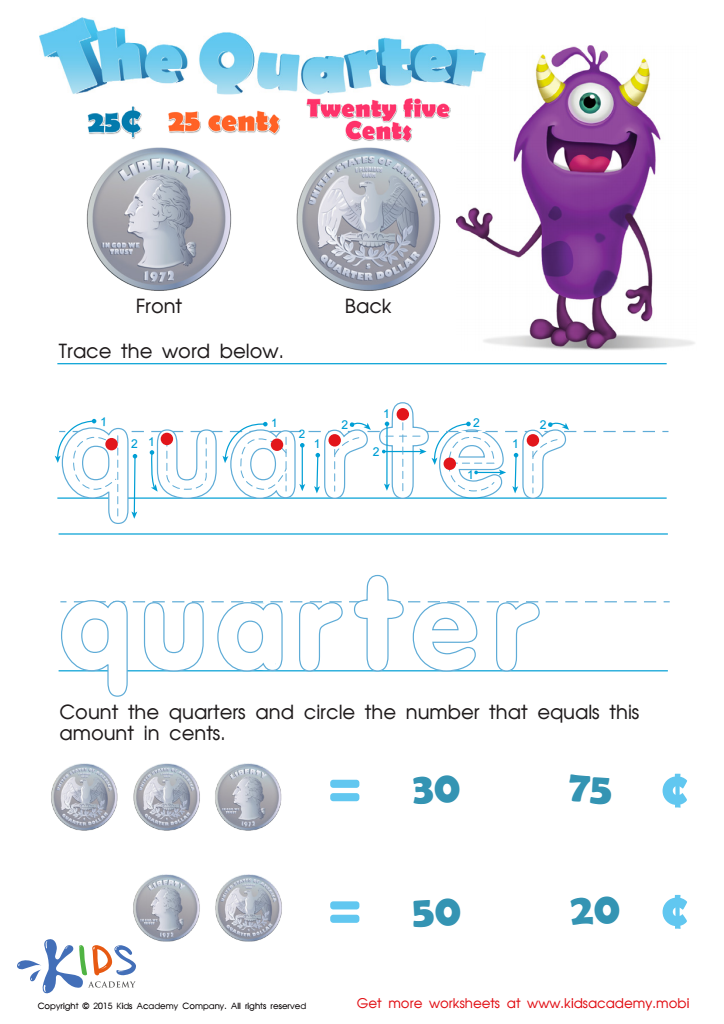
Twenty Five Cents or the Quarter Money Worksheet




Counting practice with coins is crucial for third graders as it integrates fundamental math skills with practical life applications. Understanding the value of money and performing calculations with coins lays a strong foundation for financial literacy, a critical life skill. Early exposure to money calculations helps children grasp the concepts of addition, subtraction, multiplication, and division in a fun, engaging way.
Moreover, coin counting practice enhances problem-solving skills. Students learn to approach challenges methodically, improving their ability to think critically. This practice also reinforces mental math abilities, encouraging speed and accuracy without over-reliance on calculators.
From a parent's perspective, coin counting is a wonderful opportunity to bond with their child over a meaningful and educational activity. It allows parents to participate actively in their child's learning journey, reinforcing concepts taught in the classroom.
For teachers, offering an extra challenge like counting coins caters to diverse learning levels and keeps advanced students engaged. It provides a tangible, everyday context for abstract mathematical concepts, making lessons more relatable and memorable.
Thus, focusing on coin counting practice supports academic development and equips children with essential skills they will use throughout their lives. Both parents and teachers play a pivotal role in facilitating these foundational learning experiences, fostering a balanced and comprehensive education.