Mental math skills Extra Challenge Grade 3 Multiplication Worksheets
3 filtered results
-
From - To
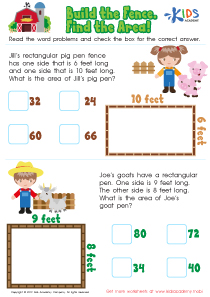
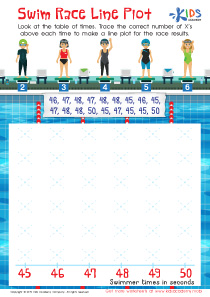
Looking to enhance your third grader's multiplication skills? Our "Mental Math Skills Extra Challenge Grade 3 Multiplication Worksheets" are designed to make math engaging and effective! These specially crafted worksheets encourage students to solve multiplication problems mentally, fostering critical thinking and quick calculation abilities. Aligned with educational standards, each worksheet offers a variety of challenging exercises, from straightforward multiplication facts to multi-step word problems. Perfect for classroom use or at-home practice, these resources help build confidence and reinforce foundational math concepts. Join us in making learning fun and effective—download our mental math worksheets today and watch your child excel!
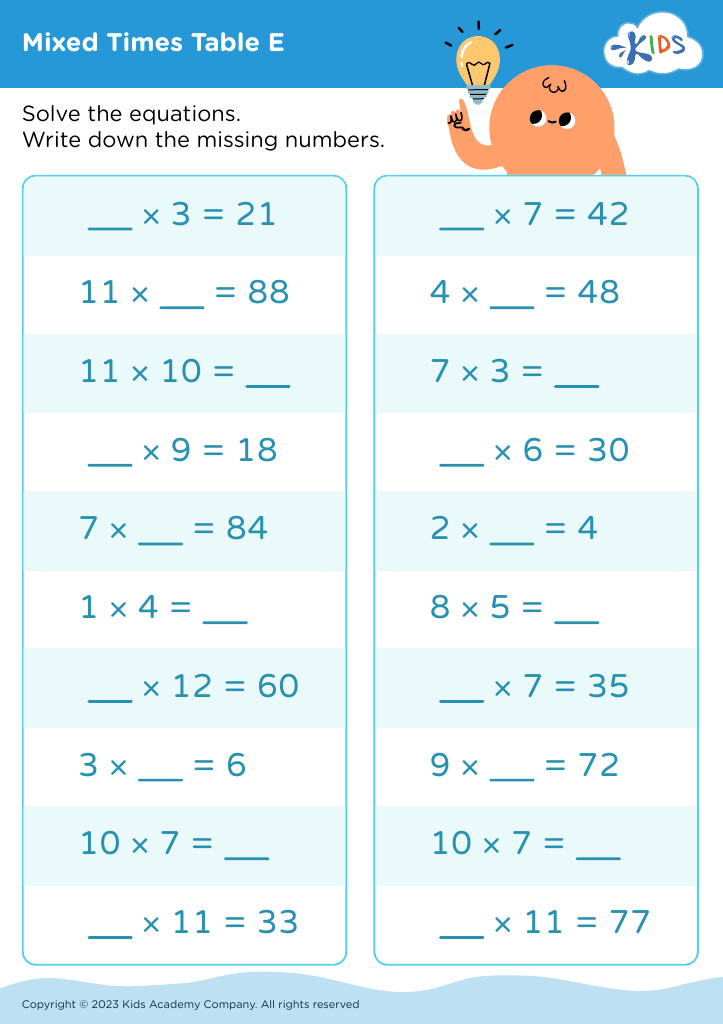
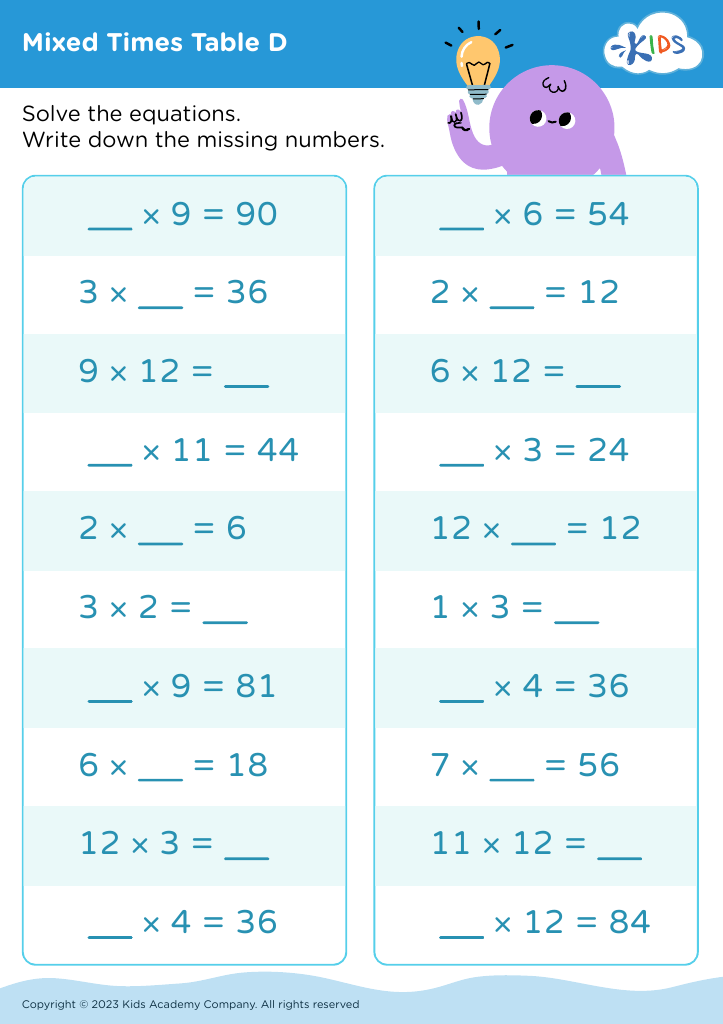
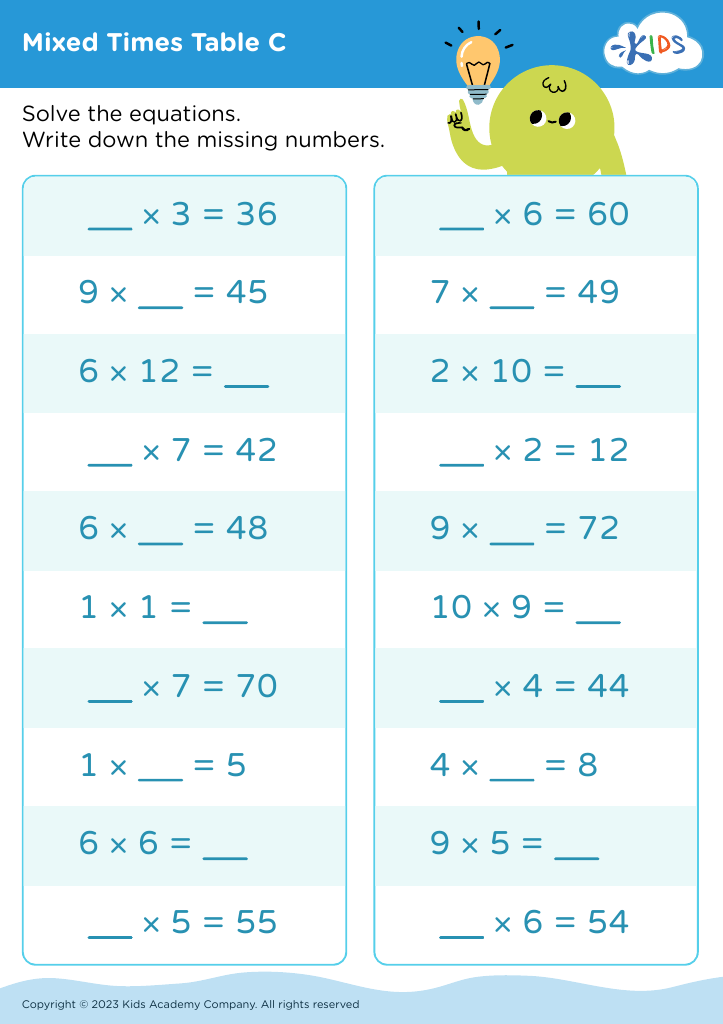








Parents and teachers should prioritize mental math skills, particularly in Grade 3 multiplication, for several compelling reasons. First, mental math enhances a child’s mathematical fluency, allowing them to perform calculations quickly and accurately without reliance on calculators. This fluency fosters confidence and encourages a positive attitude toward math.
Additionally, strong mental math skills lay the groundwork for more advanced mathematical concepts. Understanding multiplication through mental strategies helps students recognize patterns and relationships between numbers, which is crucial for problem-solving and algebraic thinking later on. Furthermore, equipping children with mental math abilities cultivates critical thinking skills and improves their ability to apply math in real-life situations, such as budgeting, cooking, and time management.
Engaging in mental math encourages a growth mindset, as children learn persistence and resilience through solving challenges. Moreover, parental and teacher involvement in strengthening these skills demonstrates to children the value society places on math proficiency. Incorporating enjoyable games and activities that promote multiplication practice can make learning engaging, allowing children to develop skills without stress or pressure. Ultimately, nurturing mental math skills helps children become self-sufficient, confident learners prepared for future academic endeavors.