Cognitive Development Kindergarten Alphabet Worksheets
7 filtered results
Difficulty Level
Grade
Age
-
From - To
Subject
Activity
Standards
Explore our engaging "Cognitive Development Kindergarten Alphabet Worksheets" designed to boost your child’s cognitive skills through interactive alphabet activities. Each worksheet strategically combines letter recognition with fun exercises to stimulate brain development, enhance memory, and improve problem-solving abilities. Tailored for young learners, this resource nurtures critical thinking and fosters an early love for learning through diverse tasks such as matching, sorting, and tracing. Ideal for both classroom settings and home practice, our alphabet worksheets ensure foundational skills are solidly built, paving the way for future academic success. Unlock your child's potential with these fun, educational printables!
Favorites
With answer key
Interactive
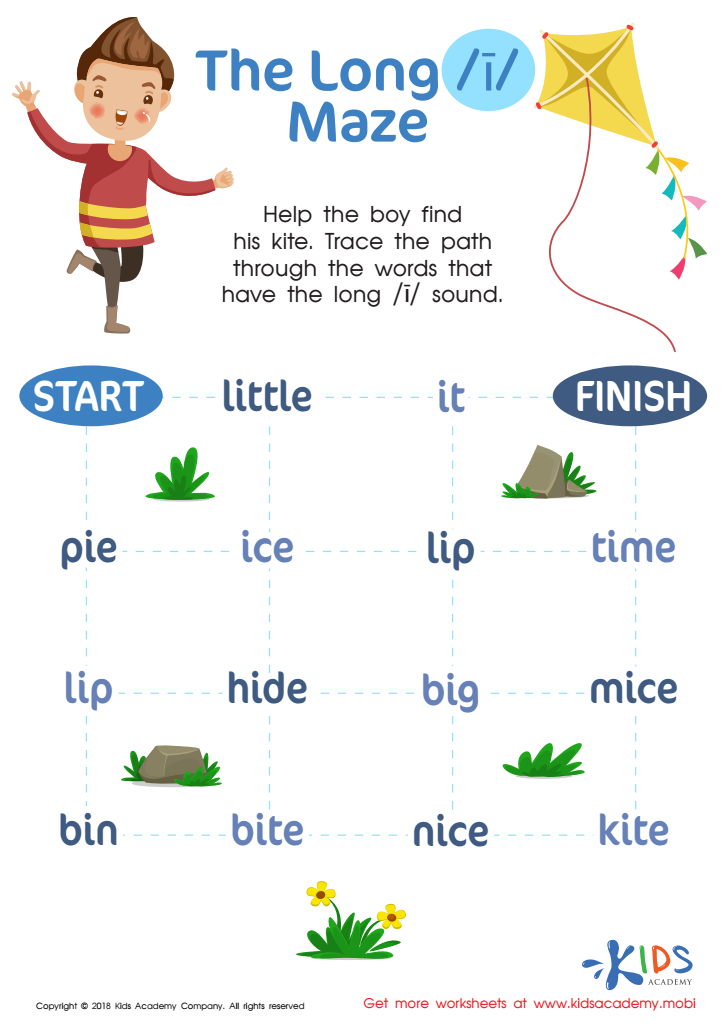
The Long I Maze Reading Worksheet
Help your child learn phonics to help them read. Show them the difference between long and short "i" sounds. Guide them as they use a pencil to trace words with the long "i:" sound in the "Help the Boy in the Picture" worksheet exercise. This will help them find the kite in the picture.
 Assign to My Students
The Long I Maze Reading Worksheet
Worksheet
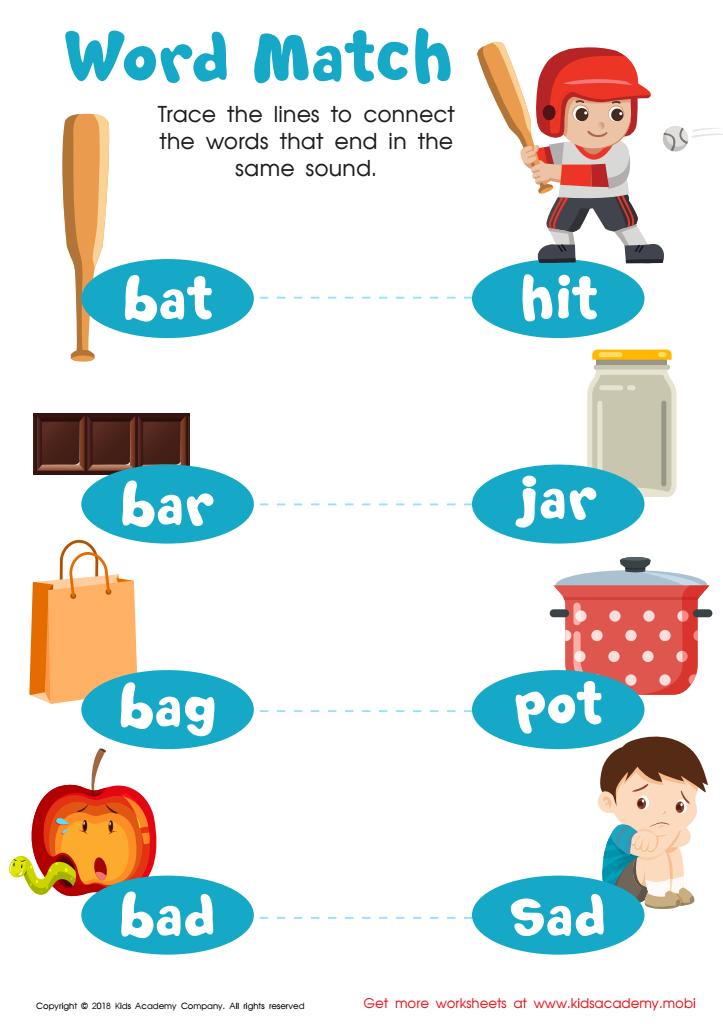
Word Match Reading Worksheet
This printout helps children learn to read fluently by connecting words with the same sound. Colorful pictures aid understanding and context for kindergarten-level students. Tracing lines, they learn to identify the sounds made by letters of the alphabet and deepen their knowledge of phonics.
Word Match Reading Worksheet
Worksheet
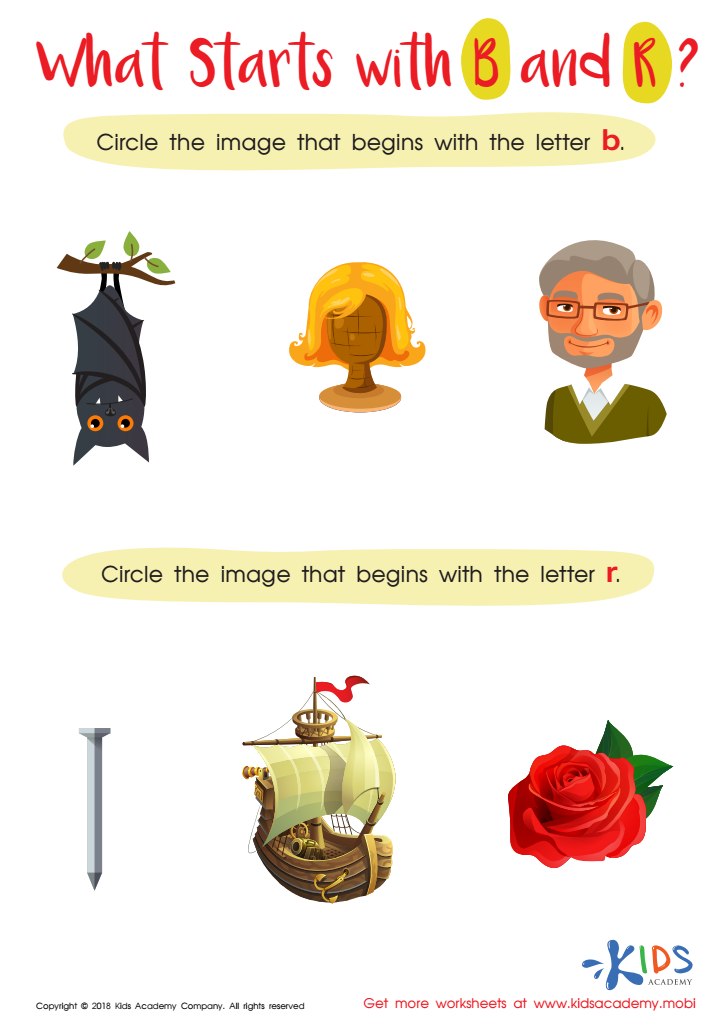
What Starts with B and R? Worksheet
Download this worksheet to help young readers practice visual and motor skills! They'll enjoy matching pictures with "B" and "R" letters while tracing the images. Bright and colorful, this engaging activity will help kids differentiate between words and have fun doing it.
What Starts with B and R? Worksheet
Worksheet
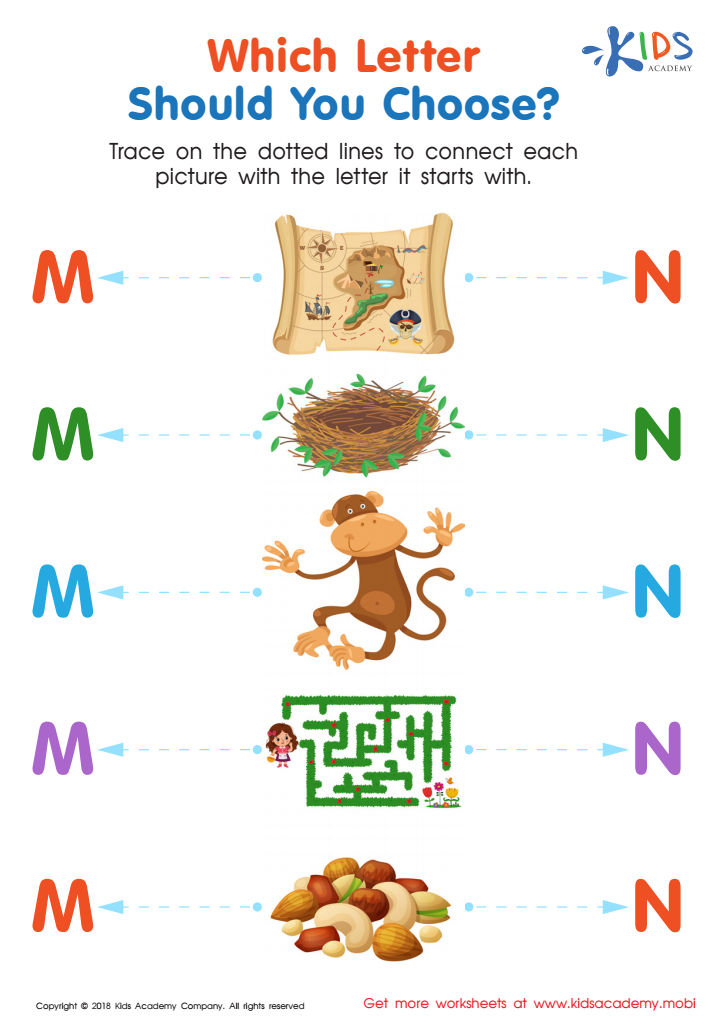
Which Letter Should you Choose? Worksheet
Trace the dotted lines to connect images with their first letter: "n" or "m." Challenge your child to name each picture, then identify the first letter and trace to the right letter! Five images in total.
Which Letter Should you Choose? Worksheet
Worksheet
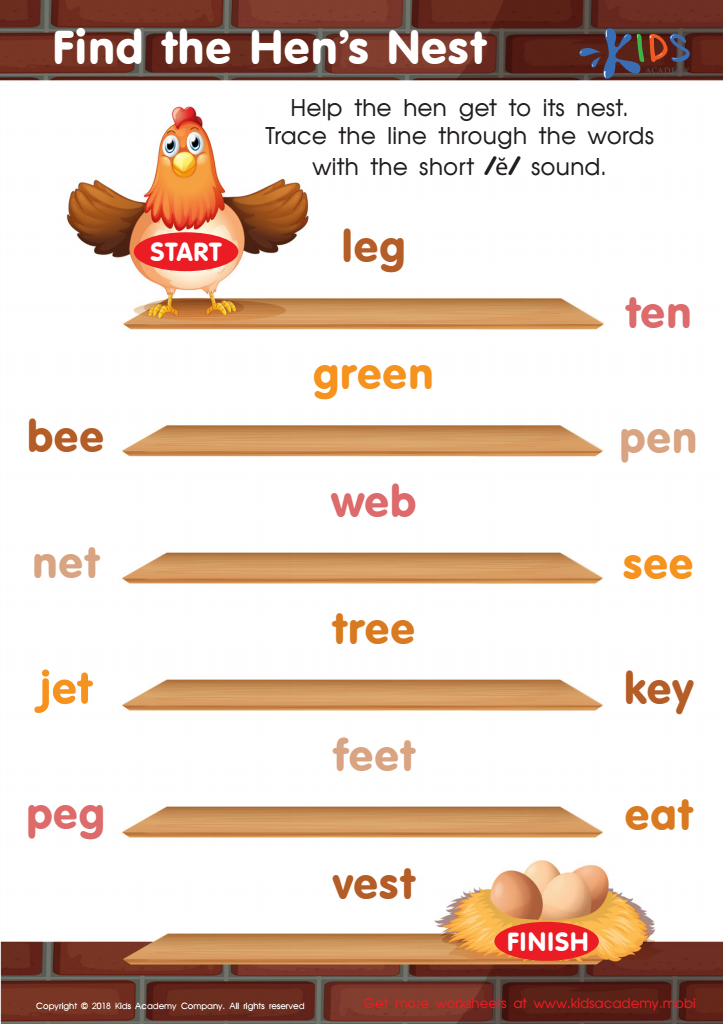
Find Hens Nest Reading Worksheet
Learning the short and long «e» sound can be tricky for kids just starting to learn the alphabet. Make it fun with this worksheet: it leads your kindergarten child to a hen's nest by following words with the short «e» sound. They'll be able to identify words with the sound by the end of the exercise.
Find Hens Nest Reading Worksheet
Worksheet
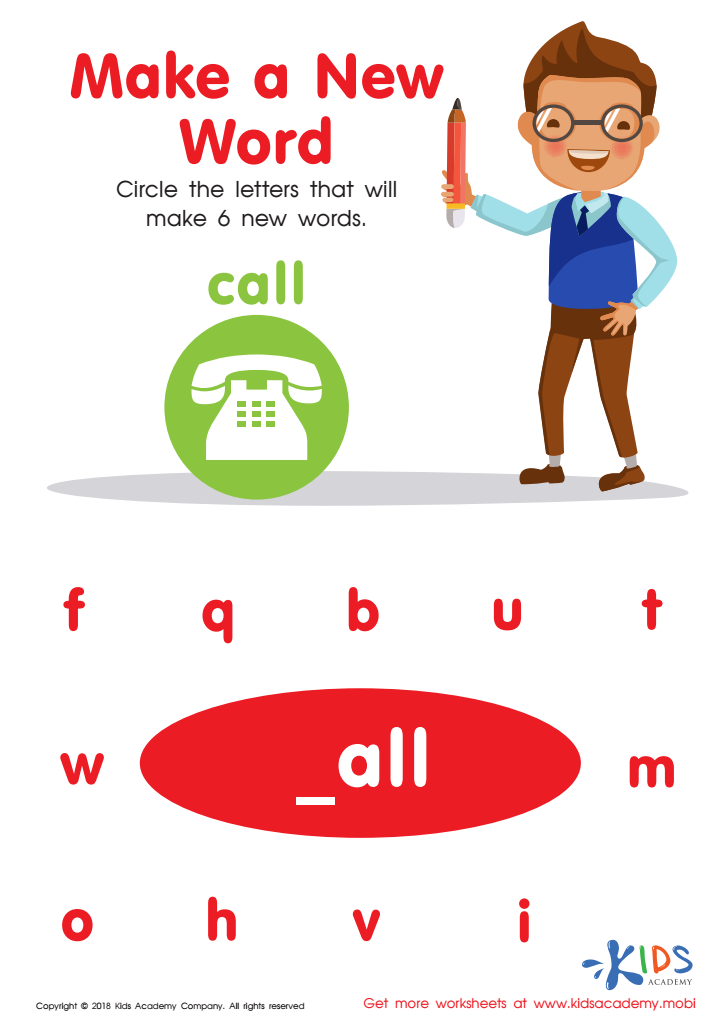
Make a New Word Worksheet
Young readers and writers can enhance their skills with this fun PDF worksheet. They'll trace letters to create new words and feel like super readers and writers after finding six words. They'll also practice building words with the "all" word family.
Make a New Word Worksheet
Worksheet
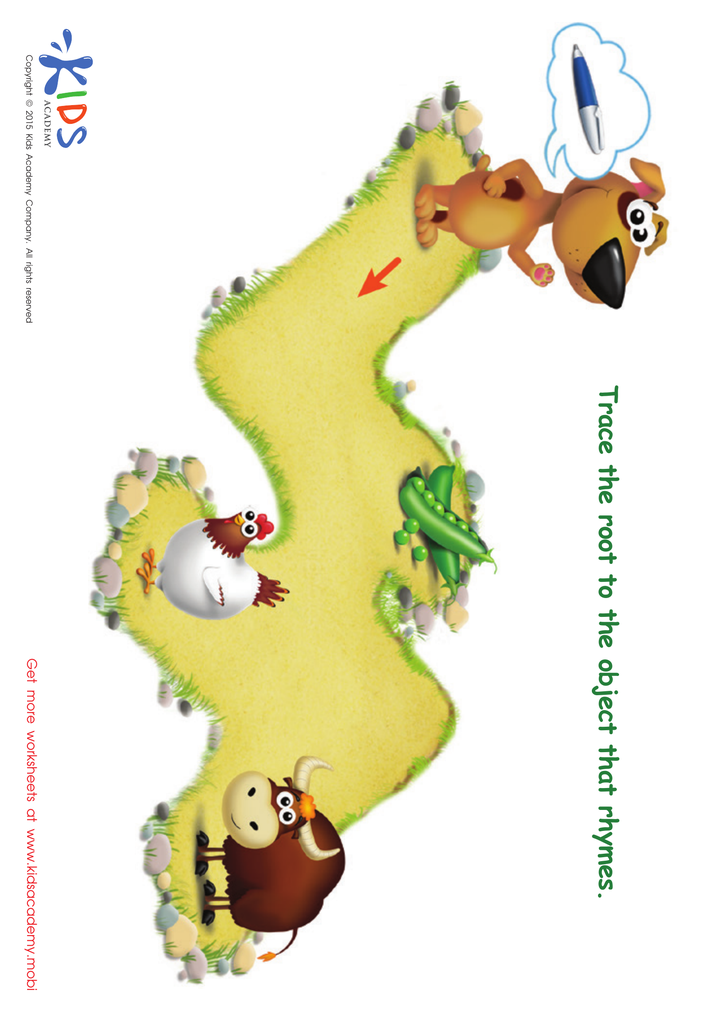
Pen Rhyming Words Worksheet
Check out the cute pup, pondering away. He's thinking of a root word - no suffix or prefix. Now check the hen, green beans, and the cow. Can you find the word that rhymes with pen? Draw a line from the root word to its rhyme for this simple yet beneficial worksheet. It helps young learners practice hearing and recognizing rhymes.
Pen Rhyming Words Worksheet
Worksheet
Join Kids Academy for Free
Who is primarily going to use this learning content?








Caring about cognitive development, especially through learning the Kindergarten Alphabet, is crucial because it lays the foundational framework for a child's lifelong learning. At this early stage, children's brains are rapidly developing, making it the optimal time to introduce fundamental concepts like letters and sounds. Recognizing and understanding the alphabet is not just about reading; it hones a child's cognitive skills, such as memory, attention, and problem-solving.
Teaching the alphabet aids in language acquisition, a fundamental cornerstone of cognitive development. When children interact with letters, they begin to understand that these symbols represent sounds, words, and eventually language, shaping their communication skills. This understanding is vital for more advanced academic pursuits as the child grows.
Moreover, alphabet learning can also boost fine motor skills through activities such as tracing and writing, and can enhance social skills when children recite and sing alphabet songs together in class. These multifaceted benefits underscore why parents and teachers should prioritize alphabet learning in kindergarten. Investing in this essential stage promotes confidence and interest in learning, setting the stage for future success in school and beyond. Emphasizing early literacy equips children with the tools to navigate an increasingly complex world, making it a pivotal aspect of their overall development.