Lowercase identification Kindergarten Letter Recognition Worksheets
5 filtered results
-
From - To
Discover our engaging Lowercase Identification Kindergarten Letter Recognition Worksheets, designed to ignite your child’s passion for learning! These printable worksheets provide a fun and interactive way for young learners to recognize and identify lowercase letters. With a variety of activities, including matching, tracing, and coloring, children will build essential literacy skills while enjoying hands-on practice. Perfect for both classroom and at-home learning, these worksheets promote confidence in reading and writing. Equip your preschooler with the foundational skills they need to succeed in their educational journey! Explore our collection today and make learning letters an exciting adventure!
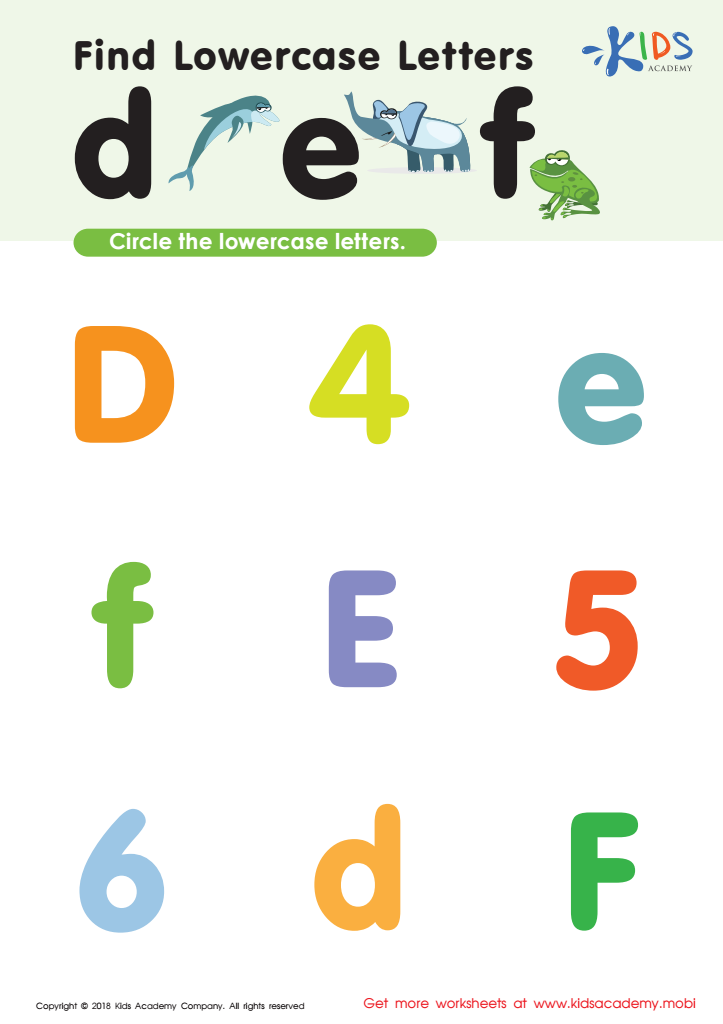
Find Lowercase Letters d e f Worksheet
 Assign to My Students
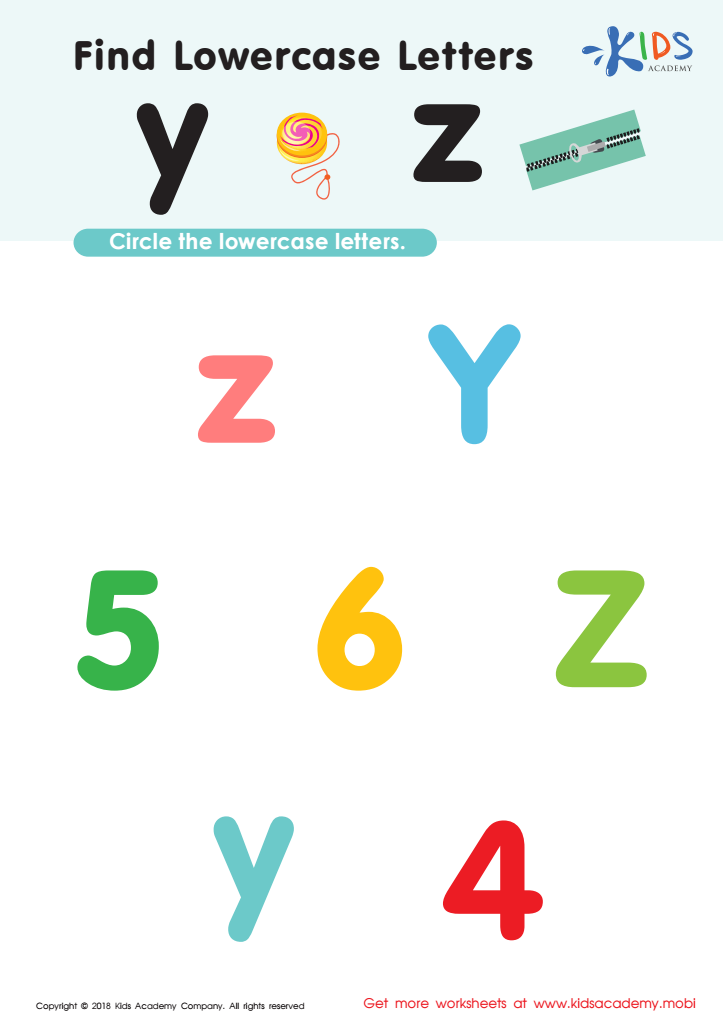
Find Lowercase Letters y z Worksheet
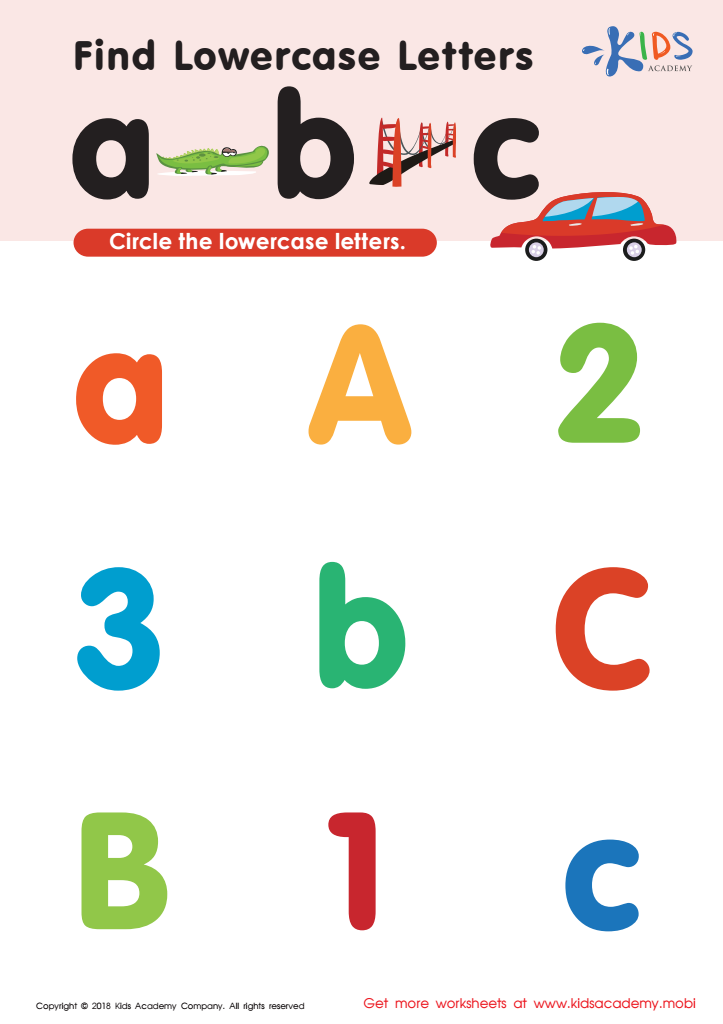
Find lowercase letters a b c Worksheet
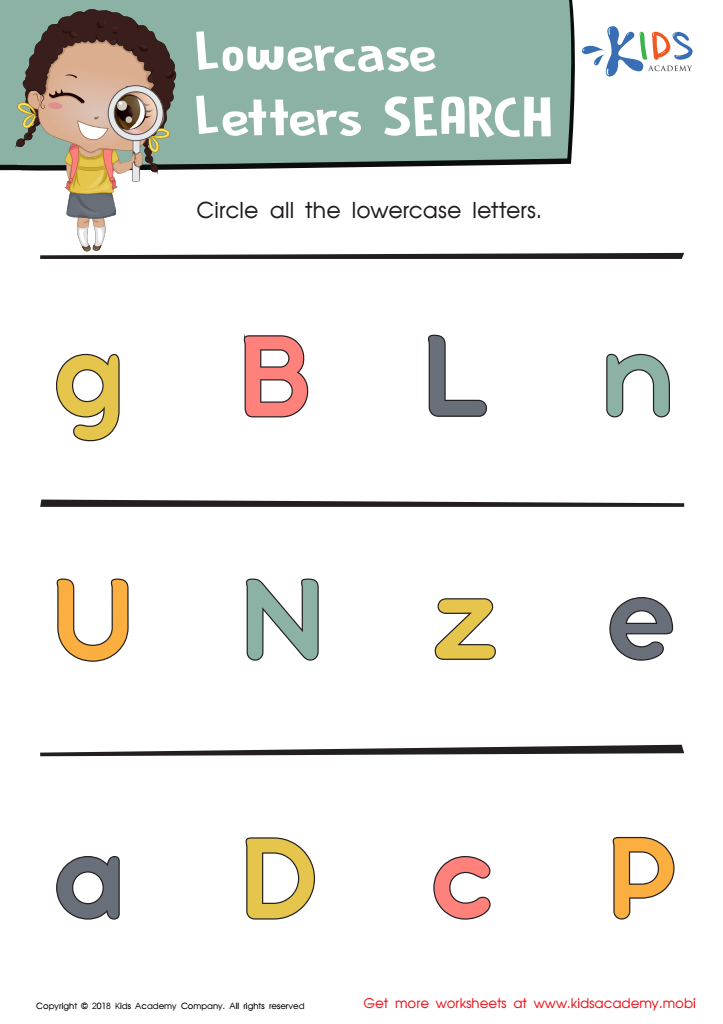
Lowercase Letters Search: Assessment Worksheet
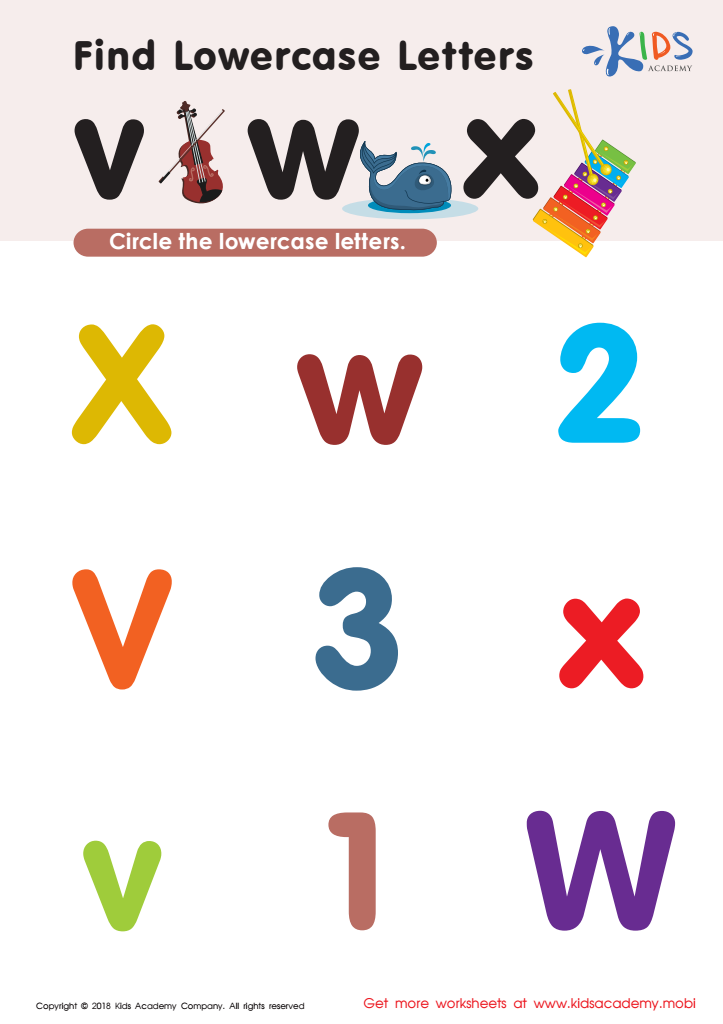
Find Lowercase Letters v w x Worksheet






Lowercase letter recognition is a foundational skill crucial for young children's literacy development, particularly in kindergarten. Parents and teachers should prioritize this because it serves as an essential stepping stone for reading and writing. Mastering lowercase letters lays the groundwork for students to decode written language. Most texts children encounter in their daily environment feature lowercase letters, making this skill vital for navigating books, signs, and digital content.
Moreover, recognizing lowercase letters encourages confidence and independence as students begin to read simple texts and write their own thoughts and stories. These skills foster a love for reading, which is ultimate aim in early education. When children struggle with lowercase recognition, they may feel frustrated, which can deter them from participating in literacy-related activities.
Additionally, lowercase letter recognition supports other subjects like math and science, where understanding written language is essential for comprehension. By focusing on this aspect, parents and teachers can actively support a child’s readiness for more complex literacy tasks, ultimately contributing to greater academic success down the road. Engaging activities such as games, storytelling, and hands-on crafts can make learning lowercase letter recognition enjoyable and effective, allowing children to thrive in their early learning environments.