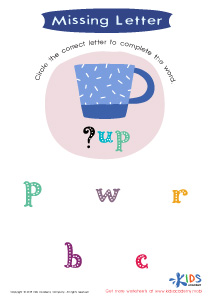
Rhyming skills development Kindergarten Phonics Worksheets
3 filtered results
-
From - To
Boost your child's phonics skills with our engaging Kindergarten Rhyming Skills Development Worksheets! Designed for early learners, these printable worksheets help children identify and create rhymes, enhancing their vocabulary and phonemic awareness. Each activity is fun and interactive, fostering a love for language through engaging exercises that encourage creativity in wordplay. By practicing with these essential phonics worksheets, students will gain the confidence they need to tackle reading and writing challenges. Explore our variety of worksheets, tailored to make rhyming enjoyable while building foundational literacy skills. Perfect for home or classroom use, these resources support learning through play!
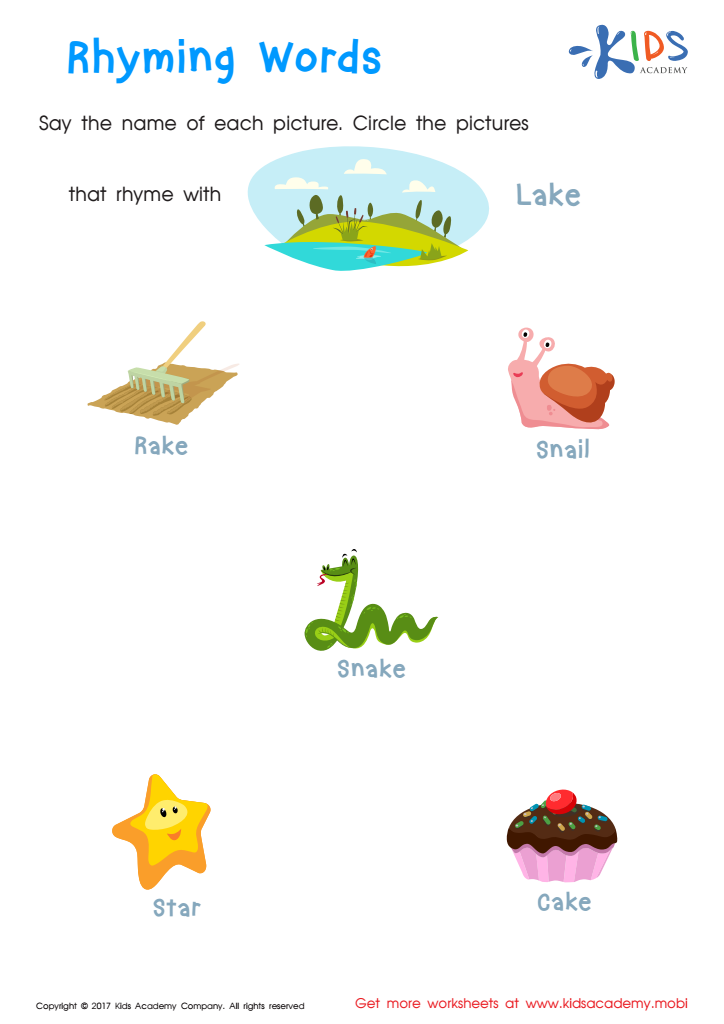
Rhyming Words Rhyming Worksheet
 Assign to My Students
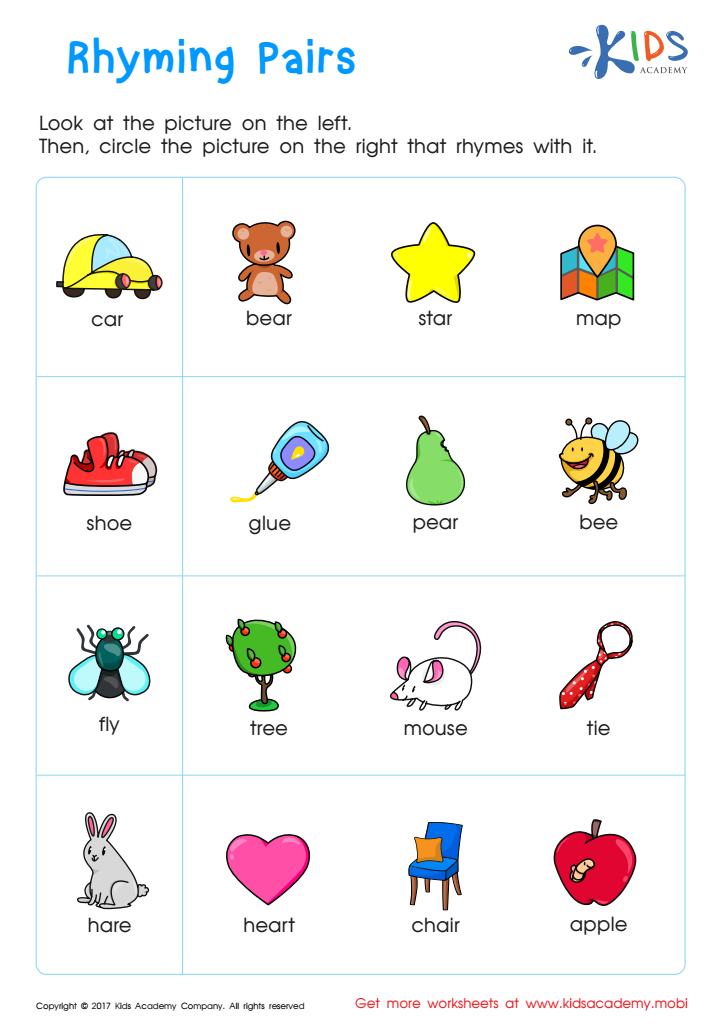
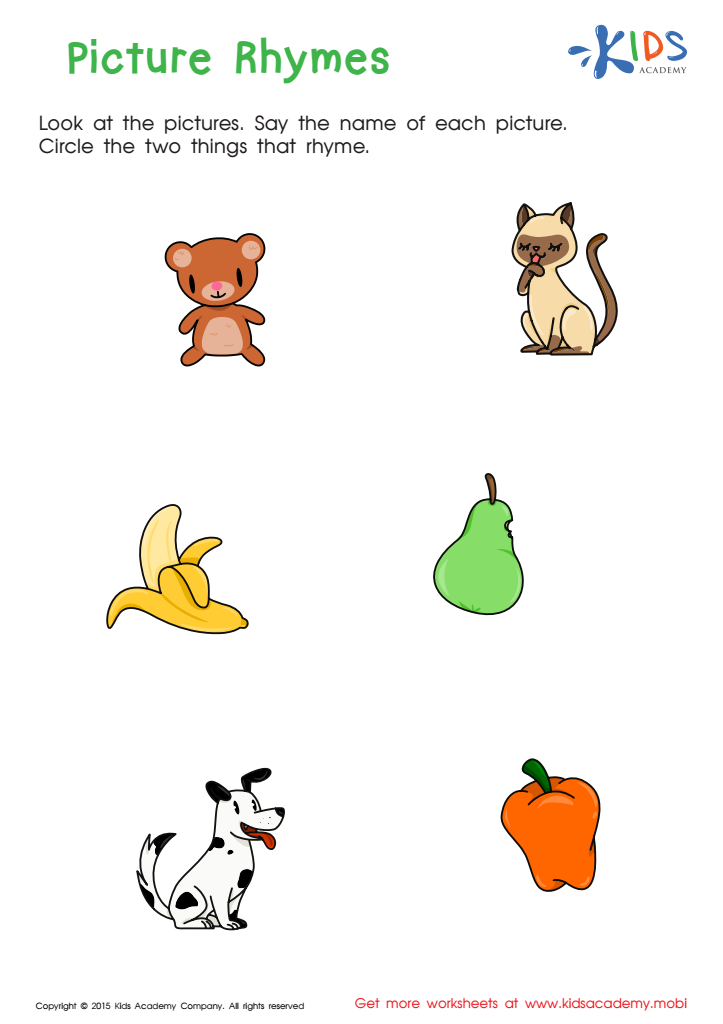
First Words: Picture Rhymes Worksheet






Rhyming skills development plays a crucial role in kindergarten phonics as it serves as a foundation for early reading and language comprehension. When children engage with rhymes, they become more attuned to the sounds and patterns within words, an essential component in understanding phonics. This skill enhances phonemic awareness, enabling them to recognize and manipulate individual sounds in words, which is key to decoding unfamiliar words as they begin reading.
Moreover, rhyming activities make learning fun and engaging. They enhance vocabulary and language development, as children are exposed to new words in a rhythmic, memorable context. Rhymes also strengthen listening skills, as children learn to differentiate between similar sounds. Parents and teachers can leverage this by incorporating chants, songs, and poems into daily activities, fostering an enjoyable learning environment.
Additionally, developing rhyming skills promotes critical thinking and cognitive development, as children learn to predict patterns and anticipate word endings. By prioritizing rhyming in phonics education, both parents and teachers can lay a strong linguistic groundwork that will support children's reading success and literacy in the long term. Ultimately, nurturing this skill in kindergarten is a vital investment in a child's educational journey.