Lowercase identification Kindergarten Upper & Lowercase Letters Worksheets
5 filtered results
-
From - To
Introduce young learners to the world of letters with Kids Academy's "Lowercase Identification Kindergarten Upper & Lowercase Letters Worksheets." These engaging and educational resources are designed to help kindergarteners distinguish and identify lowercase letters effectively. Each worksheet combines fun activities with structured learning to reinforce letter recognition, aiding the development of foundational reading skills. Easy-to-follow and visually appealing, they ensure a delightful, hands-on learning experience for children. Perfect for classroom or at-home practice, these worksheets provide essential support for your child's early literacy journey. Download today and watch their confidence in recognizing lowercase letters grow!
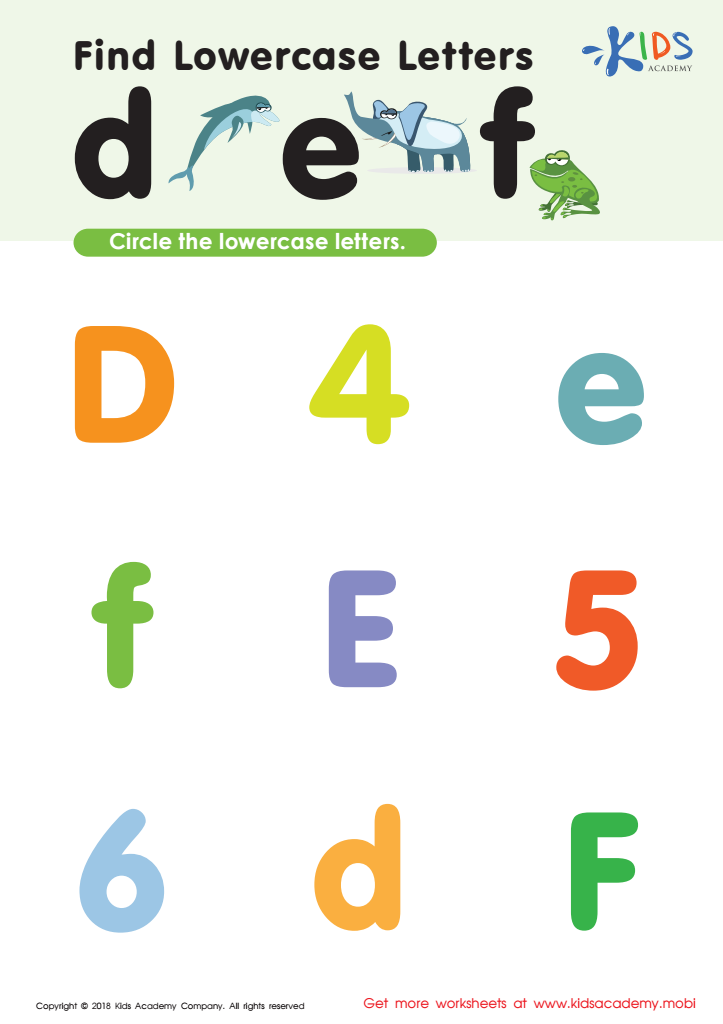
Find Lowercase Letters d e f Worksheet
 Assign to My Students


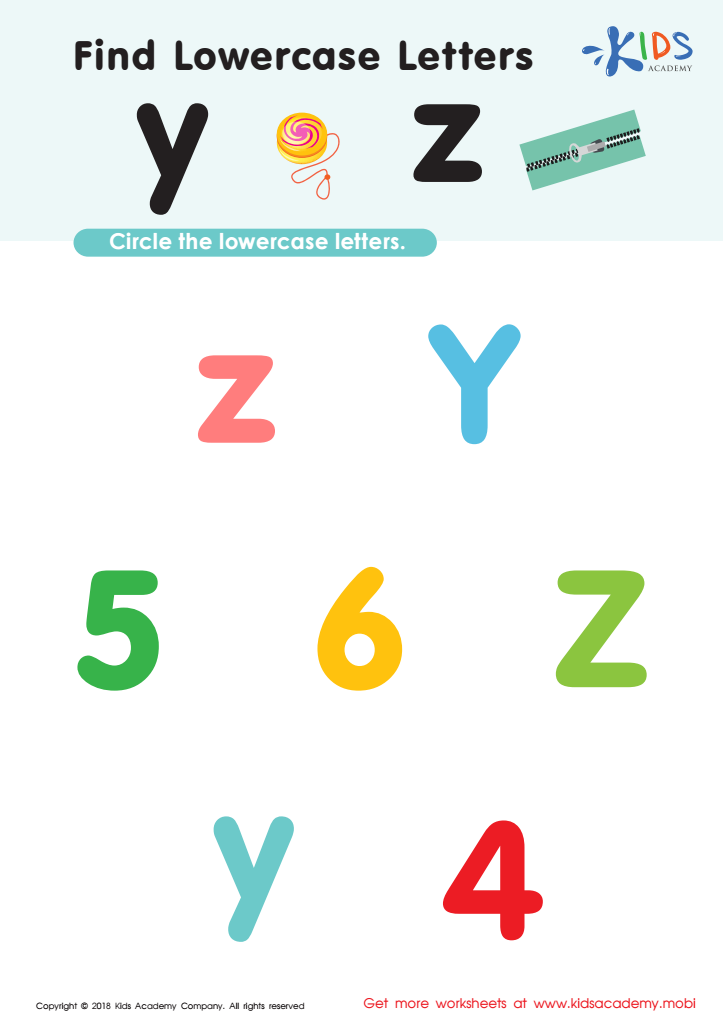
Find Lowercase Letters y z Worksheet
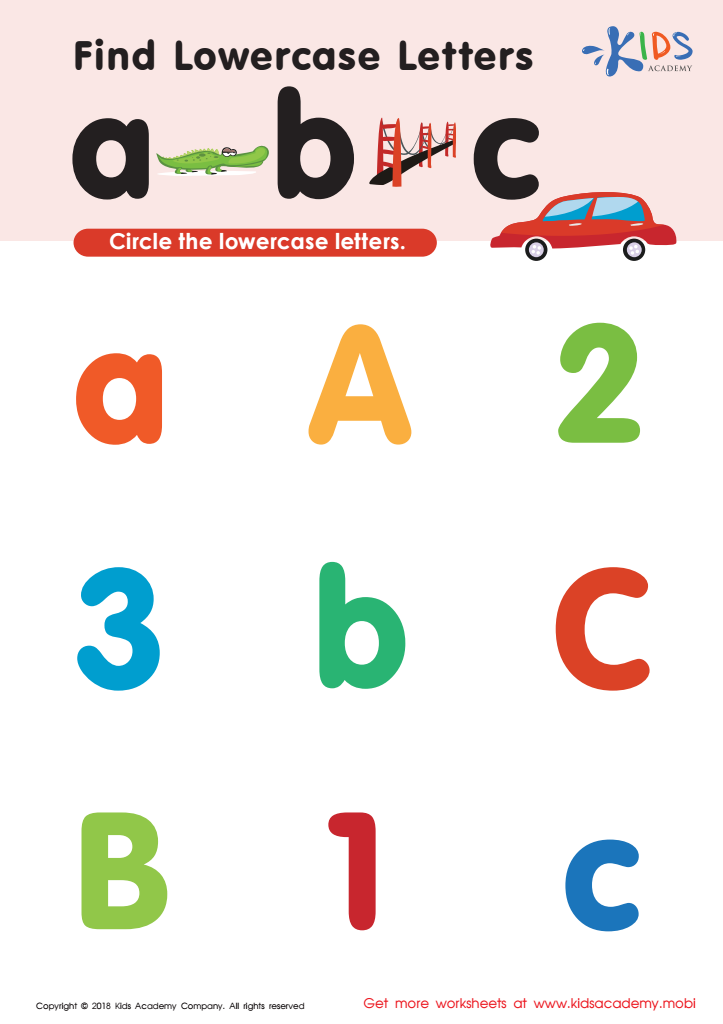
Find lowercase letters a b c Worksheet
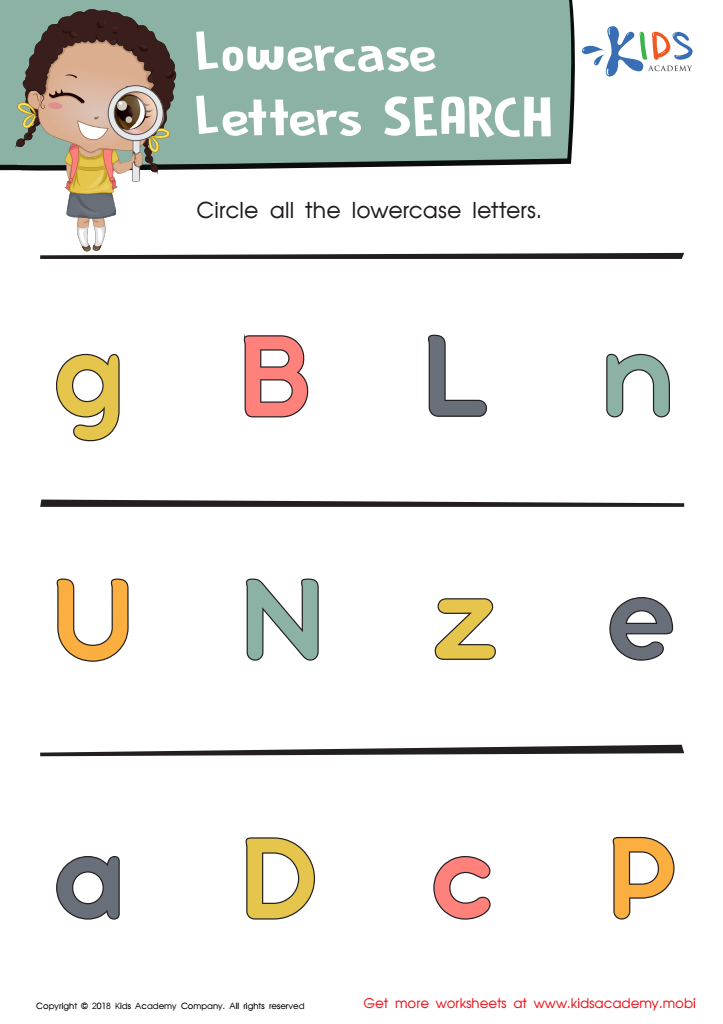
Lowercase Letters Search: Assessment Worksheet
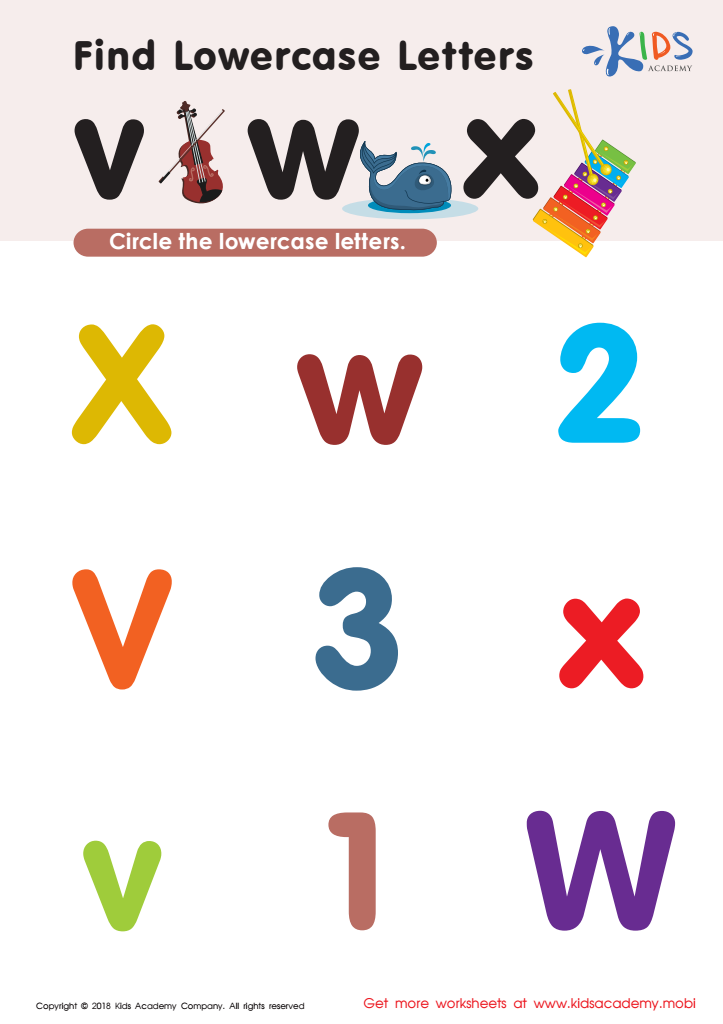
Find Lowercase Letters v w x Worksheet





Understanding the relationship between lowercase and uppercase letters is crucial in early literacy development, and hence parents and teachers should place importance on it for kindergarteners. Typically, printed text predominantly features lowercase letters, meaning proficiency in recognizing these shapes will significantly ease the reading process for young learners. Being able to fluidly transition between uppercase and lowercase letters aids in word recognition and fluency, fundamental skills for future reading success.
Moreover, knowledge of uppercase and lowercase letters assists in writing neatly and correctly. Often, children learn uppercase letters first due to their simplicity, but transitioning to lowercase letters allows for proper sentence structuring and fosters writing that reflects the conventions they will encounter in day-to-day reading material.
Beyond academic benefits, skillful letter recognition can boost a child's confidence and engagement in learning activities. When parents and teachers support children in becoming adept at distinguishing between upper and lowercase letters, they lay a foundation for strong cognitive development, enhancing not just literacy skills but also broader educational outcomes.
Prioritizing this aspect of literacy equips children with a crucial puzzle-solving tool, vital for encountering larger pieces like reading comprehensions, writing stories, and further academic challenges comfortably. Thus, taking time to help children master both letter forms paves the way for a smoother, more successful educational journey.