Comparing sizes Kindergarten Math Worksheets
6 filtered results
-
From - To
Welcome to our "Comparing Sizes Kindergarten Math Worksheets" page! Designed for young learners, these engaging worksheets help children grasp the concept of size comparison using fun visuals and relatable examples. Kids will practice identifying bigger and smaller items, reinforcing critical thinking and analytical skills. Each worksheet provides a variety of activities, including direct comparisons and sorting exercises, ensuring a comprehensive understanding of size differences. Perfect for classroom use or at-home learning, these worksheets aim to make math both enjoyable and educational. Let your child explore the fascinating world of sizes through interactive and hands-on practice today!
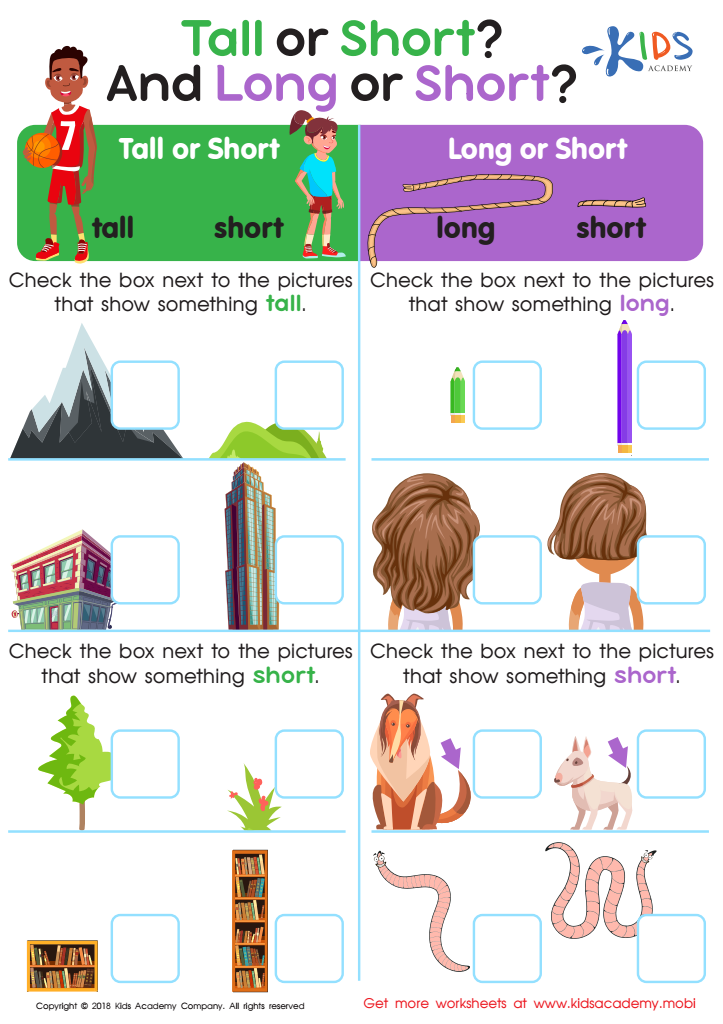
Tall or Short and Long or Short? Worksheet
 Assign to My Students
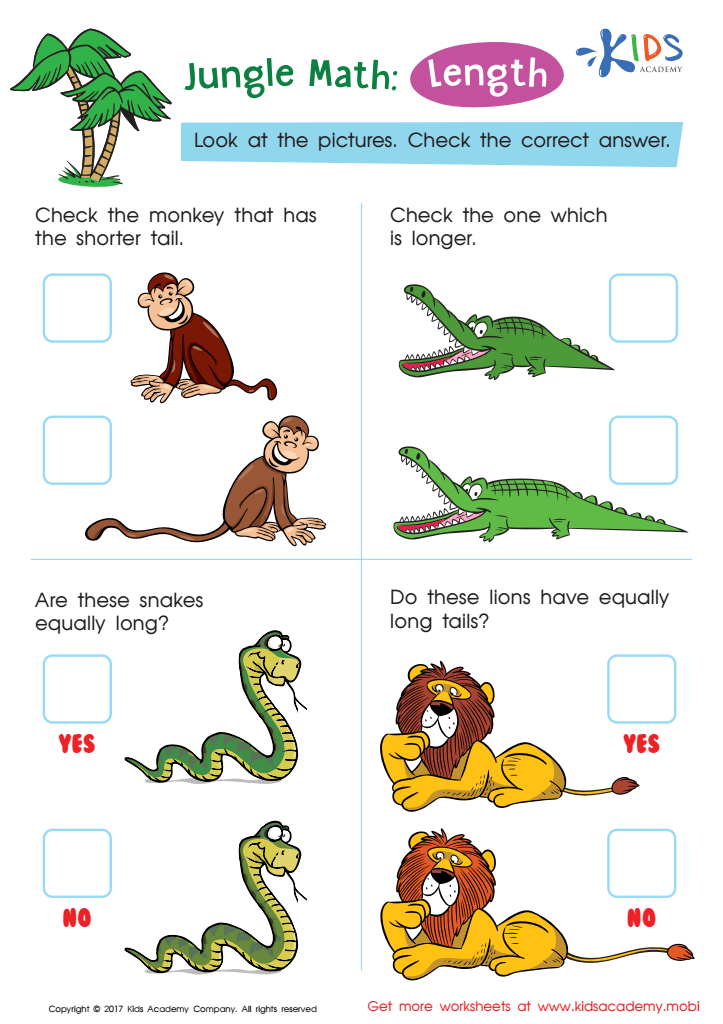
Which One Is Longer - Length Worksheet
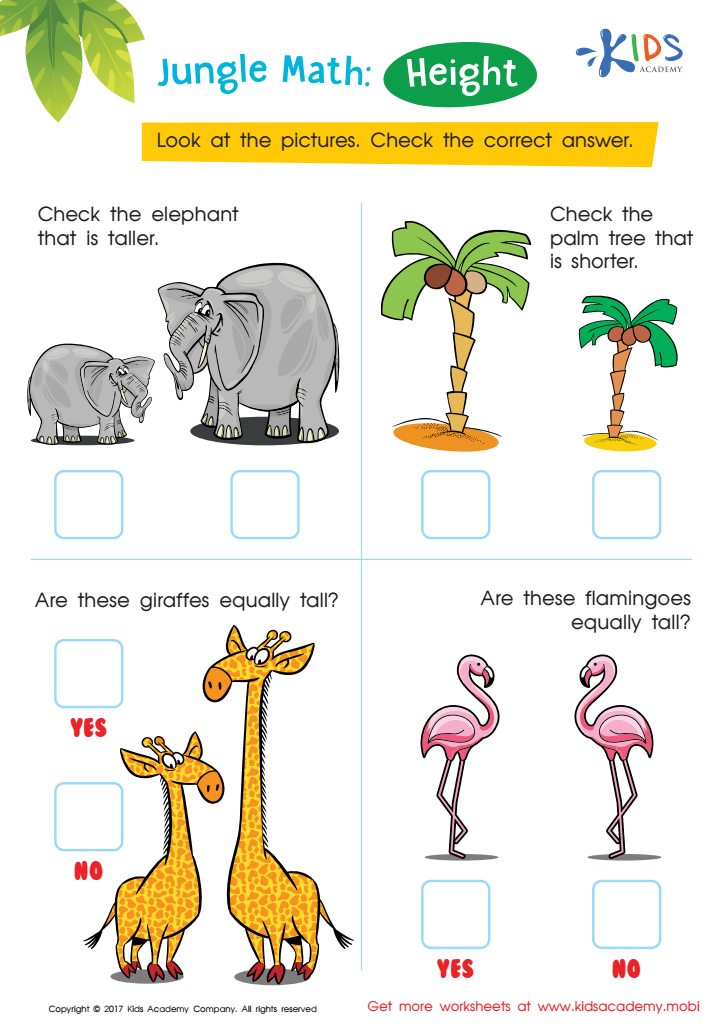
Which Is Taller Worksheet
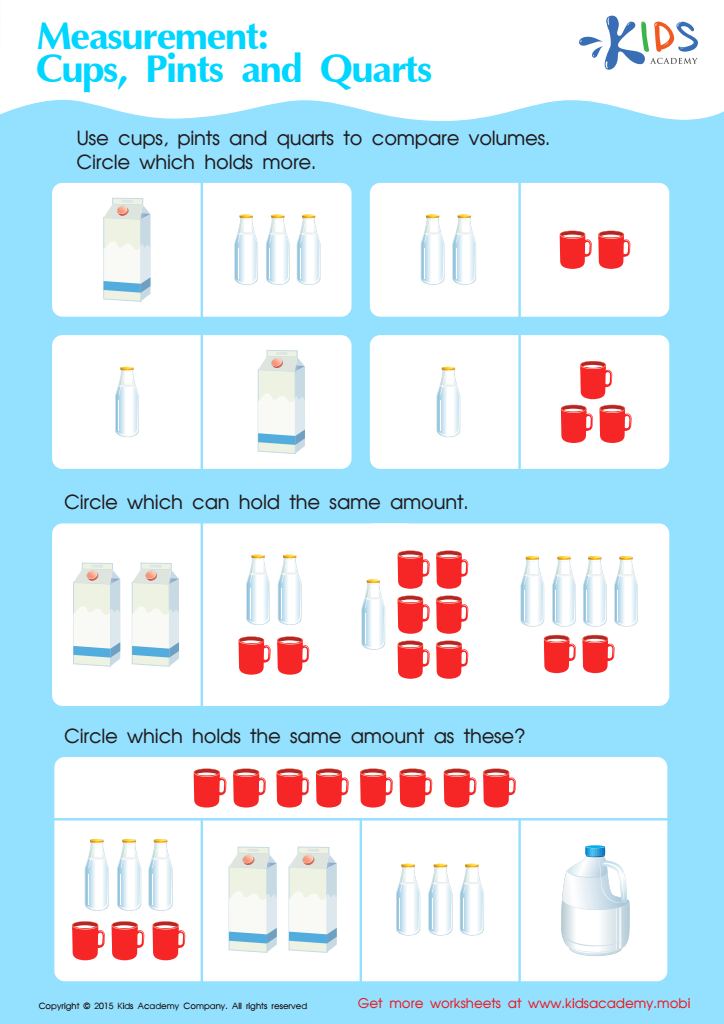
Measurement: Compare Volumes Worksheet
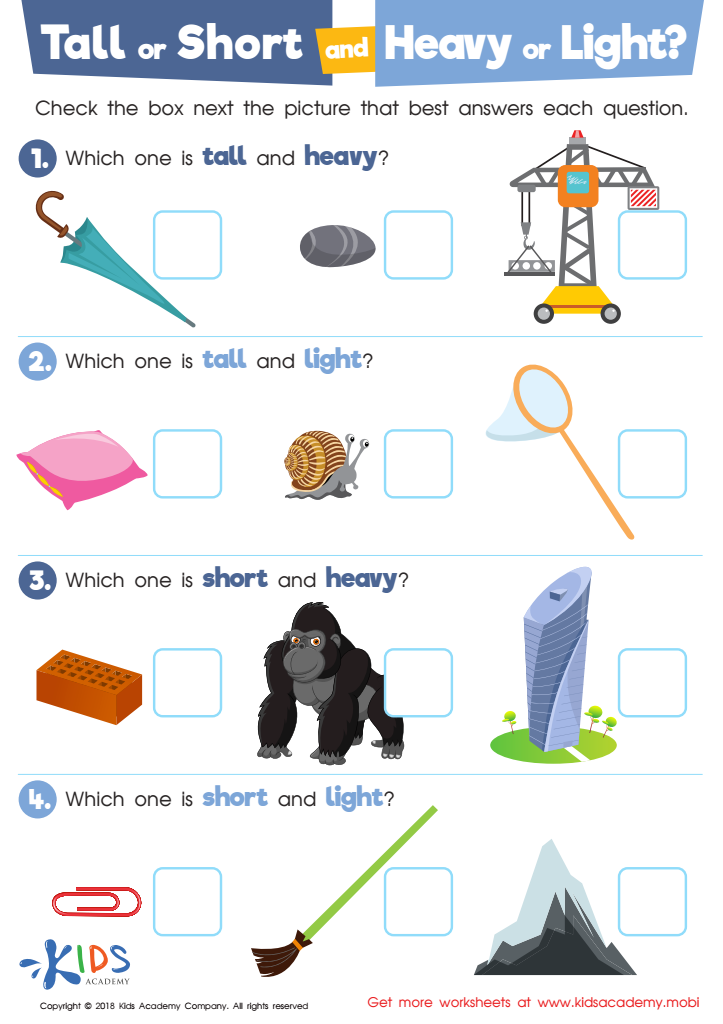
Tall or Short and Heavy or Light? Worksheet
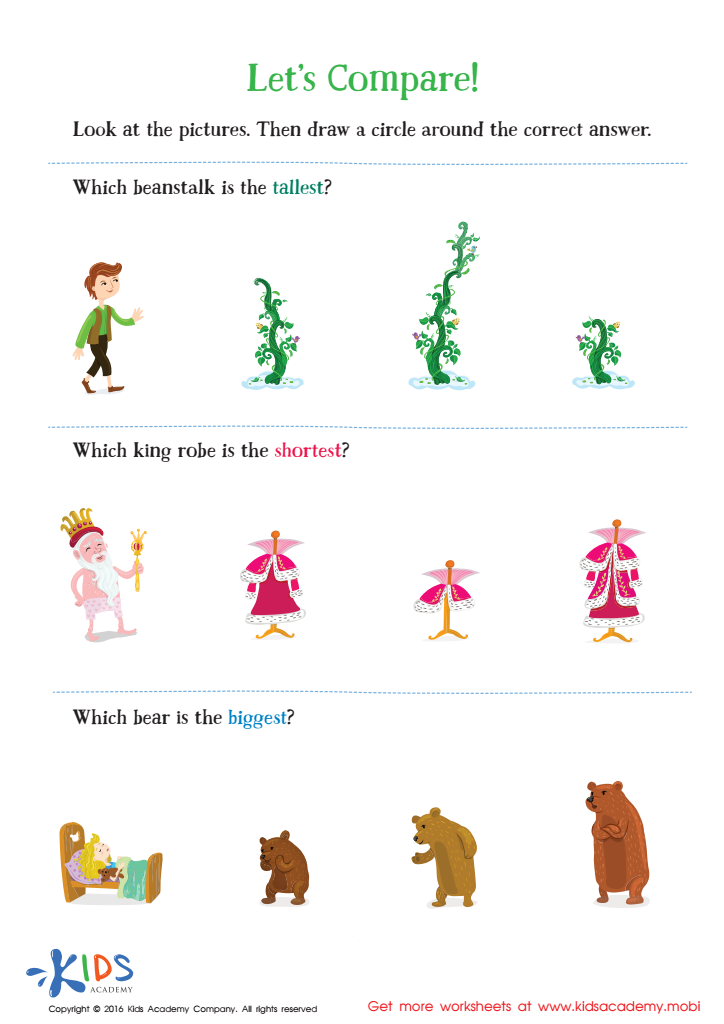
Fairy Tale Worksheet: Let's Compare








Understanding the concept of comparing sizes is crucial for kindergarten students as it lays the foundation for their mathematical reasoning and critical thinking skills. When children learn to compare sizes, they enhance their ability to categorize and organize information, which is fundamental in all areas of learning. Recognizing attributes such as "bigger than," "smaller than," or "equal to" helps children make connections with the world around them.
Parents and teachers should prioritize comparing sizes in early math education because it fosters early numeracy skills. It encourages kids to explore relationships between objects, enhancing their observational skills and promoting inquiry-based learning. For example, observing which items fit together or determining the largest flower in the garden can spark curiosity and initiative in young learners.
Additionally, measuring and comparing sizes involves language development, as it introduces new vocabulary and encourages children to articulate their thoughts. This important skill not only applies to math but also enhances communication abilities and boosts confidence in expressing ideas.
Ultimately, early mastery of comparing sizes is not just about math proficiency; it lays the groundwork for future academic success across subjects, proving integral in a child’s overall development. Engaging in these concepts supports a love for learning that lasts a lifetime.








