Cognitive Development Kindergarten Matching Worksheets
5 filtered results
-
From - To
Enhance your child’s cognitive development with our engaging Kindergarten Matching Worksheets! Designed to boost critical thinking, memory, and pattern recognition, these worksheets provide a fun and interactive way for young learners to explore important concepts. With colorful illustrations and age-appropriate activities, children will enjoy matching items, improving their visual perception and classification skills. Perfect for both classroom and home learning, these worksheets help prepare kids for future academic success while making learning enjoyable. Download our Cognitive Development Matching Worksheets today and watch your child's confidence soar as they master essential skills in a playful, supportive environment!
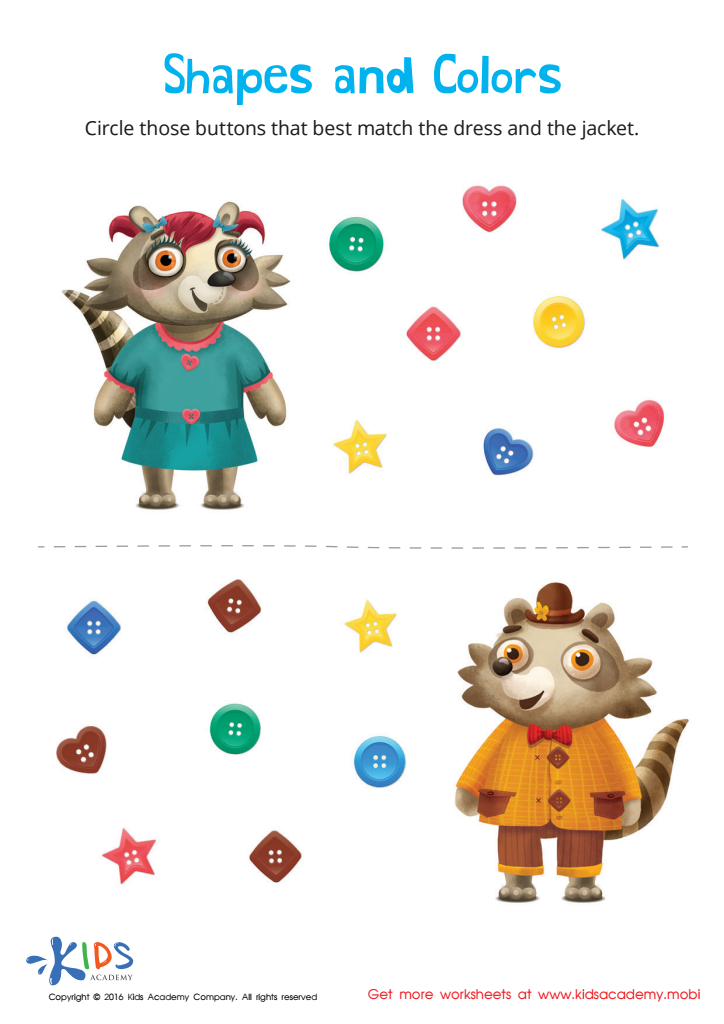
Matching: Shapes and Colors Worksheet
 Assign to My Students
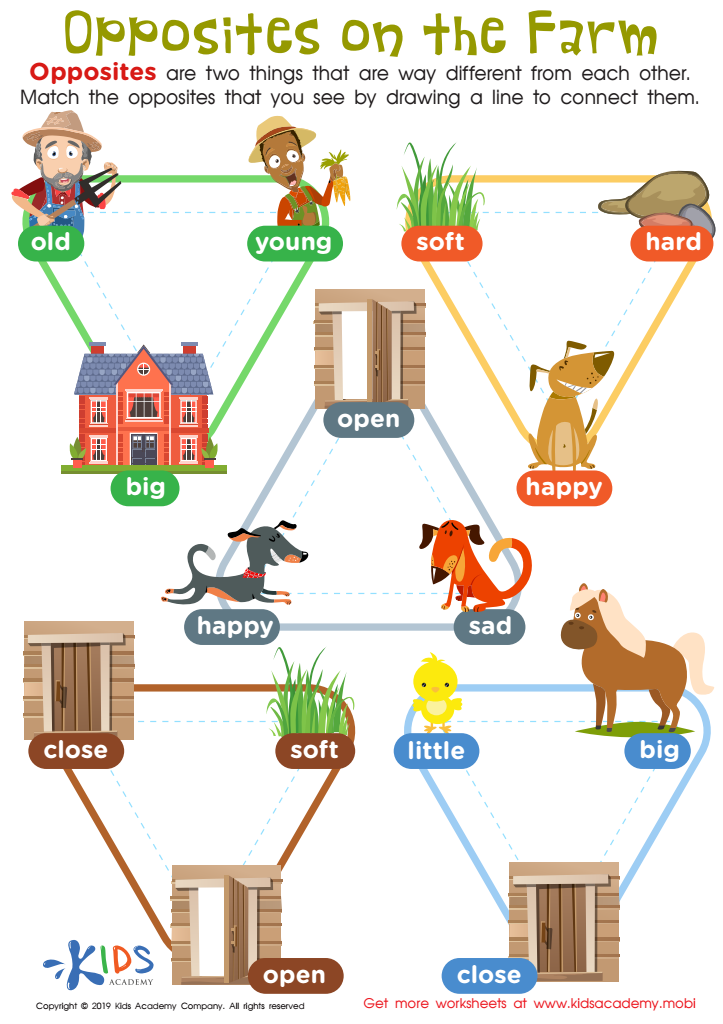
Opposites on the Farm Worksheet
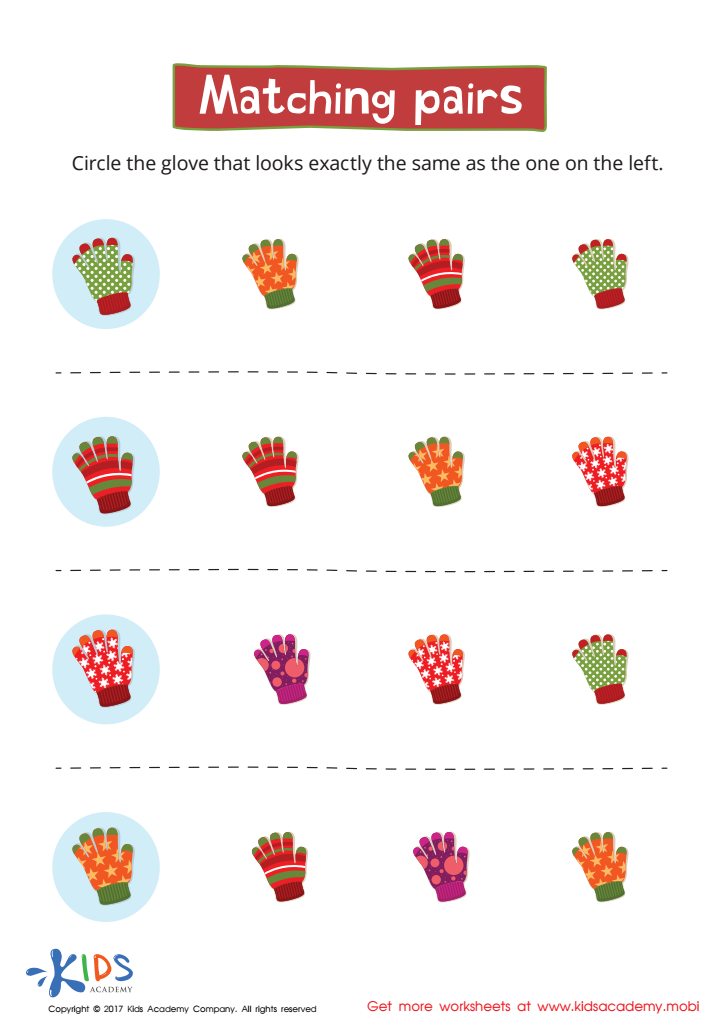
Matching: Matching Pairs Worksheet
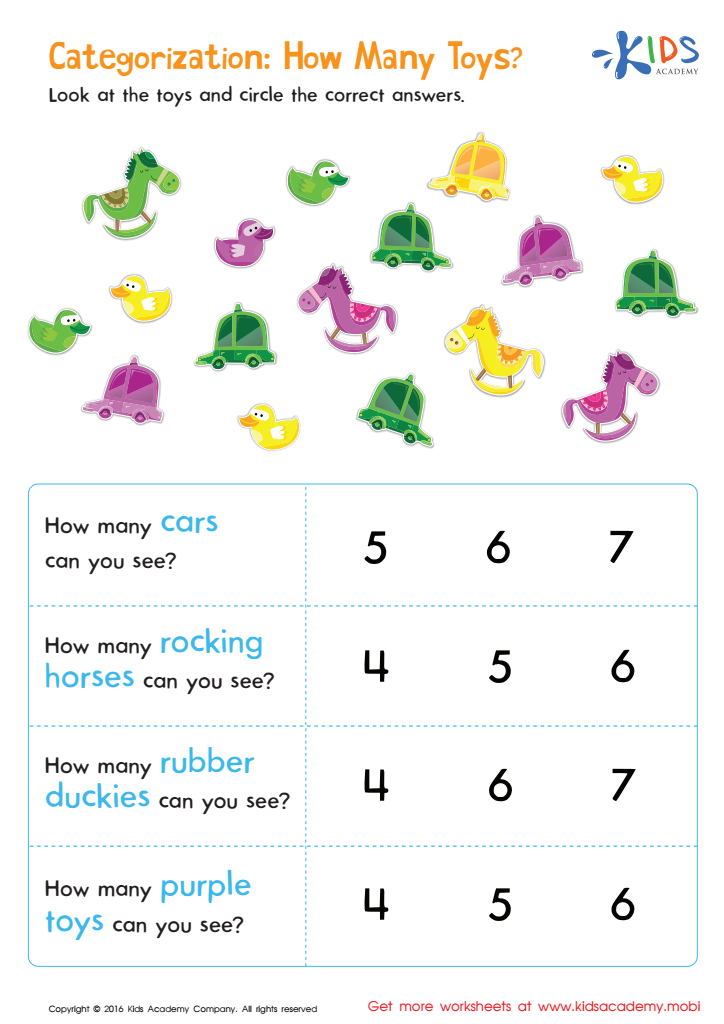
Classifying Toys by Type and Color Sorting Worksheet
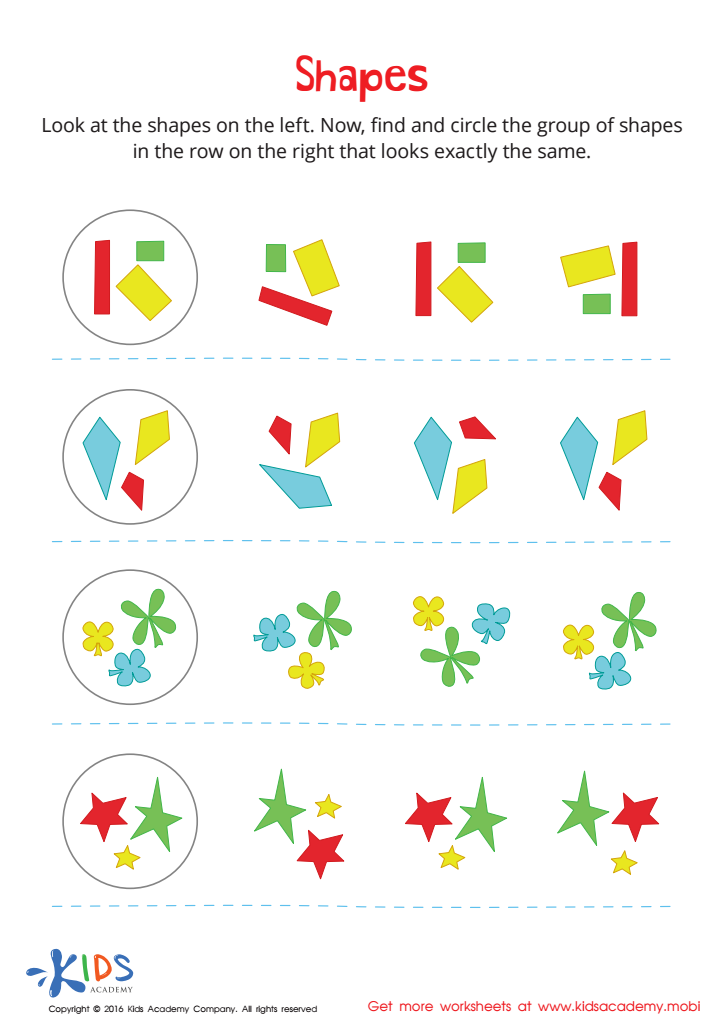
Shapes Worksheet








Cognitive development in kindergarten is crucial for children's overall growth and learning readiness. When parents and teachers prioritize cognitive development, particularly through activities like matching, they contribute to enhancing children's critical thinking, problem-solving skills, and memory. Matching games stimulate young minds, fostering the ability to recognize patterns, categorize information, and understand relationships between objects.
Engaging in matching activities, such as pairing cards or objects, encourages concentration and attention to detail. It helps develop spatial awareness and reinforces vocabulary, as children learn to articulate the names of items and their properties. Such activities also promote social skills, as children often engage in matching games collaboratively, learning to cooperate, share, and communicate effectively.
Furthermore, matched activities can be adapted to suit individual learning styles and developmental stages, providing a tailored learning experience that meets each child's unique needs. As parents and teachers observe these cognitive advancements, they can feel assured that they are laying a strong foundation for students' future learning experiences.
Ultimately, supporting cognitive development through playful activities like matching not only enhances children's academic potential but also supports their emotional and social well-being, which are critical components of holistic education.








