Understanding measurements Kindergarten Measurement Worksheets
5 filtered results
-
From - To
Welcome to our "Understanding Measurements Kindergarten Measurement Worksheets" page! Here, you'll find a variety of engaging and educational worksheets designed to introduce young learners to the concept of measurement. These printable resources help children grasp important skills such as comparing lengths, weights, and volumes in a fun, hands-on way. Our worksheets feature colorful illustrations and interactive activities that encourage critical thinking and problem-solving. Ideal for classroom use or at-home learning, these materials support early math development while adhering to foundational learning standards. Explore our collection and empower your kindergartner to build essential measurement skills today!
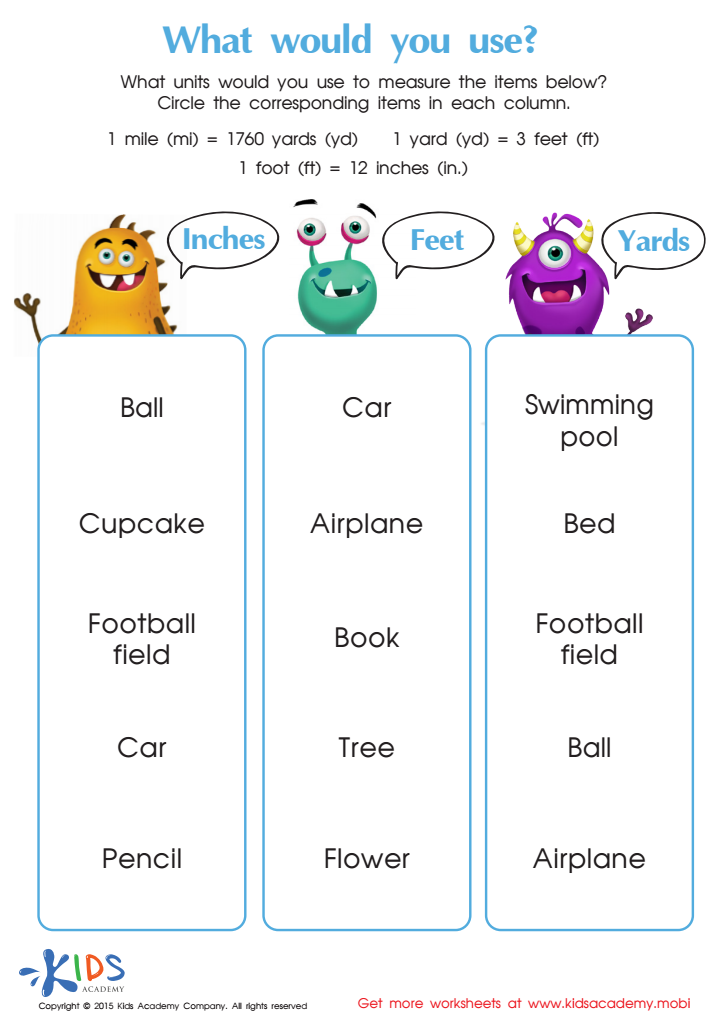
Learning about measuring objects in inches, feet and yards Worksheet
 Assign to My Students
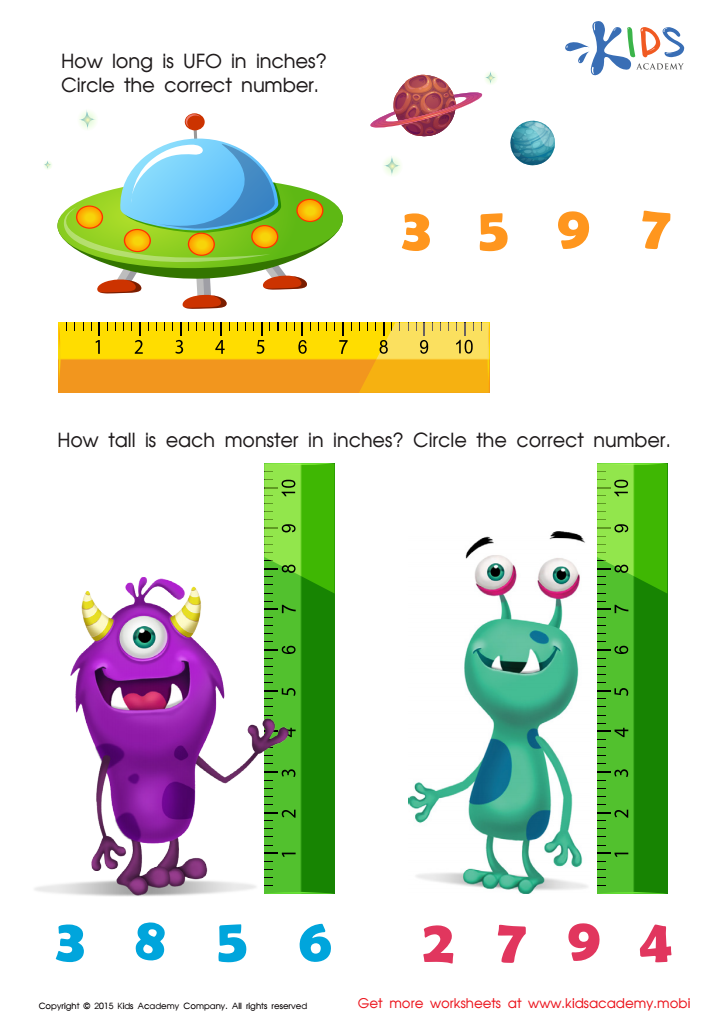
Measuring in Inches Worksheet
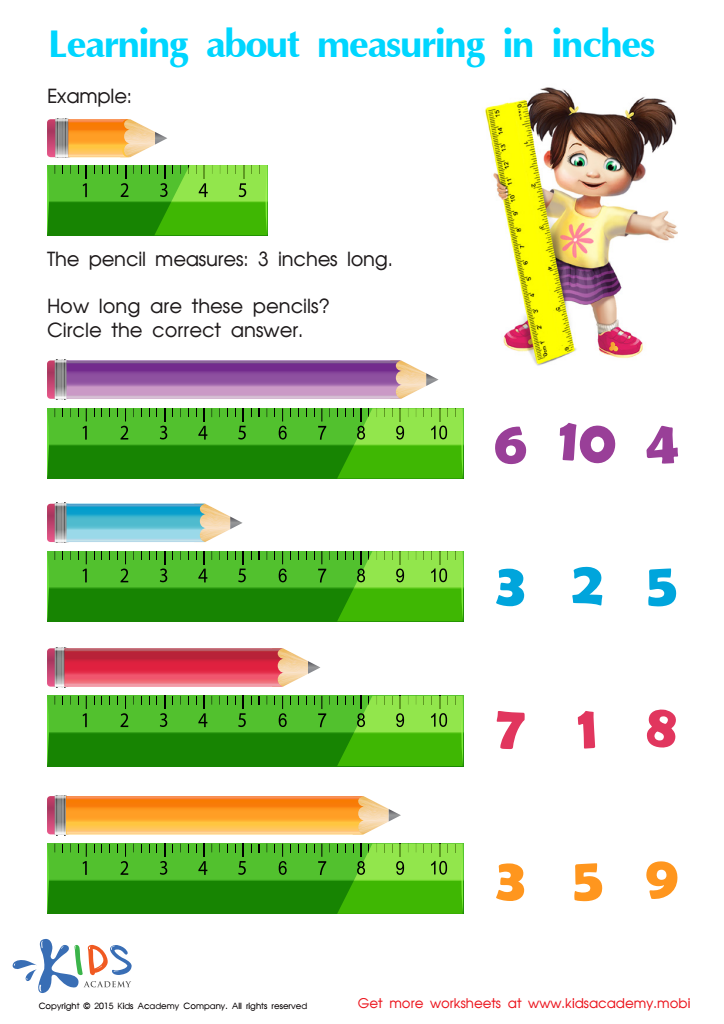
Learning About Measuring In Inches Printable
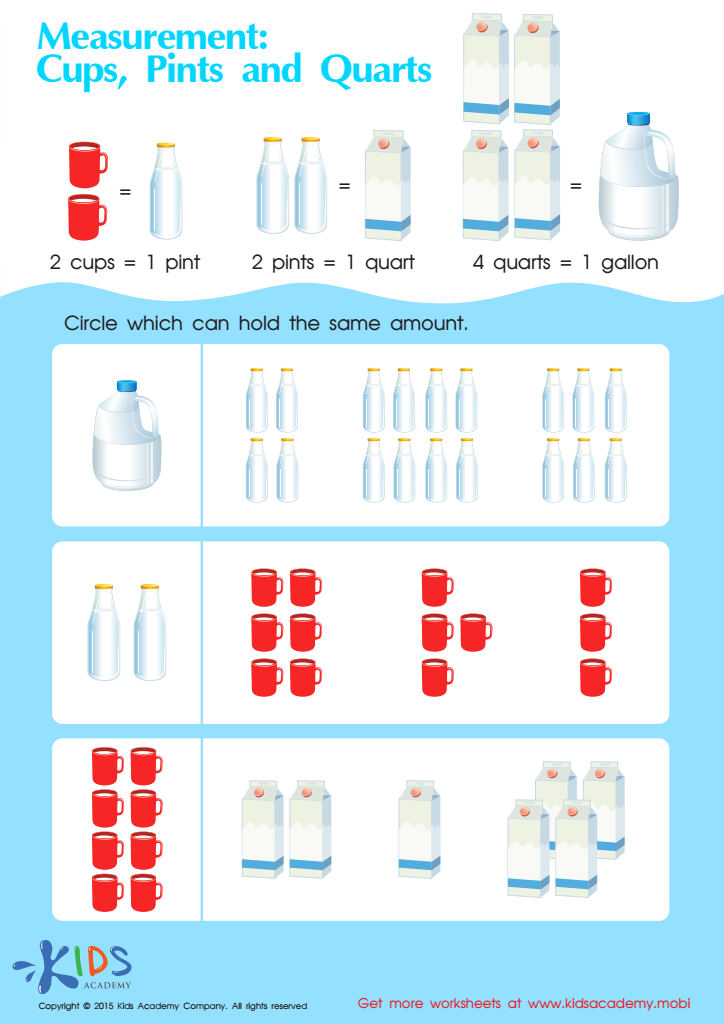
Cups, Pints and Quarts 2 Worksheet
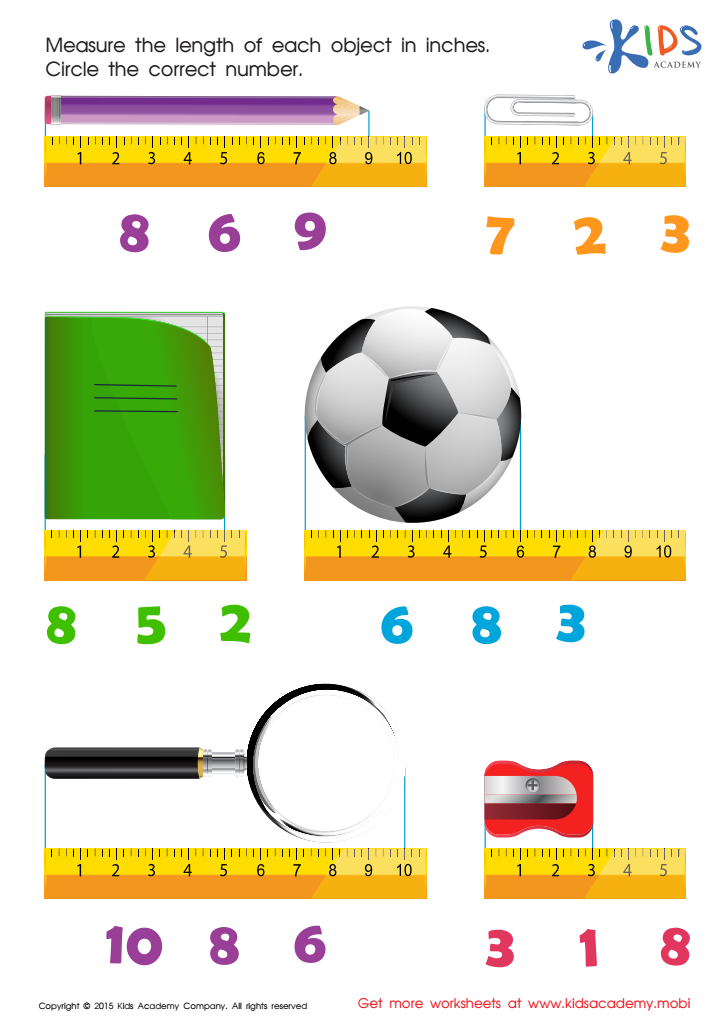
Learning measuring objects in inches Worksheet







Understanding measurements is foundational for young learners in kindergarten, as it plays a crucial role in their overall development and preparation for future learning. First, measurement fosters essential math skills, including counting, comparing, and categorizing, which are critical for building a solid numerical foundation. Engaging with measurements helps children grasp concepts of size, volume, weight, and time, allowing them to make sense of the world around them.
Moreover, incorporating measurement activities enhances critical thinking and problem-solving skills. When children learn to measure items or evaluate lengths, they engage in hands-on experiences that promote inquiry and reasoning. For example, measuring ingredients during cooking teaches them not only about volume but also enhances their cognitive abilities.
Furthermore, measurement also contributes to their language development. As kids describe characteristics such as "taller," "heavier," or "longer," they expand their vocabulary, which is vital for effective communication.
Ultimately, by embracing measurement, parents and teachers lay the groundwork for future math proficiency while empowering children with skills that cross over into various domains, such as science and everyday life. Understanding measurements can enrich students' experiences and foster curiosity, setting them on the path to becoming lifelong learners.








