
Visual Learning Kindergarten Word Problems Worksheets
5 filtered results
Difficulty Level
Grade
Age
-
From - To
Subject
Activity
Standards
Enhance your child's math skills with our "Visual Learning Kindergarten Word Problems Worksheets." These engaging, colorful worksheets feature visual aids, making it easier for young learners to understand and solve word problems. Designed specifically for kindergarteners, they help build basic math skills like addition and subtraction through fun, relatable everyday scenarios. As children visually process information, they enhance their problem-solving abilities and gain confidence in their math skills. Ideal for both classroom and home use, these resources support early learners in developing critical thinking, comprehension, and a strong math foundation. Unlock the joy of learning math with our printable worksheets!
Favorites
With answer key
Interactive
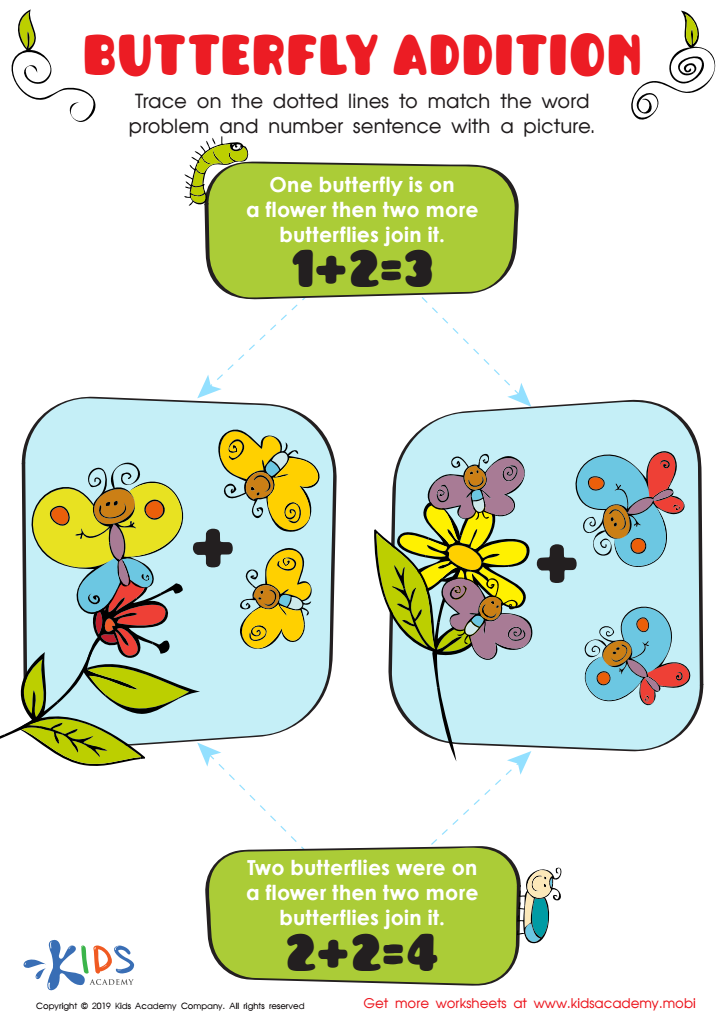
Butterfly Addition Worksheet
This tracing sheet is great for kids to work on math skills and have fun too. Read the word problems to them, then help them trace the dotted lines to match the problem and number sentence to a picture. Not only is it educational, it's beautiful too - your kids will love learning about butterflies!
 Assign to My Students
Butterfly Addition Worksheet
Worksheet
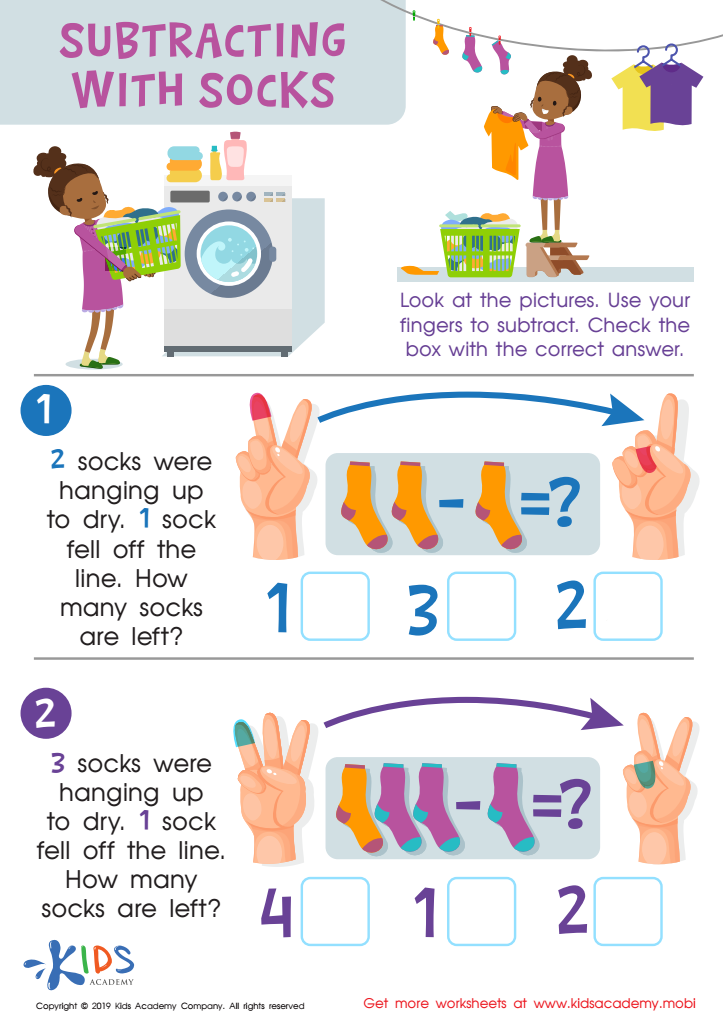
Subtracting Socks Worksheet
Before beginning this exercise with your children, warm them up with a counting game. If math is not their favorite subject, use this worksheet. Help them read the two word problems, then use their fingers to count and subtract. Ask them to select the correct answer and check the box.
Subtracting Socks Worksheet
Worksheet
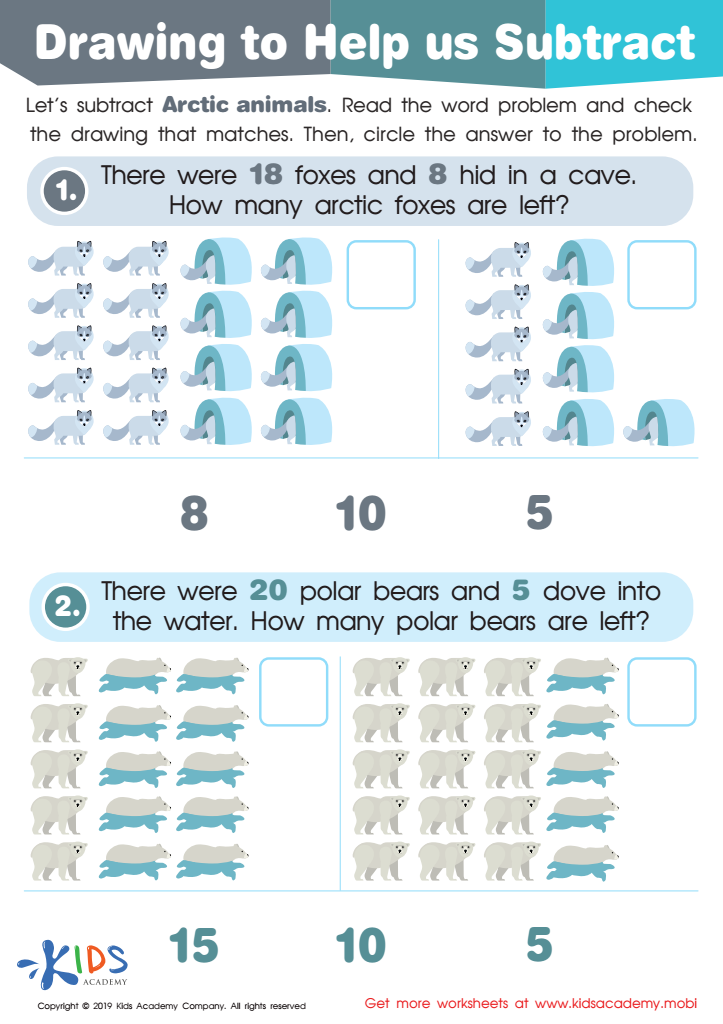
Drawing to Help Us Subtract Worksheet
Math is made fun with this free worksheet featuring Arctic animal pictures to solve basic subtraction word problems. Kids read the problem and choose the correct drawing of the animals to represent the solution. They'll have a blast with their cool animal friends while learning math!
Drawing to Help Us Subtract Worksheet
Worksheet
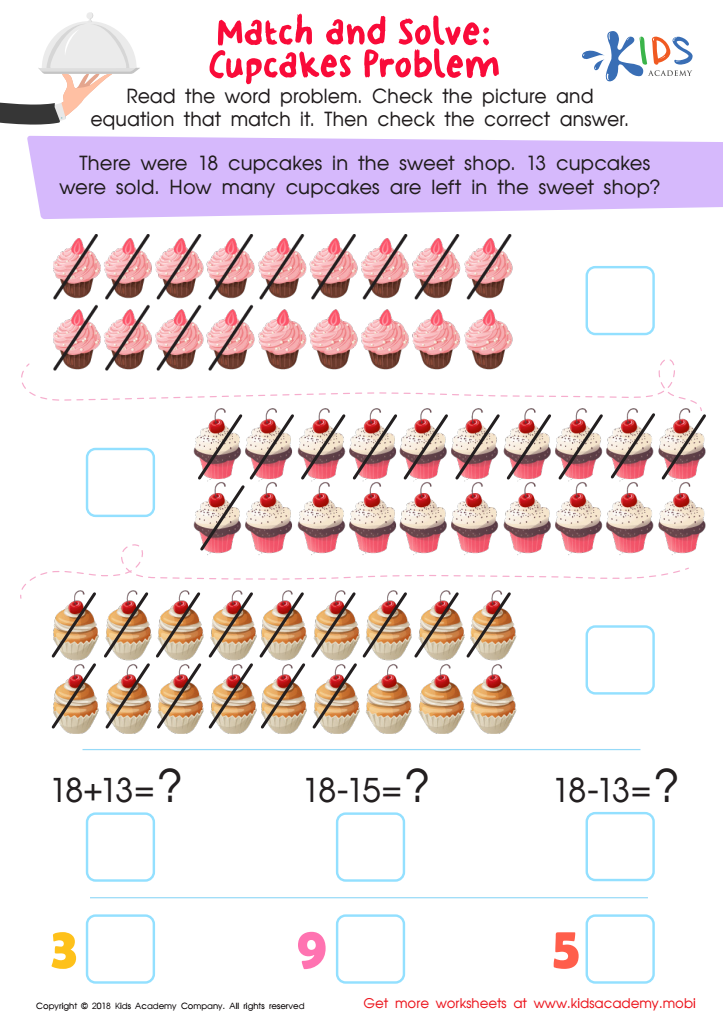
Match and Solve: Cupcakes Problem Worksheet
This math worksheet will excite your kid! Read the word problem and look at the cupcakes; the slashes mean some are being taken away. Select the picture that matches the text, then complete the equation to find the solution!
Match and Solve: Cupcakes Problem Worksheet
Worksheet
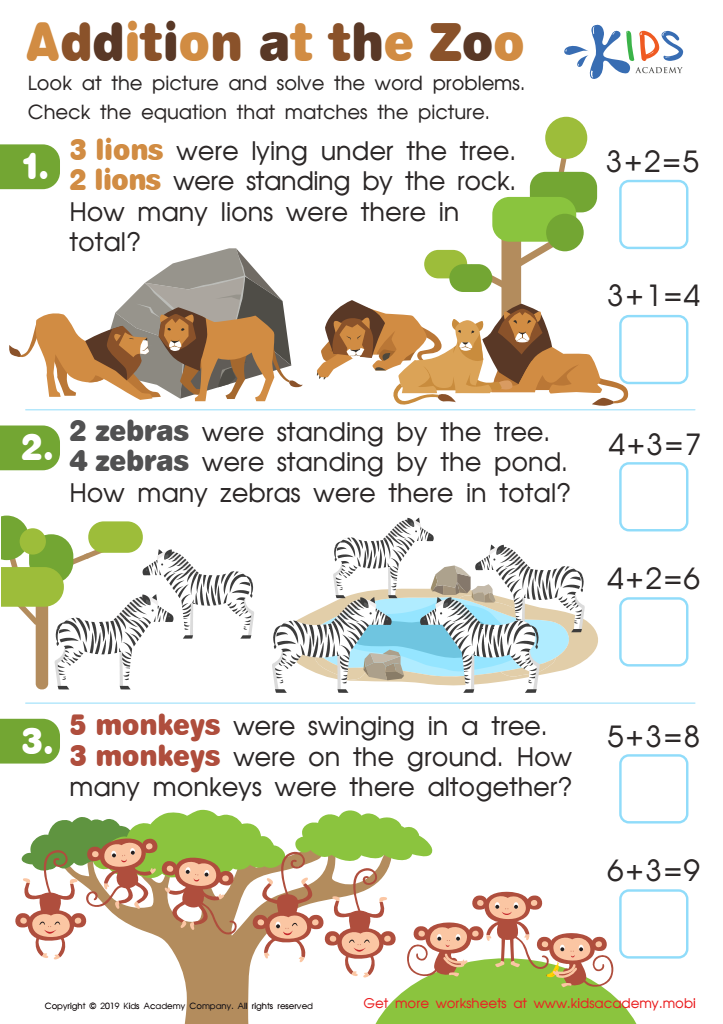
Addition at the Zoo Worksheet
Visit the zoo with your kids and point out all the different animals. Ask them to name their favorites and identify animals on a worksheet. Challenge them to solve word problems related to the pictures. Ask them for the equation that fits the picture and check the answer.
Addition at the Zoo Worksheet
Worksheet
Join Kids Academy for Free
Who is primarily going to use this learning content?








Visual Learning Kindergarten Word Problems are crucial for early childhood education because they combine visual aids with problem-solving, enhancing cognitive development in young learners. For parents and teachers, understanding the importance of this method can significantly impact a child's academic growth and love for learning.
First, visual aids, such as drawings, charts, and diagrams, help children grasp abstract concepts more concretely. When young learners see pictures and visual representations, they become more engaged and can understand problem context better than with text alone. This aids in developing spatial awareness and wiring the brain for complex thinking later on.
Second, tackling word problems at a young age promotes critical thinking and reasoning skills. It encourages kids to analyze, comprehend, and visualize different scenarios, thus improving their problem-solving abilities. Classroom interactions often reveal that children who practice with visual problems are better at explaining their thought processes and approach toward solutions.
Lastly, integrating visual learning in early education fosters confidence. As children succeed in solving problems visually, their self-esteem boosts, making them more likely to embrace learning challenges.
In essence, investing time in visual learning word problems lays a solid foundation for lifelong academic and practical skills. So, both parents and teachers should prioritize this method to nurture well-rounded, confident, and skilled learners.








