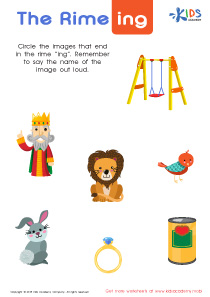
Sound recognition Kindergarten Reading Worksheets
3 filtered results
-
From - To
Boost your child's reading skills with our engaging Sound Recognition Kindergarten Reading Worksheets! Designed specifically for young learners, these worksheets help students identify and distinguish different sounds in words. Through fun activities, children will develop essential phonemic awareness, laying a strong foundation for their reading journey. Our thoughtfully crafted exercises encourage interaction and enhance learning retention. With vibrant illustrations and relatable examples, each worksheet captivates kids while fostering their understanding of phonics. Ideal for use at home or in the classroom, our sound recognition worksheets are a delightful way to enhance your child's literacy skills. Explore today and watch their confidence soar!
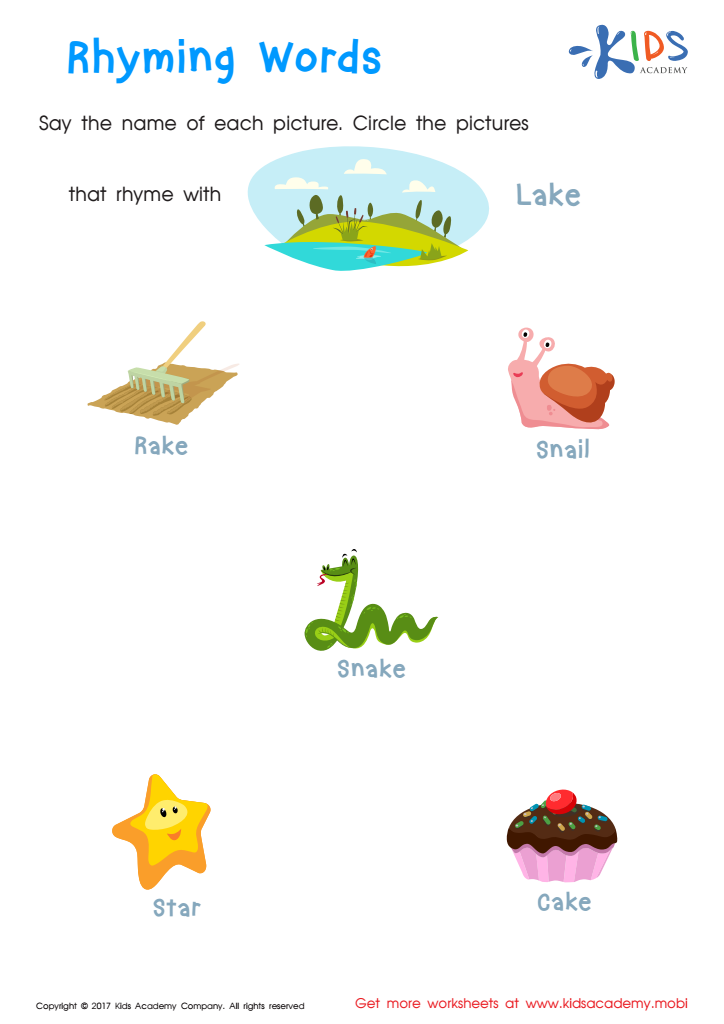
Rhyming Words Rhyming Worksheet

Long and Short U Worksheet
 Assign to My Students
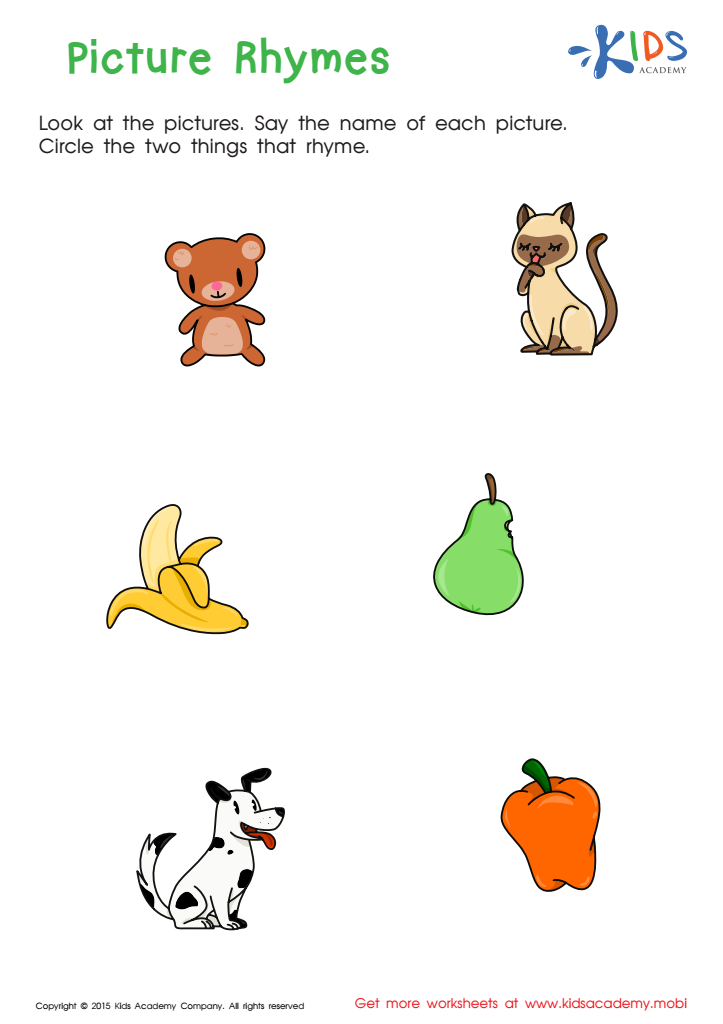
First Words: Picture Rhymes Worksheet








Sound recognition is a fundamental skill in kindergarten reading that lays the foundation for literacy development. Parents and teachers should care about this skill because it directly impacts a child's ability to decode words, a critical component of reading fluency. When children can recognize and manipulate sounds, they are better equipped to understand phonics, which is essential for reading comprehension.
Moreover, sound recognition enhances a child's listening skills, enabling them to differentiate between various phonemes and understand language nuances. This skill not only aids in reading proficiency but also enriches verbal communication, allowing children to articulate their thoughts and ideas more effectively.
Furthermore, early emphasis on sound recognition promotes a positive relationship with reading. When children gain confidence in their reading abilities, they are more likely to pursue further literacy activities, fostering a lifelong love for reading. Engaging parents in this process amplifies support at home, ensuring that learning extends beyond the classroom.
Ultimately, prioritizing sound recognition allows both parents and teachers to empower children with essential skills that promote academic success and cognitive development in their early educational journey.