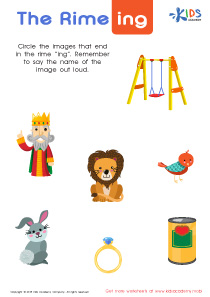
Vocabulary development Kindergarten Reading Worksheets
6 filtered results
Difficulty Level
Grade
Age
-
From - To
Subject
Activity
Standards
Help your kindergartener expand their vocabulary and strengthen reading skills with our engaging vocabulary development Kindergarten Reading Worksheets from Kids Academy! Our fun and educational worksheets are designed to introduce young learners to new words through playful activities, colorful illustrations, and age-appropriate exercises. Each worksheet is crafted to support language development, enhance comprehension, and inspire a lifelong love of learning. Whether your child is practicing at home or in school, these printables are a perfect resource for building a strong vocabulary foundation and boosting reading confidence. Download now to watch your child’s vocabulary grow!
Favorites
With answer key
Interactive
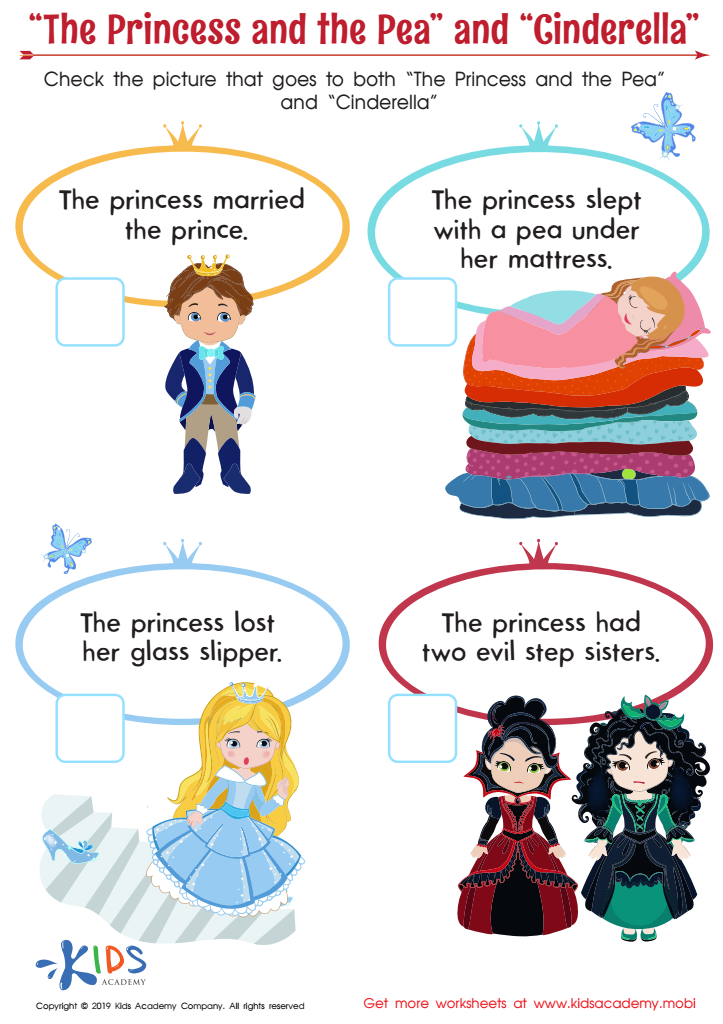
“The Princess and the Pea” and “Cinderella” Worksheet
Read "Cinderella" and "The Princess and the Pea" to your little ones. Ask them what their favorite parts were and what similarities they found in the princesses. This worksheet has four pictures of scenes from the stories. Ask your kids which picture goes with both tales.
 Assign to My Students
“The Princess and the Pea” and “Cinderella” Worksheet
Worksheet
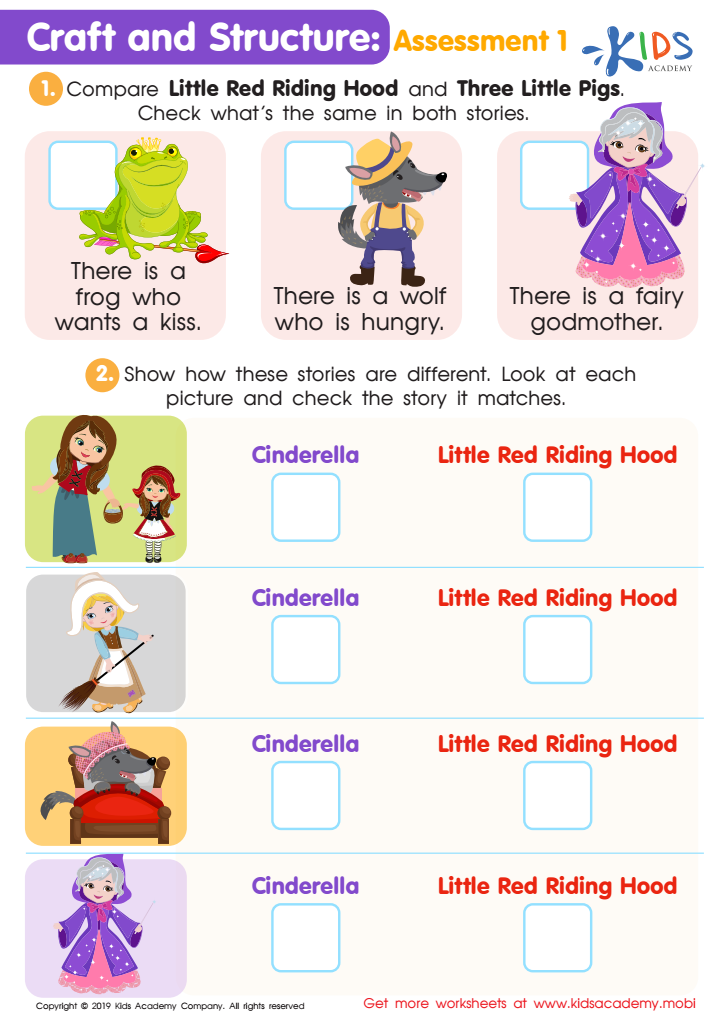
Craft and Structure: Assessment 1 Worksheet
Fairytales are a great way to bond with your kids while teaching them. Popular stories include Little Red Riding Hood and Three Little Pigs. Test how well they understood these two with this assessment worksheet. Ask them to compare the two stories and check what is the same. Doing this will help kids learn new words and sentence construction, as well as teaching them life lessons.
Craft and Structure: Assessment 1 Worksheet
Worksheet
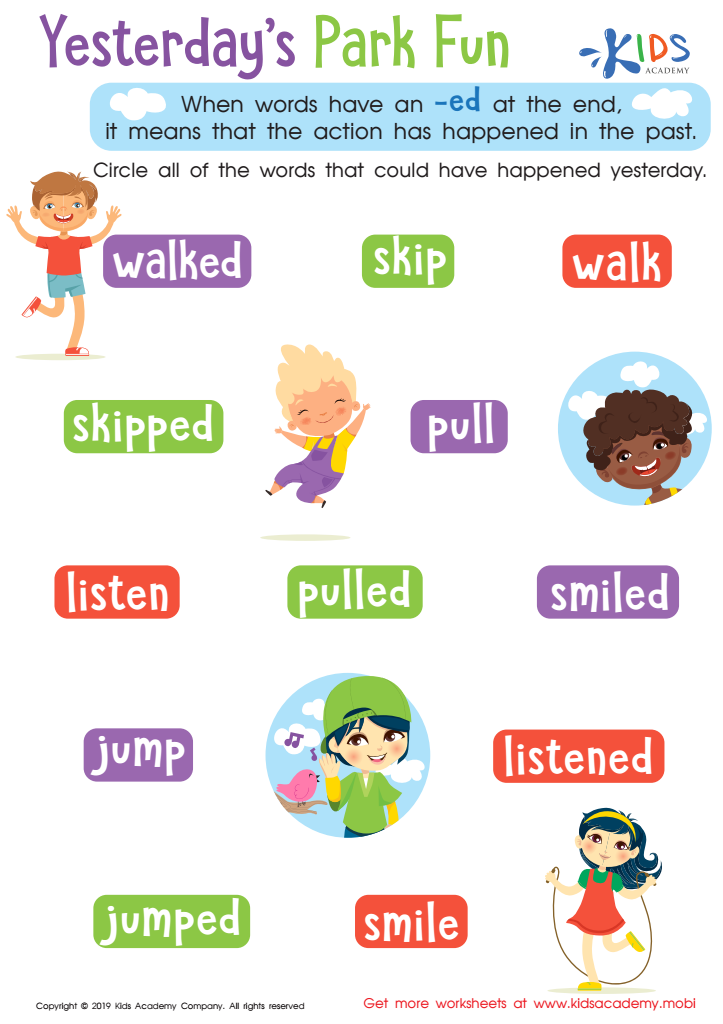
Yesterday's Park Fun Worksheet
Add -ed to the end of words and you get a word that happened in the past. This PDF helps your child understand this concept by giving practice examples: walk, pull, jump and smile can all be transformed into the past tense with a -ed suffix. They'll circle all the words that happened yesterday and learn about the past tense.
Yesterday's Park Fun Worksheet
Worksheet
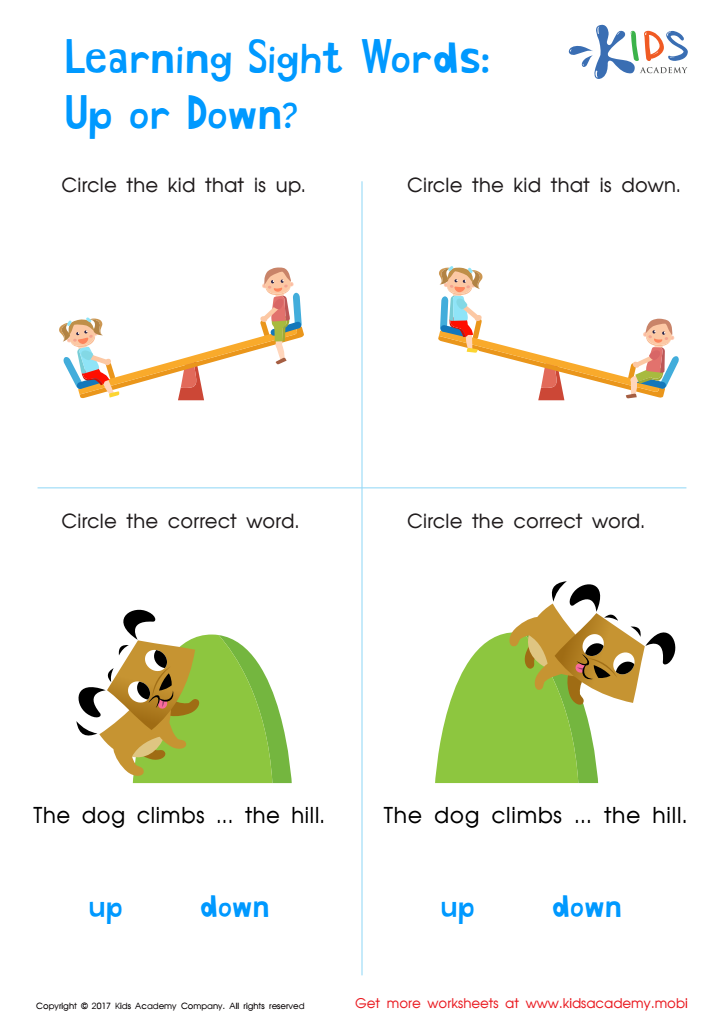
Up or Down Printable Sight Words Worksheet
Help your child identify up and down in print with this sight words worksheet. It has simple sentences, vibrant images and easy-to-read language that allow your little learner to practice these essential sight words. Perfect for early readers!
Help your early reader identify and read up and down with this sight words worksheet. It provides simple sentences, clear language and vibrant images to help them practice these essential sight words. Perfect for toddlers!
Up or Down Printable Sight Words Worksheet
Worksheet
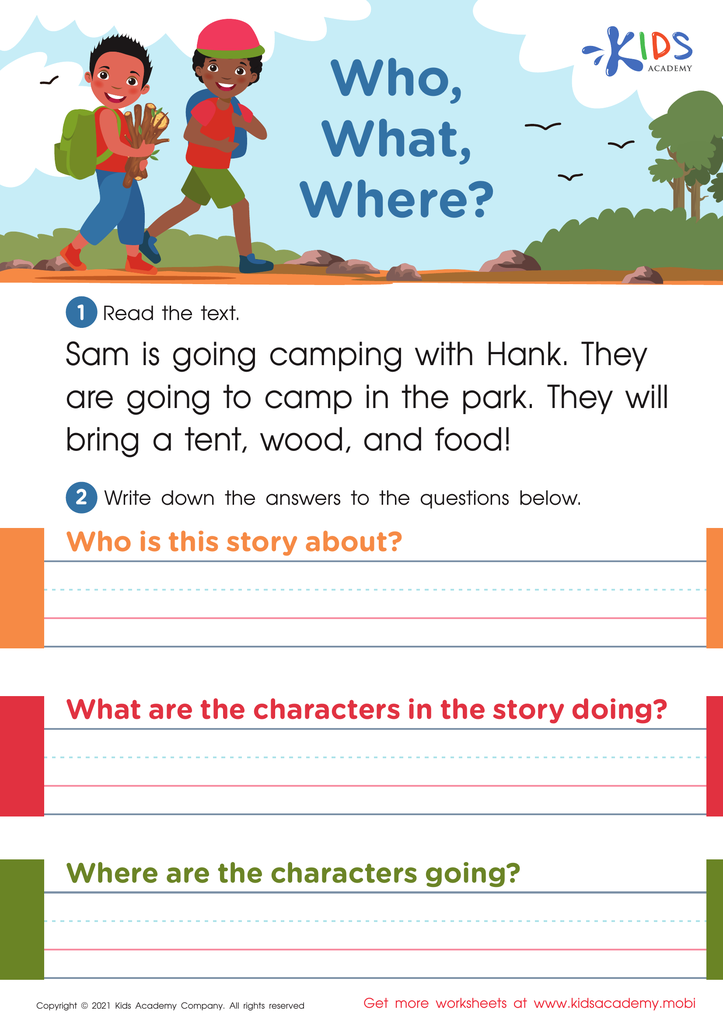
Who, What, Where? Worksheet
The availability of technology has changed the way students learn and interact with their environment in a very meaningful way.
Technology has revolutionized learning and interaction for students. It offers an array of opportunities to engage with their surroundings, leading to a more meaningful educational experience.
Who, What, Where? Worksheet
Worksheet
Join Kids Academy for Free
Who is primarily going to use this learning content?





.jpg)

Vocabulary development in kindergarten is pivotal for a child's overall reading success and future academic achievement. At this early stage, a robust vocabulary forms the foundation for learning to read. Children who enter school with a well-developed vocabulary are more likely to understand reading concepts and instructions, which facilitates smoother learning progress. This understanding not only aids in decoding written words but also enhances comprehension. When children know the meaning of the words they encounter, they can make sense of sentences and texts, thereby improving their reading fluency and enjoyment.
Furthermore, strong vocabulary skills are closely linked to better communication abilities. Children with a wide vocabulary can express themselves more clearly and confidently, fostering social interactions and emotional intelligence. This can significantly impact a child’s ability to form relationships and succeed in group activities and collaborative learning environments.
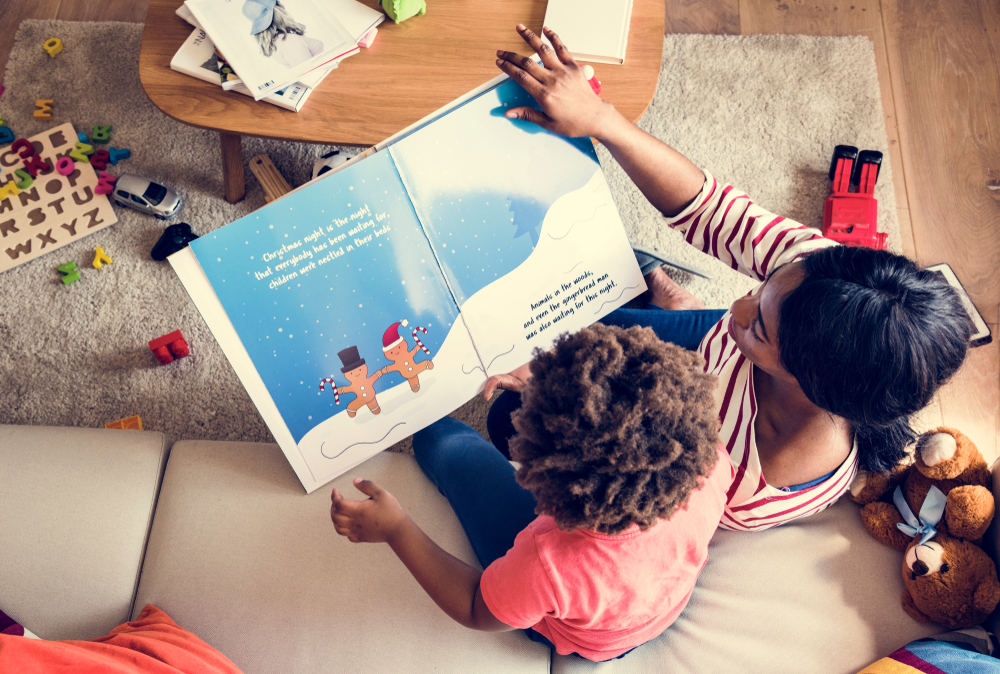
Parents and teachers play a crucial role in nurturing a child’s vocabulary. They can introduce new words through conversations, reading aloud, and interactive activities, creating a rich language environment both at home and in the classroom. By prioritizing vocabulary development, parents and teachers provide children with the essential tools they need for academic success and lifelong learning.