Counting practice Kindergarten Science Worksheets
3 filtered results
Difficulty Level
Grade
Age
-
From - To
Subject
Activity
Standards
Explore an engaging collection of Counting Practice Kindergarten Science Worksheets designed to enhance your child's early math skills. Tailored for young learners, these printable worksheets seamlessly integrate counting and science concepts, making learning both fun and effective. Each activity encourages kids to count various objects, helping them develop numerical understanding while discovering the wonders of the world around them. Ideal for classroom use or at-home practice, our worksheets promote critical thinking and problem-solving abilities. Foster a love for mathematics and science in your kindergarteners with our expertly crafted resources that ensure a solid foundation for their educational journey. Start counting today!
Favorites
With answer key
Interactive
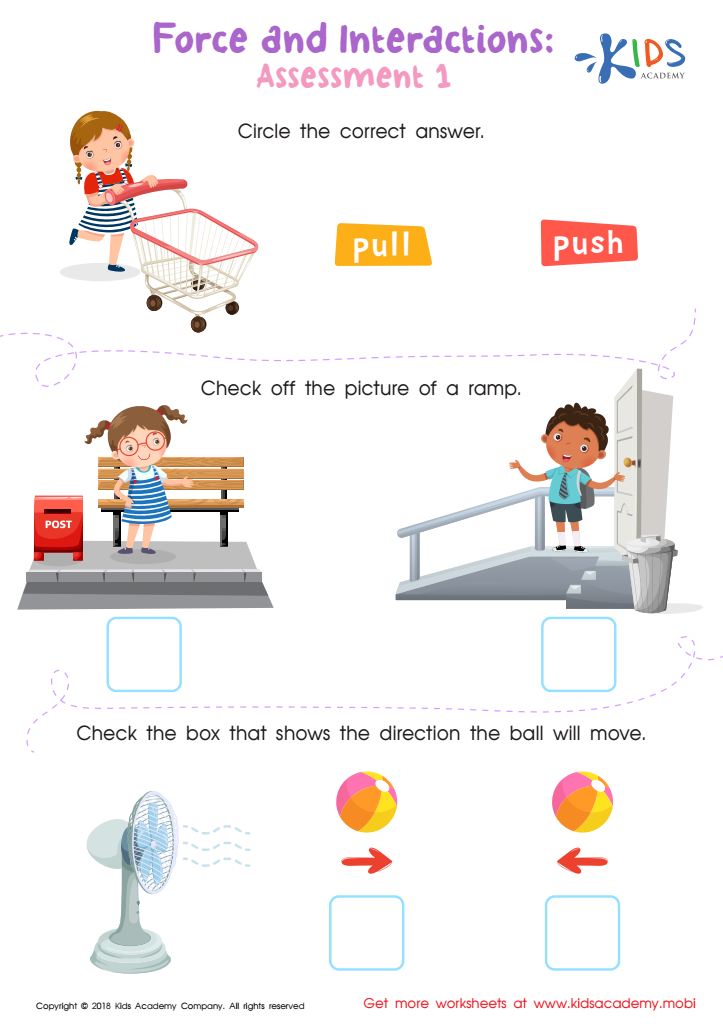
Force and Interactions: Assessment 1 Worksheet
Test your students' knowledge of pushing, pulling, ramps and wind with this worksheet. The first task requires them to identify push or pull pictures. The second asks them to identify a ramp and the third to explain which direction a ball will move when exposed to wind.
 Assign to My Students
Force and Interactions: Assessment 1 Worksheet
Worksheet
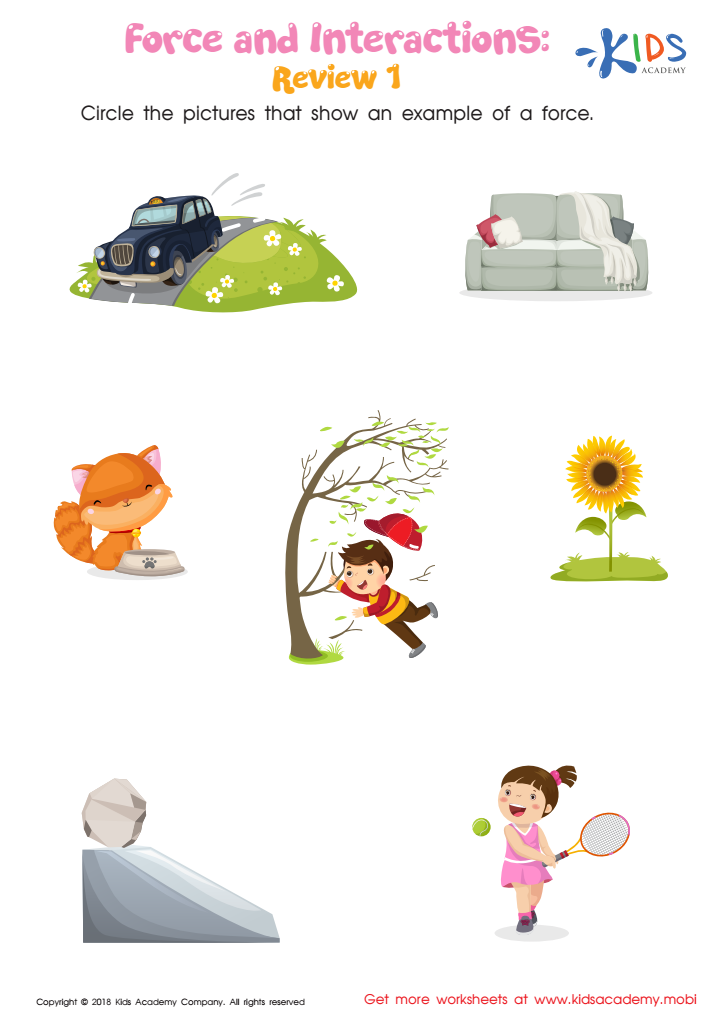
Force and Interactions: Review 1 Worksheet
See how well your child can identify the different forces.
Explain to your child that force is what causes objects to move, such as wind blowing a branch or an object going down a ramp. Ask them to circle images that show a force and assess how well they can identify them.
Force and Interactions: Review 1 Worksheet
Worksheet
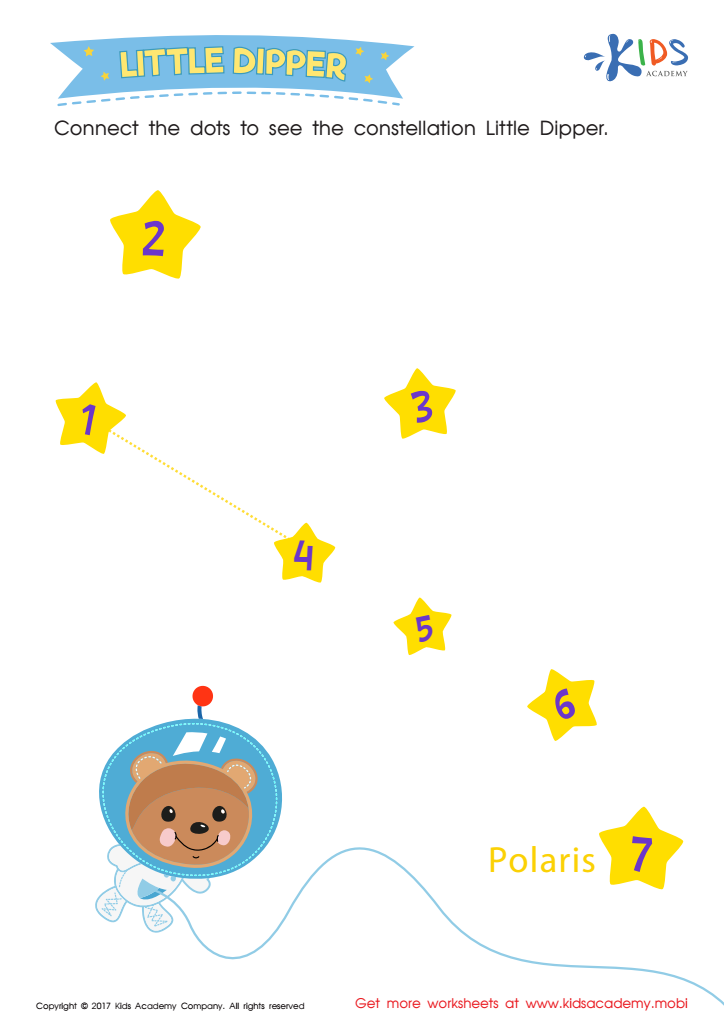
Join Kids Academy for Free
Who is primarily going to use this learning content?





.jpg)

Counting practice in kindergarten is crucial for young learners as it lays the foundation for both mathematical understanding and scientific reasoning. First, counting teaches basic numeracy skills that are essential for all future math concepts. It helps children recognize numbers, understand quantity, and engage in simple addition or subtraction, which become foundational as they progress.
Additionally, incorporating counting practice into science helps develop critical thinking and inquiry skills. For instance, when children count objects, they learn to observe, categorize, and compare—skills vital in scientific exploration. By counting natural elements, such as leaves or insects, children connect math and science, nurturing their curiosity about the world around them.
Furthermore, counting activities reinforce language skills. As children describe what they are counting or communicate their findings, they enhance their vocabulary and comprehension. Engaging in group counting activities fosters collaboration, teaching social skills alongside academic ones.
In summary, counting practice in kindergarten science equips children with essential math skills, promotes scientific thinking, and contributes positively to language development. Parents and teachers must prioritize these practices to support well-rounded early education, setting the stage for children’s future academic success.