Enhancing observation skills Kindergarten Science Worksheets
5 filtered results
Difficulty Level
Grade
Age
-
From - To
Subject
Activity
Standards
Enhance your kindergarten students' observation skills with our engaging Science Worksheets! Designed to spark curiosity and promote critical thinking, these printable worksheets encourage young learners to explore their surroundings. Through fun activities and relatable themes, children will practice identifying objects, recognizing patterns, and making observations about the world around them. Our resources support the development of essential skills such as attention to detail and analytical thinking, fostering a love for science right from the start. Perfect for classroom or home use, these worksheets integrate seamlessly into any curriculum, making learning exciting and effective. Help your child become an astute observer today!
Favorites
With answer key
Interactive
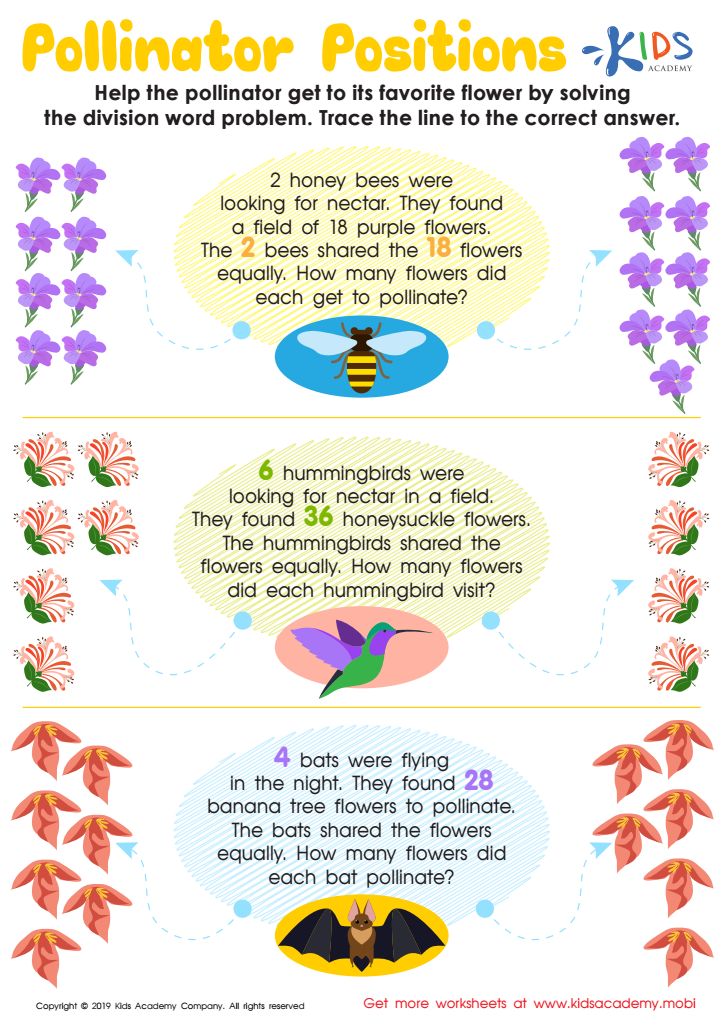
Pollinator Positions Worksheet
Kids will love learning about pollinators and how vital they are. Help their favorite friends get to the right flowers with this fun PDF. Children can solve the problems without even knowing they're doing division; just read the word problems and use the highlighted numbers. Finish by tracing the lines to the correct quotient!
 Assign to My Students
Pollinator Positions Worksheet
Worksheet
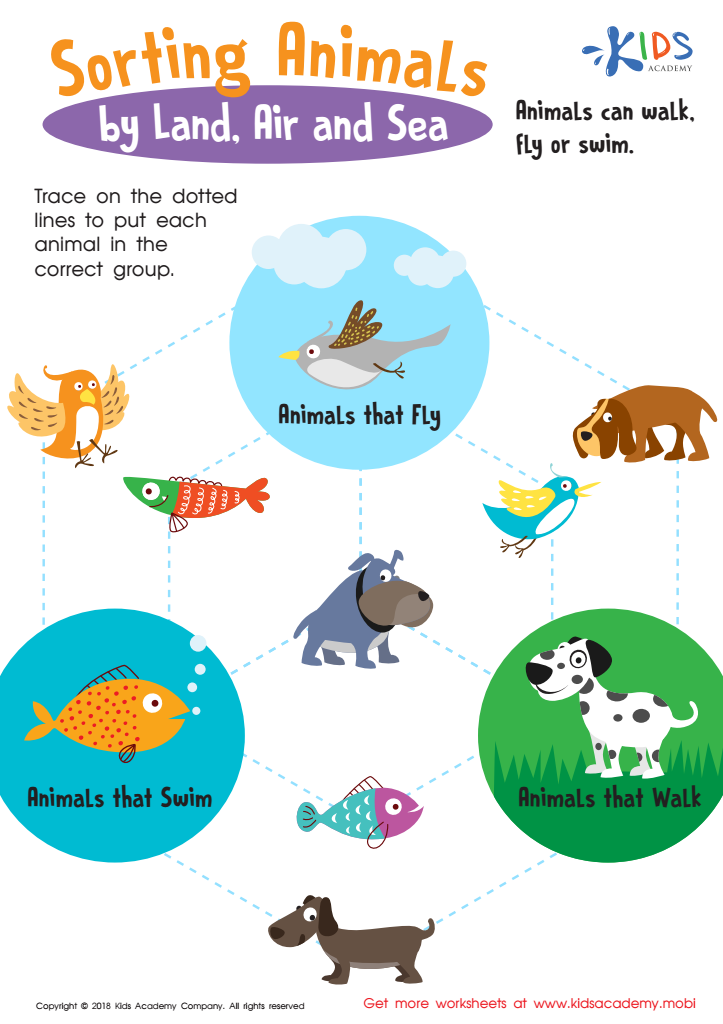
Sorting Animals by Land, Air and Sea Worksheet
Kids will use critical thinking and fine motor skills with this worksheet! They'll analyze animal traits and draw lines to sort them into groups of those that fly, swim, or walk. It's a fun way to hone skills and have a great time!
Sorting Animals by Land, Air and Sea Worksheet
Worksheet
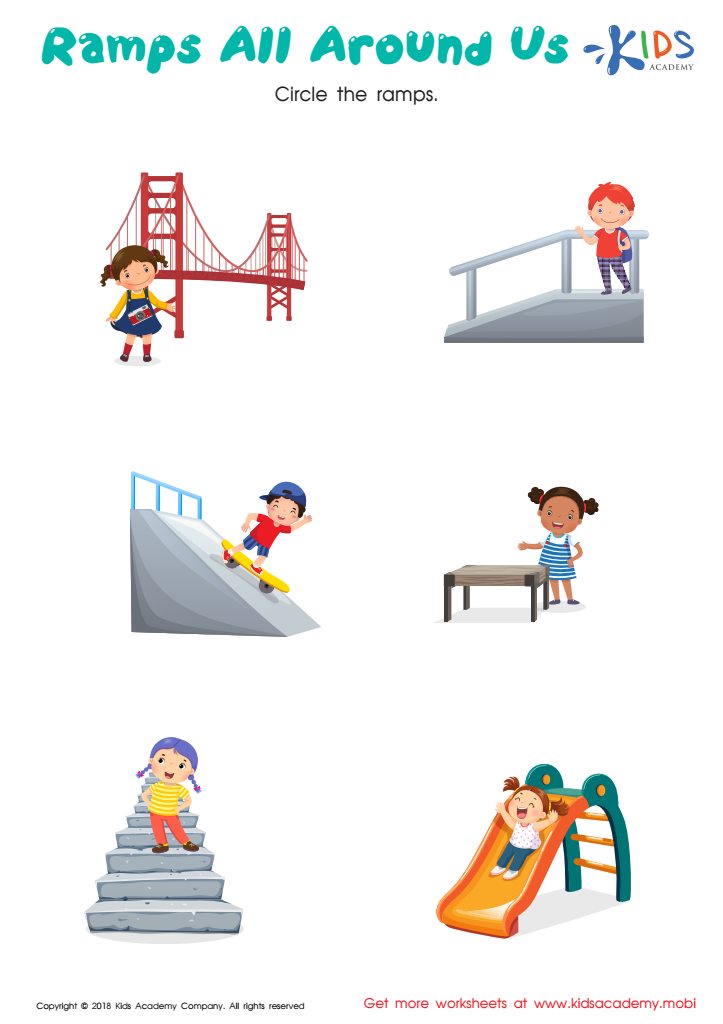
Ramps All Around us Worksheet
Ask your kids if they know what ramps are, then have them give you examples of places they've seen them. This worksheet has pictures of ramps - have your child identify and circle them.
Ramps All Around us Worksheet
Worksheet
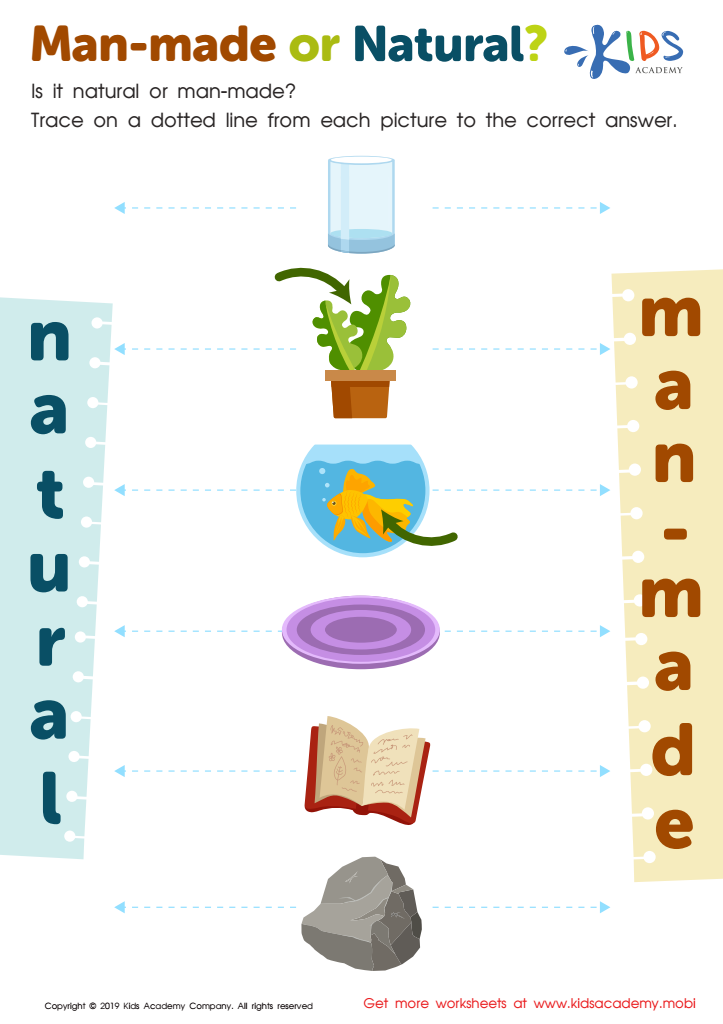
Man-Made or Natural? Worksheet
Ask your students to name natural and man-made objects. Check the worksheet to help them identify the objects, then trace the dotted line to determine if it's natural or man-made.
Man-Made or Natural? Worksheet
Worksheet
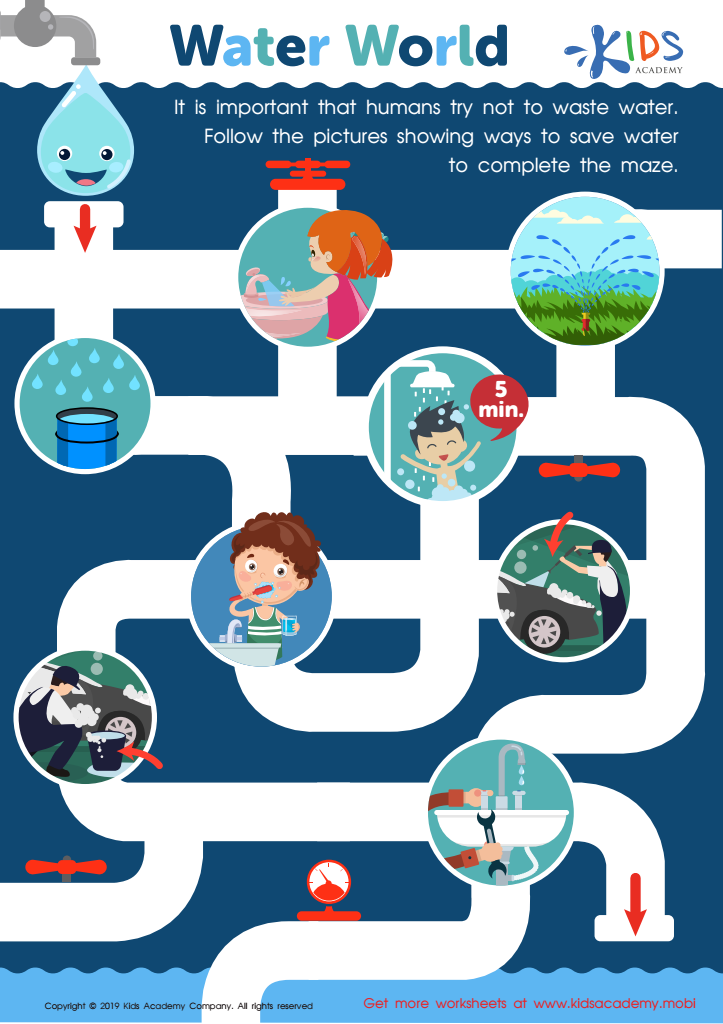
Water World Worksheet
Water is a vital necessity for living. Our bodies depend on it to stay healthy and survive. When we don't drink enough water, we become thirsty and run the risk of getting sick. Luckily, our planet is full of water and natural sources to stay hydrated. To prevent water waste, use this worksheet to teach your students how to conserve it and complete the maze.
Water World Worksheet
Worksheet
Join Kids Academy for Free
Who is primarily going to use this learning content?







Enhancing observation skills in Kindergarten science is vital for both parents and teachers for several reasons. First, observation is a foundational scientific skill that encourages curiosity and inquiry. When children develop effective observational skills, they learn to notice details in their environment, actively engaging with the world around them. This foundational skill not only fosters a love for science but also supports critical thinking and problem-solving abilities.
Moreover, strengthening observation skills aids cognitive development. Young children learn best through play and exploration, and when adults encourage this, they help promote cognitive growth and compassion for living organisms in their everyday lives. By honing these skills, children improve their ability to process and analyze information, making connections between their observations and concepts related to science.
For teachers and parents, focusing on enhancing observation skills allows for the identification of individual learning styles and interests. This enables the development of tailored activities that meet the child's unique needs, maximizing educational impact. Lastly, these skills build confidence, empowering children to ask questions, share findings, and collaborate with peers, ultimately preparing them for future academic and life challenges. Investing in observation skills today cultivates future scientists, thinkers, and engaged citizens.