Understanding directions Kindergarten Science Worksheets
3 filtered results
-
From - To
Unlock your child's potential with our engaging "Understanding Directions" Kindergarten Science Worksheets! Designed to foster essential skills, these printable worksheets encourage young learners to follow simple directions while exploring exciting science concepts. Each activity promotes critical thinking, enhances listening abilities, and builds confidence as kids learn to interpret instructions in various contexts. From navigating through fun science-themed mazes to practicing sequencing with interactive diagrams, our worksheets not only stimulate curiosity but also make learning enjoyable. Ideal for classroom use or at-home practice, these resources ensure that children develop foundational skills while enjoying educational play. Encourage your little scientists to explore today!
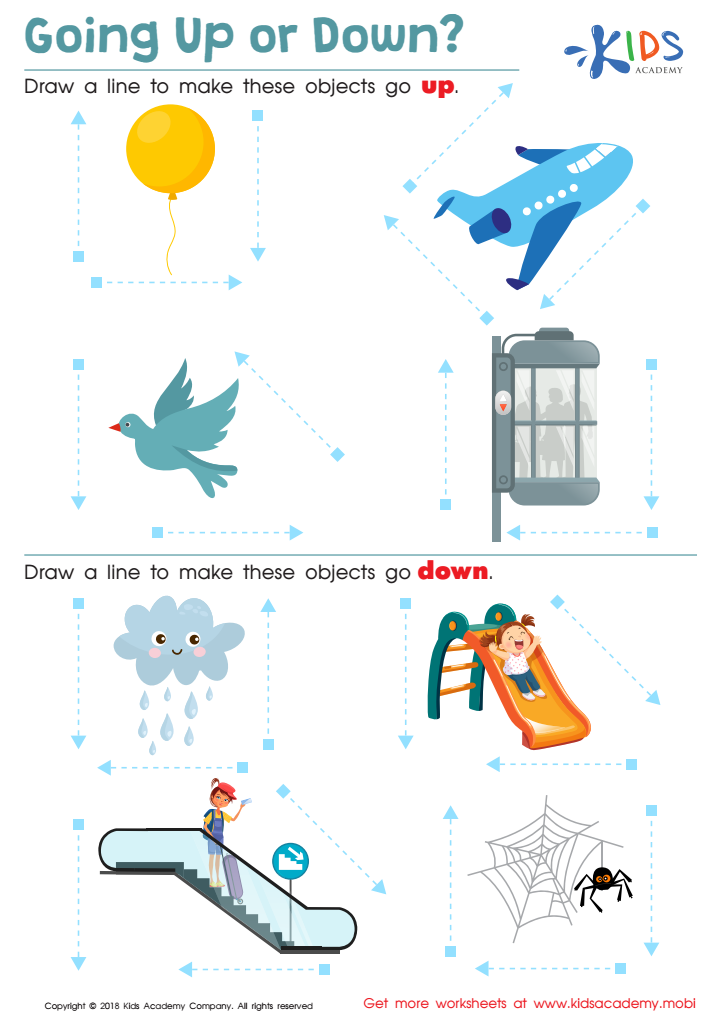
Going up or Down? Worksheet
 Assign to My Students
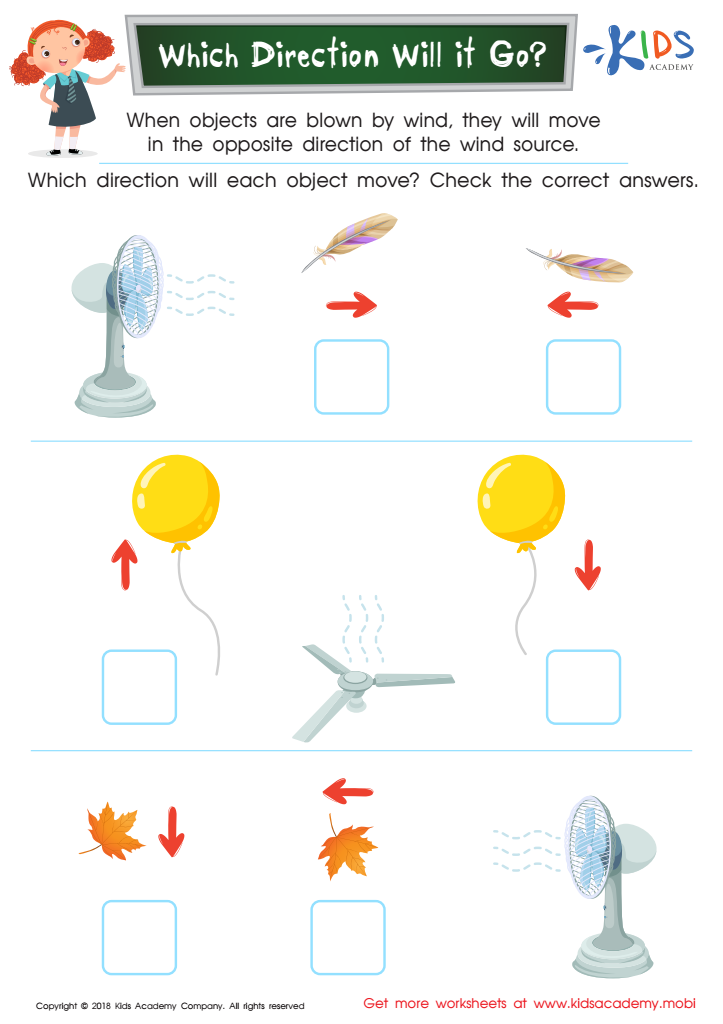
Which Direction Will it Go? Worksheet
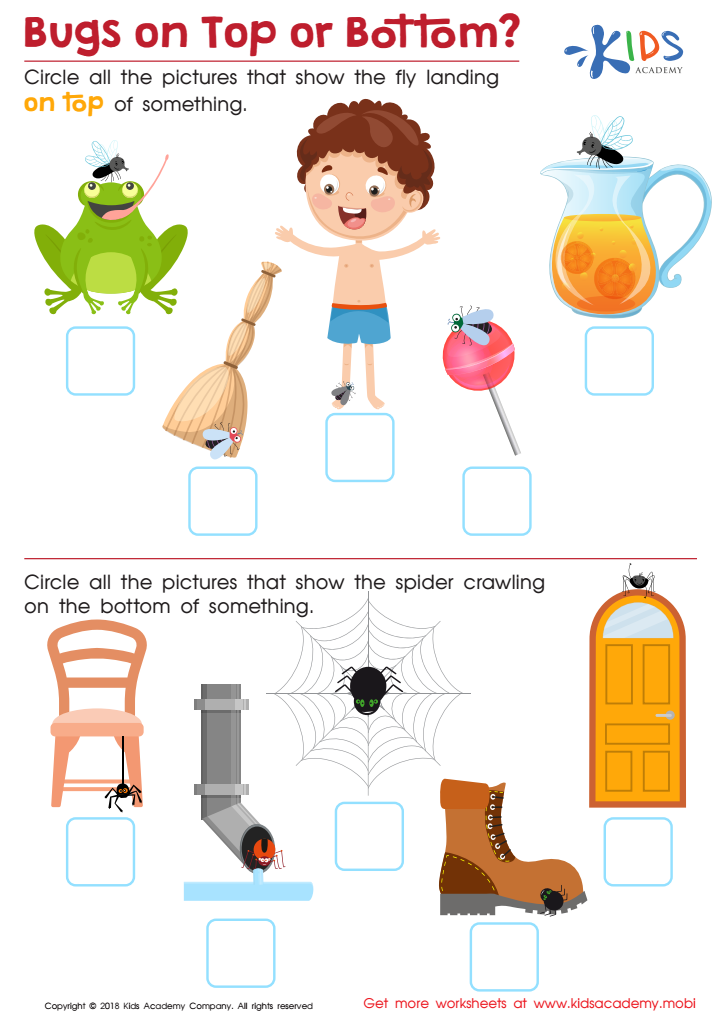
Bugs on Top or Bottom? Worksheet







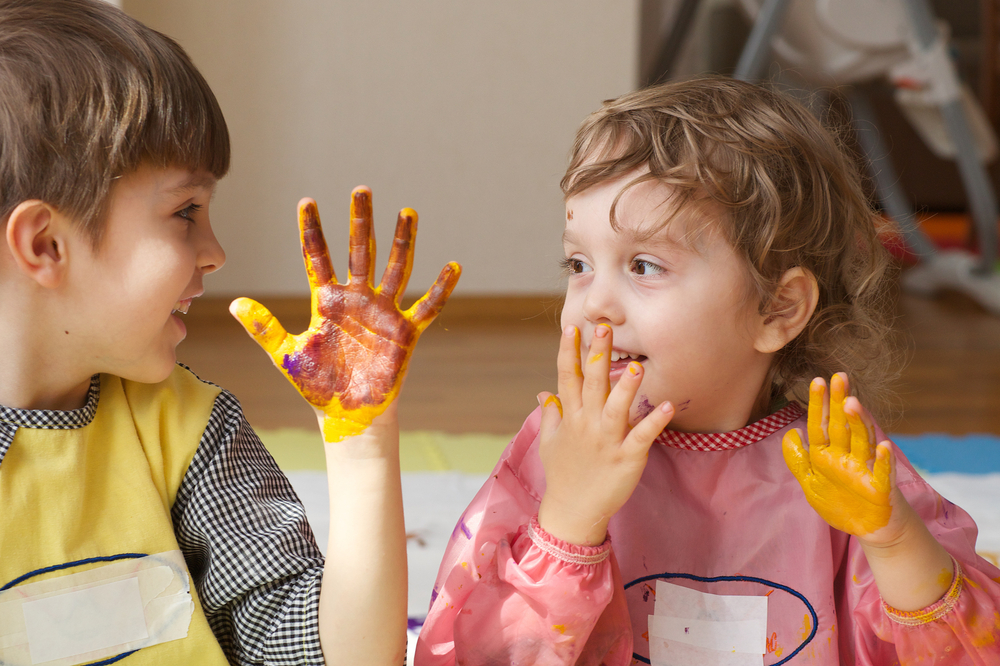
Understanding directions in Kindergarten Science is crucial for several reasons, making it a priority for parents and teachers alike. Firstly, young children are naturally curious and benefit from structured learning that encourages exploration and inquiry. By teaching children to follow directions accurately, we enhance their ability to observe, ask questions, and engage in scientific processes such as experimentation. This foundational skill supports critical thinking, helping them to plan, conduct experiments, and analyze their results.
Secondly, following directions fosters independence and responsibility in young learners. When children learn to follow instructions, they develop confidence in their ability to navigate tasks on their own, cultivating a sense of accomplishment and pride in their scientific endeavors.
Moreover, understanding directions helps improve communication and social skills as children collaborate with peers on group projects or experiments. They learn to articulate their ideas, listen actively, and work as a team, all of which are essential life skills.
Lastly, the incorporation of direction-following in science lays the groundwork for future academic success. It encourages a growth mindset, as children begin to understand that learning is a process that involves making mistakes, revising plans, and trying again. Thus, parents and teachers play a vital role in nurturing these competencies early on.