Plant identification Kindergarten Plants and Animals Worksheets
3 filtered results
Difficulty Level
Grade
Age
-
From - To
Subject
Activity
Standards
Discover the magic of nature with our Kindergarten Plant Identification Worksheets on Kids Academy! Perfectly designed for curious young minds, these engaging worksheets help kindergarteners learn to identify various plants, fostering an appreciation for the natural world. Through fun, interactive activities, children will develop essential observation and classification skills. Ideal for classroom or home learning, our plant identification worksheets make science enjoyable and educational. Encourage your child's exploration of plants and animals with quality materials that support early science learning and spark a lifelong interest in the environment. Visit Kids Academy for more hands-on learning resources!
Favorites
With answer key
Interactive
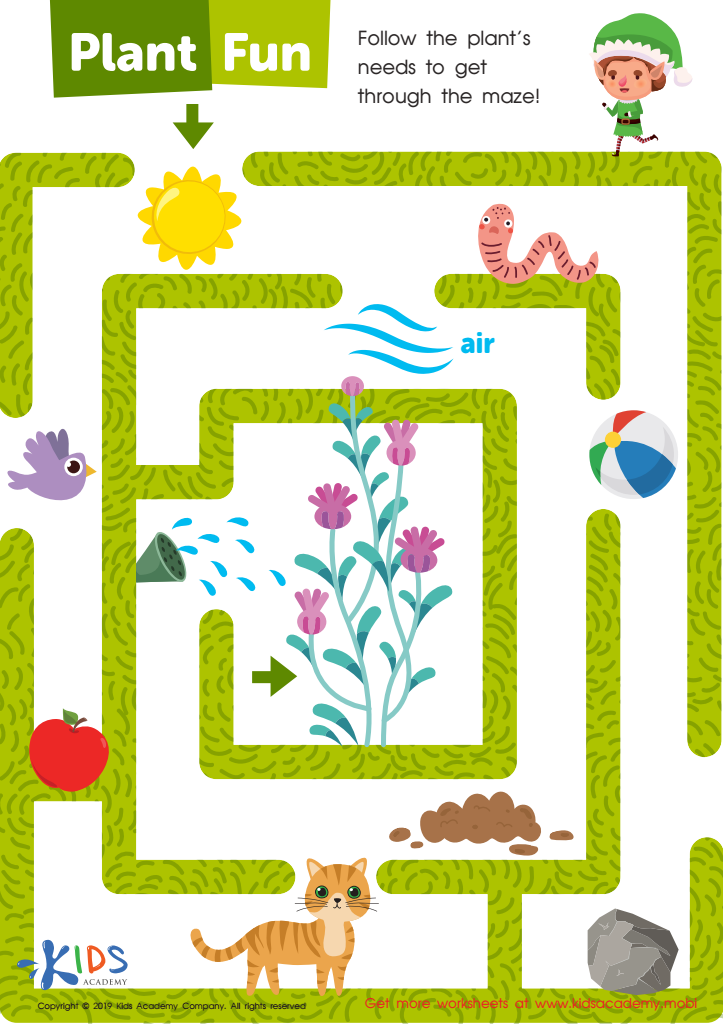
Plant Fun Worksheet
Engage your kid's mind by playing a learning maze! Ask them what plants do for us and what we need to do for the plants to help them grow. Then, help them find their way out of the maze while following the things that plants need.
Plant Fun Worksheet
Worksheet
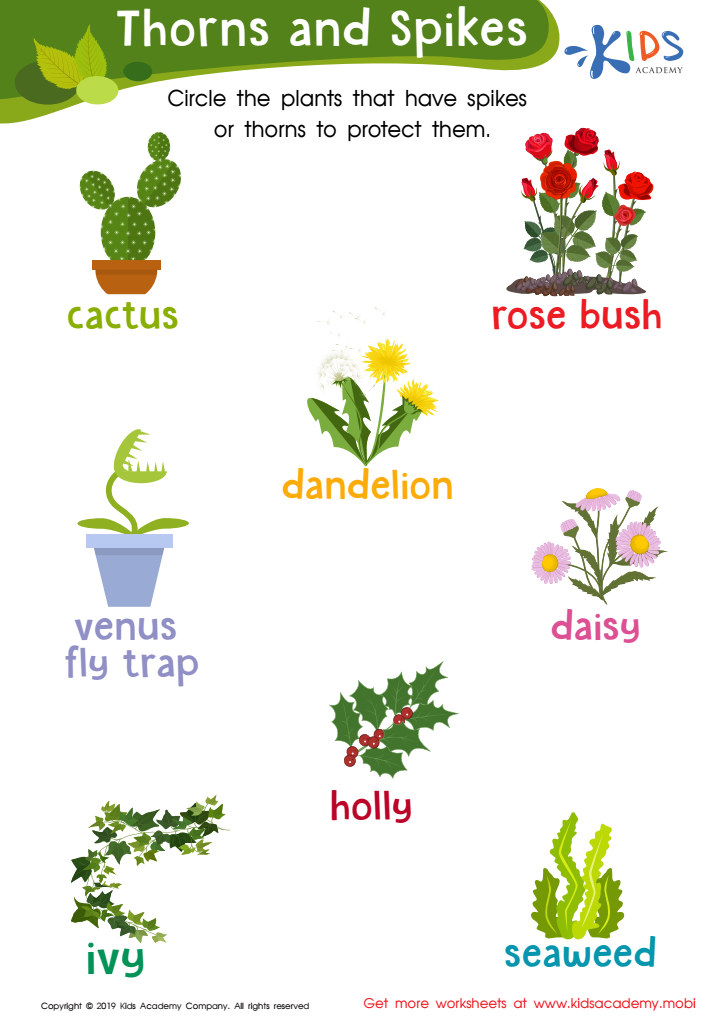
Thorns and Spikes Worksheet
Can your students name and identify the plants and flowers in this worksheet? Ask them to read out the names and circle the ones with spikes or thorns. Help them appreciate nature's beauty and understand how plants protect themselves.
Thorns and Spikes Worksheet
Worksheet
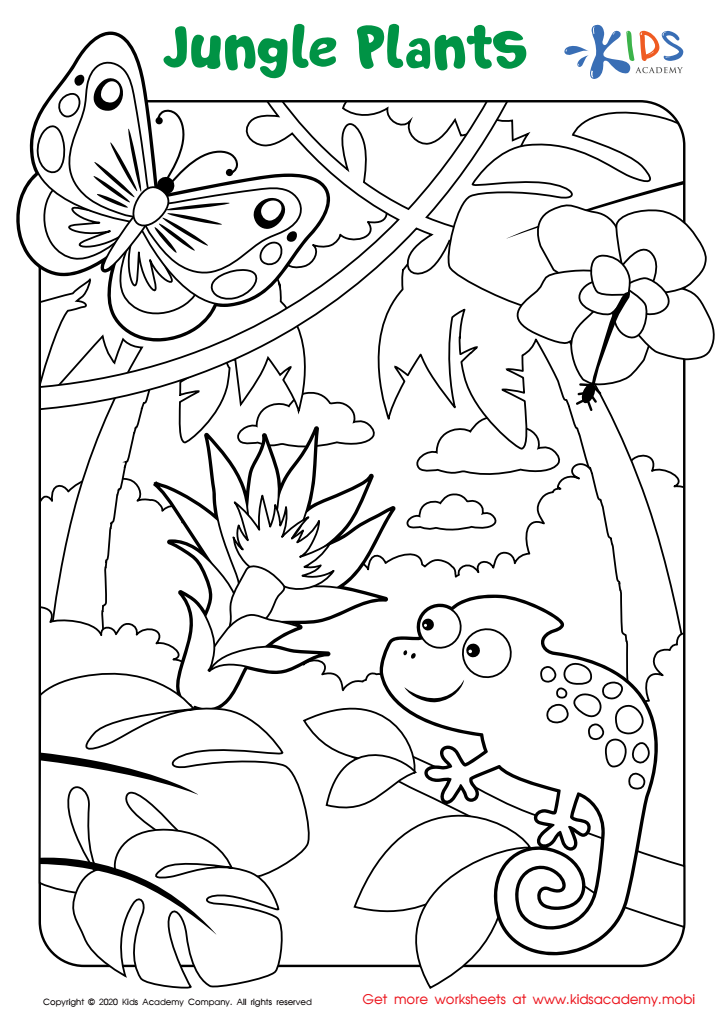
Jungle Plants Worksheet
Coloring pages can be fun and educational for kids! Print this adorable jungle worksheet with plants, a butterfly, and a lizard. Ask preschoolers to choose colors to bring the scene to life, while discussing rainforest plants and animals.
Download (PDF)
 Assign to My Students
Assign to My Students
Jungle Plants Worksheet
Worksheet
Join Kids Academy for Free
Who is primarily going to use this learning content?





Understanding plant identification in kindergarten is essential for several reasons. Firstly, it fosters a sense of curiosity and connection to the natural world. When children learn to identify different plants, they develop observational skills and an appreciation for biodiversity. This early engagement with nature sets the foundation for environmental stewardship, encouraging kids to care about and protect their surroundings from a young age.
Furthermore, recognizing various plants can also contribute to safety. Knowing which plants are safe to touch or eat and which ones are potentially harmful can prevent accidents. This knowledge is invaluable in everyday situations, such as playing outdoors or hiking.
On a cognitive level, learning about plants enhances memory, vocabulary, and categorization skills. It introduces young learners to critical concepts such as patterns, differences, and similarities, which are fundamental to scientific thinking. Additionally, this subject can be integrated into reading, writing, and art activities, making it an interdisciplinary tool that enriches broader educational experiences.
Involving children in plant identification also nurtures their sense of responsibility, as they become 'little guardians' of their environment. Whether parents or teachers lead the way, this knowledge empowers children to make informed choices and inspires a lifelong respect for the planet.