Sentence construction Kindergarten Writing Worksheets
5 filtered results
Difficulty Level
Grade
Age
-
From - To
Subject
Activity
Standards
Enhance your kindergarteners' writing skills with our Sentence Construction Worksheets! Designed to engage young learners, these worksheets provide a fun and interactive way to understand sentence structure. Children will practice organizing words, utilizing creative prompts, and generating their own sentences, fostering both comprehension and creativity. Each worksheet caters to diverse learning styles, ensuring that every child can thrive. Ideal for teachers and parents, these printable resources can be integrated into classroom lessons or at-home activities. Help your child build a strong foundation in writing with our engaging and educational sentence construction worksheets today! Start their writing journey with confidence!
Favorites
With answer key
Interactive
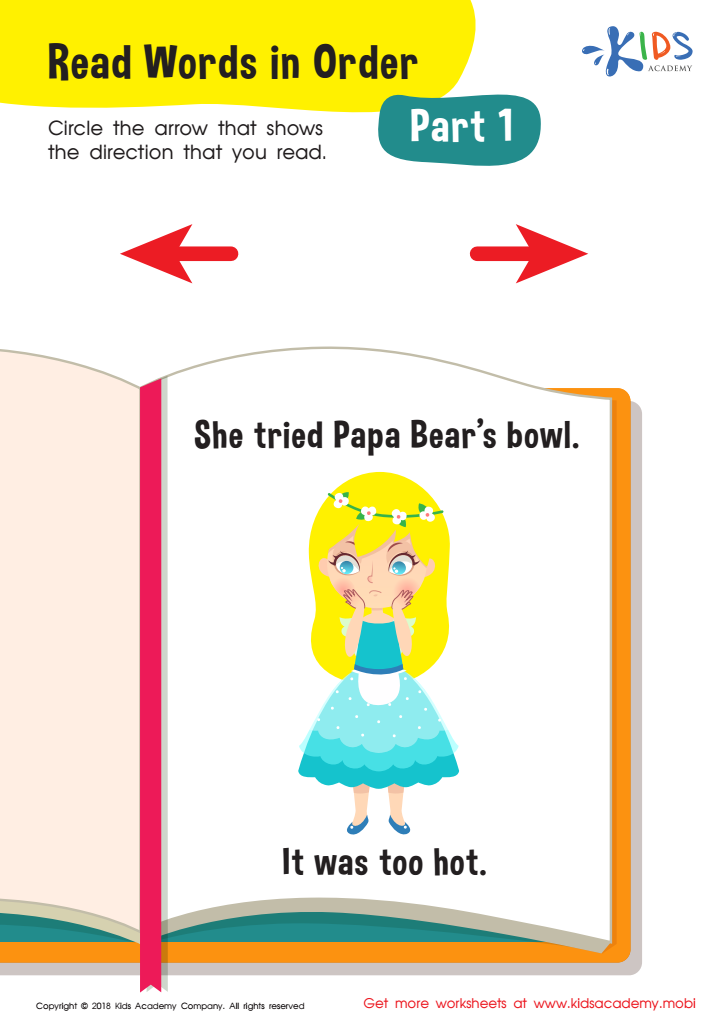
Read Words Order Part 1 Worksheet
Is your child just starting out with reading or having trouble? This worksheet is perfect! It'll help them learn the right way to read. Ask them to circle the arrow that shows the right direction to read. With this exercise, your child can overcome some of their reading challenges.
 Assign to My Students
Read Words Order Part 1 Worksheet
Worksheet
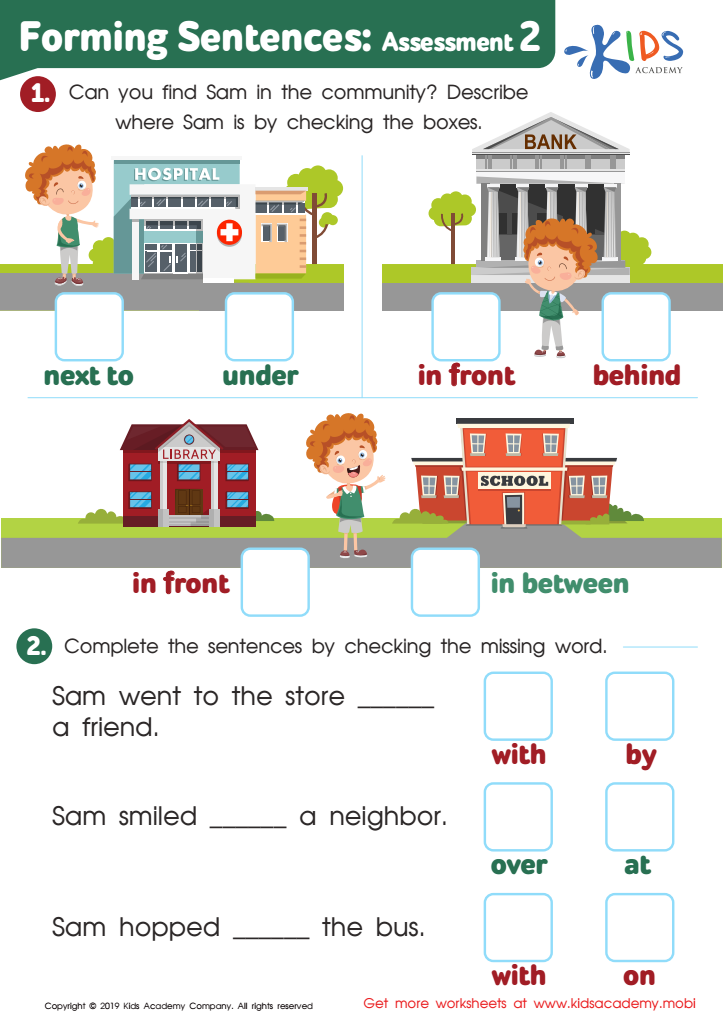
Forming Sentences: Assessment 2 Worksheet
A community is an area with different people, buildings and professionals. Ask students to list buildings in their area, then help find Sam. Describe where he is and check the boxes in the worksheet. At the bottom, help complete the sentences by checking the missing word.
Forming Sentences: Assessment 2 Worksheet
Worksheet
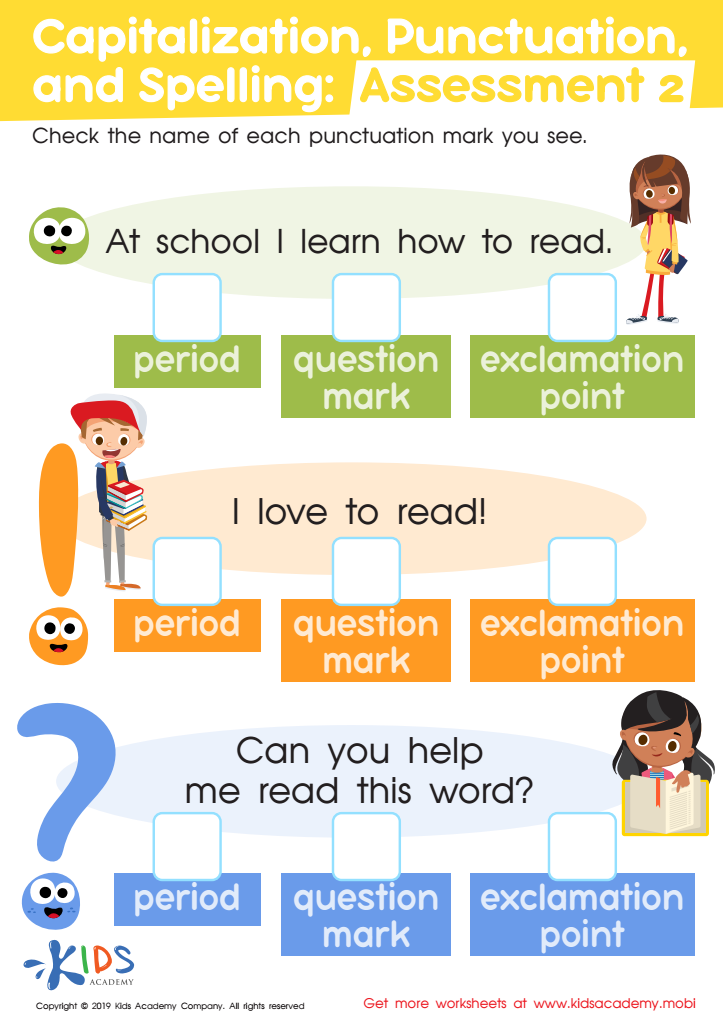
Capitalization. Punctuation. Spelling: Assessment 2 Worksheet
Teach your kids the basics of punctuation. Ask them to name the punctuation marks they know and review a worksheet together. Start with the full stop, question mark and exclamation mark. Show them examples and explain the differences between a comma and semi colon. Teaching proper use of punctuation marks is key to their development.
Capitalization. Punctuation. Spelling: Assessment 2 Worksheet
Worksheet
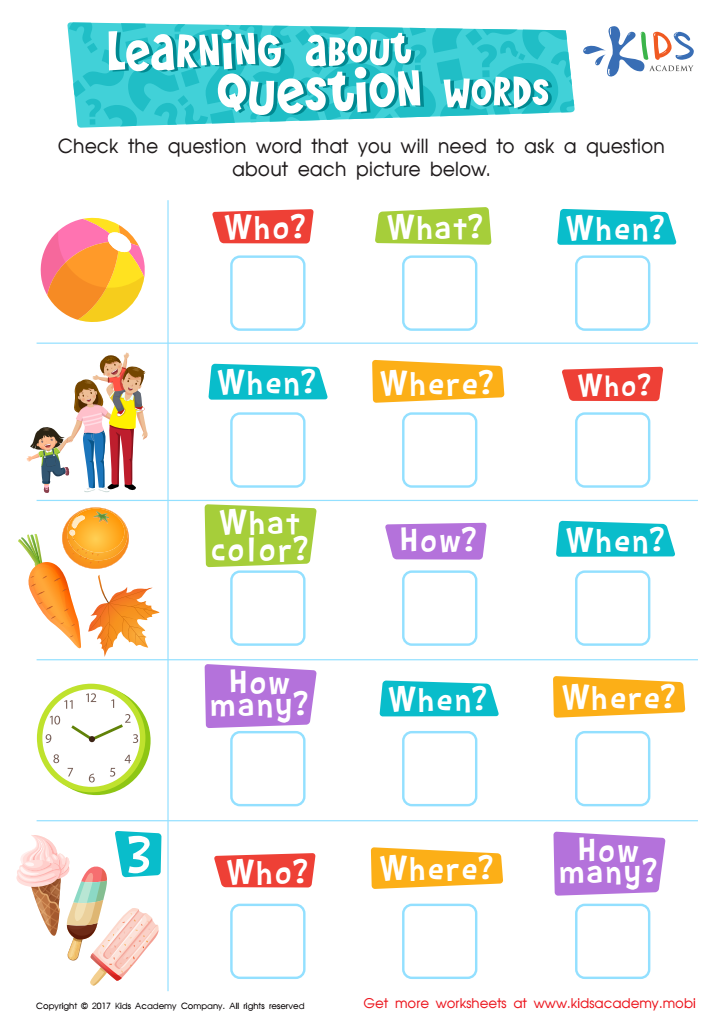
Learning about Question Words Worksheet
Learning language can be difficult, but this free printable worksheet will help! Have your child look at the picture and name it. Then help them choose the right question word to ask something about it. For example, when looking at a beach ball, you can't ask "Who?" Instead, look through the list to select the right word. It's a great way to learn language basics!
Learning about Question Words Worksheet
Worksheet
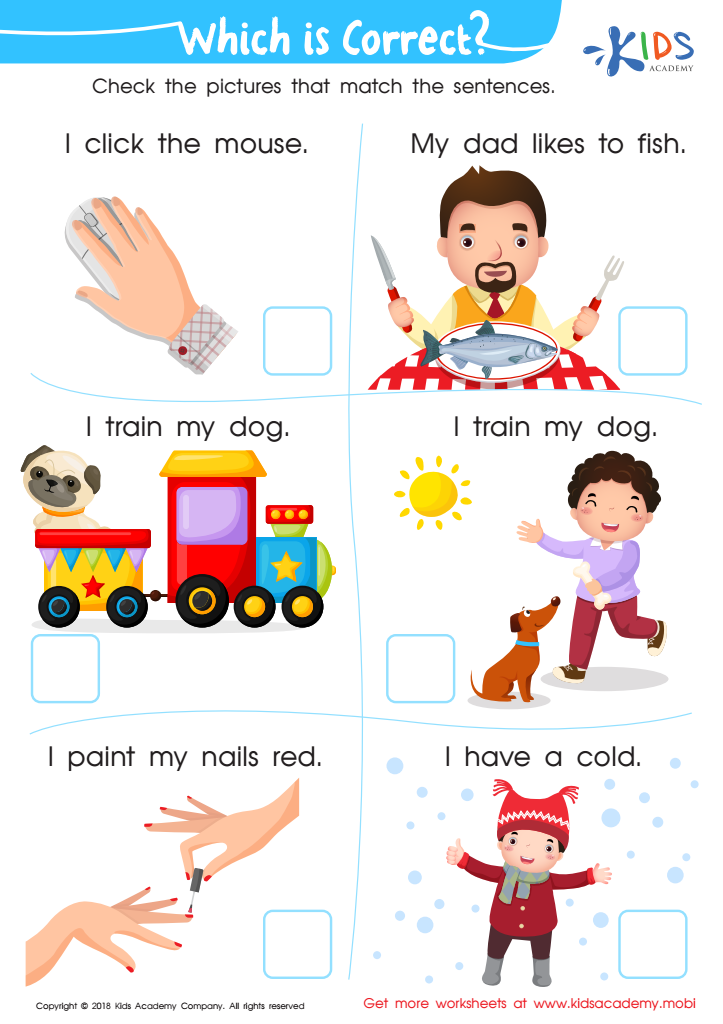
Which Is Correct? Worksheet
Go over the exercise with your students. Ask them to read the sentences and explain what they mean. Check the pictures that correspond to the sentences. For example, what does "My dad likes to fish" mean? Test their understanding with the worksheet.
Which Is Correct? Worksheet
Worksheet
Join Kids Academy for Free
Who is primarily going to use this learning content?








Parents and teachers should prioritize sentence construction in kindergarten writing because it lays the foundation for communication and literacy skills. At this early stage, children begin to understand the structure of language, which is crucial for developing both written and spoken expression. By focusing on sentence construction, children learn how to connect their thoughts logically, using grammar, punctuation, and vocabulary effectively.
Introducing sentence structures at a young age enables children to articulate their ideas clearly, fostering confidence in their writing abilities. It helps them convey messages successfully, which boosts their engagement in learning activities and enhances their overall academic success. Good sentence construction also supports reading comprehension; as children develop writing skills, they become more adept at recognizing sentence patterns during reading.
Additionally, sentence construction fosters critical thinking and creativity as children explore different ways to express their thoughts. When parents and teachers actively engage in this process, using playful strategies like storytelling, rhyming games, or sentence-building exercises, they make learning enjoyable. This positively impacts a child’s enthusiasm for reading and writing, ensuring that they are well-prepared for future educational challenges and lifelong learning. In essence, cultivating strong sentence construction skills at this stage is vital for children's overall development.