Improving decision-making skills Worksheets for Kids
1 filtered results
Difficulty Level
Grade
Age
-
From - To
Subject
Activity
Standards
Improving decision-making skills can have a profound impact on various aspects of life, from personal relationships to professional success. These worksheets offer a structured and engaging way to enhance decision-making abilities. Each worksheet presents hypothetical scenarios, challenging individuals to weigh different options, consider potential outcomes, and make informed choices. By completing these exercises, learners can strengthen critical thinking, analytical skills, and cognitive abilities. Moreover, utilizing worksheets promotes self-reflection, helping individuals understand their decision-making processes and identify areas for improvement. Ultimately, practicing decision-making skills through worksheets cultivates confidence in decision-making and empowers individuals to navigate complex choices with ease and precision.
Favorites
With answer key
Interactive
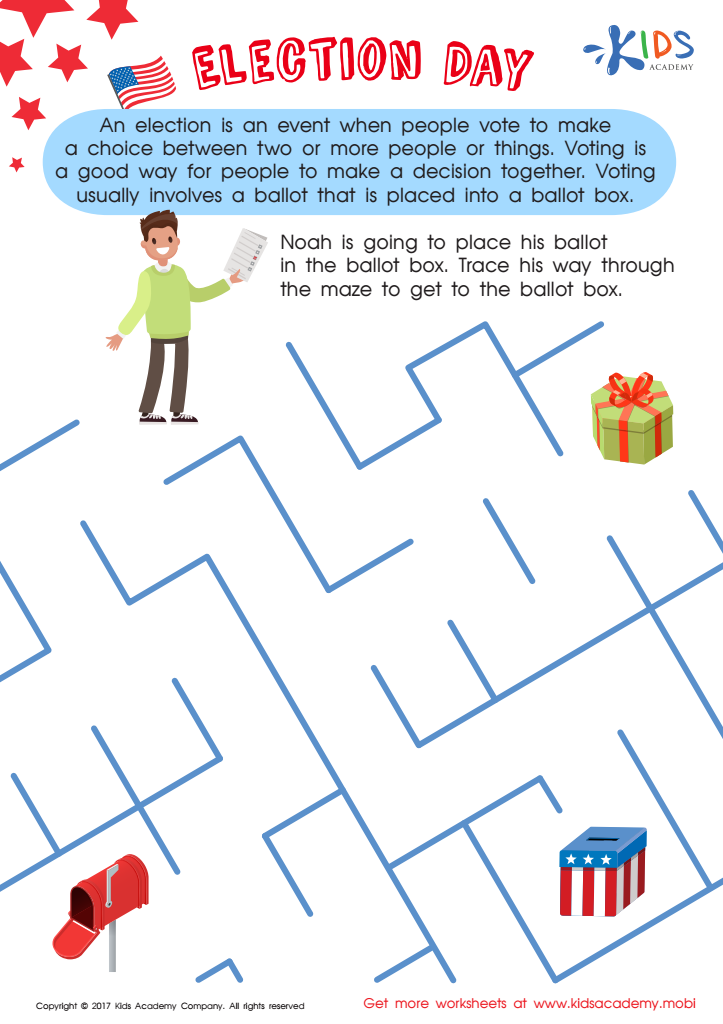
Election Day Worksheet
Get the election day worksheet PDF and teach them the value of voting - an integral part of our democracy! 80 words
 Assign to My Students
Election Day Worksheet
Worksheet
Question/Answer

What are some effective activities to train students’ Improving decision-making skill when teaching them about Governance and Civics?
Role-playing scenarios, debates on real-world governance issues, mock trials, decision-making games, and simulations of democratic processes like voting and law-making can effectively train students in decision-making skills. Utilizing case studies of historical events or current affairs to analyze decisions made by leaders also sharpens critical thinking and decision-making abilities in the context of Governance and Civics.
How to test a Grade 1 student’s Improving decision-making skills?
To test a Grade 1 student's improving decision-making skills, present them with age-appropriate scenarios requiring a choice, such as choosing materials for an art project or selecting a book to read from a set of options. Observe and evaluate their reasoning for their choices, their ability to weigh options, and the outcomes of their decisions.
What does the Improving decision-making skill mean when it comes to Grade 1 Governance and Civics learning?
Improving decision-making skill in Grade 1 Governance and Civics learning involves teaching young students to understand choices, consider consequences, and make thoughtful decisions. This foundational skill helps them grasp the basics of personal responsibility and the impact of their decisions on others, fostering early awareness of civic duties and ethical behavior in their community.
Join Kids Academy for Free
Who is primarily going to use this learning content?