Learning division Worksheets for Kids
1 filtered results
Difficulty Level
Grade
Age
-
From - To
Subject
Activity
Standards
Learning division can be a challenging concept for many students, requiring them to understand the mechanics of division and build accuracy in their calculations. To aid this learning process, division worksheets can be a valuable resource. These worksheets provide students with ample practice and a structured approach to divide numbers, helping them develop a strong foundation in this mathematical operation.
Favorites
With answer key
Interactive
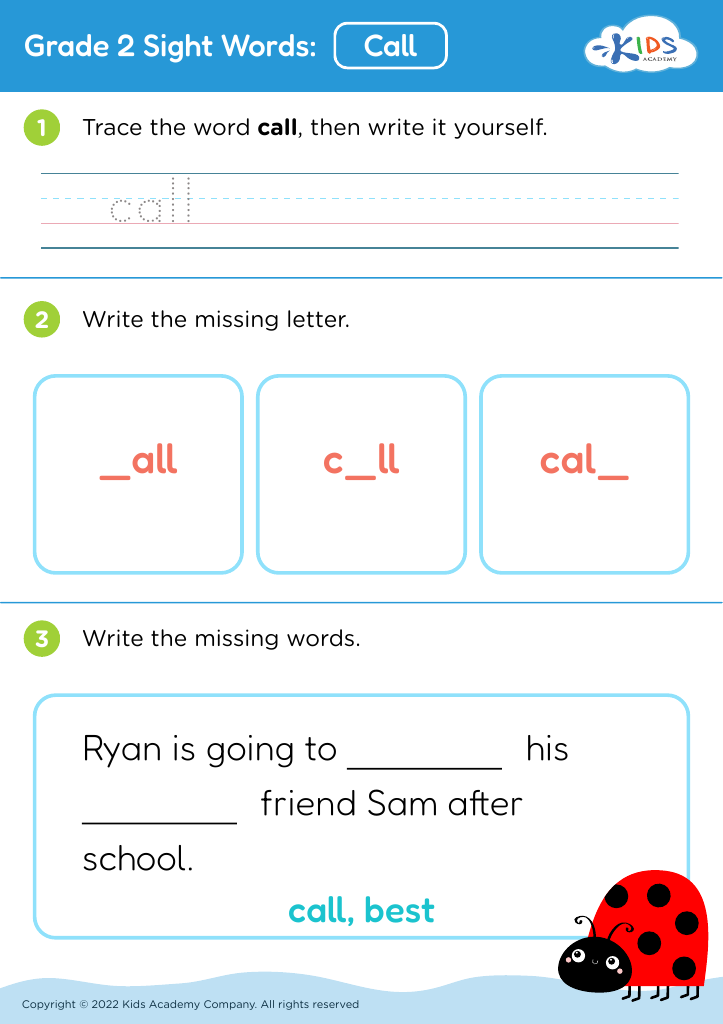
Question/Answer

What are some effective activities to train students’ Learning division skill when teaching them about Sight Words?
To effectively train students in dividing their time and focus when learning about Sight Words, engage them in interactive activities such as 'Sight Word Bingo', 'Flashcard Races', or 'Sight Word Sorting' where words are categorized by number of letters or syllables. These activities encourage both division of attention and reinforcement of sight word recognition.
How does the mastery of the Learning division skill affect a student's performance at an early age?
Mastery of the Learning division skill at an early age significantly enhances a student's mathematical understanding and performance. It lays a solid foundation for more complex mathematical concepts, improves problem-solving abilities, and fosters a positive attitude towards learning mathematics. It also boosts confidence in their math skills, which is crucial for their overall academic success.
Why is the Learning division skill important for Grade 2 students?
The Learning division skill is important for Grade 2 students because it lays the foundation for understanding more complex mathematical concepts. It helps enhance their problem-solving abilities, develops their critical thinking skills, and equips them with the ability to break down larger problems into smaller, more manageable parts, essential for their academic growth and real-life applications.
Join Kids Academy for Free
Who is primarily going to use this learning content?