Recognizing simple machines Worksheets for Kids
1 filtered results
Difficulty Level
Grade
Age
-
From - To
Subject
Activity
Standards
Recognizing simple machines Worksheets are a valuable tool in teaching students about the principles of simple machines. These worksheets provide a hands-on and interactive approach to learning, helping students understand the basic concepts of levers, inclined planes, pulleys, and more.
Favorites
With answer key
Interactive
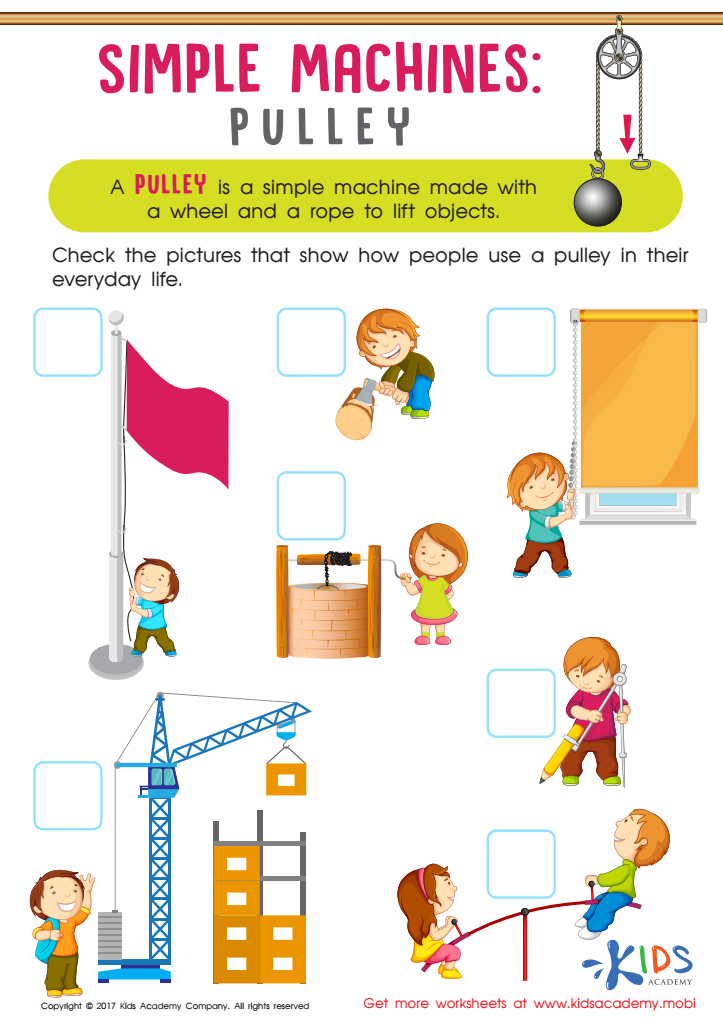
Simple Machines Pulley Worksheet
Pulleys make everyday life easier, from flag poles to elevators. This worksheet helps kids recognize and appreciate how pulleys simplify our lives. They'll learn about the many practical uses for these simple rope and wheel systems.
 Assign to My Students
Simple Machines Pulley Worksheet
Worksheet
Question/Answer

What are some effective activities to train students’ Recognizing simple machines skill when teaching them about Physical Science?
Effective activities include scavenger hunts for identifying simple machines in the classroom or school, building projects where students create simple machines from craft materials, analyzing everyday objects to identify the simple machines within them, and interactive online simulations or games that teach and test students on simple machines. These hands-on and engaging activities foster understanding and recognition skills.
How does the mastery of the Recognizing simple machines skill affect a student's performance at an early age?
Mastering the Recognizing simple machines skill at an early age enhances a student's understanding of basic physical principles and mechanical advantage, fostering critical thinking and problem-solving skills. This knowledge sets a solid foundation for more advanced scientific and engineering concepts, improving academic performance across STEM subjects and encouraging a lifelong curiosity about how things work in the world around them.
How to train the Recognizing simple machines skill in Grade 2 students learning about Physical Science?
To train Grade 2 students in recognizing simple machines, employ interactive activities such as scavenger hunts to identify items in the classroom or playground that incorporate simple machines (lever, pulley, wheel and axle, inclined plane, screw, wedge).
Join Kids Academy for Free
Who is primarily going to use this learning content?