Social behavior learning Worksheets for Kids
1 filtered results
Difficulty Level
Grade
Age
-
From - To
Subject
Activity
Standards
Social behavior learning worksheets are pivotal for cultivating positive social skills and well-being. They help learners of all ages practice successful social interactions, teaching etiquette, communication, conflict resolution, and empathy. These worksheets encourage self-awareness, prompting reflection on how one's actions affect others, thereby enhancing empathy. Individuals can evaluate social situations, recognize behavior patterns, and strategize improvements. The safe space provided by worksheets allows for emotional expression and development of emotional regulation skills. Customizable to different ages and contexts, these tools are useful in education, therapy, or home settings, equipping people with the competence to handle social nuances effectively.
Favorites
With answer key
Interactive
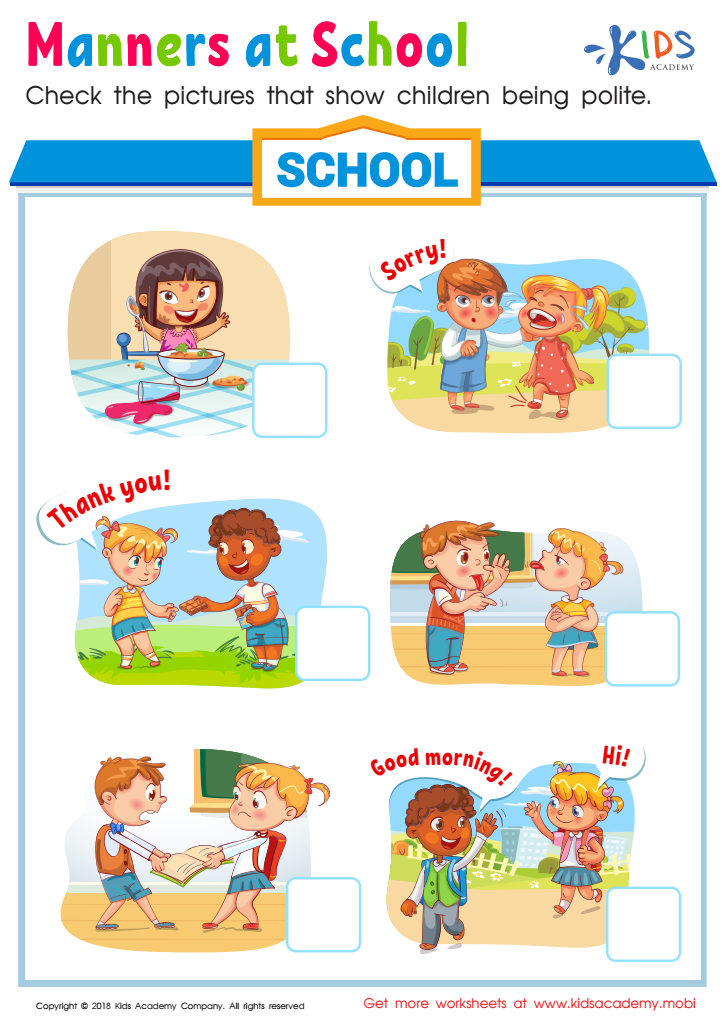
Manners at School Worksheet
Go through the worksheet with your child and ask which children are being rude or polite. Check the boxes for the polite children. Explain how to be well-behaved in school by following the examples of polite children. Help your child better their behaviour in school and the community.
 Assign to My Students
Manners at School Worksheet
Worksheet
Question/Answer

Why is the Social behavior learning skill important for Kindergarten students?
Social behavior learning skill is crucial for kindergarten students as it lays the foundation for healthy social interactions, effective communication, and emotional intelligence. It enables them to build positive relationships, cooperate with peers, understand and manage their emotions, and navigate social situations effectively. These skills are essential for their overall development, academic success, and well-being.
What are some effective activities to train students’ Social behavior learning skill when teaching them about Community?
Effective activities for training students' social behavior learning skills in community education include role-playing to practice real-life interactions, group projects that necessitate teamwork and communication, community service projects to foster empathy and civic responsibility, cooperative games to build trust and collaboration, and structured discussions to encourage perspective-taking and conflict resolution.
How does the mastery of the Social behavior learning skill affect a student's performance at an early age?
Mastery of social behavior learning skills at an early age significantly enhances a student's performance. It improves their ability to communicate, collaborate, and resolve conflicts effectively. These skills foster a positive classroom environment, encourage active participation, and facilitate better understanding and retention of academic material, ultimately leading to improved academic outcomes and personal development.
Join Kids Academy for Free
Who is primarily going to use this learning content?