Basic Addition Skills Adding in the Forest Worksheets - Page 3
55 filtered results
-
From - To
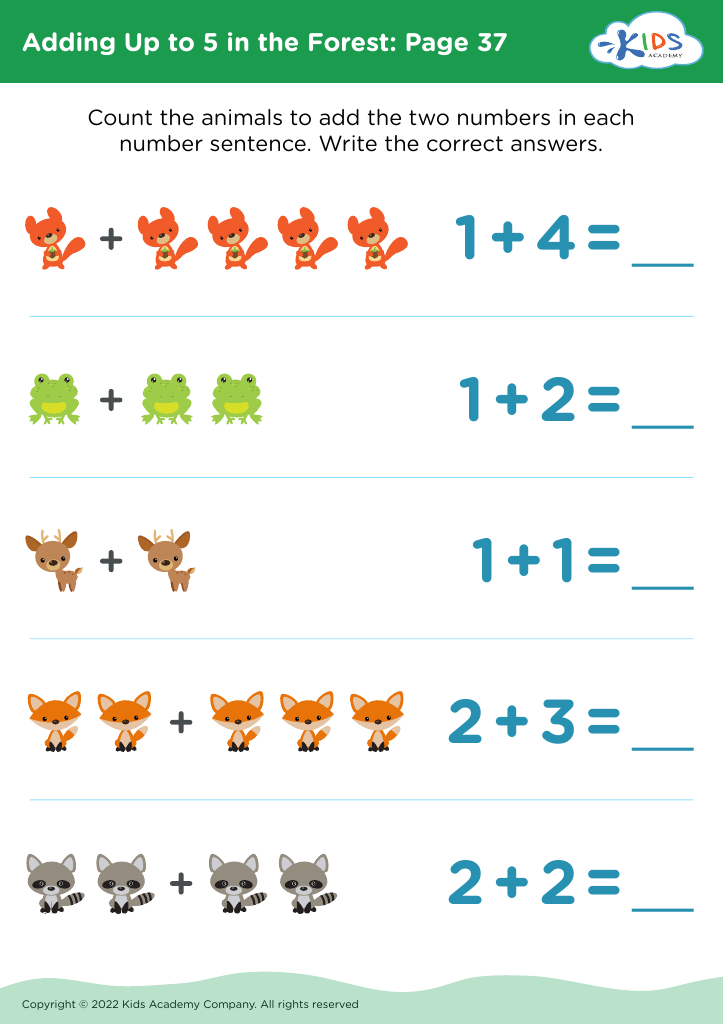
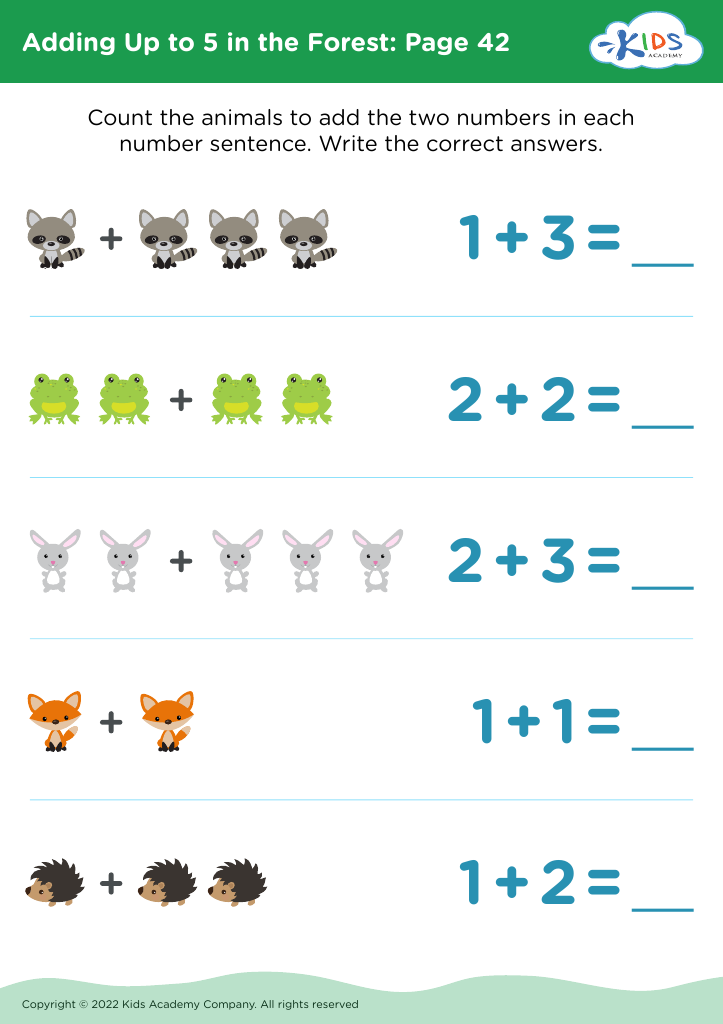
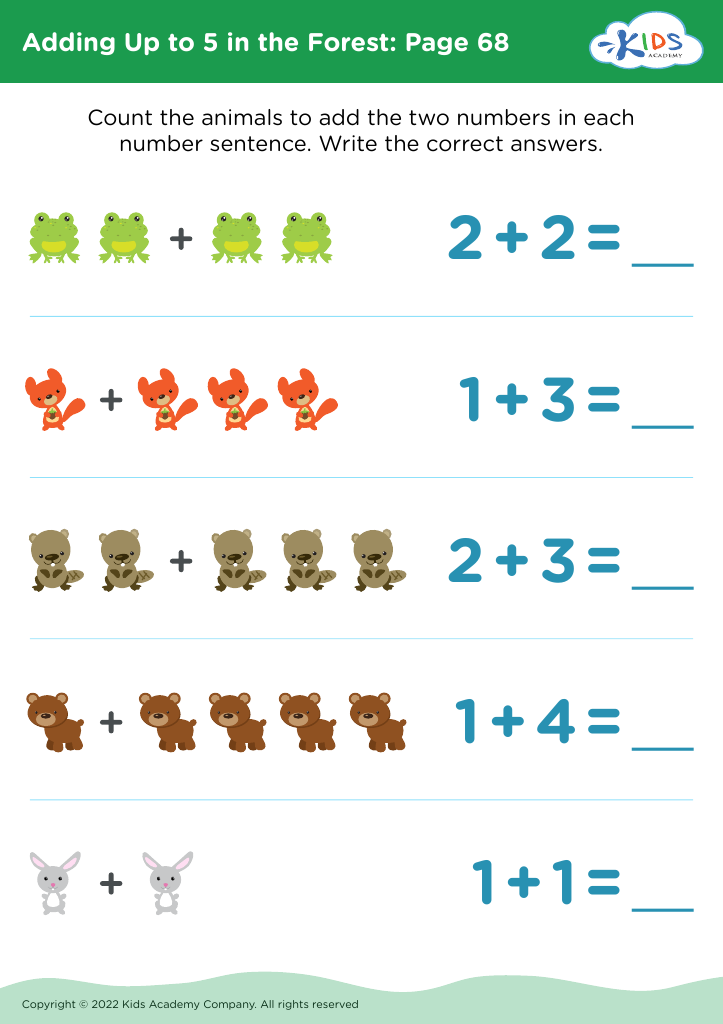
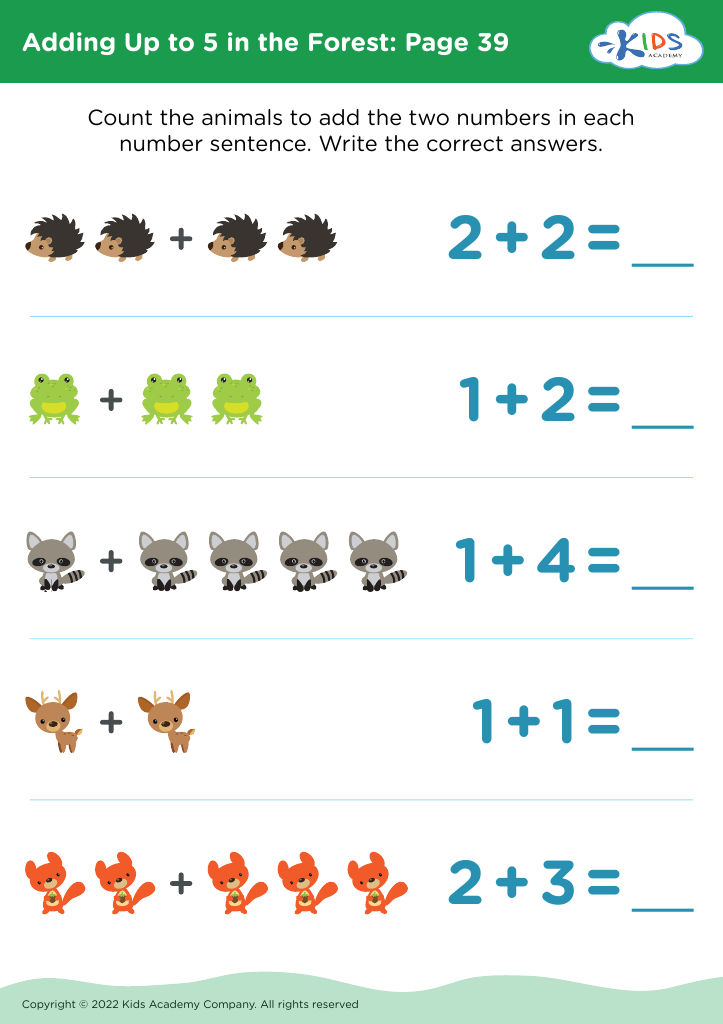
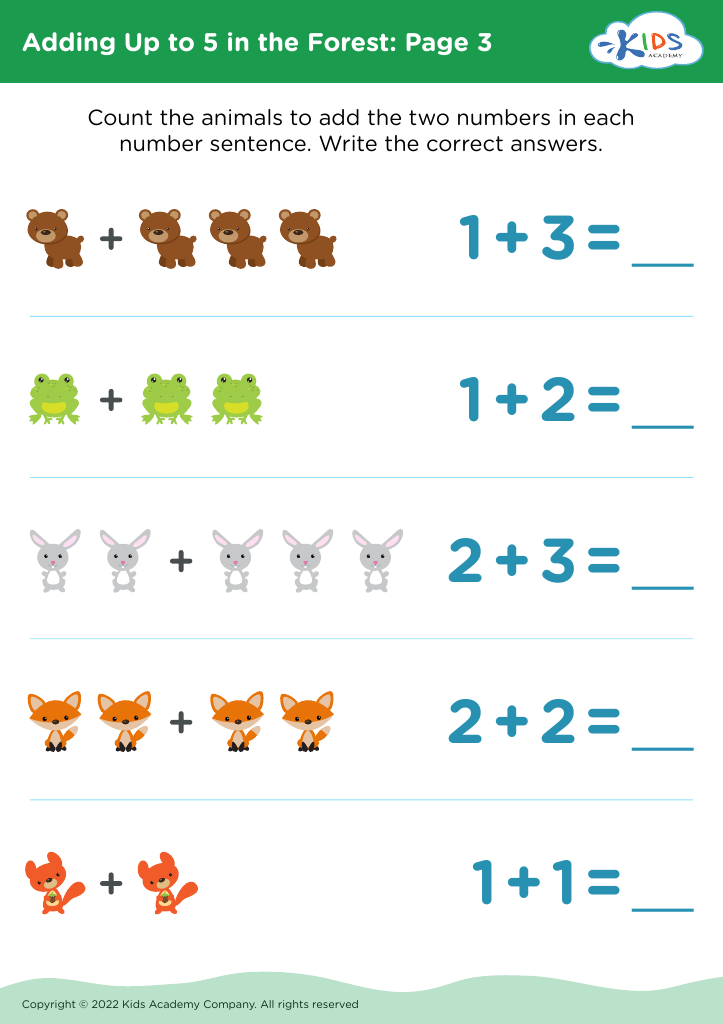
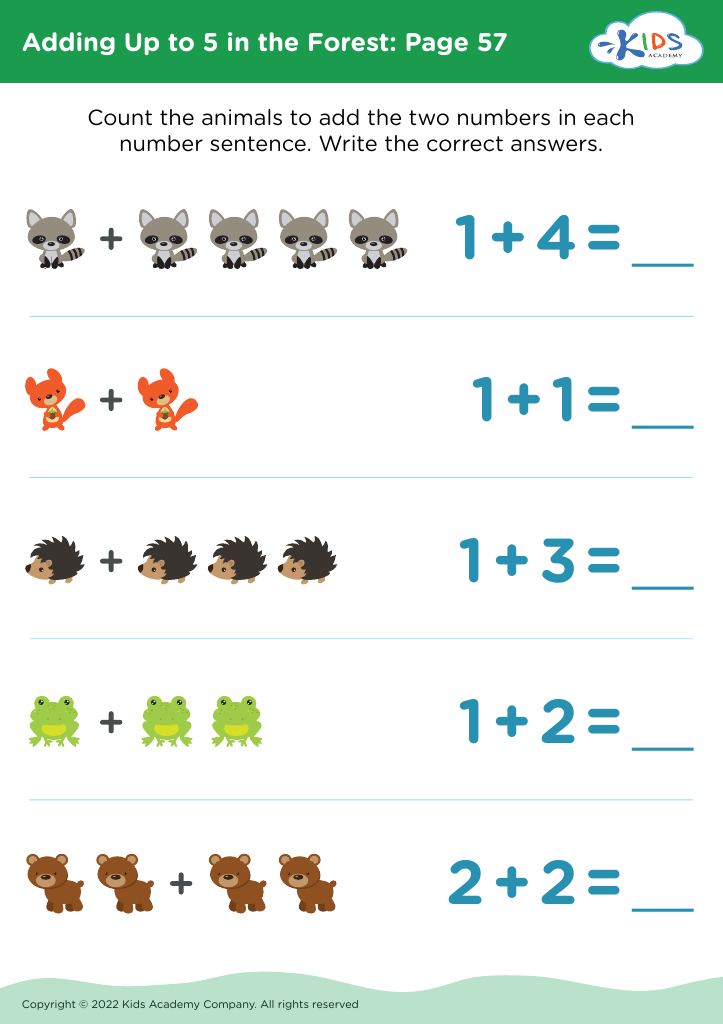
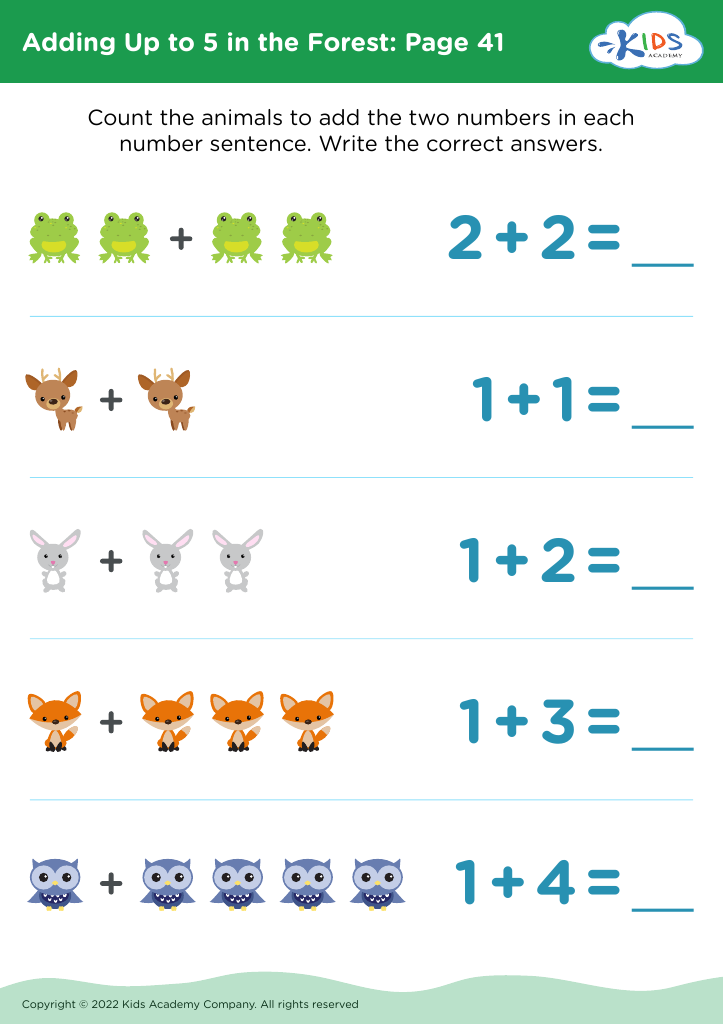




Basic addition skills, like those practiced in activities such as "Adding in the Forest," are foundational to a child's mathematical development and overall cognitive growth. Engaging in signature programs that combine learning with nature inspires curiosity, helping students visualize and contextualize mathematical concepts. This experiential approach not only fosters a love for math but also reinforces critical thinking, problem-solving, and collaboration skills.
Parents and teachers should prioritize these skills because they contribute to academic success across subjects. Proficient addition skills lay the groundwork for more advanced mathematical concepts, enhancing a child's confidence and competence in the classroom. Additionally, outdoor learning experiences, like "Adding in the Forest," help reduce anxiety around math. They create a less pressured, more relaxed environment where children feel free to experiment.
Furthermore, early mastery of addition allows students to tackle everyday tasks and real-world scenarios efficiently, preparing them for future responsibilities. By valuing and engaging in activities that reinforce basic addition skills, parents and teachers can help children build a strong mathematical foundation that supports lifelong learning and adaptability in an increasingly complex world. Ultimately, investing time in these fundamental skills reaps long-term benefits for children’s educational journeys and personal development.