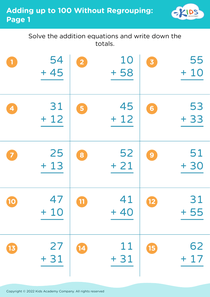
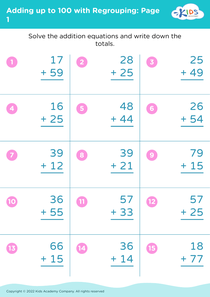
Counting practice Adding up to 100 Misc Worksheets
4 filtered results
-
From - To
Enhance your child's counting skills with our "Counting Practice: Adding Up to 100 Misc Worksheets." Designed for early learners, these engaging worksheets provide a variety of exercises to help children master addition concepts as they work towards totaling up to 100. Each worksheet encourages problem-solving and critical thinking, making learning both fun and effective. With colorful visuals and age-appropriate challenges, these resources are perfect for at-home practice or classroom activities. Foster your child's confidence in math while developing essential skills needed for future success. Dive into our collection and watch your young mathematician thrive!
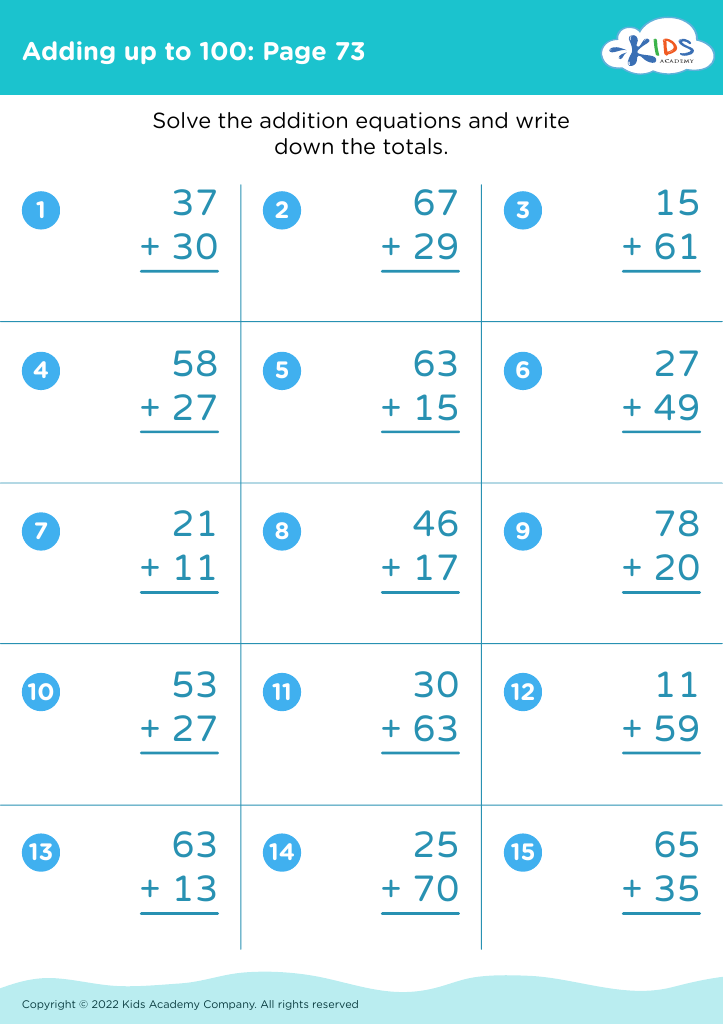
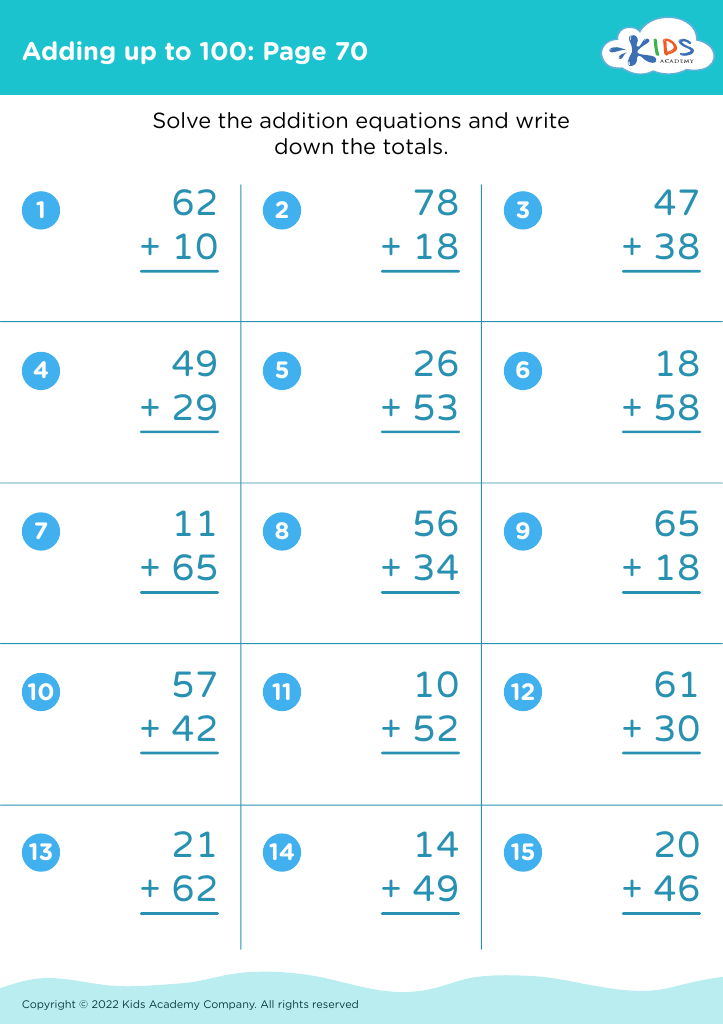
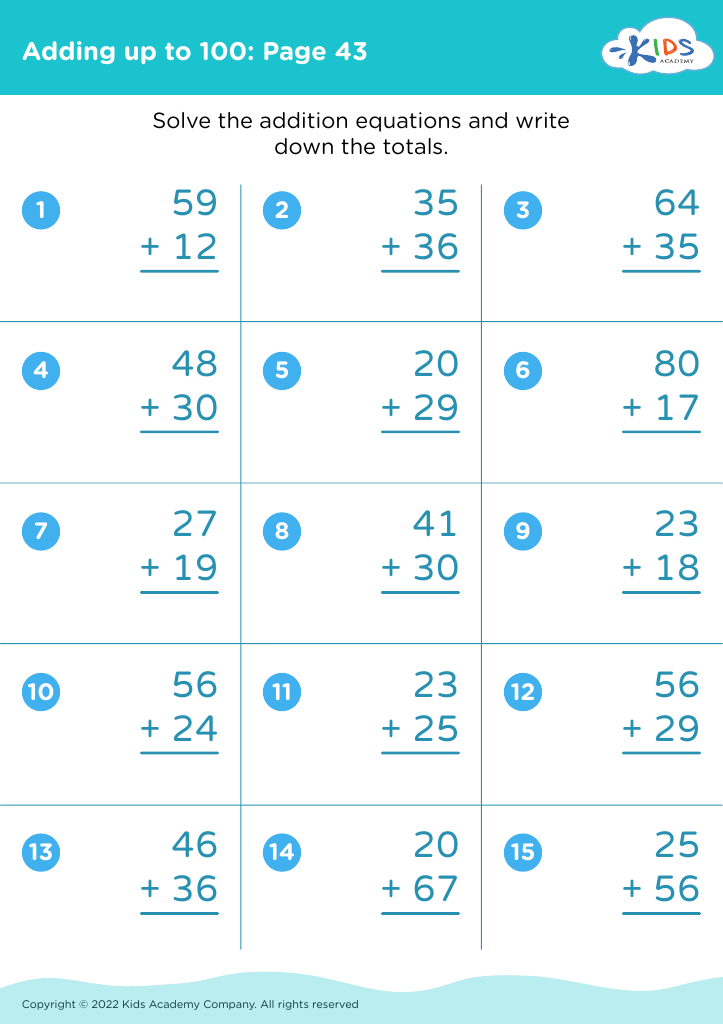
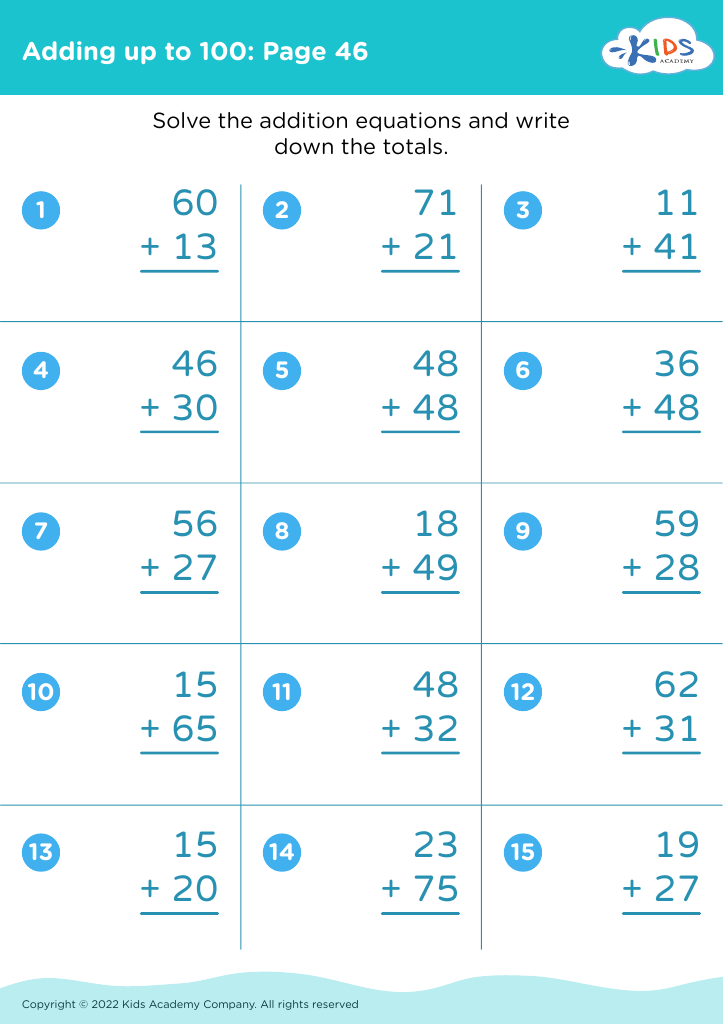


Counting practice and understanding addition up to 100 are essential skills for young learners, providing a solid foundation for their mathematical development. Firstly, these skills are crucial for problem-solving and critical thinking. When children can count confidently and add numbers effectively, they enhance their ability to tackle more complex mathematical concepts in later grades, such as subtraction, multiplication, and even fractions.
Moreover, counting practice promotes number sense, enabling children to recognize patterns, understand quantities, and develop a sense of numerical relationships. This understanding transfers to real-life situations, helping children make sense of money, time, and measurements, which are vital skills for their daily interactions.
Additionally, counting and addition are not solely academic; they can boost a child's confidence and self-esteem. Mastery of these skills often leads to a sense of achievement and encourages a positive attitude toward math. For parents and teachers, fostering these skills should be a priority, as they lay the groundwork for future learning and life skills. Engaging children in playful counting activities keeps the learning process enjoyable and reinforces these important concepts in a supportive environment. Ultimately, cultivating these early math skills is a significant step in ensuring children's overall success in their educational journey.