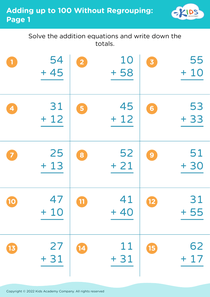
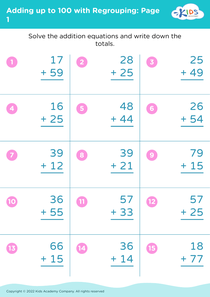
Enhance number recognition Adding up to 100 Misc Worksheets
5 filtered results
-
From - To
Struggling with number recognition and addition up to 100? Our comprehensive collection of worksheets is here to help! These well-designed activities aim to improve your child's number recognition skills while boosting their confidence in adding numbers up to 100. Each worksheet features fun, engaging exercises tailored for young learners, making math both enjoyable and educational. Perfect for classrooms or at-home learning, these resources provide an excellent foundation in number sense and arithmetic. Help your child succeed in math with our expertly crafted worksheets and start seeing improvement in no time! Visit Kids Academy for more.
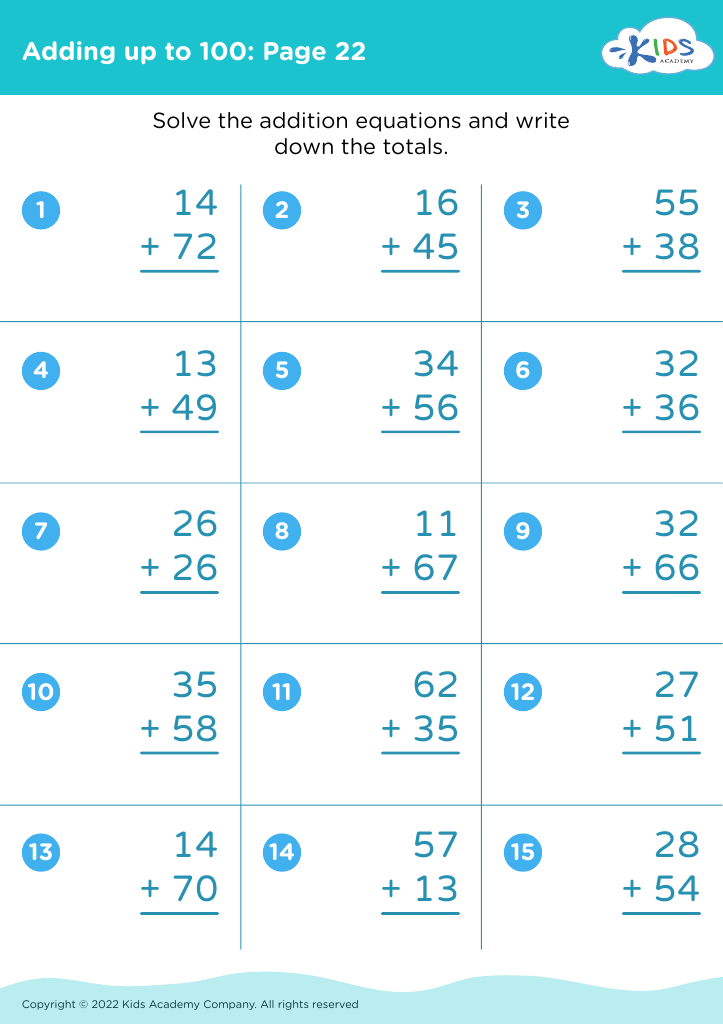
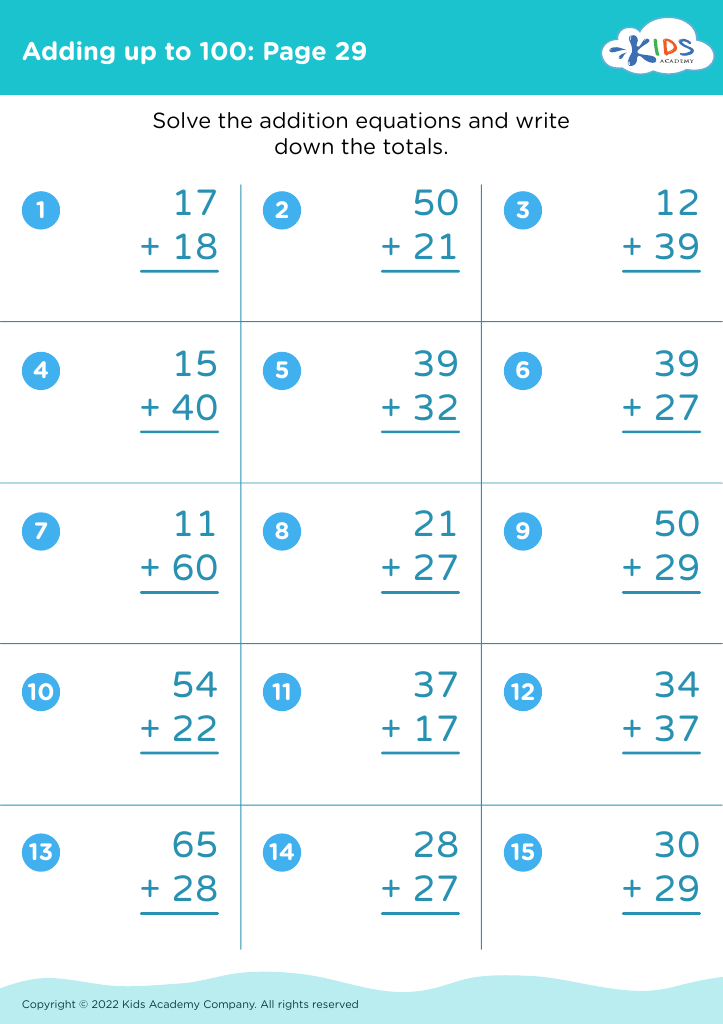
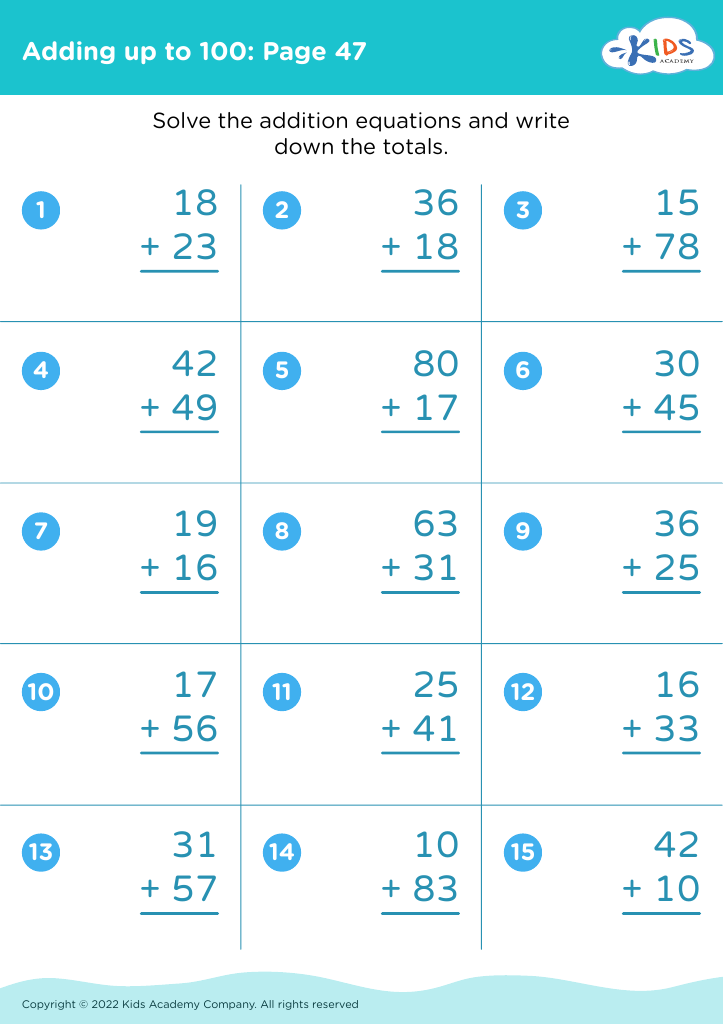
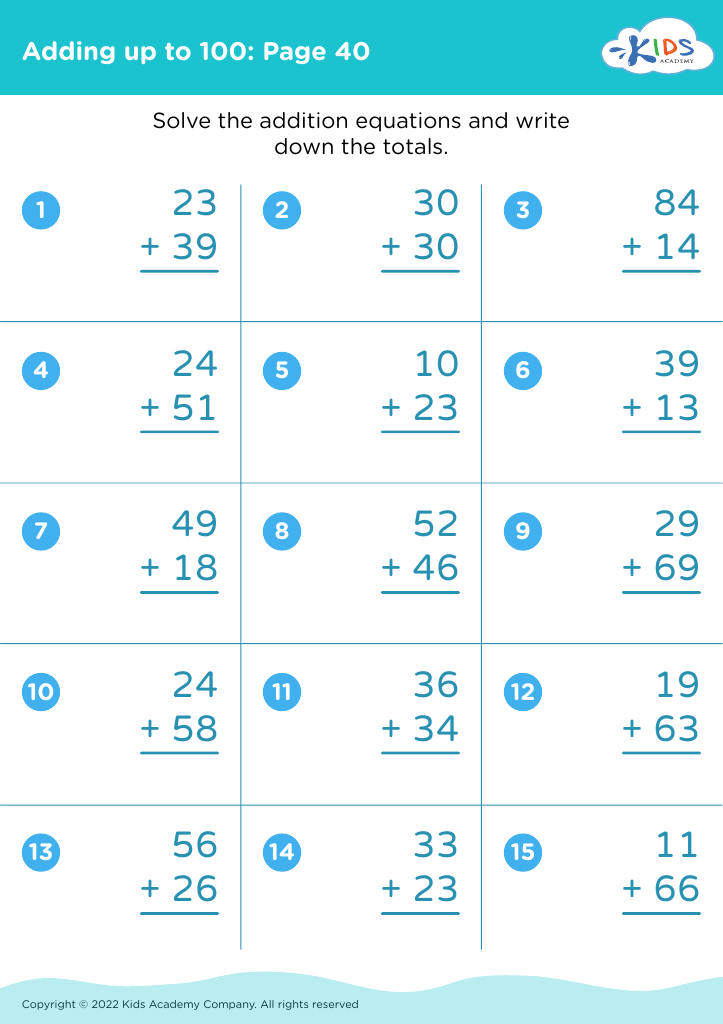
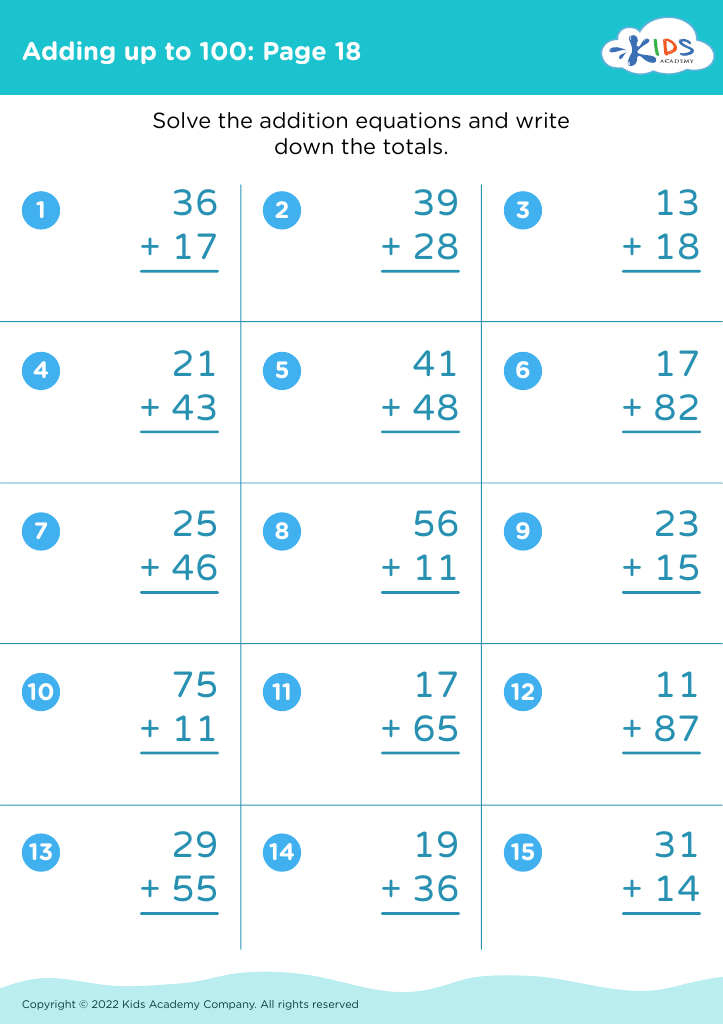


Enhancing number recognition and the ability to add up to 100 are foundational skills that greatly influence a child's early mathematical development. Firstly, strong number recognition is crucial because it allows children to understand and identify numbers, which is the basis for all future math learning, such as arithmetic, geometry, and algebra. When children easily recognize and distinguish numbers, they can efficiently perform more complex calculations.
Adding up to 100 specifically builds a child's confidence and fluency in basic operations. Mastery of addition within this range develops both cognitive and problem-solving skills. It also lays the groundwork for understanding more advanced concepts like mental math, estimation, and the properties of numbers. Furthermore, skills in addition are practical for everyday situations like counting money, telling time, and measuring.
For parents and teachers, encouraging these skills supports academic growth and boosts a child's self-esteem. Children who grasp these early math concepts tend to have a more positive attitude towards mathematics and are likely to perform better academically in the future. Engaging activities and supportive environments enable children to develop these essential skills in a fun and meaningful way, fostering a lifelong appreciation and competence in mathematics.