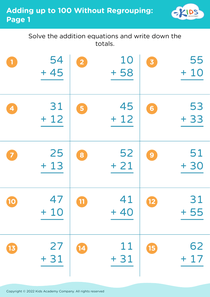
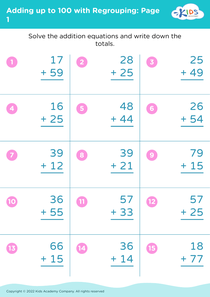
Recognizing Patterns Adding up to 100 Misc Worksheets
3 filtered results
-
From - To
Discover our "Recognizing Patterns Adding up to 100 Misc Worksheets," designed to enhance students' mathematical skills in identifying and analyzing patterns. These engaging worksheets support early learners in recognizing numerical sequences and relationships, vital for mastering addition concepts up to 100. With various fun activities and exercises, students will develop critical thinking and problem-solving abilities while navigating through exercises in a lively and interactive way. Perfect for classroom or homeschool settings, our worksheets align with educational standards and foster a love for learning. Help your child build a strong mathematical foundation with these expertly created resources, engaging their minds through fun and challenging patterns!
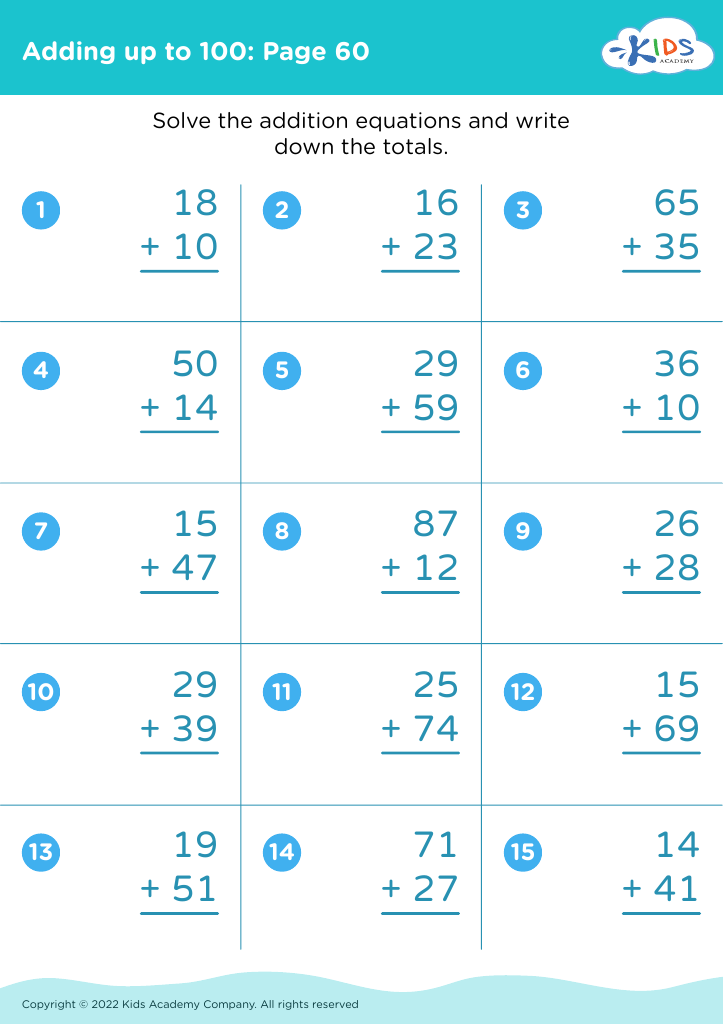
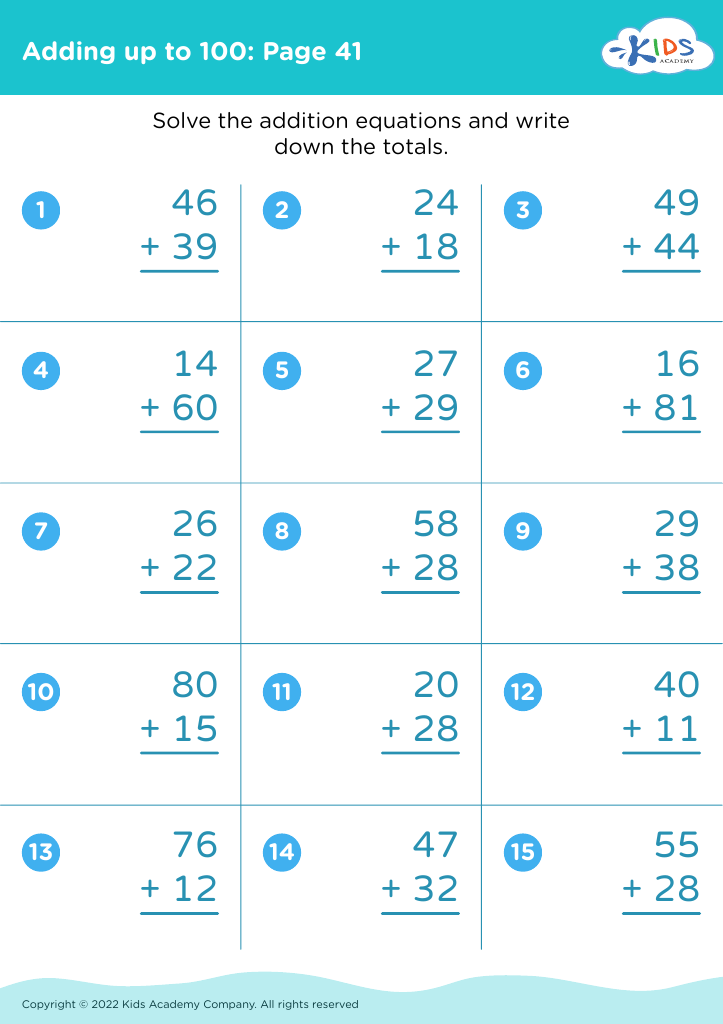
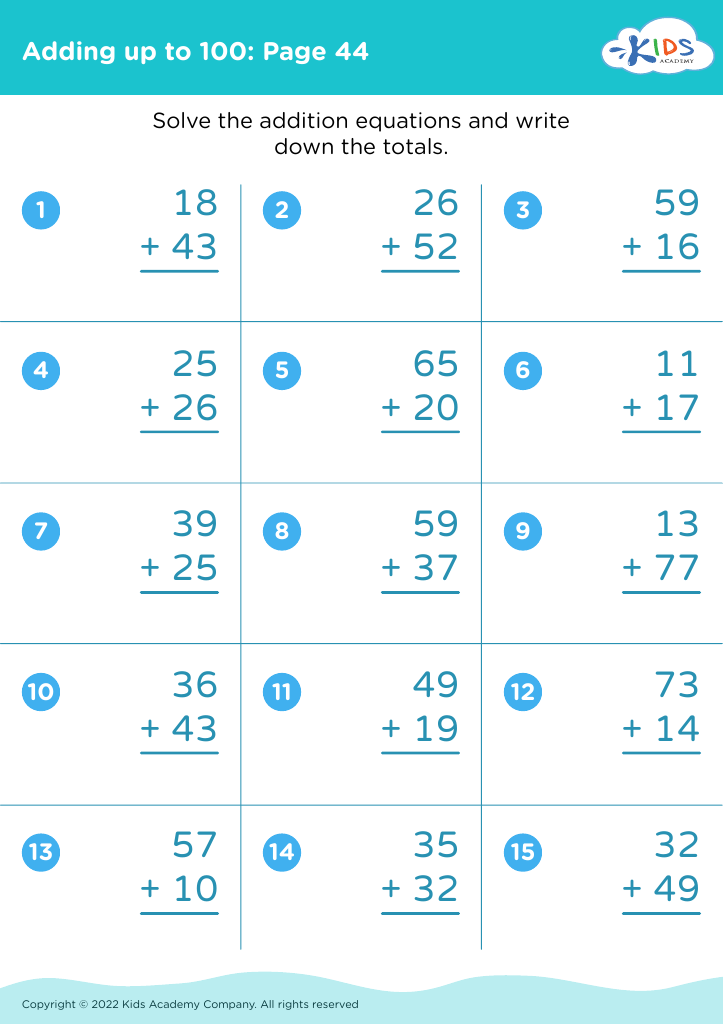


Recognizing patterns, particularly when adding up to 100, is a foundational skill in early mathematics that significantly impacts children's learning. For parents and teachers, understanding this concept provides numerous educational benefits. Firstly, recognizing patterns helps students develop strong number sense, which is crucial for mental math and problem-solving skills. When children learn to identify relationships among numbers, such as how combinations of numbers can create sums that equal 100, they enhance their ability to manipulate numbers in various mathematical contexts.
Additionally, this understanding lays the groundwork for more advanced concepts, including algebra and other mathematical operations. Notably, recognizing patterns fosters critical thinking and cognitive skills, as students begin to see the connections between different numerical relationships.
Moreover, engaging students in pattern recognition activities encourages collaboration and communication, enhancing their social skills in group settings. For parents, supporting their child in recognizing patterns can enrich family learning experiences and foster a positive attitude towards math. Ultimately, emphasizing pattern recognition not only prepares children for future concepts in mathematics but also cultivates confidence and enjoyment in their learning journey.